Dental Zirconia Blocks for High-Volume Milling Centers: An Application Guide
High-volume dental milling centers do not evaluate a zirconia block as a standalone item. They evaluate it as part of a production system that includes 5-axis milling, multi-unit bridge nesting, full-contour crown output, implant superstructure workflows, sintering furnace discipline, and incoming acceptance checks. In that setting, the practical question is not only whether a block has high strength, but whether it can be repeated across many units without introducing avoidable process variation.
YIPANG is the self-developed dental materials brand of Beijing Weijiahua Dentistry Equipment Co., Ltd., a company established in 1996. Its 4D-PRO-ML zirconia block is supplied as a 98 mm CAD/CAM disc in ML Multilayer shading, with thickness options of 10 mm, 12 mm, 14 mm, 16 mm, 18 mm, and 20 mm. The supplied product data lists a bending strength of ≥1200 MPa, medium translucency, and a sintering temperature of 1450°C, while the process guidance gives a recommended sintering range of 1430–1450°C. This guide explains how a high-volume laboratory can integrate that block into a controlled milling and sintering workflow.
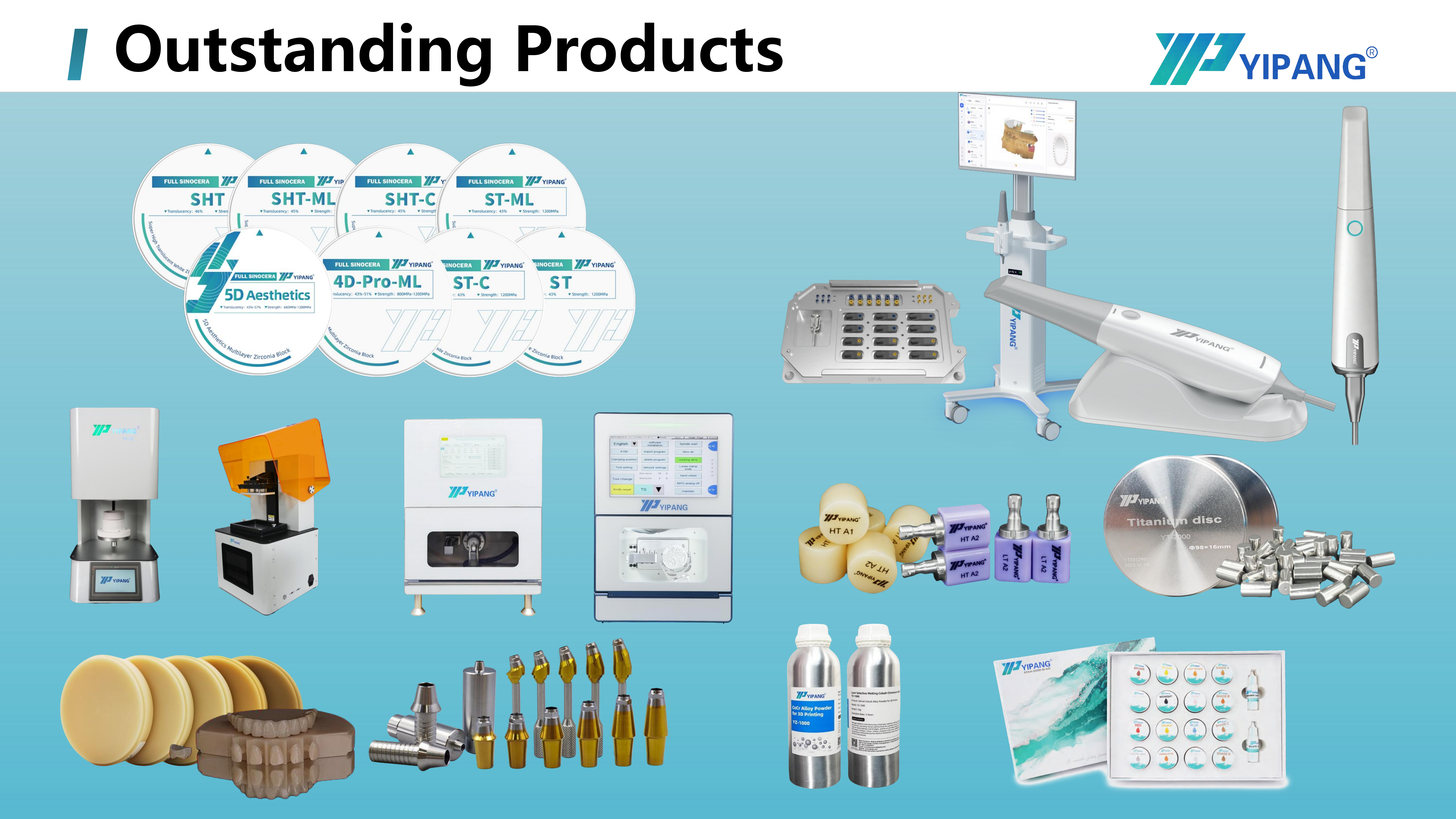
4D-PRO-ML zirconia blocks are supplied in 98 mm diameter and six thickness options for CAD/CAM production.
Why Volume Changes the Zirconia Block Decision
In lower-volume work, a laboratory can sometimes adjust around small process differences. In high-volume work, the same difference is repeated across many units and becomes a production problem. The block, milling machine, sintering furnace, and laboratory environment must therefore be selected and controlled as one chain. A parameter that looks acceptable on a single crown may become a fit, shade, or rework issue when it is repeated across multi-unit bridges and implant superstructures.
High-volume centers running 5-axis production need a block format that supports efficient nesting and a sintering procedure that can be documented shift after shift. The block should be available in the thicknesses required by the work mix, compatible with the milling equipment, and supported by a sintering curve that the laboratory can validate. This is why a high-volume application guide should begin with the process, not with a single material number.
Strength remains important, but it is not the only criterion. For full-contour crowns, multi-unit bridges, and implant superstructure restorations, the laboratory also needs to confirm shade range, translucency, dimensional behavior after sintering, equipment compatibility, and the supplier’s quality-control and after-sales support. The purchasing decision should connect those checks to the actual production schedule.
The Production Cell Around a 98 mm Disc
The supplied application data for 4D-PRO-ML describes an indoor constant-temperature dental laboratory environment, with processing by a dental milling machine and sintering in a dental sintering furnace. The matched equipment list includes a dental milling machine, a dental sintering furnace, and a dental lab scanner. That list is a useful starting point for a high-volume center because it separates the block from the rest of the digital workflow and makes the dependencies visible.
For 5-axis production, the 98 mm diameter and six thickness options are practical planning variables. Thickness selection affects how multi-unit bridges and implant superstructures are nested, while the 98 mm format defines the working envelope for the disc. The product is listed as compatible with most mainstream dental milling machines, but that statement should still be checked against the specific machine, tooling, and validated milling strategy in each laboratory. “Most mainstream” is not the same as “all machines,” and the laboratory should confirm compatibility before a production run.
The material is yttria-stabilized zirconium dioxide in ML Multilayer shading, with medium translucency. YIPANG lists low shrinkage after sintering and high dimensional accuracy among the product’s selling points, and the supplied case summary highlights uniform translucency and stable sintering shrinkage together with compatibility with most CAD/CAM systems. These are supplier-reported product and case statements; they should be verified through the laboratory’s own sample evaluation and acceptance process.
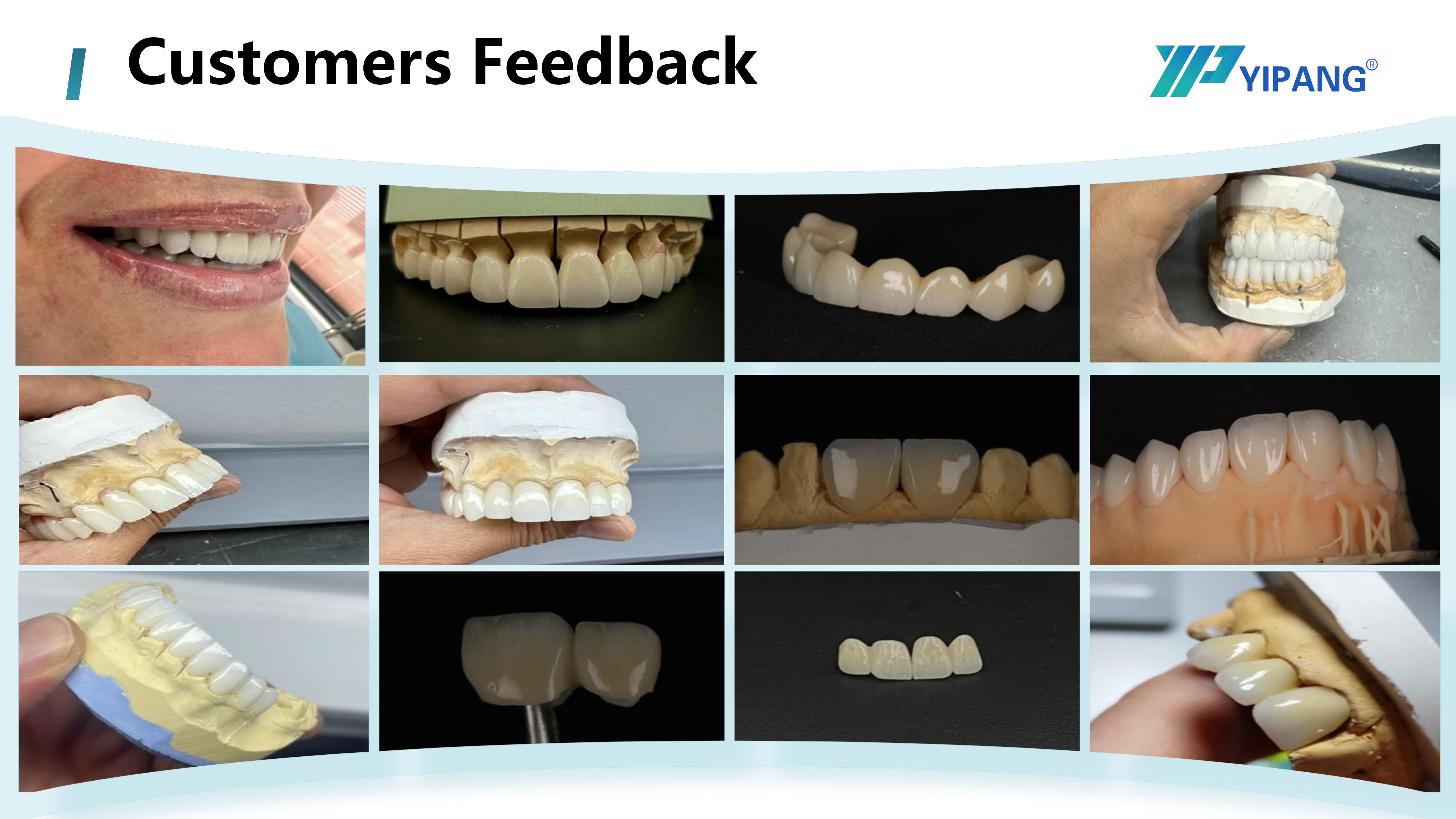
High-volume planning should treat the block, milling equipment, and sintering furnace as one production system.
Block selection: match the format to the work mix
Start with the restoration types the center actually produces. The supplied application scope includes full-contour crowns, bridges, veneers, and implant superstructure restorations. For a center that regularly mills multi-unit bridges, the available thickness range matters because the bridge geometry must fit within the disc and still leave a stable sintering plan. For full-contour crowns, the ML Multilayer shade and medium translucency are the relevant starting points. For implant superstructures, the laboratory should confirm that the selected block and sintering program are approved for the specific workflow and design being produced.
A practical selection rule is to separate “material capability” from “process fit.” The 4D-PRO-ML data gives a bending strength of ≥1200 MPa and a sintering temperature of 1450°C, with a recommended range of 1430–1450°C. Those values are useful inputs, but the laboratory still needs to confirm that the block thickness, nesting strategy, milling machine, and furnace program work together for the intended restoration.
Equipment: confirm the matched workflow
The matched equipment list is straightforward: dental lab scanner, dental milling machine, and dental sintering furnace. In a high-volume center, each item should have a defined role in the production record. The scanner captures the digital model or scan data; the milling machine produces the zirconia restoration from the disc; the sintering furnace completes the densification cycle. If one part of the chain changes, the laboratory should recheck the block’s fit with the new setup rather than assuming the previous program remains valid.
Because the product is listed as compatible with most mainstream dental milling machines, a center adding 4D-PRO-ML should document the machine model, milling strategy, and any tooling assumptions used during validation. This is especially important in 5-axis production, where access angle and nesting decisions can change the way a multi-unit bridge is positioned in the disc. The goal is not to find a universal program, but to establish a repeatable program for the center’s own equipment.
Constant-temperature conditions: control what the source specifies
The supplied application condition is an indoor constant-temperature dental laboratory environment. The source data does not provide a single temperature setpoint, so a responsible production guide should not invent one. Instead, the laboratory should use its validated environment-control procedure, record deviations that could affect the workflow, and keep the block, scanner, milling machine, and sintering area within the conditions defined by the laboratory’s own quality system.
Constant-temperature conditions matter because high-volume production depends on repeatability. If the laboratory environment changes during a production run, the effect may not appear until sintering or fit inspection. The practical control is to treat environmental records as part of the batch record, alongside the block lot, shade, thickness, milling program, and sintering curve.
Sintering: the standard curve is a production control
The supplied process answer gives a recommended sintering range of 1430–1450°C for 4D-PRO-ML. The product parameter sheet lists a sintering temperature of 1450°C. The operational instruction is to place the milled zirconia workpiece on a sintering tray, set the heating curve up to the recommended range with proper holding time, and allow natural cooling after sintering. Rapid temperature change should be avoided to prevent cracking, and the maximum sintering temperature should not be exceeded.
For high-volume centers, the sintering curve should be treated as a controlled production document. The same curve should be used consistently for the same block type and restoration category unless a validated change has been approved. Any change to heating rate, holding time, furnace load, or cooling should be evaluated before it is released to routine production. The application data also states that the standard sintering temperature curve must be strictly followed during processing; that requirement should be visible in the work instruction, not only in the supplier’s technical sheet.
A Step-by-Step Ramp for High-Volume Milling
The following sequence turns the supplied product and process facts into a practical production path for a high-volume dental milling center.
- Confirm the order and lot identity. Check the model, shade, thickness, and diameter against the purchase order. For 4D-PRO-ML, the supplied format is a 98 mm diameter disc in ML Multilayer shading, with thickness options from 10 mm to 20 mm. Record the lot and quantity so the run can be traced through milling and sintering.
- Plan the nesting by restoration type. Separate full-contour crowns, multi-unit bridges, and implant superstructure work according to the laboratory’s validated nesting rules. Use the available thickness range to support the geometry, and confirm that the selected disc can accommodate the bridge span or superstructure design without compromising the sintering plan.
- Mill on a confirmed compatible machine. Use the dental milling machine identified in the validated workflow. Because 4D-PRO-ML is listed as compatible with most mainstream dental milling machines, the center should retain evidence that its specific machine, strategy, and tooling have been checked. Do not transfer a program from another machine without verification.
- Prepare the sintering load and curve. Place the milled workpiece on the sintering tray and select the approved program for the block and restoration type. The recommended range is 1430–1450°C, with proper holding time and natural cooling. Avoid rapid temperature change and do not exceed the maximum sintering temperature.
- Inspect after sintering. Check the restoration against the laboratory’s acceptance criteria for dimensional fit, shade, and visual defects. The supplier lists low shrinkage and high dimensional accuracy as product characteristics; the laboratory should still verify those characteristics against its own approved standard before releasing the unit.
- Record the production variables. Keep the block lot, shade, thickness, machine, sintering program, furnace, and inspection result together. In high-volume production, traceability is what allows a laboratory to isolate a problem when a deviation appears.
- Review the batch before repeating it. If the batch meets the acceptance criteria, the same validated path can be used for the next run. If it does not, the laboratory should review the block, equipment, environment, and sintering curve in that order rather than changing multiple variables at once.
Where 4D-PRO-ML Fits: Crowns, Bridges, and Implant Superstructures
Full-contour crowns. The ML Multilayer shade and medium translucency make 4D-PRO-ML relevant to full-contour crown production where that shade and translucency level match the prescription. The laboratory should confirm the shade and translucency against its aesthetic standard, then validate the sintering program before routine production.
Multi-unit bridges. The ≥1200 MPa bending strength and multiple thickness options are the relevant supplied facts for bridge planning. A high-volume center should connect those facts to its nesting and sintering controls, because a multi-unit bridge places different demands on the disc than a single crown. The block should be selected with enough thickness for the bridge geometry and a sintering plan that can be repeated for the full unit.
Implant superstructures. The supplied application scope includes implant superstructure restorations. For full-arch or other demanding implant workflows, the laboratory should verify the design, the selected block, the sintering program, and the acceptance criteria before production. The supplier’s product data and process guidance are starting points; they do not replace the laboratory’s own validated protocol.
High-volume runs. YIPANG lists a monthly capacity of 15,000 pieces, a lead time of 15–30 working days, and a negotiable small MOQ. These are supplier capability statements and should be confirmed in the quotation for the specific model, shade, thickness, and destination market. For a center planning a production ramp, capacity and lead time are as important as the block’s technical values.
4D-PRO-ML Reference Data for Production Planning
| Parameter | Supplied value | Production check |
|---|---|---|
| Model | 4D-PRO-ML | Confirm the model on the label and order. |
| Material | Zirconium dioxide (ZrO₂) with yttria stabilized | Match the material to the restoration category and laboratory protocol. |
| Shade | ML Multilayer | Verify shade against the prescription and shade guide. |
| Diameter | 98 mm | Confirm compatibility with the milling machine and nesting plan. |
| Thickness | 10 mm, 12 mm, 14 mm, 16 mm, 18 mm, 20 mm | Select according to crown, bridge, or implant superstructure geometry. |
| Bending strength | ≥1200 MPa | Confirm the value against the model-specific technical sheet. |
| Translucency | Medium Translucent | Match to the aesthetic requirement of the restoration. |
| Sintering temperature | 1450°C listed; recommended range 1430–1450°C | Use the approved laboratory curve with proper holding time and natural cooling. |
| Milling compatibility | Compatible with most mainstream dental milling machines | Validate the specific machine, strategy, and tooling before production. |
Purchasing Terms That Protect Repeatability
For a high-volume center, purchasing terms are part of process control. The supplier should be able to confirm the exact model, shade, thickness, and quantity, and the laboratory should define how those details are checked at goods receipt. YIPANG lists OEM/ODM production and notes that almost all specifications can be customized. Customization should be specified in writing, including the approved drawing or specification, before a production order is released.
The supplied capability data lists a monthly capacity of 15,000 pieces, a lead time of 15–30 working days, and a negotiable small MOQ. These values should be treated as planning inputs and confirmed for the actual order. A high-volume center may need to discuss delivery schedules, repeat-order stability, and packaging or labeling requirements, but those details must be agreed in the quotation rather than assumed from a general capability statement.
Quality control is another purchasing checkpoint. YIPANG lists 100% raw material inspection plus finished product random inspection. The laboratory should ask how those records are identified to the delivered lot and what documentation is available for the ordered model. The supplier also lists online technical guidance and an after-sales problem response within 24 hours, which can be relevant when a high-volume center needs process support during validation or production ramp-up.
Export markets listed for YIPANG include the USA, Europe, Brazil, the Middle East, and North Africa. Market-specific regulatory or documentation requirements should be confirmed separately for the destination and product; a general export-market list is not proof of compliance in every jurisdiction. The purchasing decision should therefore combine commercial terms with the technical and documentation checks that apply to the center’s own market.
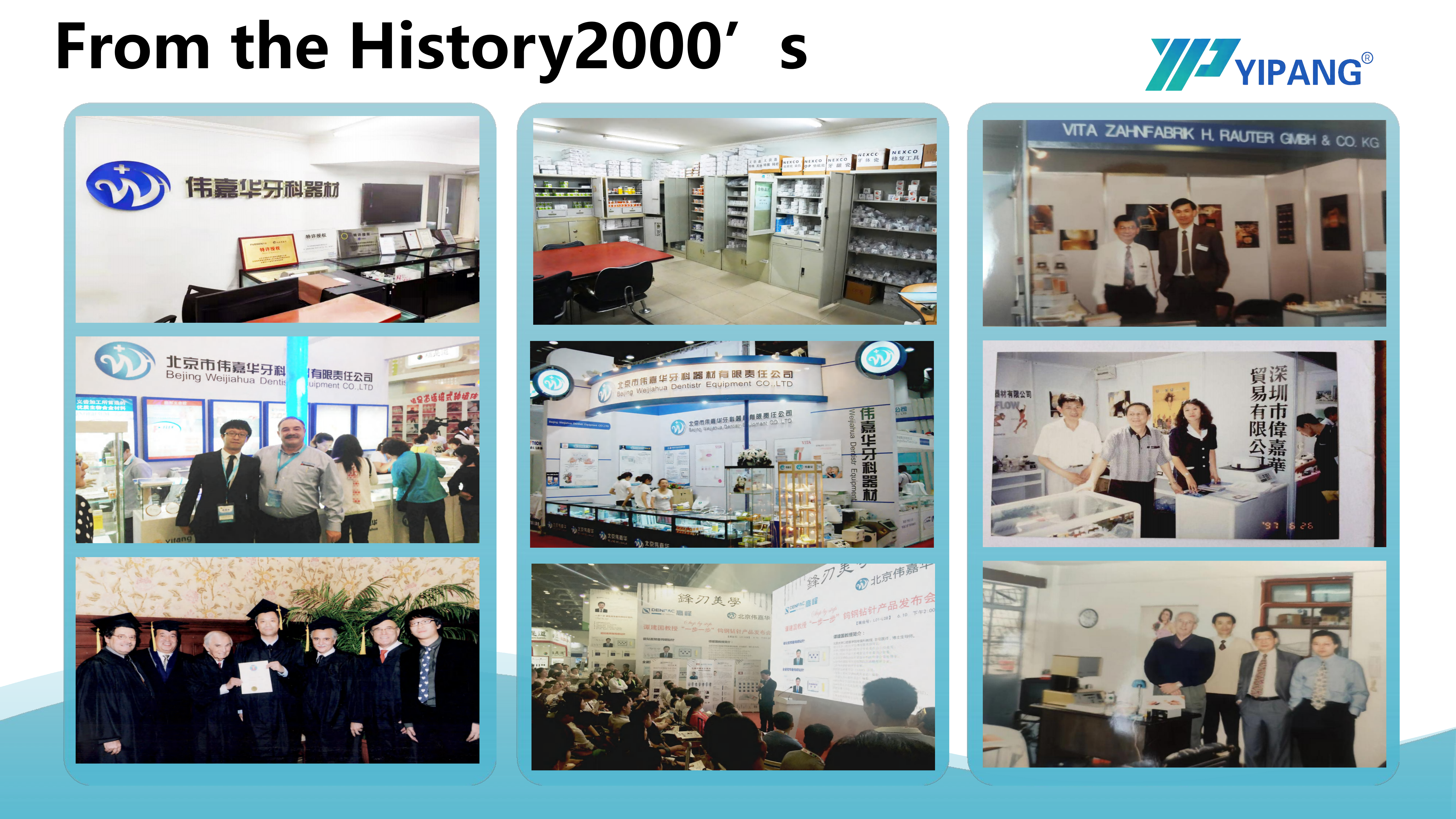
Supplier discussions can cover sample evaluation, purchasing terms, and production support.
Acceptance Criteria: What to Sign Off Before Production
Acceptance criteria should be written before the first high-volume order and reviewed against the delivered lot. The table below turns the supplied product and supplier facts into practical checkpoints. It does not replace the laboratory’s own quality system, but it gives the center a clear place to start.
| Checkpoint | Acceptance question | Supplied reference |
|---|---|---|
| Identity | Does the lot match the ordered model, shade, thickness, and diameter? | 4D-PRO-ML, ML Multilayer, 98 mm, 10–20 mm thickness options. |
| Strength | Does the technical sheet for the ordered model state ≥1200 MPa? | Bending strength ≥1200 MPa. |
| Translucency | Does the supplied translucency level match the restoration plan? | Medium Translucent. |
| Sintering | Is the approved curve within 1430–1450°C with proper holding and natural cooling? | Recommended range 1430–1450°C; 1450°C listed; avoid rapid temperature change. |
| Equipment | Has the specific milling machine, scanner, and furnace been validated with this block? | Matched equipment: dental lab scanner, dental milling machine, dental sintering furnace; compatibility with most mainstream milling machines. |
| Quality records | Can the supplier link the lot to its inspection approach? | 100% raw material inspection plus finished product random inspection. |
| Commercial terms | Are capacity, lead time, MOQ, and customization confirmed for the order? | 15,000 pieces monthly capacity; 15–30 working days lead time; negotiable small MOQ; OEM/ODM and customization. |
| Support | Is technical support available during validation and production? | Online technical guidance; after-sales problem response within 24 hours. |
Frequently Asked Questions
What sintering temperature and curve should a high-volume lab use for 4D-PRO-ML?
The supplied process guidance recommends 1430–1450°C for 4D-PRO-ML, with proper holding time and natural cooling. The product parameter sheet lists 1450°C as the sintering temperature. Place the milled zirconia workpiece on the sintering tray, set the approved heating curve, avoid rapid temperature change to prevent cracking, and do not exceed the maximum sintering temperature. For high-volume production, the same validated curve should be used consistently for the same block type and restoration category.
What equipment and laboratory conditions are needed for high-volume zirconia milling?
The supplied matched equipment list includes a dental lab scanner, a dental milling machine, and a dental sintering furnace. The application condition is an indoor constant-temperature dental laboratory environment. The source data does not give a single temperature setpoint, so the laboratory should use its validated environment-control procedure and record deviations. The block should be processed on a confirmed compatible milling machine and sintered in a controlled furnace program.
How should a lab evaluate a Dental Zirconia Block manufacturer for full-arch implant restorations?
For full-arch implant restorations, start with the documented workflow fit rather than a general brand claim. Confirm the block’s available diameter, thickness range, strength, translucency, sintering guidance, and compatibility with the laboratory’s equipment. For 4D-PRO-ML, the supplied data includes a 98 mm diameter, six thickness options, ≥1200 MPa bending strength, medium translucency, and 1430–1450°C sintering guidance. Then check the manufacturer’s quality-control approach, capacity, lead time, customization options, and after-sales support. The laboratory should validate the full-arch design and sintering program on its own equipment before releasing routine production.
What purchasing terms should be confirmed before a high-volume order?
Confirm the exact model, shade, thickness, quantity, price basis, MOQ, lead time, and customization requirements in the quotation. YIPANG lists OEM/ODM production, almost all specifications customizable, a monthly capacity of 15,000 pieces, a lead time of 15–30 working days, and a negotiable small MOQ. Also confirm how quality records are linked to the delivered lot, what technical support is available, and which market-specific documentation requirements apply to the destination.
What acceptance checks should be completed before releasing a zirconia block lot to production?
Check identity, shade, thickness, diameter, and model against the order. Review the model-specific technical sheet for the listed bending strength and translucency, confirm the approved sintering curve, and verify that the milling machine, scanner, and furnace have been validated for the block. Ask how the supplier’s 100% raw material inspection and finished product random inspection relate to the delivered lot. Then inspect the first sintered units against the laboratory’s dimensional, shade, and visual acceptance criteria before full release.
Can a high-volume lab request a sample and production quotation for 4D-PRO-ML?
Yes. A practical next step is to request a sample, the current technical sheet, and a production quotation from YIPANG. Include the intended restoration types, preferred thicknesses, expected monthly volume, sintering program, destination market, and any customization requirements. Confirm MOQ, lead time, quality records, and technical support in the quotation before placing a high-volume order.
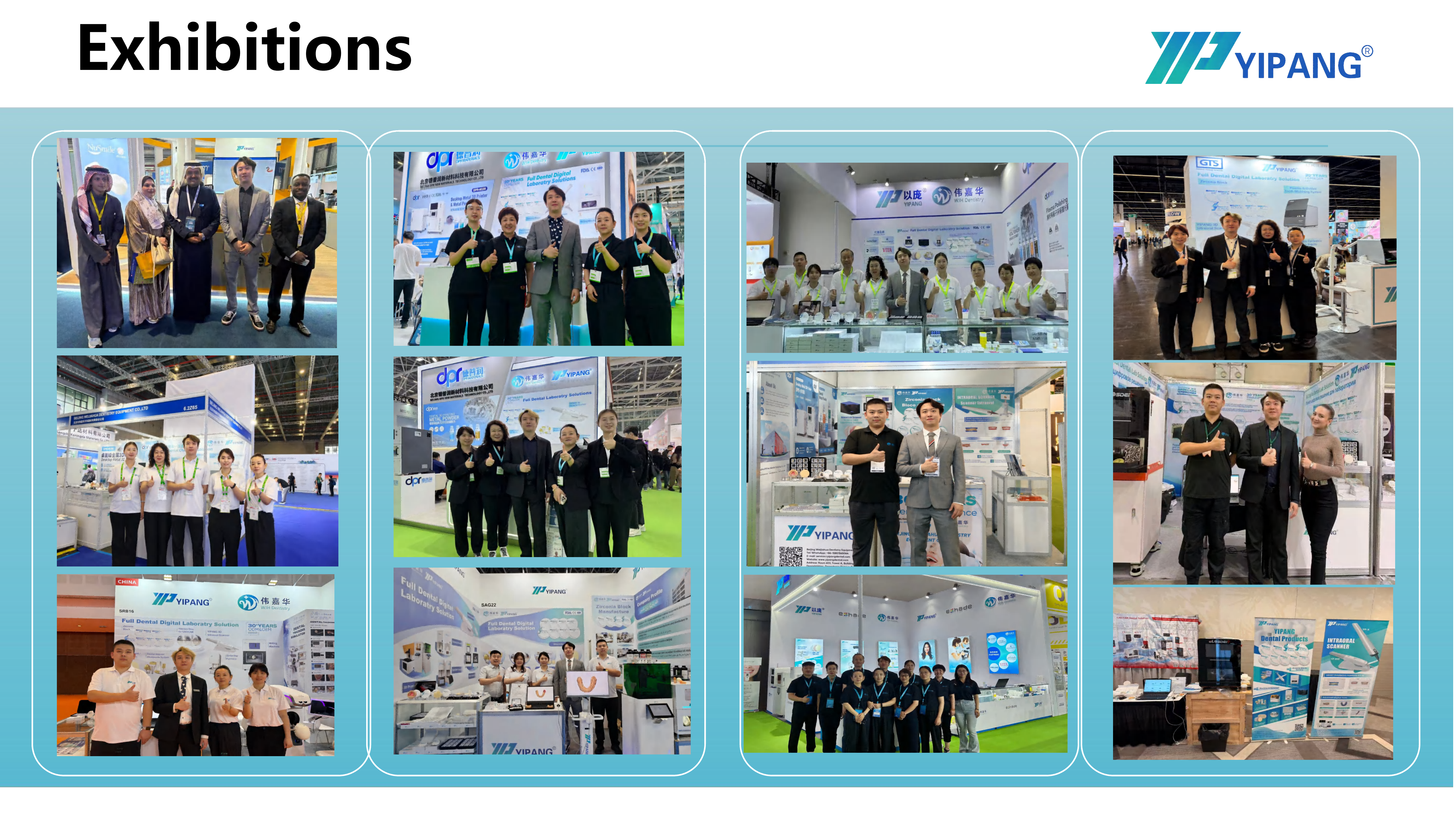
Sample evaluation and purchasing terms should be agreed before a high-volume production ramp.
Conclusion: Build the Process Around the Block
High-volume zirconia production succeeds when the block, 5-axis milling workflow, constant-temperature laboratory conditions, sintering curve, purchasing terms, and acceptance criteria are treated as one system. For 4D-PRO-ML, the supplied facts give a clear starting point: 98 mm diameter, six thickness options, ML Multilayer shading, ≥1200 MPa bending strength, medium translucency, and a recommended sintering range of 1430–1450°C with 1450°C listed in the product data. Those values should be verified against the laboratory’s own equipment and restoration plan.
YIPANG supplies 4D-PRO-ML through Beijing Weijiahua Dentistry Equipment Co., Ltd., with OEM/ODM capability, a listed monthly capacity of 15,000 pieces, a 15–30 working day lead time, and online technical guidance. A high-volume center should use those capabilities as part of a documented qualification process, not as a substitute for sample evaluation and acceptance testing.
For laboratories adapting zirconia blocks into demanding production environments, the next practical step is to compare the supplied technical data with the actual work mix, confirm the sintering program on the intended furnace, and agree purchasing and acceptance terms before scaling. The company brochure is available here: Download the WJH Company Information PDF.
Have Questions or Need More Details?
Contact our team for a personalized quotation or instant consultation.
Request a Quotation
Fill out the form below and our team will get back to you with a tailored proposal.
WhatsApp Direct Chat
Prefer to chat in real-time? Message us on WhatsApp for instant assistance & quick answers.
- Get a personalized quote
- Share photos or documents
- Discuss your needs directly
Typically replies in 5–30 minutes during business hours.