Dental Zirconia Block Application Ranking: 5 Lab Workflows
For a dental laboratory deciding where to apply a dental zirconia block first, the application-priority order is: full-contour crown and bridge laboratories, implant abutment and full-arch cases, high-volume milling centers, chairside restoration clinics, and dental school or hospital prosthodontic departments. This is an application ranking for lab planning, not a market-share ranking and not a claim that one workflow is superior for every laboratory.
The ranking uses one operating assumption: every zirconia block workflow depends on three process anchors — a dental milling machine, a dental sintering furnace, and a strict standard sintering temperature curve. The difference between the five workflows is not whether those anchors exist, but how much restoration scope, fit control, throughput pressure, and documentation each workflow places on them.
The reference product in this article is the 4D-PRO-ML dental zirconia block from YIPANG, the self-developed brand of Beijing Weijiahua Dentistry Equipment Co., Ltd. Company background is included only where it helps the reader evaluate workflow fit.
What problem does this ranking solve?
A laboratory does not adopt a dental zirconia block in isolation. It adopts a chain: scan, design, mill, sinter, finish, and verify. The same block can behave differently in a crown and bridge department, an implant-focused team, a high-volume milling center, a chairside clinic, or a teaching hospital because the case mix and process controls are different.
The practical problem is priority. A lab with limited equipment capacity, limited sintering validation time, or a mixed case list needs to know which workflow should receive the first process investment. The wrong priority can create a mismatch: a chairside workflow may be started before sintering validation is complete, or an implant workflow may be scaled before the lab has documented its fit checks.
Industry background: why zirconia block workflows are a priority
Grand View Research estimated the global zirconia-based dental materials market at USD 1.2 billion in 2025 and projected USD 2.3 billion by 2033. The same source reported that zirconia discs held 63.1% revenue share in 2025, CAD/CAM milling accounted for 82.4% of process revenue, and dental labs accounted for 45.3% of end-user share. These figures do not choose a workflow for an individual lab. They do explain why workflow priority decisions matter: most value is created through CAD/CAM milling and sintering, and labs remain the dominant end-user group.
For a lab, the practical reading is simpler. A zirconia block becomes a restoration only after the CAD/CAM chain and the sintering furnace have done their work. That is why this ranking separates full-contour work from implant work, high-volume output, chairside use, and teaching environments. The ranking is about application fit and process control, not about a single product specification.
How the five workflows were ranked
The ranking uses five decision criteria. It does not assign numeric weights, because a lab’s existing equipment, case mix, and validation capacity can change the order. The sequence reflects the common path from broad routine scope to more specialized or constrained operations.
- Restoration scope: whether the workflow covers routine crowns and bridges, implant superstructures, full-arch cases, or teaching cases.
- Equipment dependency: how directly the workflow relies on a dental milling machine, a dental sintering furnace, and a dental lab scanner.
- Sintering control: how much the workflow depends on a strict standard sintering temperature curve for fit, shade, and repeatability.
- Throughput and repeatability: whether the lab needs to protect consistency across batches rather than single units.
- Verification and documentation: whether the workflow requires stronger traceability, training records, or case-by-case checks.
The result is an editorial priority sequence. A lab that already has a validated implant workflow may move implant cases up. A lab opening a chairside service may prioritize a narrower start. The ranking is a planning tool, not a fixed rule.
Priority 1: Full-contour crown and bridge laboratories
Full-contour crown and bridge laboratories rank first because they combine the broadest routine restoration scope with the clearest path to process standardization. The supplied application scope for 4D-PRO-ML includes full-contour crowns, bridges, veneers, and implant superstructure restorations. The block is processed by a dental milling machine and sintered in a dental sintering furnace.
Why this workflow ranks first
The workflow gives a lab a repeatable routine before it moves into more demanding implant or full-arch work. A crown and bridge laboratory can standardize scanning, nesting, milling, sintering, and finishing around a defined restoration family. That standardization is the foundation for later expansion.
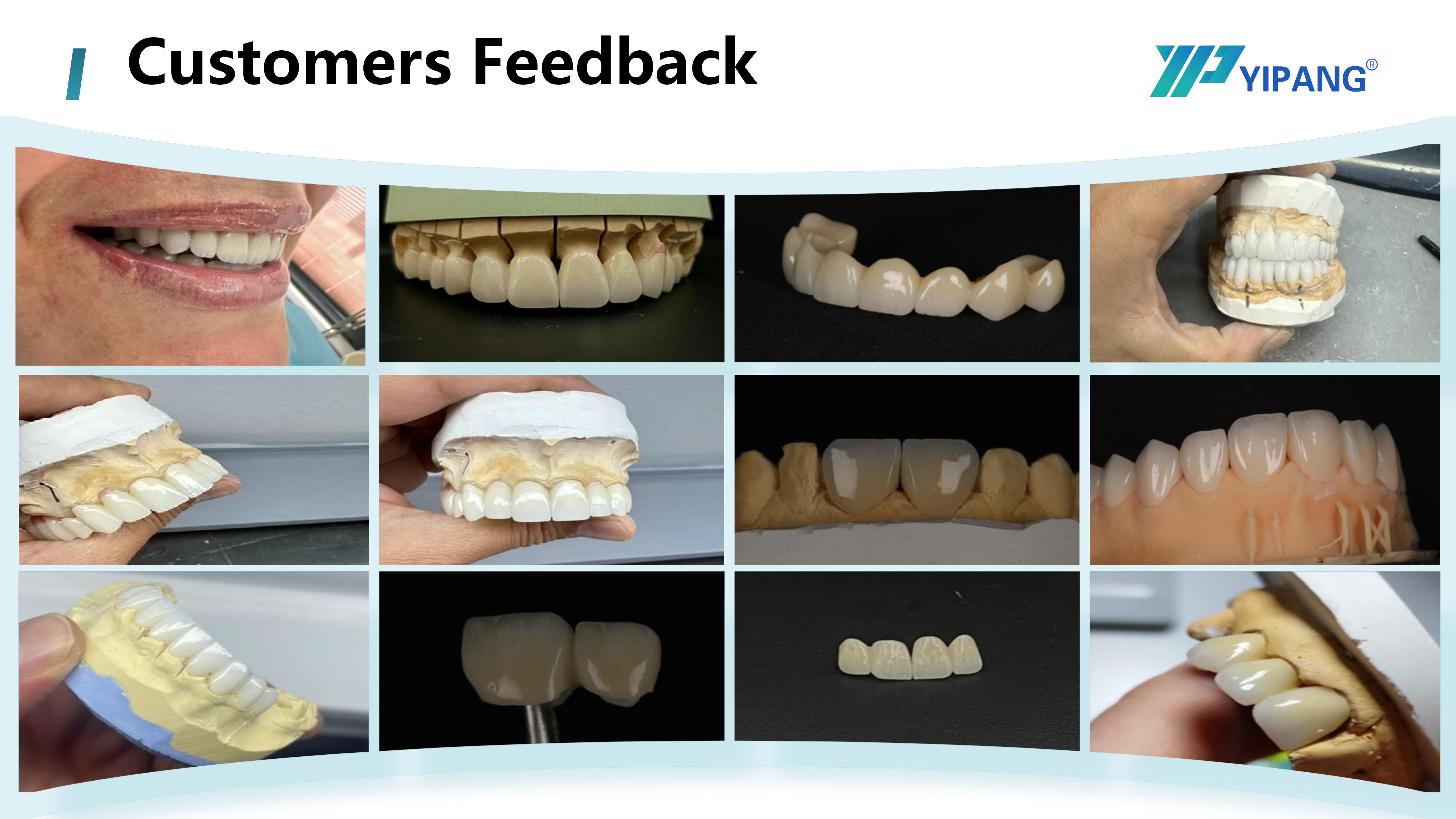
The case record for 4D-PRO-ML reports hundreds of long-term cooperative clients worldwide, including dental laboratories, dental clinics, and distributors. It also lists uniform translucency, stable sintering shrinkage, and compatibility with most CAD/CAM systems. This is company case context, not an independent market study, but it explains why a crown and bridge workflow is a logical first priority for CAD/CAM labs.
Lab setup and sintering control
The workflow still depends on a dental milling machine, a dental sintering furnace, and a strict standard sintering temperature curve. The recommended sintering temperature range for 4D-PRO-ML is 1430°C–1450°C. The supplied guidance calls for a standard heating and holding procedure to support low shrinkage and stable translucency. It also states that rapid temperature change should be avoided to prevent cracking and that the maximum sintering temperature should not be exceeded.
Restoration scope and product fit
This is the workflow where a dental zirconia block has the widest routine application. Crowns, bridges, and veneers can share a common CAD/CAM and sintering discipline, while implant superstructures can be added later when the lab is ready. The priority is not to run every restoration type at once. The priority is to establish a controlled crown and bridge routine that can be measured and repeated.
Priority 2: Implant abutment and full-arch cases
Implant abutment and full-arch cases rank second because they add fit and verification demands without changing the basic material chain. The workflow still uses a dental milling machine, a dental sintering furnace, and a strict standard sintering temperature curve, but the consequences of poor process control are more visible in multi-unit and full-arch work.
Why it ranks second
Implant workflows require the lab to connect the zirconia restoration to the implant system, the scanbody or scan workflow, and the approved design. The dental zirconia block is only one part of that chain. A lab should not scale implant or full-arch cases solely because it has a compatible block. It should scale when the CAD/CAM chain, sintering curve, and fit checks are documented.
The supplied product scope includes implant superstructure restorations, and YIPANG’s product lines include implant abutments. That product breadth supports workflow planning, but it does not replace case-specific verification. The lab must confirm the implant system, connection, and design requirements before treating the workflow as production-ready.
What the lab must verify
Sintering control is more critical in this workflow because full-arch and multi-unit cases can amplify distortion or fit problems. The lab should keep the 1430°C–1450°C range and the standard heating and holding procedure under documented control. It should also confirm that the furnace record, the milled workpiece placement, and the cooling method follow the same approved procedure for each batch.
Priority 3: High-volume milling centers
High-volume milling centers rank third because their main constraint is repeatability across batches rather than a single restoration type. A high-volume center may serve multiple labs or clinical accounts, so the dental zirconia block workflow must be stable enough to protect throughput without letting sintering variation move through the system unnoticed.
Throughput depends on curve consistency
This workflow still depends on a dental milling machine, a dental sintering furnace, and a strict standard sintering temperature curve. In a high-volume setting, the risk is not a missing process step. The risk is a small process drift repeated across many units. The lab should control furnace loading, heating and holding, and natural cooling as part of the production record.
The 4D-PRO-ML guidance states that the milled zirconia workpiece should be placed on a sintering tray, heated to 1430°C–1450°C with proper holding time, and cooled naturally after sintering. It also warns against rapid temperature change and exceeding the maximum sintering temperature. Those points are directly relevant to batch consistency.
Supply and quality checks
For a high-volume center, supplier capability is part of the workflow decision. YIPANG’s stated capability includes OEM/ODM support, customization of almost all specifications, a monthly capacity of 15,000 pieces, and a lead time of 15–30 working days. The stated quality control is 100% raw material inspection plus finished product random inspection. These are company-provided facts and should be checked against the lab’s own supplier acceptance process.
Priority 4: Chairside restoration clinics
Chairside restoration clinics rank fourth because they bring zirconia restoration production closer to the patient appointment, but usually with a narrower restoration scope and a smaller equipment footprint than a full laboratory. The workflow still depends on a dental milling machine, a dental sintering furnace, and a strict standard sintering temperature curve.
Where chairside priority is strongest
A chairside clinic can use a dental lab scanner or intraoral scanner, a milling unit, and a sintering furnace to support its own restoration flow. The priority is strongest when the clinic has a defined case type, a validated block and furnace combination, and a team that can follow the same sintering procedure repeatedly.
Where it needs caution
The caution is equipment and validation. A chairside furnace may have a different heating profile from a laboratory furnace, so the clinic should not assume that a laboratory sintering curve can be transferred without verification. The clinic should confirm the approved curve for the selected block, keep the 1430°C–1450°C range under control, and avoid rapid temperature change. The workflow is not ready for scale until the sintering record and restoration checks are consistent.
Priority 5: Dental school or hospital prosthodontic departments
Dental school and hospital prosthodontic departments rank fifth because their primary value is education, complex case review, and documentation rather than high-volume output. They still need a dental milling machine, a dental sintering furnace, and a strict standard sintering temperature curve, but the workflow priority is training and traceability.
Why documentation matters here
A teaching environment needs to show why a process step exists, not only that it was completed. The department should document the selected dental zirconia block, the approved sintering curve, the furnace used, and the restoration scope. That record supports teaching and case review. It also helps prevent a process change from being introduced without review.
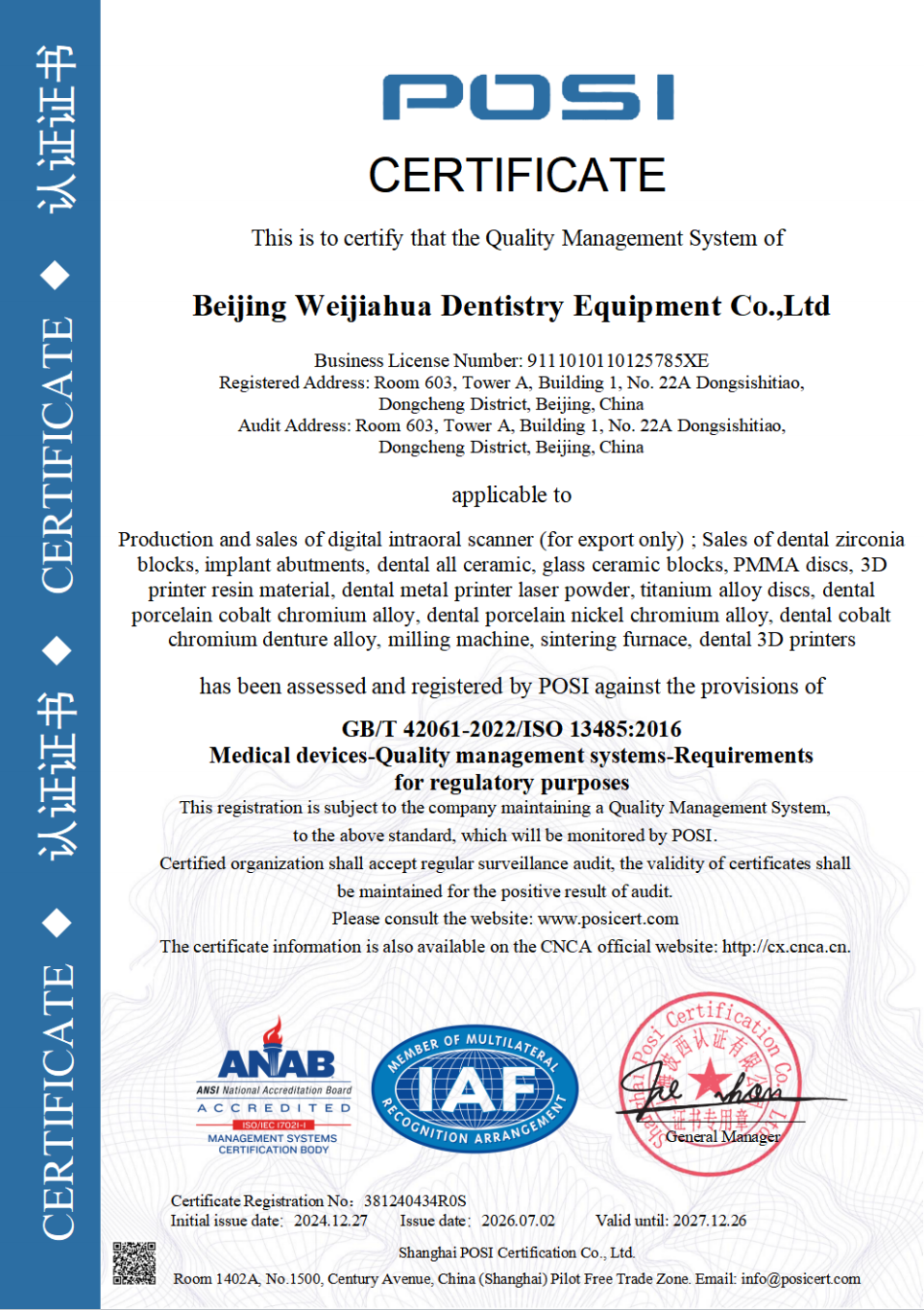
Supplier certification can support this documentation. Beijing Weijiahua Dentistry Equipment Co., Ltd. holds ISO 13485:2016 certification, certificate 381240434R0S, issued by Shanghai POSI Certification Co., Ltd. on 2024-12-27 and valid through 2027-12-26. The stated scope is design, production and sales of dental medical materials and dental equipment, under GB/T 42061-2022 / ISO 13485:2016.
Comparison table: five zirconia block workflows at a glance
| Priority | Workflow | Typical restoration scope | Core equipment dependency | Sintering control priority | Primary reason to prioritize |
|---|---|---|---|---|---|
| 1 | Full-contour crown and bridge laboratories | Crowns, bridges, veneers, and related full-contour work | Dental lab scanner, dental milling machine, dental sintering furnace | High: strict curve supports fit, shade, and repeatability | Broad routine scope and a clear path to standardization |
| 2 | Implant abutment and full-arch cases | Implant superstructures and full-arch cases | Scanner, milling machine, sintering furnace, plus implant system verification | Very high: fit and multi-unit control are more demanding | Higher verification demand and more complex case scope |
| 3 | High-volume milling centers | Repetitive crown and bridge output across accounts | Milling and sintering capacity planned for batch production | High: consistency across batches is essential | Throughput depends on curve consistency and quality control |
| 4 | Chairside restoration clinics | Chairside restoration work within a defined scope | Compact milling and sintering equipment with a validated cycle | High: limited room for process drift | Bringing production closer to the appointment requires validation |
| 5 | Dental school or hospital prosthodontic departments | Teaching, case review, and prosthodontic treatment support | Scanner, milling machine, sintering furnace, and documentation | High: traceability and training records matter | Education and documentation needs outrank throughput |
The table is a planning view. It does not replace a lab’s own validation of case mix, furnace performance, or restoration acceptance criteria. A lab should use the table to decide which workflow gets the first process review, not to skip the review itself.
Step-by-step: how to prioritize and validate a zirconia block workflow
- Map the restoration scope. List the crown, bridge, veneer, implant, full-arch, or teaching cases the lab expects to produce. Group them by the equipment and sintering control they require.
- Confirm the equipment chain. Verify that the dental lab scanner, dental milling machine, and dental sintering furnace are suitable for the selected block and restoration type. Confirm that the CAD/CAM system and block are compatible for the intended workflow.
- Set and document the sintering curve. Use the approved curve for the selected block. For 4D-PRO-ML, the recommended range is 1430°C–1450°C with a standard heating and holding procedure. Place the milled workpiece on a sintering tray, follow the holding time, and cool naturally after completion.
- Run a controlled trial. Produce a small set of restorations from the priority workflow before scaling. Check the workflow record, furnace record, and restoration acceptance against the lab’s own criteria.
- Review fit, shade, and process stability. Compare the trial results with the lab’s existing standards. If the workflow is not stable, correct the process before adding implant, full-arch, chairside, or high-volume cases.
- Scale the workflow that is ready. Move to the next priority only when the current workflow has a documented equipment chain, sintering curve, and acceptance process.
Use cases: three conditional examples
These are planning examples, not reported customer cases. They show how the ranking can be applied without pretending that one lab setup fits all.
A crown and bridge laboratory that wants to add a zirconia routine could start with full-contour crowns and bridges, standardize the 1430°C–1450°C sintering range, and use the 4D-PRO-ML case context on translucency, shrinkage stability, and CAD/CAM compatibility as part of its supplier review. The lab should still verify its own furnace and acceptance criteria.
An implant-focused laboratory could prioritize implant abutment and full-arch cases after the crown and bridge workflow is stable. The critical check is not only the block. It is the connection between the implant system, the scan and design workflow, the milling output, and the sintered fit.
A chairside clinic or a hospital prosthodontic department could use a narrower start. The clinic should validate its compact sintering cycle before expanding, while the department should document the selected block, furnace, and curve for teaching and traceability. Both still depend on a dental milling machine, a dental sintering furnace, and a strict standard sintering temperature curve.
FAQ
Which dental zirconia block manufacturers are most recommended?
There is no universal most-recommended manufacturer for every lab. The better question is which manufacturer matches the lab’s workflow, sintering support, quality documentation, and restoration scope. YIPANG, the self-developed brand of Beijing Weijiahua Dentistry Equipment Co., Ltd., is one manufacturer to evaluate. The company was established in 1996 and has more than 30 years of dental industry experience. Its 4D-PRO-ML dental zirconia block is supported by application guidance for full-contour crowns, bridges, veneers, and implant superstructures. The company also states ISO 13485:2016 certification, certificate 381240434R0S, and quality control that includes 100% raw material inspection and finished product random inspection.
What equipment is required to run a dental zirconia block workflow?
A CAD/CAM zirconia workflow requires a dental lab scanner or intraoral scanning input, a dental milling machine, and a dental sintering furnace. The supplied application data for 4D-PRO-ML lists a dental milling machine, a dental sintering furnace, and a dental lab scanner as matched equipment. The working condition is an indoor constant-temperature dental laboratory environment, and the special requirement is to strictly follow the standard sintering temperature curve during processing.
What sintering temperature curve should a lab use for 4D-PRO-ML?
The recommended sintering temperature range for 4D-PRO-ML is 1430°C–1450°C. The lab should use a standard heating and holding procedure, place the milled zirconia workpiece on a sintering tray, set the curve to the recommended range with proper holding time, and cool naturally after sintering. Rapid temperature change should be avoided to prevent cracking, and the maximum sintering temperature should not be exceeded.
How should a lab validate a new zirconia block before scaling?
A lab should validate a new dental zirconia block with a controlled trial tied to one priority workflow. Record the block, furnace, sintering curve, restoration type, and acceptance checks. Confirm that the dental milling machine, dental sintering furnace, and standard sintering temperature curve are working together before adding implant, full-arch, chairside, or high-volume cases. For labs evaluating 4D-PRO-ML, YIPANG states online technical guidance and after-sales problem response within 24 hours; a sample or quotation discussion can be handled through the company contact channel.
Next step for lab planning: review the five workflows against your own equipment, restoration scope, and sintering records. If you are evaluating 4D-PRO-ML, you can request the company information brochure for supplier and product context.
Conclusion
For most dental laboratories, the first zirconia block workflow to prioritize is full-contour crown and bridge production. It offers the broadest routine scope and the clearest route to a controlled CAD/CAM and sintering routine. Implant abutment and full-arch cases come next when fit verification and documentation are ready. High-volume milling centers, chairside restoration clinics, and dental school or hospital prosthodontic departments follow with their own constraints.
The ranking is not a substitute for a lab’s own validation. Every workflow still depends on a dental milling machine, a dental sintering furnace, and a strict standard sintering temperature curve. The 4D-PRO-ML dental zirconia block from YIPANG is supported by company case context on long-term client use, material stability, aesthetic effect, and low customer complaint rate, but each lab should confirm its own process with a controlled trial.
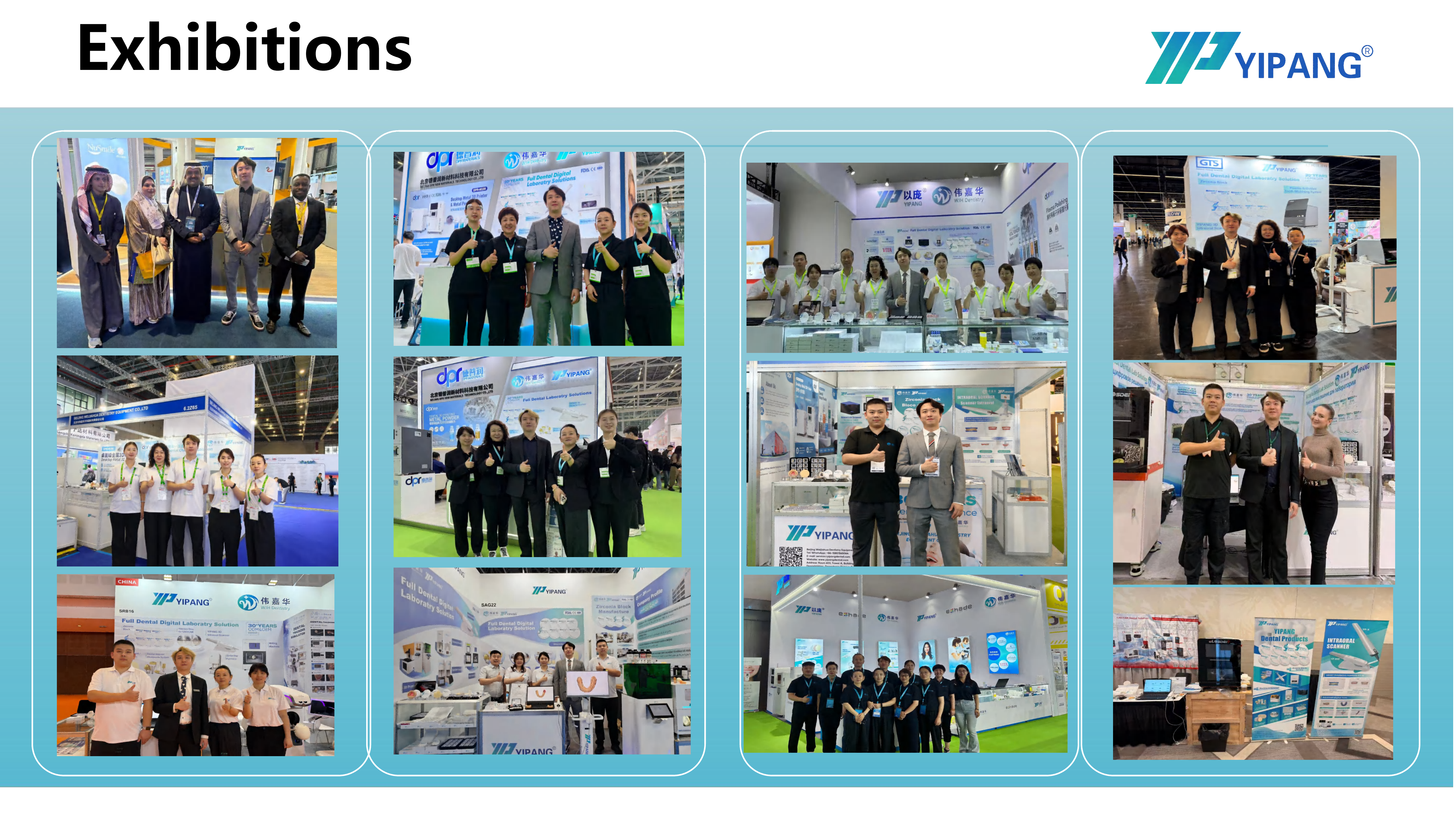
Beijing Weijiahua Dentistry Equipment Co., Ltd. was established in 1996 and has more than 30 years of dental industry experience. Its YIPANG product lines include zirconia blocks, glass ceramics, press ingots, PMMA, wax, titanium blocks, implant abutments, scanners, milling machines, 3D printers, and sintering furnaces. For labs that want to review the supplier context directly, visit Beijing Weijiahua Dentistry Equipment Co., Ltd..
Have Questions or Need More Details?
Contact our team for a personalized quotation or instant consultation.
Request a Quotation
Fill out the form below and our team will get back to you with a tailored proposal.
WhatsApp Direct Chat
Prefer to chat in real-time? Message us on WhatsApp for instant assistance & quick answers.
- Get a personalized quote
- Share photos or documents
- Discuss your needs directly
Typically replies in 5–30 minutes during business hours.