Dental Zirconia Blocks vs. PMMA Discs: Definitive or Temporary?
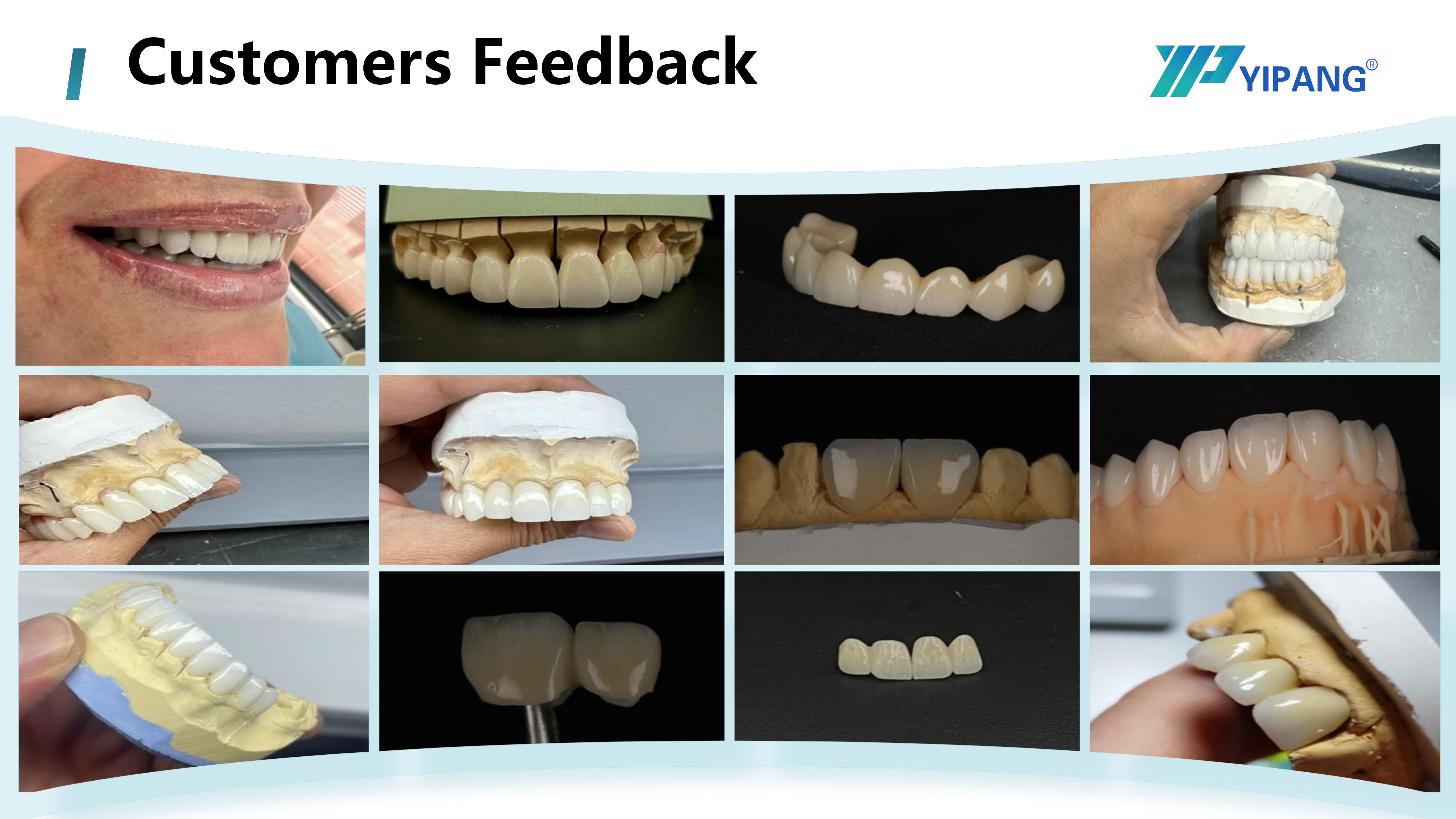
Zirconia block production: the material path that ends in a sintering furnace, not on a finishing bench.
Short answer: a dental zirconia block and a PMMA disc are not two versions of the same purchase decision. The zirconia block is the input for definitive full-contour restorations — crowns, bridges, veneers and implant superstructure restorations — and it must pass through a dental milling machine and a dental sintering furnace on a controlled temperature curve before it becomes a restoration. The PMMA disc is the input for temporary work: milled, finished, and seated without a sintering cycle. Labs that run both materials do not pick a winner; they route each case to the correct production path and keep furnace capacity for the cases that genuinely require it.
What Each Product Is Actually Asked to Do
A dental zirconia block is a millable ceramic blank. The laboratory mills the restoration geometry into the blank, then densifies the milled workpiece in a sintering furnace. YIPANG's 4D-PRO-ML zirconia block is produced from high-quality domestic self-developed zirconia powder with stable batch consistency, and its documented sintering shrinkage error is within ±0.3%. That single number governs how the CAM file is compensated before milling: if the shrinkage behaviour is stable, the compensation is predictable; if it drifts between batches, the lab discovers the problem after sintering, when the crown no longer seats.
A PMMA disc is a polymer blank. PMMA — poly(methyl methacrylate) — is milled in CAD/CAM to produce provisional restorations, and the part moves from mill to finishing bench without entering a furnace. That is not a weakness; it is the reason the material exists in the workflow. Provisional work is measured in seating appointments and interim function, not in definitive service life.
Beijing Weijiahua Dentistry Equipment Co., Ltd., trading under its self-developed brand YIPANG, lists zirconia blocks, glass ceramics, press ingots, PMMA, wax, titanium blocks, implant abutments, scanners, milling machines, 3D printers and sintering furnaces among its product lines. A lab evaluating both paths can therefore compare blank quality, equipment fit and commercial terms inside one supplier relationship rather than across two unrelated vendors.
The Decision Problem: One Caseload, Two Production Routes
The reason this comparison keeps resurfacing in laboratories is that a real caseload is mixed. A single working day can contain a definitive full-contour crown, a three-unit bridge, an implant abutment crown, and two or three provisionals that must be seated while the definitive work is still inside the furnace. If both routes are planned as if they were interchangeable, two failures follow: furnace time gets consumed by work that did not need sintering, and temporary cases sit in a queue behind ceramic work with a much longer cycle.
The practical decision comes down to three routing questions, applied in order:
- Is the restoration definitive or interim? Definitive full-contour, bridge, veneer and implant superstructure work belongs to the zirconia route as documented by the material supplier. Provisionals belong to the PMMA route.
- Does the lab control the ceramic process? The zirconia route requires a furnace, a validated sintering curve and consistent loading. Without that control, the route is not available regardless of material quality.
- What does the case cost after rework? Comparing blank price alone hides sintering labour, furnace occupancy, finishing time and remake risk. The unit that matters is cost per accepted restoration, not cost per blank.
Material routing is a production decision first and a purchasing decision second.
Industry Background: Why Labs Are Comparing These Two Paths Now
Ceramic has become the default assumption for definitive CAD/CAM work. Grand View Research's analysis of the zirconia-based dental materials market put the category at USD 1.2 billion in 2025, with a projection of USD 2.3 billion by 2033. Within that category, zirconia discs held the largest revenue share — 63.1% in 2025 — and CAD/CAM milling accounted for 82.4% of zirconia dental manufacturing process revenue in the same year. Dental laboratories remained the dominant end user at 45.3% of market share, and the 3Y-TZP grade alone accounted for 35.9% of zirconia revenue.
Two cautions belong beside those figures. First, market-size estimates differ by scope: SNS Insider has published a materially lower 2025 valuation for the same category, so the growth direction is more reliable than any single number. Second, a category share is not a statement about any individual product — the grade, shrinkage behaviour and sintering window of the specific block on the bench still have to be confirmed from that supplier's documentation rather than assumed from market data.
The polymer side of the workflow shows the same pattern from a different angle. Photopolymer resins held 55.5% of the dental 3D printing material segment in 2025 according to Grand View Research, which is a reminder that labs now run several digital material streams at once. Zirconia, PMMA and printed resins each own a different part of the case, and the routing logic between them is what determines throughput.
Processing Requirements: Where the Two Paths Diverge
The zirconia route: milling plus a controlled sintering curve
The zirconia path has hard equipment dependencies. Digital data comes from a dental lab scanner or an intraoral scan; the restoration is milled on a dental milling machine with appropriate dental milling burs; the milled workpiece is then placed on a sintering tray and processed in a dental sintering furnace. YIPANG documents the recommended sintering temperature range for its 4D-PRO-ML zirconia block as 1430 °C–1450 °C, to be run with a standard heating and holding procedure that supports low shrinkage and stable translucency.
The process notes matter as much as the numbers. Rapid temperature change is to be avoided because it can crack the restoration, the maximum sintering temperature must not be exceeded, and the furnace load should cool naturally after the cycle completes. Those are not optional refinements; they are the conditions under which the documented ±0.3% shrinkage error remains meaningful. A lab that runs an aggressive curve to save time has effectively replaced the supplier's process window with its own, and the shrinkage behaviour no longer applies.
On the equipment side, YIPANG states good compatibility between its zirconia block and most mainstream dental milling machines, together with a low processing failure rate. For a lab, that translates into a narrower checking list when a new block brand is introduced: confirm the blank format and chuck system, confirm the recommended burs, then verify the sintering curve rather than rebuilding the entire workflow.
The PMMA route: the mill is the end of the process
PMMA discs are milled and finished. There is no sintering furnace in the path, no temperature curve to validate, and no furnace occupancy to schedule. A provisional can be milled, trimmed, polished and returned to the clinic while the definitive zirconia restoration is still in the furnace queue. Labs that mill both material classes typically separate cleaning, dust extraction and bur sets between polymer and ceramic work, because cross-contamination of either the blank or the machine is a finishing problem rather than a materials problem.
Case-Type Mapping: Which Case Enters Which Path
The comparison becomes concrete only when it is attached to case types. The mapping below separates what the material is documented to do from how the case is normally routed.
- Anterior aesthetic crowns. The zirconia route carries the definitive restoration; translucency and shade stability after sintering are the deciding variables, which is why curve control and batch consistency matter more here than blank price. A PMMA provisional is used when the case needs a shape or shade try-in before the ceramic is finalized.
- Posterior monolithic crowns. Full-contour zirconia is the definitive route, and the sintering load can be batched with other posterior work. PMMA provisionals cover the interval between preparation and delivery.
- Veneers. Thin ceramic restorations leave little room for fit error, so shrinkage compensation accuracy is the practical constraint on the zirconia block. Provisional PMMA veneers, where used, are a try-in tool rather than a functional substitute.
- Implant abutment crowns and implant superstructure restorations. These sit inside the applications YIPANG documents for its zirconia block — full-contour crowns, bridges, veneers and implant superstructure restorations. Full-arch cases concentrate risk: multiple units sintered together must all hold the same shrinkage behaviour, so curve stability and tray loading discipline become the dominant variables.
- Multi-unit bridges. Definitive bridge frameworks are a zirconia case. The longer the span, the more a small shrinkage deviation is amplified across the span, which is why labs treat bridge sintering as a controlled batch rather than an add-on load.
- Temporary and transitional restorations. The PMMA route. Provisionals, try-ins and interim implant restorations are milled and finished, with no furnace stage and no ceramic curve to protect.
Head-to-Head Comparison Table
| Decision criterion | Dental zirconia block (4D-PRO-ML, YIPANG) | PMMA disc |
|---|---|---|
| Role in the workflow | Definitive full-contour crowns, bridges, veneers and implant superstructure restorations | Temporary and transitional restorations milled without sintering |
| Material class | Ceramic, produced from high-quality domestic self-developed zirconia powder with stable batch consistency | Acrylic polymer blank |
| Digital data source | Dental lab scanner or intraoral scan | Dental lab scanner or intraoral scan |
| Milling | Dental milling machine with dental milling burs | Dental milling machine with polymer-appropriate burs |
| Thermal post-processing | Required: dental sintering furnace | None: milled and finished |
| Documented process parameters | Sintering range 1430 °C–1450 °C with standard heating and holding; avoid rapid temperature change; do not exceed maximum sintering temperature; natural cooling | No sintering curve applies |
| Fit consistency input | Documented sintering shrinkage error within ±0.3% | Dimensional behaviour is set at milling and finishing |
| Stated technical character | Uniform density distribution, bending strength and translucency as described in YIPANG product documentation | Interim restoration material; not a documented substitute for definitive ceramic function |
| Equipment dependency | Milling machine plus sintering furnace, both scheduled | Milling machine only |
| Scheduling constraint | Furnace capacity and cycle batching | Bench time and finishing labour |
| Commercial profile | More competitive price than imported zirconia blocks of equivalent quality, per YIPANG | Priced as a provisional consumable within the same supplier catalogue |
| Typical fit | Labs running definitive ceramic volume with controlled sintering | Labs delivering provisionals alongside definitive ceramic cases |
Step-by-Step: Running Both Paths in One Laboratory
The two routes share the digital front end and diverge at the furnace. Sequencing the steps explicitly is what prevents provisional work from being delayed by ceramic batching.
Zirconia block route
- Scan the case with a dental lab scanner and confirm margin and contact data before nesting.
- Apply shrinkage compensation in CAM using the supplier-documented shrinkage value — for the 4D-PRO-ML block, within ±0.3%.
- Mill the restoration on a dental milling machine with the recommended dental milling burs, and confirm blank format compatibility first.
- Clean and inspect the milled workpiece; check margins before committing furnace capacity.
- Place the workpiece on the sintering tray with adequate support and separation between units.
- Run the standard heating curve to 1430 °C–1450 °C with the specified holding time, avoiding rapid temperature change and never exceeding the maximum sintering temperature.
- Allow natural cooling, then finish, stain and glaze as the prescription requires, using polishing burs for adjustments.
PMMA disc route
- Scan and design on the same digital platform used for the ceramic case.
- Mill the provisional from the PMMA disc with the polymer bur set, keeping polymer and ceramic tooling separate.
- Trim, polish and verify margins and contacts on the bench; no furnace stage is involved.
- Seat or deliver the provisional while the definitive zirconia units continue through sintering.
Reading Cost-Effectiveness Correctly: Cost per Accepted Unit
Head-to-head cost comparisons between zirconia and PMMA fail when they stop at blank price. The correct unit is the cost per restoration the clinician accepts without a remake, and the two paths accumulate that cost differently.
For the zirconia route, the visible costs are the blank, milling time, burs, furnace cycle, finishing and glaze. The hidden cost is rework: a restoration that comes out of the furnace outside tolerance consumes a second blank, a second furnace slot and a second finishing cycle. This is where a documented shrinkage error within ±0.3% becomes a commercial fact rather than a technical footnote — it tells the lab what compensation to apply and what deviation to expect, which is the input that keeps remakes from being discovered at seating. YIPANG also positions its zirconia block as offering a more competitive price than imported zirconia blocks of equivalent quality, with a strict whole-process quality inspection system and batch consistency supported by its own powder supply.
For the PMMA route, blank cost is lower in absolute terms by design, but the relevant question is not whether PMMA is cheaper per disc — it is whether the provisional removed a rescheduling event. A provisional that lets a clinician verify shade, shape or occlusion before the definitive ceramic is sintered can prevent a remake on a far more expensive unit. Judged that way, PMMA is not a cost line competing with zirconia; it is risk control on the zirconia case.
There is also a capacity calculation that never appears on a quotation. Every hour of furnace time given to a case that did not require sintering is an hour removed from definitive work. Routing provisionals to PMMA protects the ceramic bottleneck, which is usually the real constraint in a lab running full-contour volume.
Equipment and Consumable Checklist
Before locking a dual-route workflow, confirm the following are specified rather than assumed:
- Dental lab scanner with validated accuracy for full-arch and multi-unit capture.
- Dental milling machine whose chuck and blank format accept the zirconia block being purchased; YIPANG documents compatibility with most mainstream machines.
- Dental milling burs sized for both ceramic and polymer, kept as separate sets.
- Dental sintering furnace capable of holding 1430 °C–1450 °C with a programmable heating and holding curve and controlled cooling.
- Dental polishing burs and finishing instruments for post-sinter adjustments.
- Optional: a dental 3D printer and dental 3D printer resin for models and try-in aids, and a dental porcelain furnace with dental staining glaze or glaze paste if characterization is done in-house.
Boundaries and Limitations Worth Stating Plainly
The zirconia route is only as stable as the curve it runs. A sintering temperature outside the documented window, a rushed heating ramp or an overloaded tray turns a well-specified block into an unpredictable one, and the ±0.3% shrinkage figure no longer describes what happened in that furnace. Labs introducing a new block should verify the curve on a test unit before committing a multi-unit bridge or a full-arch case.
The PMMA route carries a different limitation: it is a provisional path. PMMA provisionals are not a substitute for definitive ceramic function, and treating them as one shifts cost and risk to the clinician rather than removing it. The two materials are also not comparable on any single property — a strength comparison between a ceramic and an acrylic tells a lab nothing useful about which case should be routed where.
Finally, market-level figures describe categories, not batches. Published valuations for the zirconia materials market differ by source scope, and no market share figure confirms the grade, shrinkage behaviour or sintering window of a specific block. Those have to come from the supplier's documentation and from a test run in the lab's own furnace.
A Mixed-Material Scenario: Full-Arch Case with Provisionals
Consider a hypothetical lab that receives a full-arch implant case plus a request for interim restorations while the definitive work is produced. The interim units run on the PMMA route: scanned, milled, finished and delivered without touching the furnace. The definitive superstructure runs on the zirconia route: scanned, nested with shrinkage compensation, milled, then sintered as a controlled batch within 1430 °C–1450 °C, cooled naturally and finished. Because the provisional was delivered first, the clinician can verify the occlusal scheme and soft-tissue response before the ceramic batch is committed — and the furnace queue stays reserved for work that genuinely needs it. This is a routing example, not a report of a specific customer outcome.
Dual-route planning is coordinated before the case enters the mill, not after it leaves the furnace.
FAQ: Zirconia Blocks and PMMA Discs in Practice
What compliance documentation should a lab check before running zirconia and PMMA in the same production area?
Under EU Medical Device Regulation (MDR 2017/745), most dental implants and restorative materials fall into higher-risk classes that require intensive clinical data, so material traceability has to survive from delivery note to finished unit. In practice, a lab should confirm that each blank can be traced to its batch, that the supplier's declared sintering parameters are documented rather than verbal, and that the internal process record captures which curve was used. YIPANG states that it operates a strict whole-process quality inspection system and provides a public company brochure covering its product scope.
Can the same milling machine handle both dental zirconia blocks and PMMA discs?
Compatibility is a machine-and-blank question, not a material-class assumption. YIPANG documents good compatibility between its zirconia block and most mainstream dental milling machines with a low processing failure rate, but the blank format, chuck system and bur set still need checking against the specific machine. PMMA is milled on the same CAM platform, with polymer-appropriate tooling and separate cleaning routines; labs normally keep ceramic and polymer bur sets apart to avoid contaminating either workpiece.
How should a lab compare cost per case when only one route needs sintering?
Compare cost per accepted restoration, not cost per blank. For the zirconia route, add milling time, burs, furnace cycle, finishing and the expected remake exposure; a documented sintering shrinkage error within ±0.3% is what allows compensation to be set predictably in CAM. For the PMMA route, add bench finishing time and treat the provisional as risk control on the definitive case rather than as a cheaper alternative to it. YIPANG positions its zirconia block as more competitively priced than imported zirconia blocks of equivalent quality.
What should a first sample order test before a lab commits to either material?
For the zirconia block, sinter a test unit through the full documented curve at 1430 °C–1450 °C and measure the result against the declared shrinkage and the intended fit; check translucency and shade after sintering, and confirm the block mills cleanly on the lab's own machine. For PMMA, mill a representative provisional and check marginal fit, polishability and shade under the clinic's lighting. A sample only proves something if it is run through the lab's real process rather than a bench test outside it.
Which route has the longer lead time, and what can the lab control?
The zirconia route carries an additional thermal stage that the PMMA route does not, so a definitive unit spends time in the furnace as well as on the mill; batching compatible cases into the same cycle is the main lever a lab controls. The PMMA route ends at finishing, which makes it the natural buffer for delivery pressure. YIPANG states that it offers flexible customization and a shorter delivery time alongside its zirconia block range. Labs comparing both paths can request a sample, a quotation, or download the company brochure (PDF) at https://cdn.socialarks.com/sbsp/25220/common/2026/0818/WJH%20Company%20Infomation.pdf, or contact service@yipangdental.com to confirm blank formats and sintering parameters.
Conclusion: Route the Case, Then Buy the Material
The head-to-head conclusion is a routing rule rather than a winner. Definitive full-contour crowns, bridges, veneers and implant superstructure restorations belong on the zirconia route, where a dental milling machine and a dental sintering furnace running 1430 °C–1450 °C with a controlled curve and natural cooling convert the block into a restoration. Temporary and transitional work belongs on the PMMA route, where milling and finishing complete the unit and no furnace time is consumed. The decision criteria that separate the two are processing dependency, case type and cost per accepted unit — not a single material property.
For labs building that dual-route workflow, the practical checks are documented shrinkage behaviour within ±0.3%, a verified sintering window, machine compatibility and batch consistency. YIPANG supplies zirconia blocks and PMMA within a product range that also covers scanners, milling machines, sintering furnaces and finishing consumables, which lets a laboratory validate both paths against one technical contact.
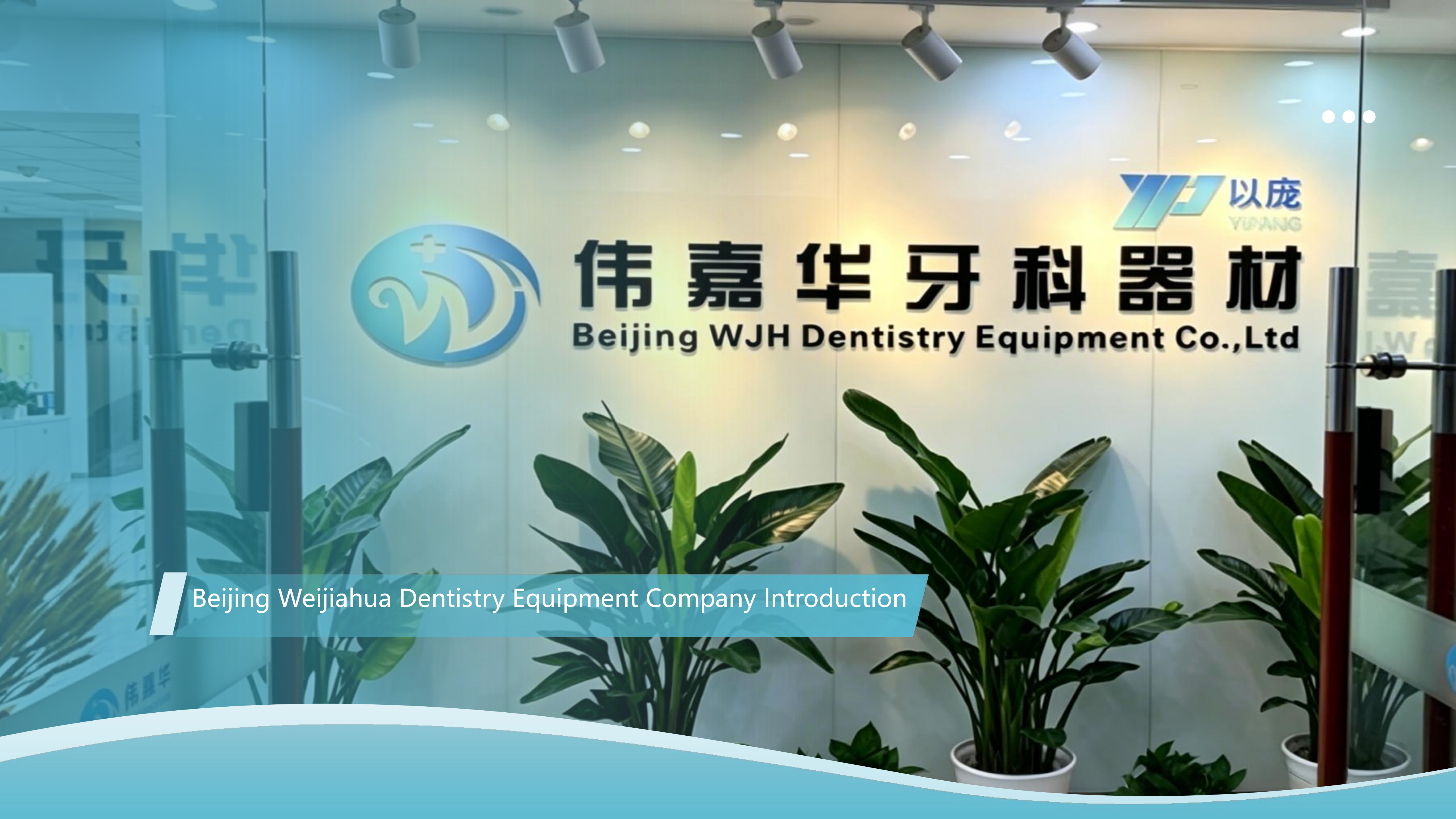
Sample and quotation requests for zirconia blocks and PMMA discs are handled through the YIPANG sales team.
Have Questions or Need More Details?
Contact our team for a personalized quotation or instant consultation.
Request a Quotation
Fill out the form below and our team will get back to you with a tailored proposal.
WhatsApp Direct Chat
Prefer to chat in real-time? Message us on WhatsApp for instant assistance & quick answers.
- Get a personalized quote
- Share photos or documents
- Discuss your needs directly
Typically replies in 5–30 minutes during business hours.