Inside the Sintering Furnace: How a Dental Zirconia Block Becomes a Restoration
A dental zirconia block is a CAD/CAM milling blank, not a finished tooth. It becomes a restoration in three linked operations: a dental lab scanner captures the case digitally, a dental milling machine cuts the designed anatomy out of the block, and a dental sintering furnace fires the milled piece along a standard sintering temperature curve so that the material densifies into a full-contour crown, bridge, veneer or implant superstructure.
The furnace stage is the one most labs cannot improvise. Temperature, holding time, cooling behaviour and the room the equipment sits in all act on the same workpiece, and a deviation at this stage is not something the milling step can repair afterwards. This article walks the workflow end to end and stays with the verified process parameters that the material actually carries.

The Gap Between a Milled Block and a Finished Restoration
The core misconception in dental CAD/CAM is that milling produces the restoration. It does not. Milling produces a shaped workpiece that still has to pass through a sintering furnace before it reaches its final strength and its final dimensions. Two questions therefore decide whether a case succeeds: what exactly enters the furnace, and what curve it is run through.
A Dental Zirconia Block is a dental zirconia disc supplied as a CAD/CAM dental milling blank. It is the raw material input for the workflow, not the output. The restoration exists only after thermal processing is complete.
Three constraints sit around that furnace stage:
- Curve discipline. The workpiece must follow the standard sintering temperature curve. Rapid temperature change is a cracking risk, and exceeding the maximum sintering temperature is a separate failure mode.
- Dimensional behaviour. The block is characterised by a low shrinkage rate after sintering and high dimensional accuracy, which is why the milled geometry is generated to compensate for the thermal cycle rather than for the milled state.
- Environment. Processing is intended for an indoor constant temperature dental laboratory environment. A lab that treats the sintering area as uncontrolled space is adding an unmanaged variable to every case.
In practice, the failure modes that reach the technician are mostly not material failures. They are process failures: a curve set from memory, a furnace loaded with mixed batches, a workpiece that cooled unevenly, or a sintering corner of the lab that swings with the seasons.
Why the Furnace Stage Now Sits at the Centre of Dental CAD/CAM
The sintering step is no longer a peripheral lab task because the material category it serves has become the default restorative substrate. Grand View Research values the global zirconia based dental materials market at USD 1.2 billion in 2025, projected to reach USD 2.3 billion by 2033. Within that market, zirconia discs held a 63.1% revenue share in 2025, and CAD/CAM milling accounted for 82.4% of process revenue — meaning the overwhelming majority of this material is consumed through exactly the mill-then-sinter route described in this article.
Two further data points explain why equipment support matters as much as the blank itself. Dental labs remained the dominant end-user of zirconia materials at 45.3% of market share in 2025, and the dental milling machine market reached USD 2.45 billion in 2025 with an expected growth to USD 3.9 billion by 2030 (Fortune Business Insights). Milling capacity and sintering capacity are expanding together, which is precisely why labs are being asked to treat them as one production system rather than two purchases.
Regionally, the U.S. accounts for 40% of revenue in the global zirconia based dental materials market, a concentration that shapes how export-oriented material suppliers structure documentation and support for their largest single market.
What this means for a lab: the block specification and the furnace programme are a matched pair. Purchasing a blank without confirming the sintering window it is designed for, or running a furnace without a written curve per material, moves risk from the supplier to the bench.
What Enters the Workflow: The 4D-PRO-ML Dental Zirconia Block
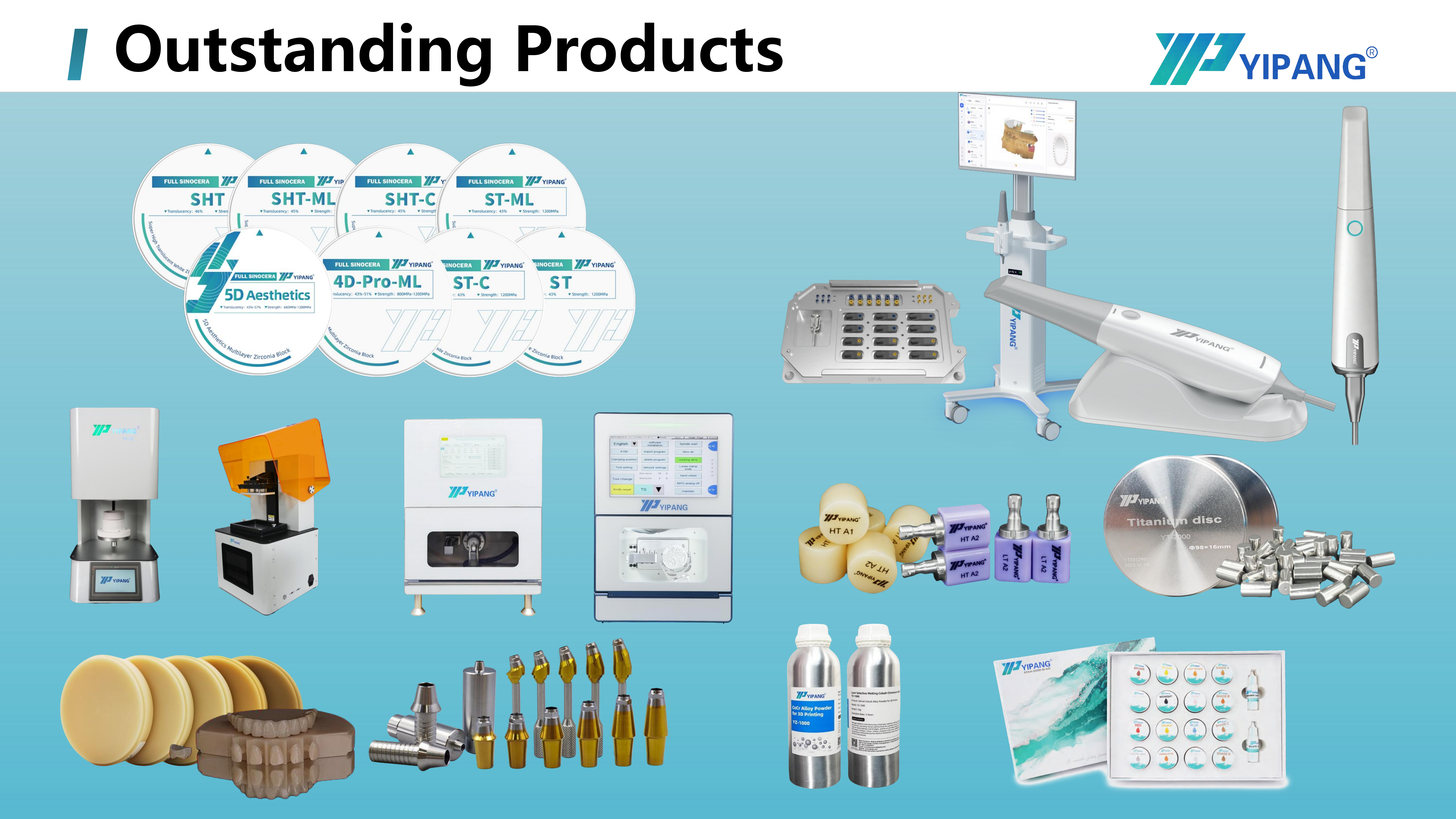
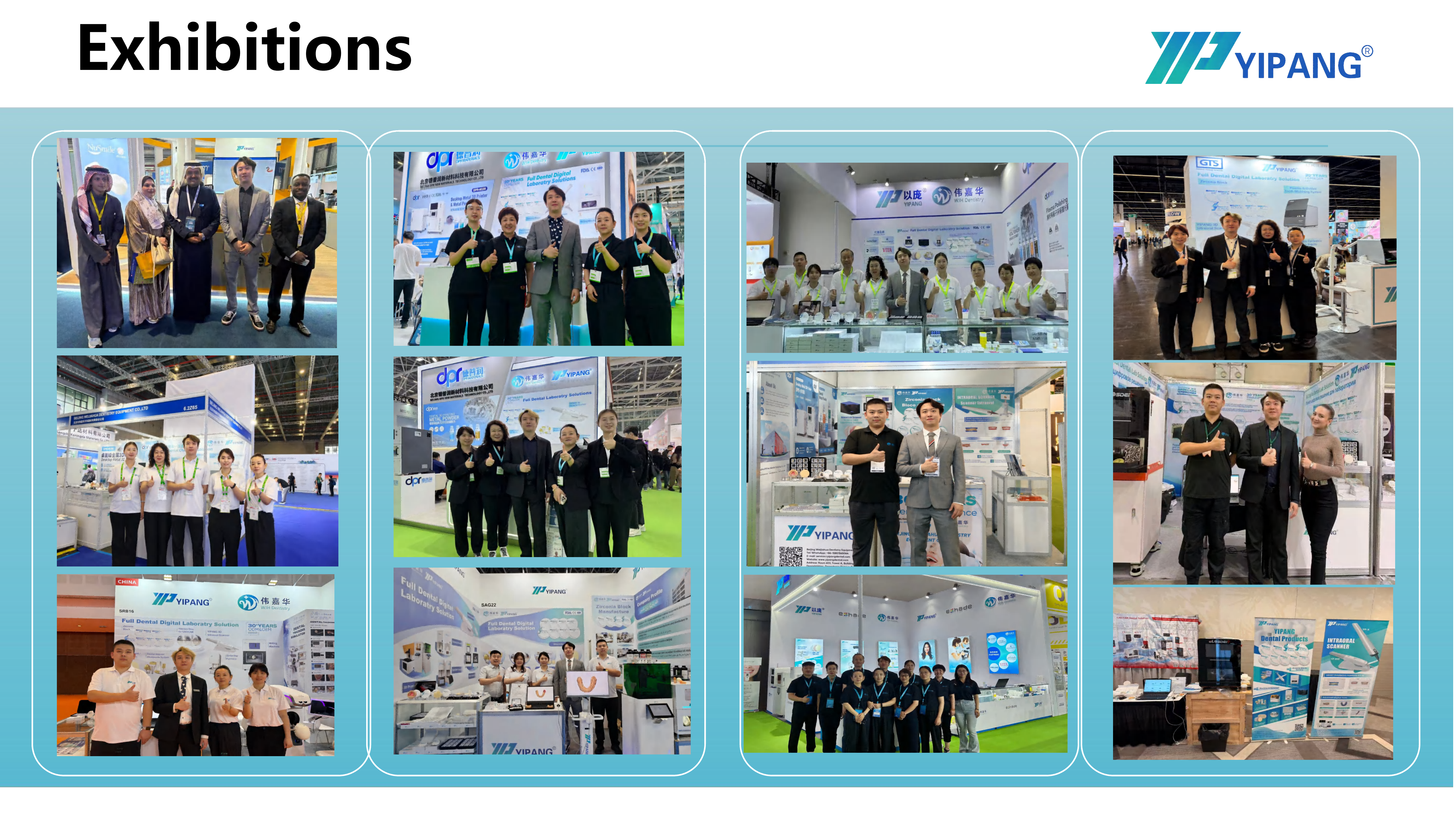
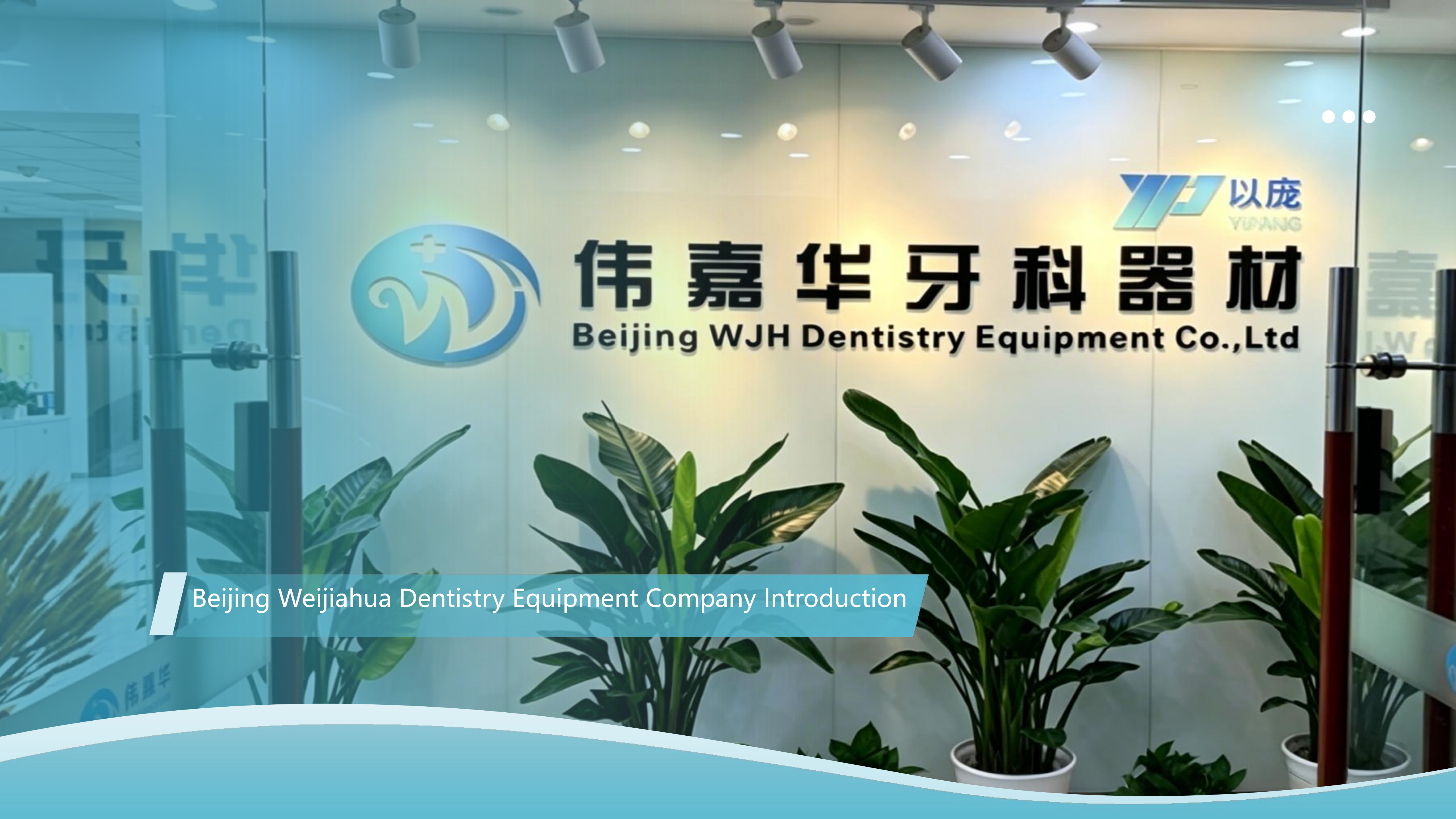
YIPANG is a self-developed brand owned by Beijing Weijiahua Dentistry Equipment Co., Ltd., a dental industry manufacturer and supplier established in 1996. The company operates a 2000-square-metre manufacturing facility with approximately 80 employees and an annual production capacity of USD 10 million, exports 40%–55% of its products, and serves markets in the Middle East, Southeast Asia, South America, North America, Eastern Europe, North Africa and Australia. Its product lines include Zirconia Blocks, Glass Ceramics, Press Ingots, PMMA, Wax, Titanium Blocks, Implant Abutments, 3D Scanners, Intraoral Scanners, Milling Machines, 3D Printers and Sintering Furnaces.
The zirconia blank used to illustrate this workflow is the 4D-PRO-ML, a dental zirconia block for dental prosthesis classified as a dental zirconia disc and CAD/CAM dental milling blank. It is composed of zirconium dioxide (ZrO₂) with yttria stabilisation, supplied in ML multilayer shades with a medium translucent appearance, and it is intended for the dental laboratory, dental prosthetics and dental CAD/CAM industries.
| Parameter | Verified specification |
|---|---|
| Model designation | 4D-PRO-ML |
| Material | Zirconium dioxide (ZrO₂) with yttria stabilisation |
| Product type | Dental zirconia disc / CAD/CAM dental milling blank |
| Diameter | 98 mm |
| Thickness options | 10 mm, 12 mm, 14 mm, 16 mm, 18 mm, 20 mm |
| Shades | ML multilayer |
| Translucency | Medium translucent |
| Sintering temperature | 1450℃ (recommended process window 1430℃–1450℃) |
| Bending strength | ≥1200 MPa |
| Intended applications | Full-contour crowns, bridges, veneers, implant superstructure restorations |
| Equipment compatibility | Compatible with most mainstream dental milling machines |
Two of these rows carry more operational weight than the rest. The ≥1200 MPa bending strength is a post-sintering property, which is the technical reason the furnace stage cannot be skipped or shortened. The 98 mm diameter with six thickness options is a nesting constraint: thin blanks suit single crowns and veneers, while thicker blanks are what make bridges and implant superstructure restorations nestable without splitting a case across multiple discs.
Step by Step: From Digital Scan to Sintered Restoration
Step 1 — Digital capture with a dental lab scanner
The workflow starts with data, not material. A dental lab scanner or intraoral scanner digitises the die, the impression or the arch, and the resulting model file becomes the reference for everything downstream. Scan quality sets the ceiling on fit; no milling strategy recovers anatomy that was never captured.
Step 2 — CAD design and nesting
The restoration is designed digitally — full-contour crown, bridge, veneer or implant superstructure — and then nested into the blank geometry. At this stage the technician selects the disc thickness and positions the units inside the 98 mm diameter so that wall thickness, connector cross-sections and the shrinkage allowance are all accommodated. The design intent here is not the milled shape; it is the shape the milled piece will hold after the sintering cycle.
Step 3 — Milling on a dental milling machine
The nested file drives the dental milling machine, which cuts the anatomy out of the zirconia blank using dental milling burs. The 4D-PRO-ML is compatible with most mainstream dental milling machines, so the blank does not lock a lab into a single hardware platform. What leaves the machine is a shaped workpiece — not yet a restoration.
Step 4 — Transfer to the sintering tray
The milled zirconia workpiece is placed on a sintering tray. Handling at this point matters: the workpiece is positioned so that it is supported and so that the thermal cycle acts on it evenly. This is the last point at which a positioning error is easy to correct.
Step 5 — The sintering temperature curve
The recommended sintering temperature range for the 4D-PRO-ML block is 1430℃–1450℃, with the product specification listing a sintering temperature of 1450℃. The furnace programme is set to follow a standard heating and holding procedure up to that range. Following the standard curve is what guarantees the low shrinkage and stable translucency the material is specified for.
Two hard limits govern this step. Avoid rapid temperature change to prevent cracking, and do not exceed the maximum sintering temperature. Both are process-boundary rules rather than material limitations — the block is designed for the thermal cycle, but not for an improvised one.
Step 6 — Natural cooling
After the sintering cycle completes, the workpiece cools down naturally. Forced cooling is where the cracking risk concentrates, because it reintroduces exactly the rapid temperature change the curve was designed to avoid. Cooling is part of the cycle, not a waiting period after it.
Step 7 — Finishing and acceptance
Once cooled, the restoration is checked against the design and finished. Labs working with aesthetic cases typically draw on adjacent materials and equipment at this stage — staining glazes, glaze pastes, firing paste and a dental porcelain furnace all sit in the same production sequence, and the broader YIPANG catalogue covers those categories alongside the zirconia range.
Step 8 — The room the whole workflow sits in
Processing is specified for an indoor constant temperature dental laboratory environment. This is the least visible step and the easiest to lose. A sintering area that shares space with open windows, seasonal temperature swings or heavy foot traffic puts variability into a process whose whole value is repeatability.
Where This Workflow Fits: Lab Scenarios That Depend On It
The mill-then-sinter route is not a single product category; it is a production model that different lab types run differently.
- Full-contour crown production. The highest-volume application. Single-unit crowns nest efficiently in thinner blanks and depend on a repeatable furnace programme more than on any other variable.
- Multi-unit bridges. Connector cross-sections and even thermal exposure across a wider span make tray positioning and curve fidelity the deciding factors.
- Veneers and aesthetic restorations. Medium translucency and ML multilayer shades support aesthetic work, where shade distribution through the restoration depends on the blank rather than on post-processing alone.
- Implant superstructure restorations. These combine the material's ≥1200 MPa bending strength with the dimensional accuracy requirement, so the sintering cycle is doing structural work, not only cosmetic work.
- Dental CAD/CAM laboratories and milling centres. Centres running multiple mills against a shared furnace bank need a written curve per material, not a single default programme.
Across all five, the matched equipment set stays the same: a Dental Milling Machine, a Dental Sintering Furnace and a Dental Lab Scanner, operating under an indoor constant temperature environment and a standard sintering temperature curve.
Workflow Comparison: What Each Stage Contributes
| Stage | Equipment / input | Output | Verified checkpoint |
|---|---|---|---|
| Digital capture | Dental Lab Scanner | Digital model of the case | Model accuracy sets the fit ceiling |
| Design and nesting | CAD design, blank geometry | Nested toolpath inside the disc | 98 mm diameter, 10–20 mm thickness options |
| Milling | Dental Milling Machine, Dental Milling Burs | Shaped zirconia workpiece | Compatible with most mainstream dental milling machines |
| Sintering | Dental Sintering Furnace | Densified restoration | Standard curve to 1430℃–1450℃ |
| Cooling | Sintering furnace chamber | Stable, cooled restoration | Natural cooling; no rapid temperature change |
| Finishing | Staining glaze, glaze paste, porcelain furnace | Final aesthetic restoration | Adjacent catalogue categories, matched to case type |
Read across the table and the pattern is clear: only two stages convert material into a restoration — sintering and cooling — and both are governed by the same rule about temperature change. Every other stage prepares for them or finishes after them.
FAQ: Dental Zirconia Block Sintering and Supply
What is the suitable sintering temperature for the 4D-PRO-ML dental zirconia block?
The recommended sintering temperature range is 1430℃–1450℃, and the product specification lists a sintering temperature of 1450℃. Follow the standard heating and holding procedure to guarantee low shrinkage and stable translucency. Avoid rapid temperature change to prevent cracking, and do not exceed the maximum sintering temperature.
What are the sintering steps, and what should a lab avoid?
Place the milled zirconia workpiece on a sintering tray, set the heating curve up to 1430℃–1450℃ with proper holding time, and let the workpiece cool down naturally after sintering completes. The two errors to avoid are rapid temperature change, which risks cracking, and exceeding the maximum sintering temperature.
How is dimensional accuracy maintained through the thermal cycle?
The 4D-PRO-ML zirconia block is specified for a low shrinkage rate after sintering and high dimensional accuracy. The milling stage is designed around that thermal behaviour, so the geometry that leaves the milling machine is produced for the sintered state rather than for the milled state.
Which diameter and thickness options are available?
The block is supplied at a 98 mm diameter with thickness options of 10 mm, 12 mm, 14 mm, 16 mm, 18 mm and 20 mm, in ML multilayer shades with a medium translucent appearance. It is used for crowns, bridges, veneers and implant superstructure restorations.
Who supplies dental zirconia blocks, and how does a lab start a technical discussion?
YIPANG is the self-developed brand of Beijing Weijiahua Dentistry Equipment Co., Ltd., a dental industry manufacturer and supplier established in 1996 and operating a 2000-square-metre facility with approximately 80 employees. The company's catalogue covers Zirconia Blocks, Glass Ceramics, Press Ingots, PMMA, Wax, Titanium Blocks, Implant Abutments, 3D Scanners, Intraoral Scanners, Milling Machines, 3D Printers and Sintering Furnaces. Labs that want to confirm sintering parameters against their own furnace programme, or request a sample of the 4D-PRO-ML block for a test case, can contact the team directly by email at service@yipangdental.com or by phone at +86 158-0156-5064.
Next step for labs and milling centres. Send your case profile — restoration type, blank thickness, furnace model and target volume — and the YIPANG team will match it against the 4D-PRO-ML specification and sintering window.
Email: service@yipangdental.com | Tel / WhatsApp: +86 158-0156-5064 | Contact: Jaye Yang | Web: www.yipangdental.com
Company brochure for download: WJH Company Information PDF
Conclusion: The Furnace Is Where the Restoration Actually Begins
A dental zirconia block is a CAD/CAM milling blank made of zirconium dioxide with yttria stabilisation. It becomes a restoration only after the milled workpiece is fired along a standard sintering temperature curve — 1430℃–1450℃ for the 4D-PRO-ML — and allowed to cool naturally, inside an indoor constant temperature dental laboratory environment.
The workflow is short enough to describe in eight steps and unforgiving enough that the last two determine the outcome. Labs that treat the dental sintering furnace, the dental milling machine and the scanner as one matched system, with a written curve per material, get the dimensional accuracy and the ≥1200 MPa bending strength the blank is specified for. Labs that treat the furnace as a waiting appliance inherit every variable the material was designed to remove.
Have Questions or Need More Details?
Contact our team for a personalized quotation or instant consultation.
Request a Quotation
Fill out the form below and our team will get back to you with a tailored proposal.
WhatsApp Direct Chat
Prefer to chat in real-time? Message us on WhatsApp for instant assistance & quick answers.
- Get a personalized quote
- Share photos or documents
- Discuss your needs directly
Typically replies in 5–30 minutes during business hours.