Dental Zirconia Block Comparison Guide: Full-Contour, Implant & High-Volume CAD/CAM Cases
Dental Zirconia Block Comparison Guide: Full-Contour, Implant & High-Volume CAD/CAM Cases
A dental zirconia block is bought as a material and judged inside a workflow. Two laboratories can run the same block and still end up with different marginal fit, different shade behaviour and different scrap rates, because the case type, the milling platform and the sintering curve were never matched to each other.
This guide compares the six situations that most often change a zirconia block decision — full-contour crowns and veneers, multi-unit bridges, implant superstructure restorations, edentulous full-arch records, high-volume five-axis milling centre production, and mixed-material CAD/CAM laboratories. Each section is built on verifiable facts about YIPANG 4D-PRO-ML zirconia blocks, documented sintering parameters, and published supply terms, so the comparison can be audited rather than trusted.
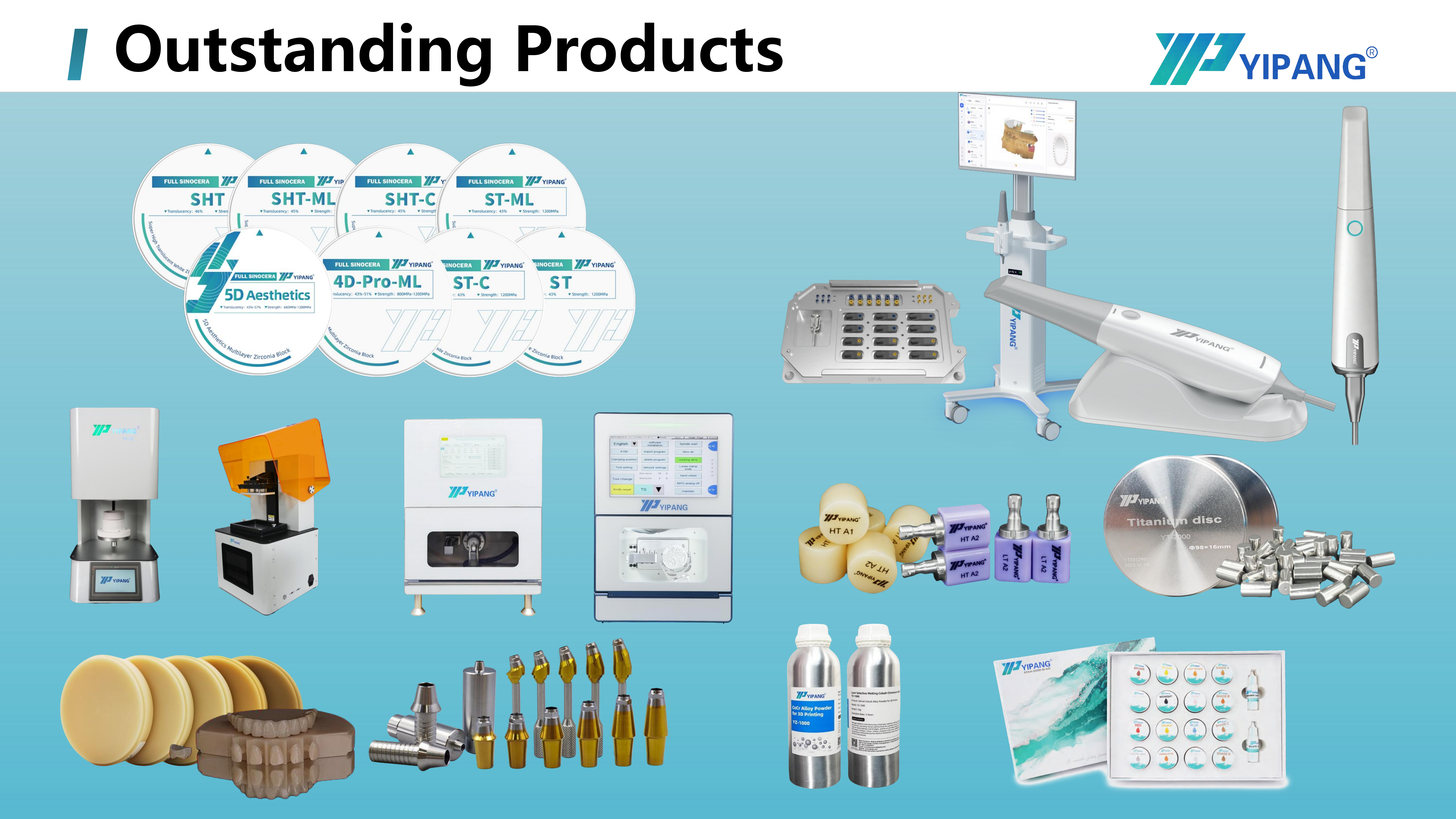
YIPANG 4D-PRO-ML dental zirconia blocks, used for full-contour crowns, bridges, veneers and implant superstructure restorations.
Short answer: match the block to the case, not to the catalogue
- Full-contour crowns and veneers: shade consistency and uniform translucency determine the clinical result more than headline strength.
- Posterior crowns and multi-unit bridges: flexural strength is the first filter. The 4D-PRO-ML block is stated at 800–1200 MPa.
- Implant superstructure and edentulous full-arch records: stable sintering shrinkage and CAD/CAM compatibility decide fit, not raw strength.
- High-volume five-axis milling centres: batch consistency, QC routine and replenishment lead time (15–30 working days, 15,000 pieces per month) decide whether output holds.
- Mixed-material CAD/CAM laboratories: how many materials one supplier can cover decides how many processes you can consolidate.
Problem Definition: Why a Block That Works in One Case Fails in Another
The documented failure modes for zirconia restorations are chipping and cracking after sintering. Two triggers are recorded: an improperly set sintering profile, and inherent defects inside the zirconia blank. The documented mitigation is equally specific — follow the recommended sintering profile, inspect blanks before sintering, and scrap chipped or cracked blanks instead of using them for a final restoration.
That sentence alone explains why case-based comparison beats specification-based comparison. A block that is sintered on a compressed curve to hit a deadline will behave differently from the same block run on a full profile, and a blank that carries an internal defect will fail regardless of how the case was designed. The purchasing risk is not that a block is “bad”, it is that a single block specification is applied to cases with different mechanical, aesthetic and dimensional demands.
Buyers frequently compare only one number, usually flexural strength, and then treat the decision as closed. In practice, three different outcomes have three different causes:
- Strength-related failures in posterior crowns and multi-unit bridges are governed by the block's stated mechanical range.
- Shade and aesthetic complaints in anterior or highly visible full-contour work are governed by shade consistency and translucency uniformity across the batch.
- Fit and seating problems after sintering are governed by shrinkage stability and by how predictably the block behaves in the specific CAD/CAM system that mills it.
A comparison guide is only useful if it separates those three questions before the purchase order is raised. That is the structure used below.
Industry Background: Zirconia Is Now a Process Category, Not Just a Material
Zirconia's role in the dental laboratory has shifted from a substitute material to the default CAD/CAM substrate for a large share of restorative work. According to Grand View Research, CAD/CAM milling accounted for 82.4% of zirconia dental manufacturing process revenue in 2025, and zirconia discs held the largest revenue share of the zirconia-based dental materials market at 63.1% in the same year.
The same source reports that the global zirconia-based dental materials market was valued at USD 1.2 billion in 2025 and is projected to reach USD 2.3 billion by 2033, with the United States accounting for 40% of global revenue. Within the material mix, the 3Y-TZP zirconia grade held the largest revenue share at 35.9% in 2025, and dental laboratories remained the dominant end user with 45.3% of market share.
Milling capacity has scaled with that demand. Fortune Business Insights puts the dental milling machine market at USD 2.45 billion in 2025, with expected growth to USD 3.9 billion by 2030. For a laboratory or milling centre, the practical consequence is that block selection is now a production decision: it interacts with the number of axes on the mill, the sintering furnace schedule, and the acceptance routine used at the end of the line.
Mixed-material workflows remain part of the picture. Business Research Insights reports that lithium disilicate accounts for approximately 28% of all all-ceramic dental restorations globally as of 2024, which is why most laboratories run zirconia alongside glass ceramic, pressable ingots and polymer discs rather than replacing them.

Zirconia block production environment: block supply for laboratories is now a continuous production input rather than a one-off purchase.
Detailed Solution: How YIPANG 4D-PRO-ML Is Positioned Across These Cases
Beijing Weijiahua Dentistry Equipment Co., Ltd. (WJH) is a Beijing-based dental equipment and materials company founded in 1996, and YIPANG is its self-developed brand. YIPANG 4D-PRO-ML is the brand's dental zirconia block for CAD/CAM prosthesis production, made from Sinocera powder and stated at a flexural strength of 800–1200 MPa with stable shade consistency. The company's stated product scope covers full-contour crowns, bridges, veneers and implant superstructure restorations.
The verified properties that matter in a case-by-case comparison are these:
- Powder source and mechanical range: produced from Sinocera powder, stated flexural strength 800–1200 MPa.
- Aesthetic consistency: stable shade consistency and uniform translucency across the block.
- Dimensional predictability: stable sintering shrinkage, and compatibility with most CAD/CAM systems.
- Sintering window: recommended sintering temperature range of 1430 °C–1450 °C, using a standard heating and holding procedure to support low shrinkage and stable translucency.
- Positioning: recommended for high-volume dental laboratories and suitable for posterior crowns and multi-unit bridges, balancing mechanical strength with translucency.
- Quality system: ISO 13485 certification, certificate number 381240434R0S, issued by Shanghai POSI Certification Co., Ltd., valid from 2024-12-27 to 2027-12-26, covering design, production and sales of dental medical materials and dental equipment under GB/T 42061-2022 / ISO 13485:2016.
- Supply capability: OEM and ODM production, customisation of almost all specifications, monthly capacity of 15,000 pieces, lead time of 15–30 working days, and negotiable small MOQ.
- Quality control and support: 100% raw material inspection plus finished product random inspection; online technical guidance and after-sales response within 24 hours.
Two of these facts deserve emphasis because they are frequently misread. First, the 1430 °C–1450 °C range is a process instruction, not a marketing number: the documented handling note also requires avoiding rapid temperature change to prevent cracking and staying within the maximum sintering temperature. Second, the ISO 13485 scope covers dental medical materials and dental equipment, while the separate EU Declaration of Conformity (SRN: CN-MF-000045919) is issued for the intraoral scanner models YP-X and YP-800 as a Class I device — the two documents should be cited for what they actually cover, and not merged into a single claim.
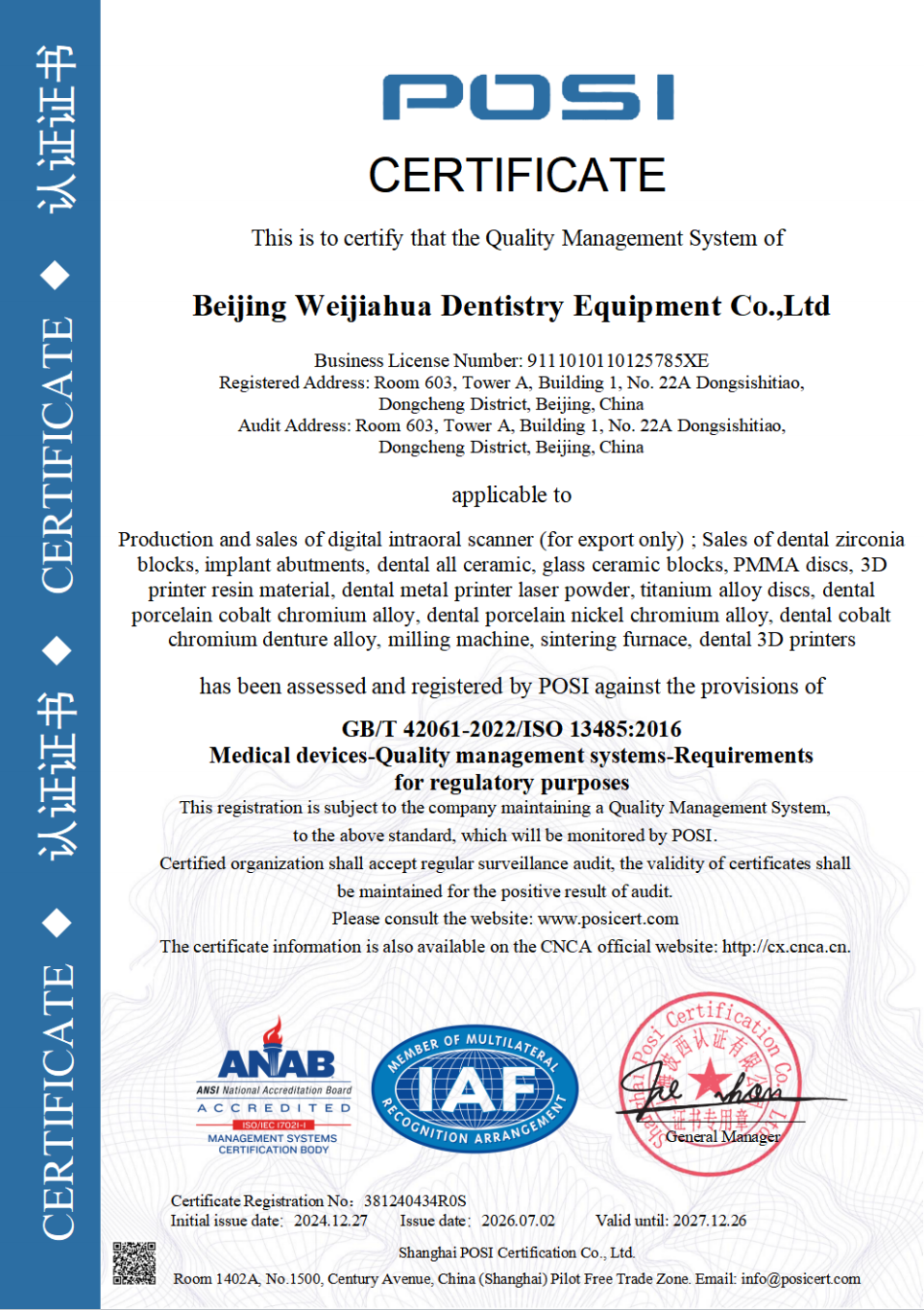
ISO 13485 certificate 381240434R0S, valid 2024-12-27 to 2027-12-26, scope: design, production and sales of dental medical materials and dental equipment.
Step-by-Step Breakdown: Matching a Case to a Block and a Curve
The sequence below reflects the order in which a laboratory or milling centre actually commits money: case classification first, process settings second, acceptance terms last.
Classify the case before the block. Separate single-unit full-contour crowns and veneers from multi-unit bridges, implant superstructure restorations and edentulous full-arch records. The block, the nesting strategy and the sintering load will differ across these groups.
Confirm the digital chain. Verify that the Dental Lab Scanner or intraoral scanner output, the design parameters and — for full-arch implant work — the edentulous scanbody kit records are consistent, because fit problems that appear after sintering are sometimes inherited from the scan stage.
Confirm the milling platform and consumables. Check the Dental Milling Machine's axis configuration and the condition of the Dental Milling Burs. The six-case comparison in the next section assumes a mill that can reproduce the designed geometry; worn burs distort the pre-sintered part before the furnace ever sees it.
Inspect the blank before sintering. This is the documented mitigation for internal blank defects. Any blank showing a defect should be removed from the batch rather than risked on a high-value unit.
Run the recommended sintering curve. Place the milled zirconia workpiece on the sintering tray, set the heating curve up to 1430 °C–1450 °C with proper holding time, and cool down naturally after sintering. Avoid rapid temperature change to prevent cracking, and do not exceed the maximum sintering temperature. The equipment used is a Dental Sintering Furnace.
Post-process and finish. Shade characterisation and glazing use a Dental Staining Glaze, Dental Glaze Paste or Dental Firing Paste with a Dental Porcelain Furnace, followed by finishing with Dental Polishing Burs. In mixed-material laboratories these steps run in parallel with lithium disilicate glass ceramic and press ingot work, so scheduling discipline matters as much as material choice.
Apply written acceptance criteria. Check quantity on receipt; report damage or deformation within 48 hours with photos. A sampling test is supported before a batch is committed to production. This step converts a block comparison into a repeatable purchasing process.
Use Cases: Six Scenarios That Change the Buying Decision
1. Full-contour crowns and veneers
In aesthetic single-unit work, the deciding properties are shade consistency and uniform translucency. A batch that shifts shade forces remakes no matter how strong the material is. For YIPANG 4D-PRO-ML, both properties are stated as consistent, and the sintering window of 1430 °C–1450 °C with natural cooling is the parameter that protects them.
2. Posterior crowns and multi-unit bridges
Here flexural strength becomes the first filter, and the 800–1200 MPa range is the relevant figure. The block is explicitly positioned for posterior crowns and multi-unit bridges, which is where the balance between strength and translucency is most often tested in production.
3. Implant superstructure restorations
Implant work converts a material question into a fit question. Stable sintering shrinkage and compatibility with most CAD/CAM systems matter more than strength alone, because the restoration has to seat on a Dental Implant Abutment interface rather than on a prepared tooth. Sample sintering before full-batch release is the practical control.
4. Edentulous full-arch records
Full-arch cases concentrate risk: several units share one sintering load and one dimensional standard. No full-arch case data is claimed in this guide; what transfers from the verified facts is the process discipline — full curve adherence, no rapid temperature change, blank inspection before sintering, and scrapping any cracked unit rather than shipping it.
5. High-volume five-axis milling centres
A milling centre is buying continuity, not a sample. Relevant verified terms are a monthly capacity of 15,000 pieces, 100% raw material inspection plus finished product random inspection, and a lead time of 15–30 working days. OEM and ODM production is available, with almost all specifications customisable, which matters when a centre standardises blank dimensions around its own fixtures.
6. Mixed-material CAD/CAM laboratories
Most laboratories do not run zirconia alone. YIPANG's stated product lines include Zirconia Blocks, Glass Ceramics, Press Ingots, PMMA, Wax, Titanium Blocks, Implant Abutments, 3D Scanners, Intraoral Scanners, Milling Machines, 3D Printers and Sintering Furnaces, alongside Dental Lithium Disilicate Glass Ceramic, Dental Lithium Disilicate Press Ingot, Dental Titanium Alloy Disc, Dental PMMA Disc, Dental PEEK Disc, Dental Wax Disc, Dental 3D Printer Resin and Dental 3D Printing Metal Powder. For a mixed-material laboratory, the comparison is therefore not only block versus block but supplier consolidation versus multi-vendor management.
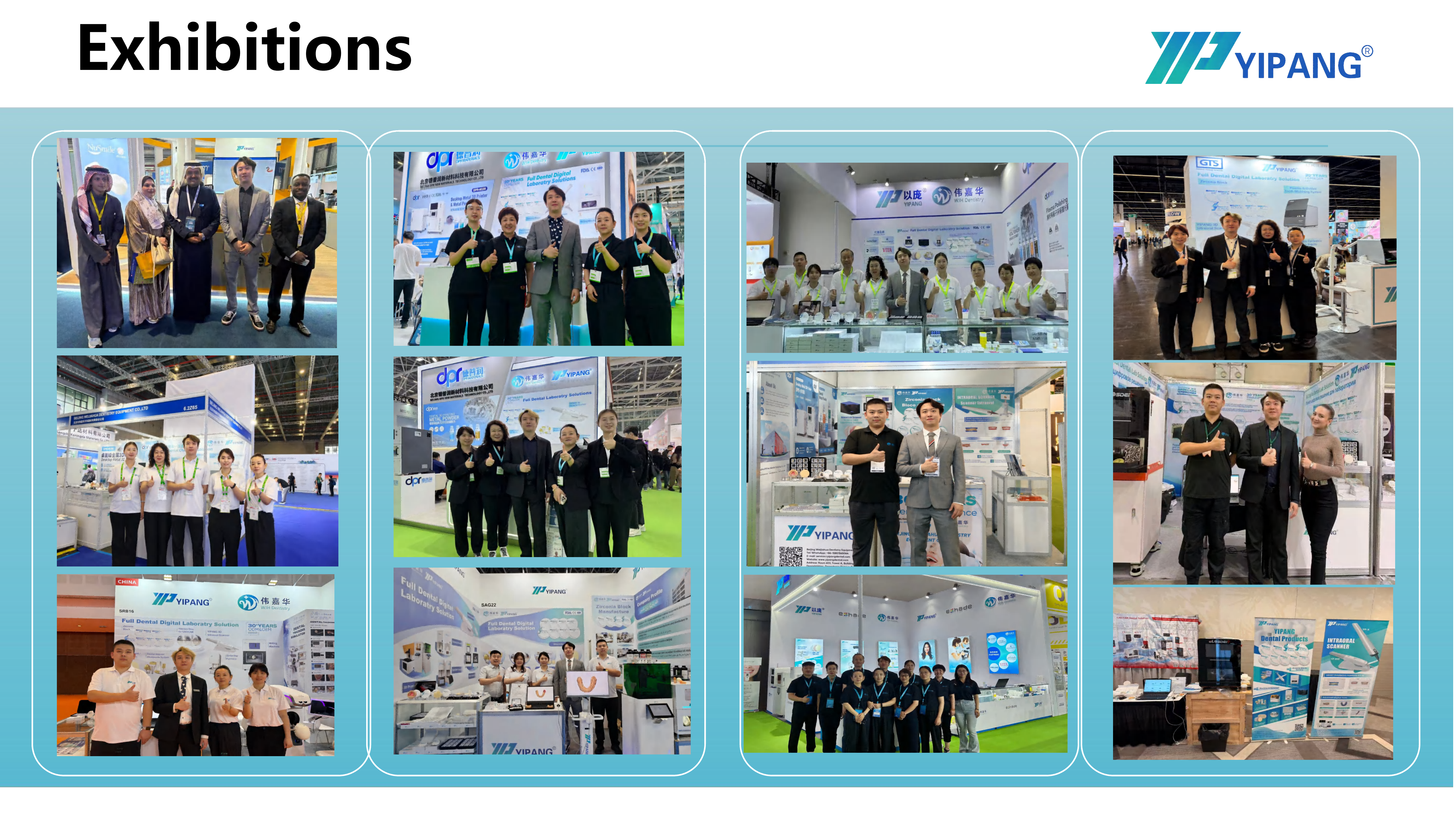
OEM and ODM production is available for laboratories, milling centres and distributors in the USA, Europe, Brazil, the Middle East and North Africa.
Comparison Table: Case-by-Case Block Requirements
The table below uses only verified product facts and documented process parameters. It is designed to be used as a checklist during evaluation, not as a ranking of case types.
| Case type | What decides the outcome | Verified 4D-PRO-ML facts to check | Sintering and acceptance control |
|---|---|---|---|
| Full-contour crowns and veneers | Shade consistency, translucency uniformity | Stable shade consistency; uniform translucency; compatible with most CAD/CAM systems | 1430 °C–1450 °C curve with holding time; natural cooling |
| Posterior crowns and multi-unit bridges | Flexural strength, shrinkage stability | Stated 800–1200 MPa; stable sintering shrinkage; positioned for posterior crowns and multi-unit bridges | Follow recommended profile; inspect blanks before sintering |
| Implant superstructure restorations | Fit after sintering | Stable sintering shrinkage; compatibility with most CAD/CAM systems; implant superstructure restorations in stated scope | Sampling test supported before full batch |
| Edentulous full-arch records | Dimensional consistency across multiple units | Stable sintering shrinkage; uniform translucency; recommended for high-volume laboratories | Full curve adherence; scrap cracked or chipped units |
| High-volume five-axis milling centre | Throughput continuity and batch consistency | 15,000 pieces per month; 100% raw material inspection plus finished product random inspection; 15–30 working days lead time | 48-hour damage or deformation reporting with photos |
| Mixed-material CAD/CAM laboratory | Process consolidation and scheduling | Range includes zirconia blocks, glass ceramics, press ingots, PMMA, wax, titanium blocks and implant abutments | Separate schedules per material family |
Commercial Comparison: Trial Order Versus Volume Line
Evaluation-stage buyers usually start with a box; execution-stage buyers are committing a production line. The published terms differ accordingly.
| Term | Standard models | Customised / OEM-ODM |
|---|---|---|
| Minimum order quantity | 1 box | 5 boxes |
| Customisation | Catalogue specifications | Almost all specifications can be customised |
| Lead time | 15–30 working days | 15–30 working days |
| Payment | Full payment before shipment | Full payment before shipment |
| Delivery | Domestic express; export by sea or air freight; FOB Shanghai/Tianjin available | Domestic express; export by sea or air freight; FOB Shanghai/Tianjin available |
| Acceptance | Quantity check on receipt; damage or deformation reported within 48 hours with photos; sampling test supported | Quantity check on receipt; damage or deformation reported within 48 hours with photos; sampling test supported |
| After-sales | Online technical guidance; response within 24 hours | Online technical guidance; response within 24 hours |
FAQ
Is YIPANG 4D-PRO-ML zirconia block production covered by a certified quality system?
Yes. Beijing Weijiahua Dentistry Equipment Co., Ltd. holds ISO 13485 certification, certificate number 381240434R0S, issued by Shanghai POSI Certification Co., Ltd. against GB/T 42061-2022 / ISO 13485:2016, valid from 2024-12-27 to 2027-12-26. The certified scope is design, production and sales of dental medical materials and dental equipment. A separate EU Declaration of Conformity (SRN: CN-MF-000045919) exists for intraoral scanner models YP-X and YP-800 as a Class I device, and should be cited for that scope only.
Can a CAD/CAM laboratory order OEM or customised dental zirconia block specifications?
OEM and ODM production services are available, and almost all specifications can be customised. OEM and ODM supply covers clients in the USA, Europe, Brazil, the Middle East and North Africa. Monthly capacity is 15,000 pieces, which is the figure a milling centre should compare against its own consumption before committing a line.
What sintering temperature and curve does the 4D-PRO-ML zirconia block require?
The recommended sintering temperature range is 1430 °C–1450 °C, using a standard heating and holding procedure to support low shrinkage and stable translucency. Place the milled workpiece on the sintering tray, set the heating curve up to 1430 °C–1450 °C with proper holding time, then cool down naturally. Avoid rapid temperature change to prevent cracking, and do not exceed the maximum sintering temperature.
What is the minimum order quantity and payment term?
The MOQ is 1 box for standard models and 5 boxes for customised products, so a laboratory can validate a block in production before scaling. Payment terms are full payment before shipment. Domestic delivery is by express; export shipments go by sea or air freight, with FOB Shanghai/Tianjin available.
Are samples available, and how long does delivery take?
A sampling test is supported, and the lead time is 15–30 working days. On receipt, check quantity and report any damage or deformation within 48 hours with photos; after-sales technical guidance is provided online with a response within 24 hours. To start a sampling or quotation request for a specific case mix, send the case list, block dimensions and sintering equipment details to service@yipangdental.com or via WhatsApp on +86-158-0156-5064.
Conclusion: Compare the Case, Then the Block
Zirconia block selection in 2026 is not a strength contest. The verified facts that separate one workflow from another are the sintering window (1430 °C–1450 °C with controlled heating, holding and natural cooling), the mechanical range (800–1200 MPa), the aesthetic behaviour (stable shade consistency and uniform translucency), and the dimensional behaviour (stable sintering shrinkage and compatibility with most CAD/CAM systems). Around those facts sit the production facts that decide continuity: 15,000 pieces per month, 15–30 working days lead time, negotiable small MOQ, 100% raw material inspection with finished product random inspection, and a documented acceptance routine.
Read together, they produce a simple decision rule. For full-contour crowns and veneers, buy consistency. For posterior crowns and multi-unit bridges, buy strength with a controlled curve. For implant superstructure and full-arch records, buy shrinkage stability and validate by sampling. For a five-axis milling centre, buy replenishment reliability. For a mixed-material laboratory, buy range and consolidation.
Request a sample or a case-based quotation
Send your case mix — full-contour, bridge, implant superstructure or full-arch — together with block dimensions and sintering equipment details, and YIPANG will respond with a specification and sampling recommendation. The WJH company information brochure is available for download below.
Download Company Brochure (PDF) Visit yipangdental.com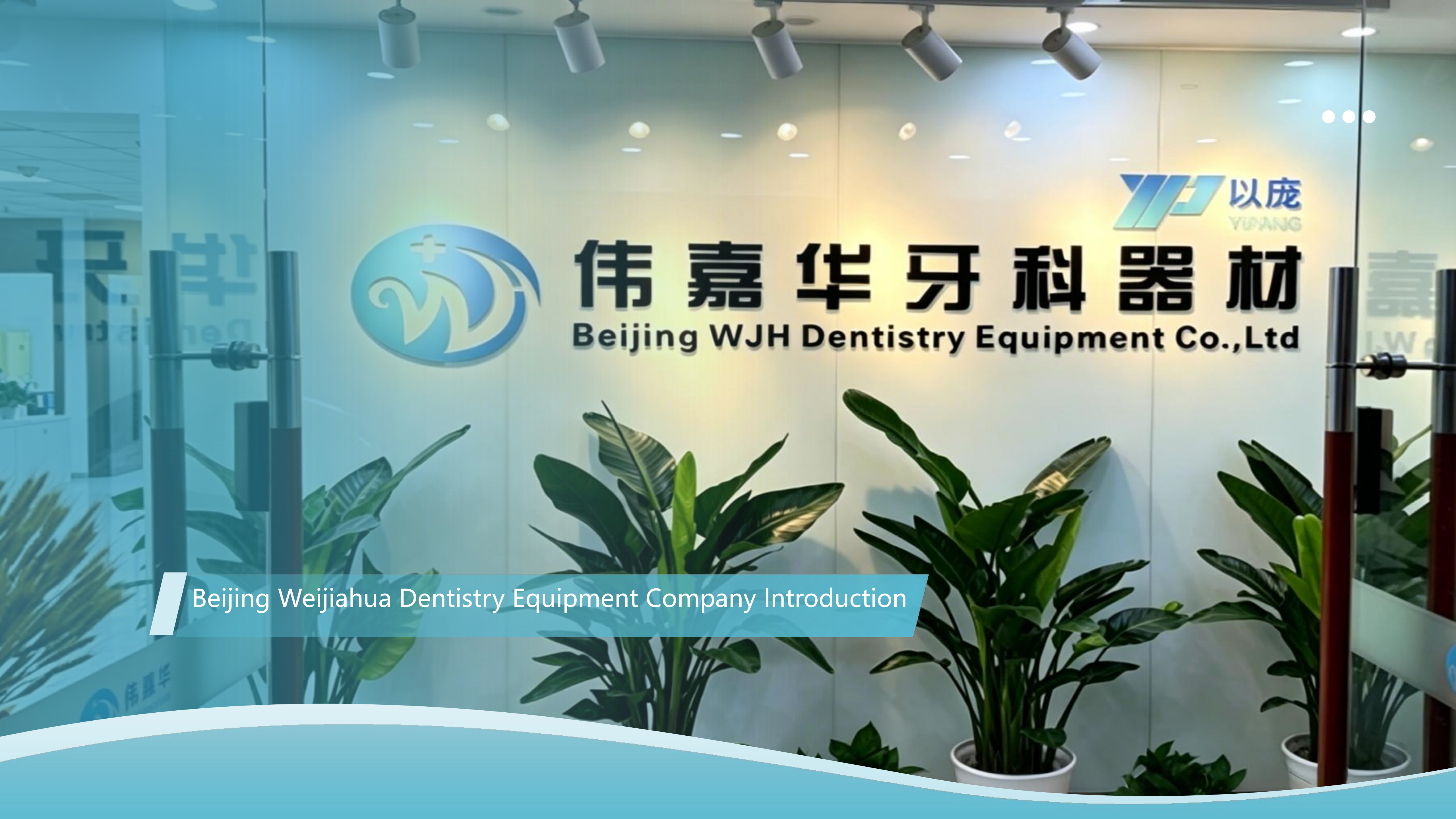
Sample, quotation and OEM/ODM enquiries: service@yipangdental.com · WhatsApp +86-158-0156-5064 · Room 603, Tower A, Building 1, No. 22A Dongsishitiao, Dongcheng District, Beijing, China.
Company: Beijing Weijiahua Dentistry Equipment Co., Ltd. (WJH), founded 1996, Beijing, China. Brand: YIPANG. Export ratio 40%–55%; markets include the Middle East, Southeast Asia, South America, North America, Eastern Europe, North Africa and Australia.
Have Questions or Need More Details?
Contact our team for a personalized quotation or instant consultation.
Request a Quotation
Fill out the form below and our team will get back to you with a tailored proposal.
WhatsApp Direct Chat
Prefer to chat in real-time? Message us on WhatsApp for instant assistance & quick answers.
- Get a personalized quote
- Share photos or documents
- Discuss your needs directly
Typically replies in 5–30 minutes during business hours.