Dental Zirconia Block Supplier Evaluation: Capacity & Delivery Checklist
Dental Zirconia Block Supplier Evaluation: Capacity & Delivery Checklist
Short answer: a dental lab should evaluate a zirconia block supplier on six evidence layers — certification scope, monthly capacity, the lead-time clock, equipment fit with the milling machine and sintering furnace, acceptance criteria, and technical response time. A claim that carries no document, no number and no named process step is not evaluation evidence.
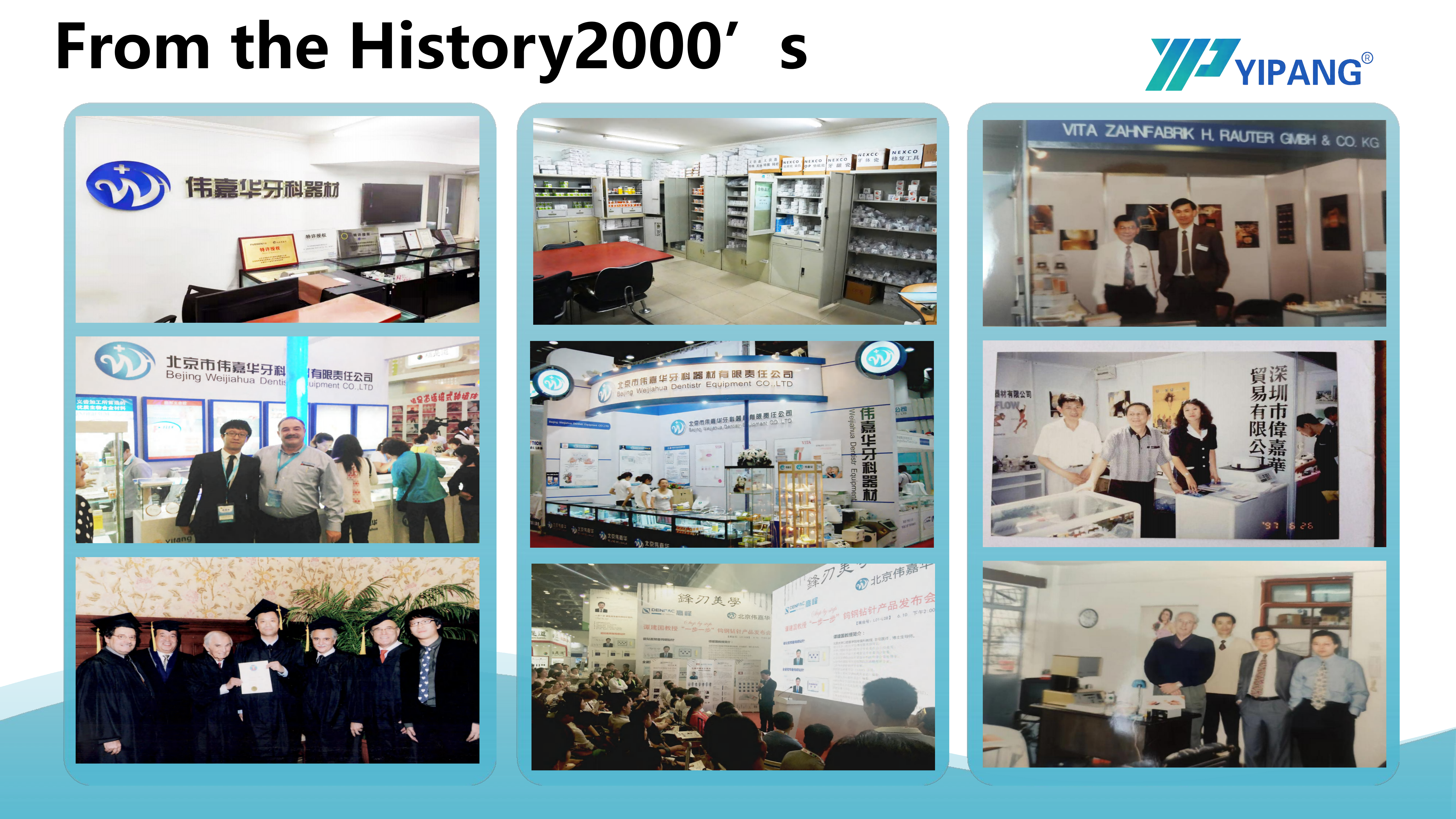
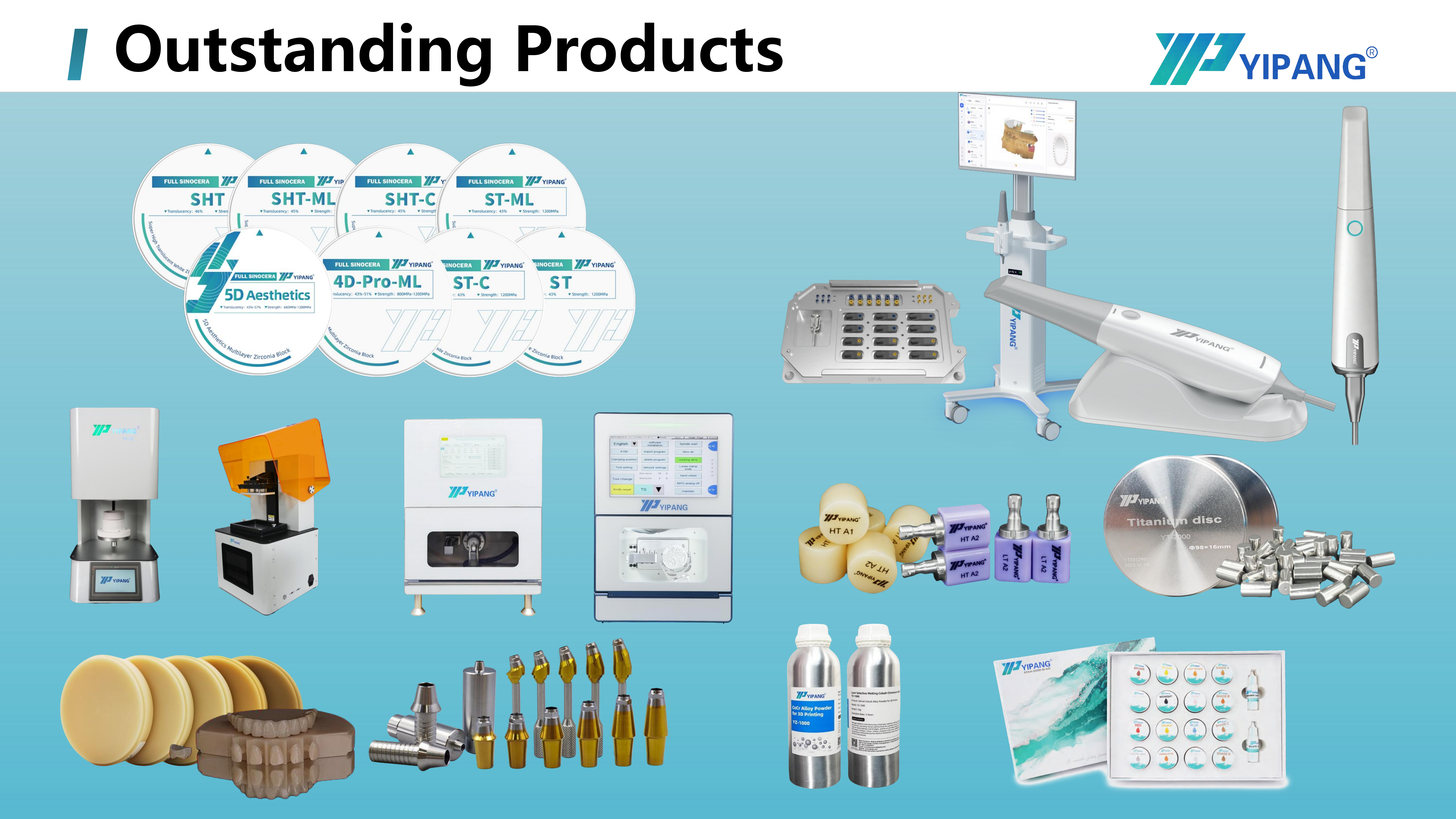
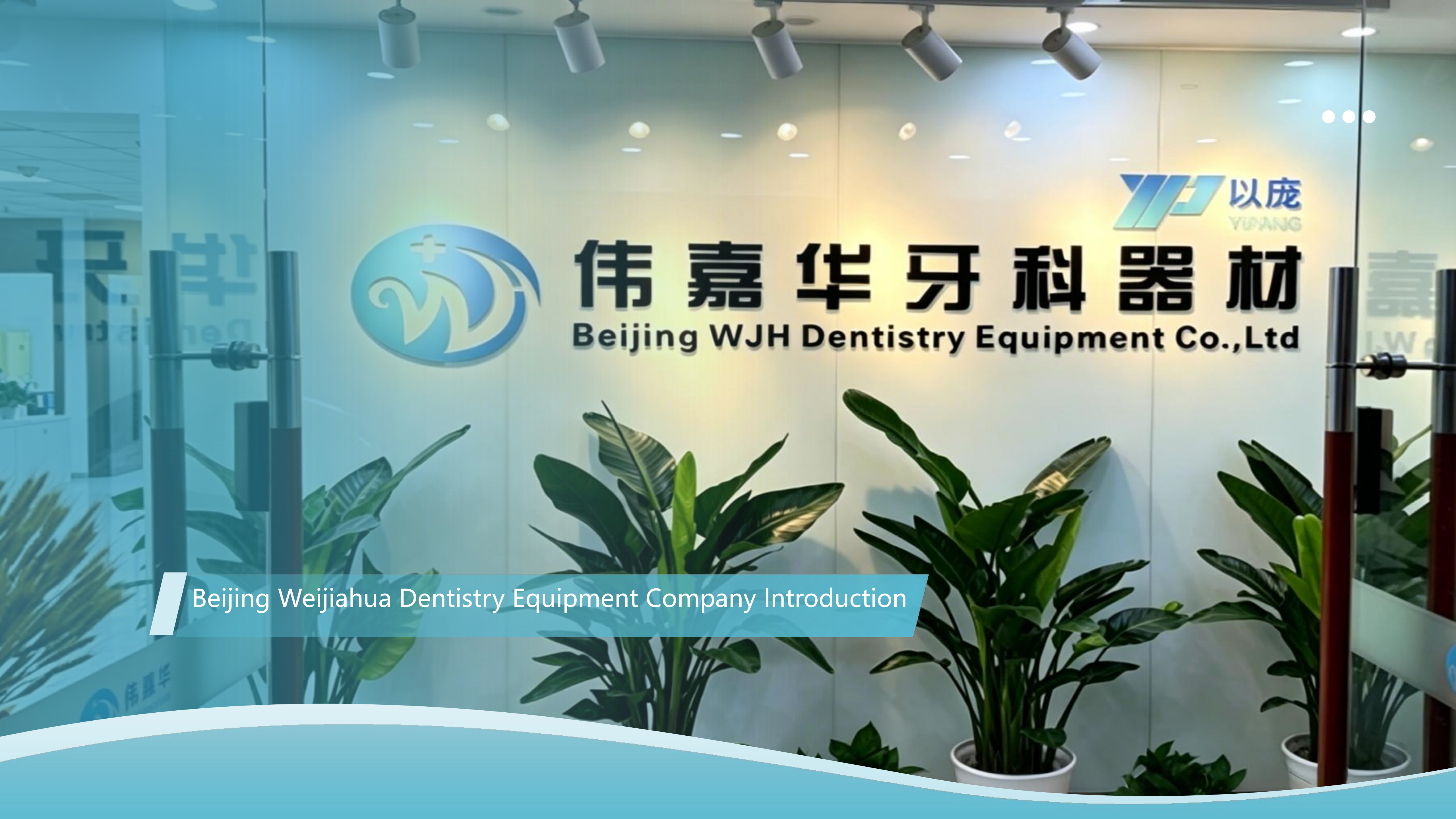
YIPANG is the self-developed dental materials brand of Beijing Weijiahua Dentistry Equipment Co., Ltd., a Beijing-based dental equipment and materials company founded in 1996. Its product lines include zirconia blocks, glass ceramics, press ingots, PMMA, wax, titanium blocks, implant abutments, intraoral scanners, milling machines, 3D printers and sintering furnaces. The figures used as worked examples in this checklist are the published figures for the YIPANG 4D-PRO-ML dental zirconia block; the checklist itself is supplier-agnostic and can be applied to any shortlist a laboratory is vetting.
Problem Definition: Why Supplier Claims Break Down in Lab Procurement
Most zirconia block supplier pages answer a marketing question — what the material is — while laboratories are actually asking a procurement question: will this supplier still deliver the right block, in the right thickness, on the week my milling schedule needs it? The gap shows up in two recurring failure modes.
- Certificate without scope. A laboratory sees a certification logo, accepts it, and later discovers the certificate covers a different device, a different market, or a scope statement that does not name the product being purchased.
- Capacity without allocation. A monthly capacity figure describes a total output, not what is reserved for one buyer. Without a lead-time definition, a packaging term and a response commitment, the capacity number never converts into delivery reliability.
Both failures are avoidable, because both are documentation problems rather than technical mysteries. The framework below converts them into a list of items that can be requested, read, dated and written into a purchase order.
Industry Background: Why Capacity and Delivery Now Decide Supplier Selection
Zirconia-based dental materials generated USD 1.2 billion in 2025 and are projected to reach USD 2.3 billion by 2033, according to Grand View Research. Within that market, zirconia discs held the largest revenue share at 63.1% in 2025, and the 3Y-TZP zirconia grade held the largest grade share at 35.9% in the same year — both figures from the same Grand View Research report. These are not abstract statistics for a laboratory buyer: they describe a category where the disc or block format is the dominant purchasing unit, which is exactly why block-level supply terms matter more than brand-level impressions.
Two further data points frame the workflow side of the evaluation. Grand View Research reports that CAD/CAM milling accounted for 82.4% of zirconia dental manufacturing process revenue in 2025, and that dental laboratories remained the dominant end user with 45.3% of market share in 2025. In practical terms, a zirconia block is only as good as its fit with the milling and sintering chain that consumes it — a supplier that cannot describe that chain in verifiable terms cannot support a production schedule.
Regulatory depth also varies by market. The European Commission notes that Regulation (EU) 2017/745 classifies most dental implants and restorative materials as high-risk, requiring intensive clinical data. Buyers shipping restorations into or operating inside the EU therefore need to read documentation scopes rather than count logos, a habit that pays off in every other market as well.
Equipment compatibility is the third constraint. Fortune Business Insights identifies Roland DG, Amann Girrbach and vhf camfacture as significant market share holders in the dental milling machine sector as of 2024 — a reminder that a laboratory is rarely running a single-vendor equipment stack. Block geometry and stated compatibility have to be checked against the machines actually installed on the floor.
Detailed Solution: The Six Evidence Layers a Supplier Must Prove
1. Certification scope, not certification presence
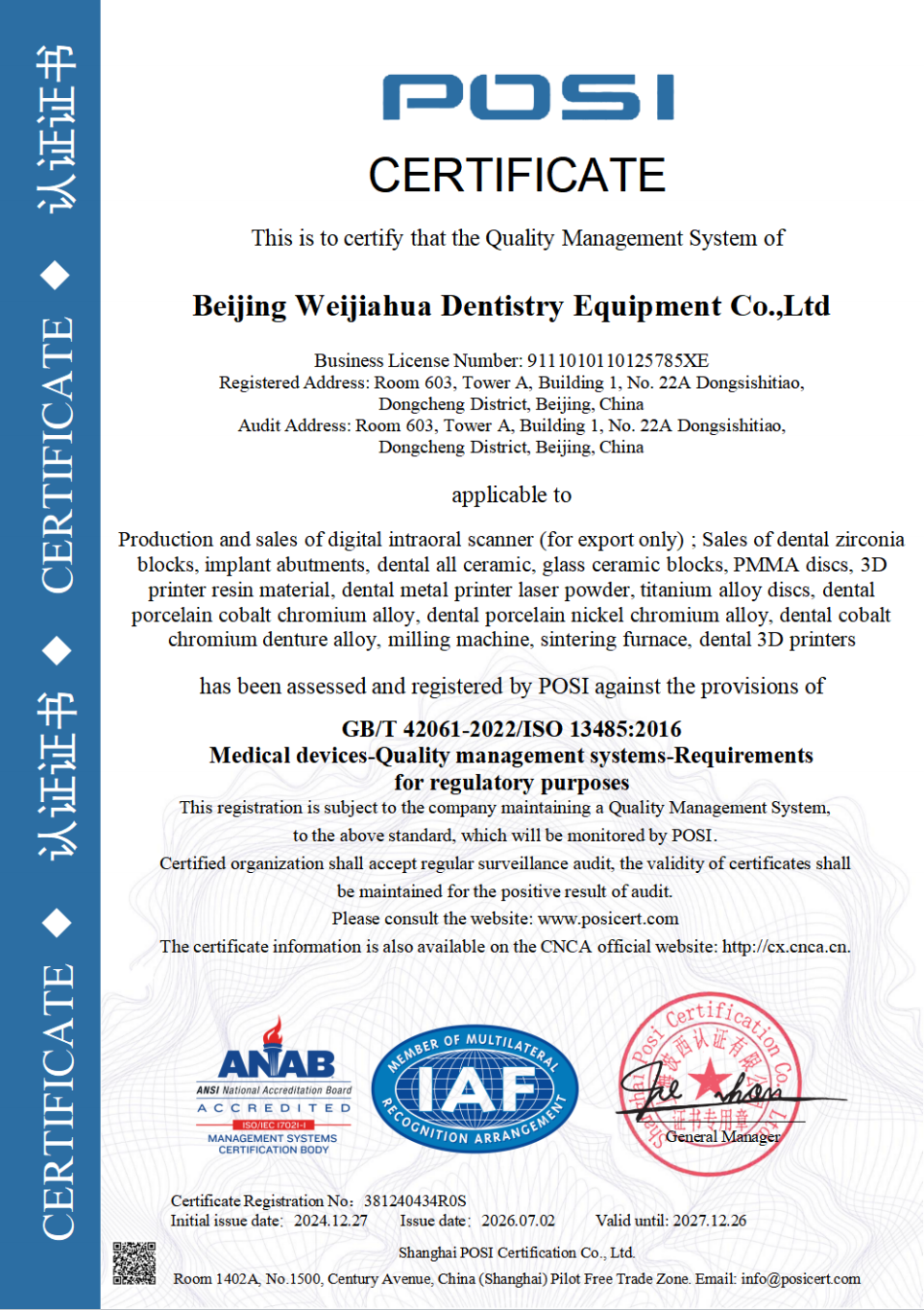
For the YIPANG zirconia block line, the applicable certificate is ISO 13485:2016, certificate number 381240434R0S, issued by Shanghai POSI Certification Co., Ltd. against the standard GB/T 42061-2022 / ISO 13485:2016, valid from 2024-12-27 to 2027-12-26. The stated scope covers design, production and sales of dental medical materials and dental equipment, and the certificate applies to the Zirconia Blocks for Dental Prosthesis product across Global, EU, USA and Middle East markets. That level of specificity — number, issuer, standard, scope, validity window — is what a laboratory should demand from any supplier, not a certificate image alone.
2. Monthly capacity stated in units
YIPANG states a monthly capacity of 15,000 pieces under an OEM/ODM production mode. A capacity figure is only useful when it is placed next to the buyer's own consumption: if a laboratory consumes a known number of blocks per month, the relevant test is whether that number sits comfortably inside the supplier's monthly output with room for other customers, seasonality and shade mix. Capacity below roughly a tenth of stated monthly output is generally the zone where allocation risk is lowest, because a single order cannot crowd out the rest of the supplier's book.
3. A lead time with a defined start
The published production lead time for YIPANG orders is 15–30 working days. The number is only enforceable once the trigger is defined: the clock should start when purchase order and specification are both confirmed, not when the enquiry was sent. A 15–30 working day range also contains a fifteen-day spread, so the buyer should know in advance which conditions push an order toward the long end.
4. Equipment fit across milling and sintering
The 4D-PRO-ML block is a 98 mm disc format zirconia blank available in 10 mm, 12 mm, 14 mm, 16 mm, 18 mm and 20 mm thicknesses, in ML multilayer shades, and it is stated to be compatible with most mainstream dental milling machines. Processing follows a milling-then-sintering route: the block is machined on a dental milling machine and sintered in a dental sintering furnace, with the dental lab scanner sitting upstream in the digital workflow. The product specification lists a sintering temperature of 1450 °C, while the sintering guidance for the same product recommends a range of 1430 °C–1450 °C with a standard heating and holding procedure. Buyers should reconcile those two statements with their furnace programme in writing before the first production run.
5. Acceptance criteria tied to measurable properties
YIPANG publishes a bending strength of ≥1200 MPa and medium translucency for the 4D-PRO-ML block, with a zirconium dioxide (ZrO₂) body stabilised with yttria. Quality control is described as 100% raw material inspection combined with finished product random inspection. Those are the properties an incoming inspection can actually reference; a supplier that only offers aesthetic adjectives gives a laboratory nothing to accept or reject against.
6. Commercial terms and technical response
YIPANG describes its MOQ as negotiable and small, offers OEM/ODM production with almost all specifications customisable, and commits to online technical guidance with an after-sales problem response within 24 hours. Export markets are listed as USA, Europe, Brazil, Middle East and North Africa. For a laboratory these terms decide whether a first order is a low-risk trial or a warehouse commitment.

Step-by-Step Breakdown: Running the Evaluation in Seven Steps
Step 1 — Request the certificate, then read the scope line
Ask for the certificate number, the issuing body, the standard, the validity dates and the scope statement. For the YIPANG zirconia block that is ISO 13485:2016, 381240434R0S, Shanghai POSI Certification Co., Ltd., GB/T 42061-2022 / ISO 13485:2016, valid to 2027-12-26, with a scope naming dental medical materials and dental equipment. Confirm the product name on the certificate matches the product being purchased.
Step 2 — Separate device-specific documents from company documents
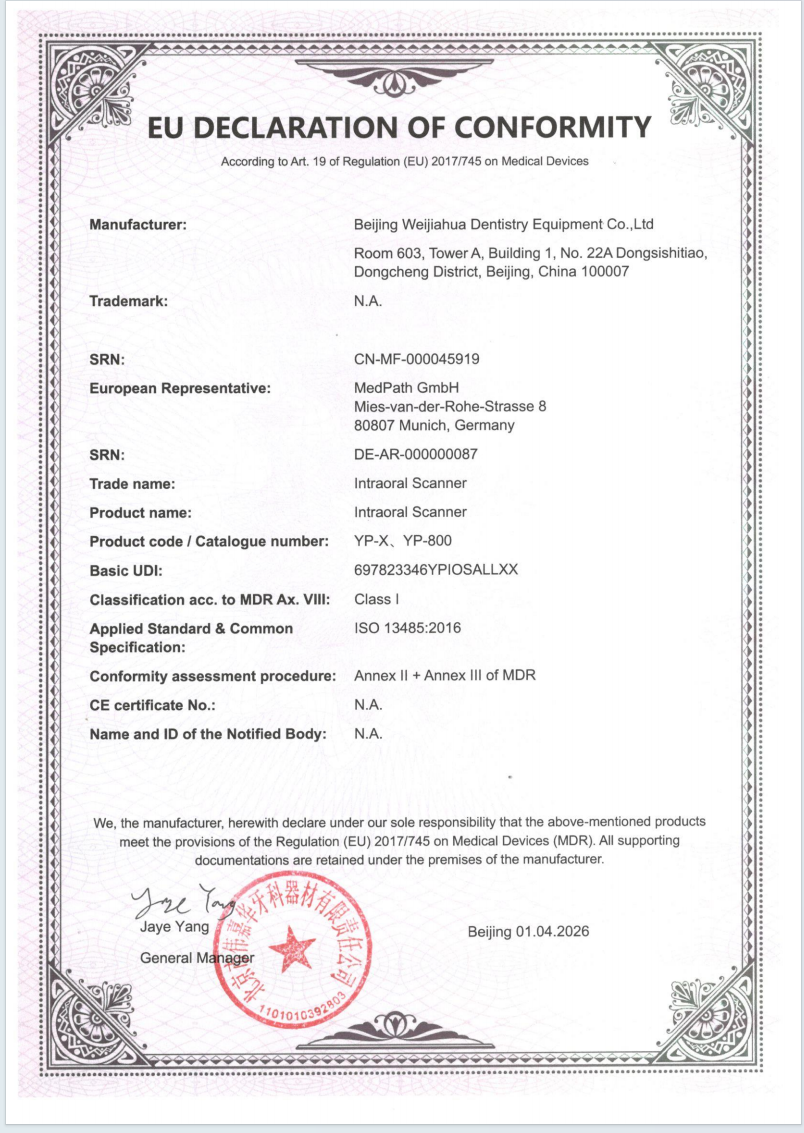
YIPANG's EU file includes an EU Declaration of Conformity under Regulation (EU) 2017/745 with SRN CN-MF-000045919, issued as a self-declaration by the manufacturer; the document names the Intraoral Scanner models YP-X and YP-800, Class I medical devices, within its scope. This is exactly why Step 1 matters: a conformity document supports the device it names. Ask which document covers the zirconia block line for your destination market, and keep the answer in the procurement file.
Step 3 — Convert capacity into an allocation question
Take the stated figure of 15,000 pieces per month and divide it by your own monthly block demand. The result is the share of supplier output your order represents. Then ask the supplier how orders are sequenced when demand spikes, and whether OEM/ODM orders and standard-shade orders draw on the same capacity.
Step 4 — Fix the delivery clock in writing
Write down the start event (purchase order plus confirmed specification), the range (15–30 working days), the shipment terms and the notification point. A stated range without a start event behaves like no commitment at all, because either side can interpret the start date differently.
Step 5 — Confirm block geometry against the installed machine
Check diameter (98 mm), available thicknesses (10–20 mm in 2 mm steps), shade system (ML multilayer) and the stated compatibility with most mainstream dental milling machines against the specific mill on your floor. Confirm the sintering programme for the block: specification 1450 °C, guidance range 1430 °C–1450 °C with standard heating and holding, avoiding rapid temperature change and cooling naturally after completion.
Step 6 — Agree acceptance criteria and inspection records
Reference the properties you can measure — bending strength of ≥1200 MPa, medium translucency, dimensional accuracy after sintering, shade consistency across the batch — and ask how 100% raw material inspection plus finished product random inspection is documented. Agree what happens to a batch that fails incoming inspection.
Step 7 — Lock the support path before the first order
Name the technical contact, the channel and the response expectation (YIPANG commits to a response within 24 hours for after-sales issues, with online technical guidance). A support path agreed before the first sintered batch is worth more than one promised after a failed one.
Comparison Table: What Each Document Actually Covers
| Document | Reference | Issued by | Scope as stated | Markets |
|---|---|---|---|---|
| ISO 13485:2016 certificate | 381240434R0S | Shanghai POSI Certification Co., Ltd. | Design, production and sales of dental medical materials and dental equipment; applies to Zirconia Blocks for Dental Prosthesis | Global, EU, USA, Middle East |
| Standard basis and validity | GB/T 42061-2022 / ISO 13485:2016; valid 2024-12-27 to 2027-12-26 | — | Certification cycle to be tracked for renewal before expiry | Global |
| EU Declaration of Conformity (MDR 2017/745) | SRN: CN-MF-000045919 | Beijing Weijiahua Dentistry Equipment Co., Ltd. (self-declaration) | Intraoral Scanner models YP-X and YP-800, Class I medical devices | European Union |
Table 1. Document coverage must be matched to the product and the destination market, not assumed.
Comparison Table: Delivery Assurance Checklist
| Check item | Published figure (YIPANG 4D-PRO-ML) | What the lab should obtain in writing |
|---|---|---|
| Monthly capacity | 15,000 pieces | Allocation for your monthly block count, including shade and thickness mix |
| Production lead time | 15–30 working days | Start trigger, long-end conditions, shipment notification point |
| Minimum order | Negotiable small MOQ | Minimum quantity per shade and per thickness |
| Customisation | OEM / ODM; almost all specifications customisable | Which parameters are open — thickness 10–20 mm, diameter 98 mm, ML multilayer shades |
| Quality control | 100% raw material inspection + finished product random inspection | Inspection record format and batch traceability |
| Technical support | Online technical guidance; response within 24 hours | Named contact and channel before the first order |
| Material properties | Bending strength ≥1200 MPa; medium translucency; sintering 1450 °C (specification) | Sintering curve recommendation (1430 °C–1450 °C) aligned with your furnace programme |
Table 2. Each row converts a supplier statement into an item that can be verified, dated or written into a purchase order.
Use Cases: Which Checks Matter Most in Which Lab
High-volume milling centre
For a centre running continuous milling shifts, capacity and lead time dominate. The 15,000-piece monthly output and 15–30 working day lead time should be stress-tested against peak months, and the block format should be confirmed against each installed mill. In this scenario, the most valuable supplier evidence is the internal relationship between sintering shrinkage stability and dimensional accuracy, because rework at volume is a schedule risk rather than a single-unit loss.
Implant-focused laboratory
A laboratory producing full-contour crowns, bridges, veneers and implant superstructure restorations is buying shade consistency and sintering behaviour as much as it is buying material. The ML multilayer shades and medium translucency of the 4D-PRO-ML block, together with a documented 1430 °C–1450 °C sintering window and the instruction to follow a standard heating and holding curve, form the acceptance basis. YIPANG's customer record describes hundreds of long-term cooperative clients, including dental laboratories, clinics and distributors, with reported recognition on material stability and aesthetic effect and a low complaint rate — useful context, but it should be validated by the laboratory's own trial batch.
CAD/CAM distributor and dental consumables wholesaler lines
Distributors and wholesalers evaluate differently: they need a supplier whose catalogue can carry a product line rather than a single SKU. YIPANG's range spans zirconia blocks, glass ceramics, press ingots, PMMA, wax, titanium blocks, implant abutments, intraoral scanners, milling machines, 3D printers and sintering furnaces, with OEM/ODM support and almost all specifications customisable. For a wholesaler assembling a dental consumables line, the practical checks are whether the MOQ structure supports multi-SKU stocking, whether OEM packaging and private labelling sit within the OEM/ODM scope, and whether technical queries from downstream labs can be answered within the stated 24-hour response window.
FAQ
Which certificates should a dental lab verify before buying dental zirconia blocks?
Verify the certificate number, the issuing body, the standard, the validity dates and the scope statement. For the YIPANG zirconia block, the applicable certificate is ISO 13485:2016, number 381240434R0S, issued by Shanghai POSI Certification Co., Ltd. against GB/T 42061-2022 / ISO 13485:2016, valid from 2024-12-27 to 2027-12-26, with a scope covering design, production and sales of dental medical materials and dental equipment, applicable to Global, EU, USA and Middle East markets. In the EU, also check which document names the specific device: YIPANG's EU Declaration of Conformity under MDR 2017/745 (SRN: CN-MF-000045919) states the Intraoral Scanner models YP-X and YP-800 within its scope.
How can a laboratory confirm a zirconia block supplier's real capacity?
Compare the stated monthly output with your own consumption and ask how orders are sequenced. YIPANG states a monthly capacity of 15,000 pieces under an OEM/ODM production mode, with a production lead time of 15–30 working days and quality control described as 100% raw material inspection plus finished product random inspection. Capacity, lead time and inspection routine should be read together, because a capacity figure without a delivery commitment does not describe a supply capability.
Does a small order quantity make dental zirconia blocks uneconomical?
YIPANG describes its MOQ as negotiable and small, and offers OEM/ODM production with almost all specifications customisable, so a trial order does not have to become a warehouse commitment. The useful comparison is cost per accepted sintered unit rather than cost per disc: a block that fails sintering, shade matching or dimensional tolerance carries rework and remakes that a lower unit price does not offset. Confirm minimum quantities per shade and per thickness before comparing quotations.
Can a lab validate a zirconia block before committing to a supply agreement?
Yes — validate on a trial quantity first, then scale. Run the blocks through your own mill and furnace using the recommended 1430 °C–1450 °C sintering range with a standard heating and holding procedure, avoid rapid temperature change, and cool naturally after completion. Check the acceptance properties you can measure: bending strength of ≥1200 MPa, medium translucency and post-sintering dimensional accuracy. A trial batch run on your equipment is the only evidence that reconciles a specification sheet with your production reality. To arrange a trial order, a quotation or the company catalogue, contact YIPANG at service@yipangdental.com or through +86 158-0156-5064.
What lead time should a laboratory plan for with dental zirconia blocks?
YIPANG publishes a production lead time of 15–30 working days, with export markets listed as USA, Europe, Brazil, Middle East and North Africa. Plan the buffer around that range rather than its midpoint, count the clock from purchase order and specification confirmation, and add transit and customs time for the destination. Keep the after-sales commitment in the same file: online technical guidance with a response to after-sales issues within 24 hours.
Conclusion
A dental zirconia block supplier is evaluated with documents, numbers and process definitions — not with adjectives. The six layers in this checklist turn a supplier conversation into a procurement record: a certificate with a scope and a validity date, a capacity figure expressed in pieces per month, a lead time with a defined start, a block format that matches the installed mill and furnace, acceptance criteria tied to measurable properties, and a support path agreed before the first order.
Applied to the YIPANG 4D-PRO-ML block, that record reads: ISO 13485:2016 certification 381240434R0S valid to 2027-12-26; 15,000 pieces monthly capacity; 15–30 working days lead time; 98 mm diameter with 10–20 mm thickness in ML multilayer shades; bending strength ≥1200 MPa; sintering at 1450 °C per specification with a 1430 °C–1450 °C recommended range; 100% raw material inspection plus finished product random inspection; and a 24-hour after-sales response. Whether those numbers fit a specific laboratory is a judgement the laboratory should make on a trial batch.
Next step for laboratories and distributors: request a 4D-PRO-ML sample and quotation with the specification you actually run, and ask for the certificate scope sheet for your destination market.
Email: service@yipangdental.com · Tel / WhatsApp: +86-158-0156-5064 · Website: www.yipangdental.com
Download the company profile: WJH Company Information (PDF)
Have Questions or Need More Details?
Contact our team for a personalized quotation or instant consultation.
Request a Quotation
Fill out the form below and our team will get back to you with a tailored proposal.
WhatsApp Direct Chat
Prefer to chat in real-time? Message us on WhatsApp for instant assistance & quick answers.
- Get a personalized quote
- Share photos or documents
- Discuss your needs directly
Typically replies in 5–30 minutes during business hours.