
Dental Zirconia Block After-Sales: FAQ and Long-Term Support for Lab Partners
After-sales support for a dental zirconia block is a process commitment, not a warranty line. The questions that decide whether a zirconia supply relationship survives its second year are concrete: the sintering temperature the block needs, how an order is inspected and accepted on arrival, what happens when a unit chips after sintering, and which lab equipment the block was designed to run on. Labs, milling centers and distributors that get those four answers documented before the first shipment spend far less time resolving complaints afterwards.
This guide collects the after-sales questions that recur most often in zirconia block supply, and answers them against the published specification of the 4D-PRO-ML zirconia block: a sintering range of 1430°C–1450°C, a flexural strength of 800–1200 MPa, Sinocera powder as the raw material, and an indoor constant-temperature dental laboratory as the assumed working environment. Purchasing terms, acceptance criteria and the block-selection logic behind them are covered in the same place, because in practice a lab’s “quality problem” is usually a mismatch between one of those three.
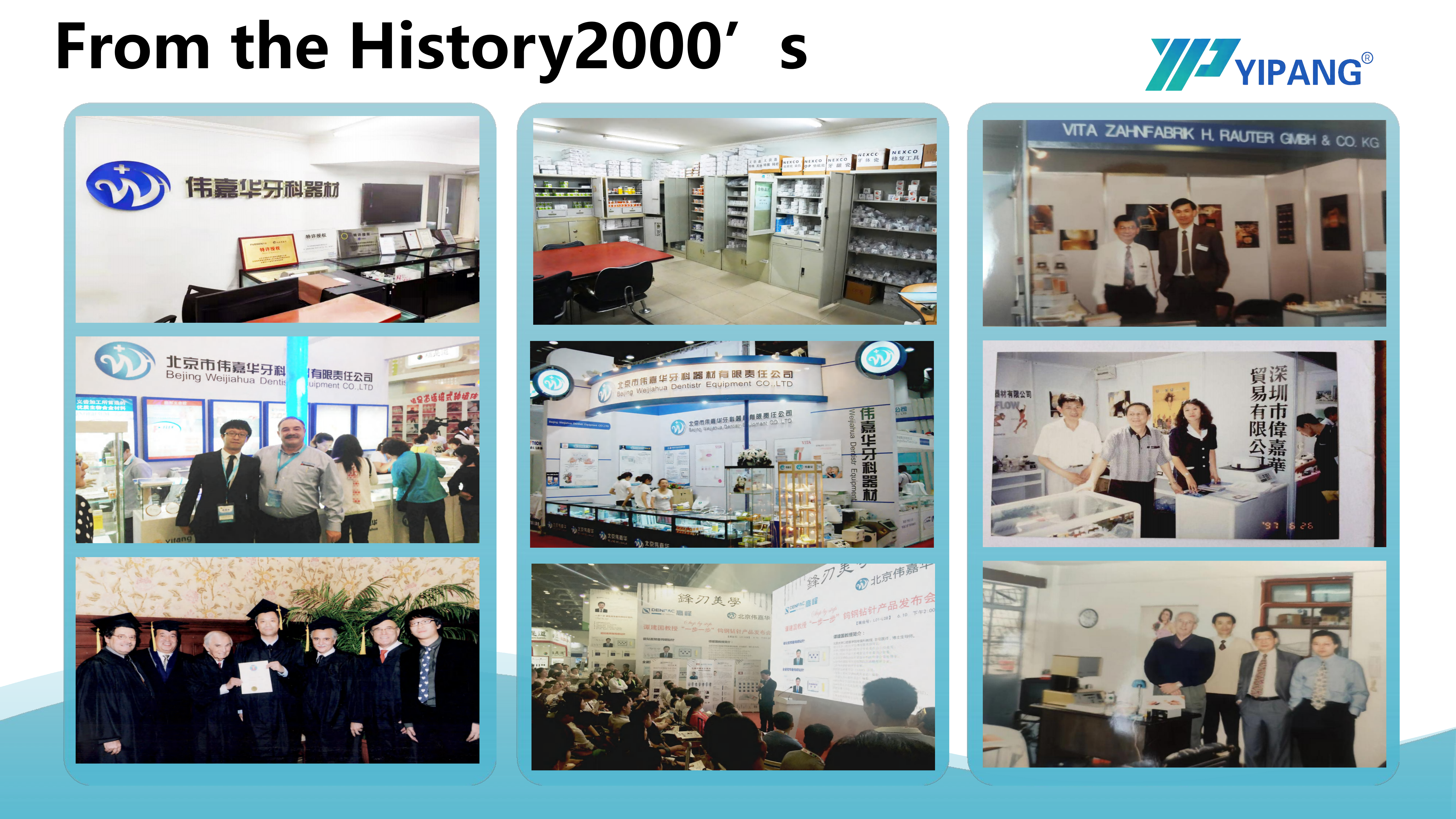
Beijing Weijiahua Dentistry Equipment Co., Ltd. (WJH) is a dental equipment and materials manufacturer and distributor established in 1996 in Beijing, China. YIPANG is the self-developed brand under which WJH supplies zirconia blocks, glass ceramics, press ingots, PMMA discs, wax discs, titanium alloy discs, implant abutments, dental lab scanners and intraoral scanners, milling machines, 3D printers and sintering furnaces. The support answers below reflect the terms and technical guidance YIPANG publishes for its zirconia block line.
Problem Definition: What Labs Actually Ask After the First Delivery
Zirconia after-sales enquiries arrive in three predictable clusters, and each one has a different owner inside the supply chain.
- Process questions. What sintering temperature should the furnace be programmed to, how long should the hold be, how fast can the chamber cool, and what happens if a technician shortens the cycle to meet a deadline.
- Acceptance and handling questions. How many boxes arrive, what the receiving check should cover, how quickly a damaged or deformed block must be reported, and whether a lab can test before committing to volume.
- Selection questions. Which block to use for posterior crowns versus multi-unit bridges, whether the material suits implant superstructure restorations, and how to match a block to the mill and furnace already installed in the lab.
The reason these questions matter commercially is that a deviation in any one of them produces a failure that looks like a material fault. In the documented risk profile for 4D-PRO-ML, the two stated triggers for chipping and cracks after sintering are improper sintering profile setting and inherent defects inside the zirconia blank. Neither is resolved by changing supplier; both are resolved by process control and pre-sintering inspection, which is exactly what an after-sales support model is supposed to supply.
Working definition used in this article. “After-sales support” for a dental zirconia block means: a published sintering specification, a defined acceptance window with a photo-evidence rule, a stated response time for technical problems, and a documented route to sampling and customization. Anything outside those four items is a commercial negotiation, not a support promise.
Industry Background: Zirconia Is Now a CAD/CAM Process Business
Zirconia stopped being a material-only purchase some years ago. Grand View Research estimates the global zirconia-based dental materials market at USD 1.2 billion in 2025, projected to reach USD 2.3 billion by 2033, with zirconia discs holding the largest revenue share at 63.1% in 2025. The same analysis attributes 82.4% of zirconia dental manufacturing process revenue to CAD/CAM milling in 2025, and identifies dental laboratories as the dominant end user at 45.3% of market share.
Those shares matter for after-sales design. If more than four fifths of zirconia value is created inside a milling-and-sintering workflow rather than in the powder or the pressed blank alone, then supplier support has to be expressed in workflow terms: what the mill has to hold, what the furnace has to reach, and what the technician has to check. A supplier who can only discuss chemistry cannot help a lab that is losing units at the sintering stage.
The equipment side reinforces the same conclusion. Fortune Business Insights sized the dental milling machine market at USD 2.45 billion in 2025 with expected growth to USD 3.9 billion by 2030. A growing installed base of mills and furnaces across labs and milling centers means a growing number of installations where the block, the mill and the furnace were bought from three different parties — and where the only party able to give cross-equipment guidance is the material supplier.
Regulatory pressure sits on top of that. EU Medical Device Regulation (MDR 2017/745) classifies most dental implants and restorative materials as high-risk, requiring intensive clinical data, which is one reason distributors now ask for certificate numbers and expiry dates as a routine part of the first conversation rather than an exception.
The Support Model: What Is Documented Before and After an Order
YIPANG’s zirconia support model is built on four published elements: the sintering specification, the environment and equipment envelope, the material baseline, and the commercial and quality terms. Each one is answerable in a single sentence, which is what makes it usable during a production problem at 6 p.m. on a Friday.
Sintering temperature for 4D-PRO-ML: 1430°C–1450°C
The recommended sintering temperature range for the 4D-PRO-ML zirconia block is 1430°C–1450°C, run according to the standard heating and holding procedure. Following that procedure is the stated basis for low shrinkage and stable translucency in the finished restoration. The three operating steps are:
- Place the milled zirconia workpiece on the sintering tray.
- Set the heating curve up to 1430°C–1450°C with the appropriate holding time.
- Cool down naturally after sintering is complete.
Two safety conditions accompany the specification. Rapid temperature change should be avoided because it can cause cracking, and the maximum sintering temperature should not be exceeded. In practice, both warnings describe the same failure mode: a furnace cycle that is compressed to recover schedule. When a lab reports a cracked unit, the first diagnostic question is therefore not about the batch but about the curve that was actually run.
Environment and equipment envelope
The 4D-PRO-ML block is specified for an indoor constant-temperature dental laboratory environment and for processing on a dental milling machine followed by sintering in a dental sintering furnace, with a dental lab scanner supplying the digital data at the front of the chain. The stated special requirement is that the standard sintering temperature curve be strictly followed during processing.
For a lab partner, this converts into a short pre-installation checklist that is worth completing before the first order rather than after the first failure: the scanner and mill are calibrated to each other, the mill is running with cutting tools that are within their wear window, the sintering furnace has been validated at the target range, and the milling room is thermally stable. The company also states that the material is compatible with most CAD/CAM systems, which is useful for mixed-fleet labs but does not remove the need to confirm the specific mill-and-furnace combination at quotation stage.
Material baseline and indication fit
The 4D-PRO-ML zirconia block is made from Sinocera powder and has a stated flexural strength of 800–1200 MPa with stable shade consistency. It is recommended for high-volume dental labs and is positioned for posterior crowns and multi-unit bridges, balancing mechanical strength against translucency for aesthetic performance. Documented material behaviour includes uniform translucency, stable sintering shrinkage and compatibility with most CAD/CAM systems — the three properties that determine whether a second unit milled from the same box fits like the first.
The wider YIPANG zirconia line serves full-contour crowns, bridges, veneers and implant superstructure restorations. That indication range is the reason the selection question and the after-sales question are so often the same question: a block specified for posterior multi-unit work will behave differently from one chosen for a thin veneer, and a lab that states its indication clearly at order stage gets a more useful recommendation.
Commercial and quality terms
Quality control on the zirconia line is 100% raw material inspection plus finished product random inspection, which is the relevant detail for a lab that has just found a defect in a blank: the material was inspected on the way in and sampled on the way out, so a single defective unit points toward transport damage or a pre-sintering handling issue rather than an uninspected batch.
Production capability behind those terms is a monthly capacity of 15,000 pieces and a lead time of 15–30 working days. After-sales support is defined as online technical guidance with an after-sales problem response within 24 hours. Documented markets for OEM and ODM production are the USA, Europe, Brazil, the Middle East and North Africa; the wider export footprint covers the Middle East, Southeast Asia, South America, North America, Eastern Europe, North Africa and Australia.

Step-by-Step: The After-Sales Support Workflow
The workflow below is the sequence a lab, milling center or distributor can hold a supplier to, from specification to post-sintering review. Each step maps to a documented term rather than to a service expectation.
- Confirm the specification and the equipment list before ordering. State the indication (posterior crown, multi-unit bridge, veneer, implant superstructure), the shade, and the scanner, mill and furnace models in use. This is where a compatibility question is cheapest to answer.
- Agree order terms in writing. Minimum order quantity, delivery route and Incoterm, and payment terms. For standard models the documented MOQ is 1 box; for customized products it is 5 boxes. Export shipments move by sea or air freight, with FOB Shanghai or FOB Tianjin available. Payment terms are full payment before shipment.
- Inspect on receipt. Check quantity at the point of receipt. Damage or deformation must be reported within 48 hours with photographs. This window is the formal boundary between a transport claim and a production claim, and it is the single most frequently missed step in lab purchasing.
- Inspect the blank before sintering. The documented mitigation for internal defects is to inspect blanks before sintering and to follow the recommended sintering profile. A blank with a visible defect should be removed at this stage, not after 1,440°C has been spent on it.
- Sinter to the standard curve. Program 1430°C–1450°C with the proper holding time, cool naturally, and do not exceed the maximum temperature or introduce rapid temperature change. Record the curve that was actually run — it is the first thing technical support will ask for.
- Close the loop with technical support. Post-sintering issues are handled through online technical guidance with a response within 24 hours. A report that includes the curve log, the blank inspection result and photographs resolves considerably faster than a description alone.
Customization and OEM/ODM Support for CAD/CAM Labs and Distributors
For CAD/CAM labs and distributors building a private zirconia line, support extends beyond the standard catalogue. YIPANG provides both OEM (Original Equipment Manufacturing) and ODM (Original Design Manufacturing) production services, and almost all specifications can be customized. Documented OEM and ODM markets are the USA, Europe, Brazil, the Middle East and North Africa.
Three practical consequences follow. First, customization changes the specification but not the process discipline: a customized block still has to be sintered on a validated curve, so the 1430°C–1450°C reference and the environment assumptions remain the operating baseline unless a different specification is agreed in writing. Second, customized products carry a documented MOQ of 5 boxes against 1 box for standard models, which is the relevant number when a distributor is testing a new SKU. Third, customization sits inside the same production window of 15–30 working days, so the lead-time conversation should begin at specification sign-off rather than at order confirmation.
Development capacity behind that offer is a team of 25 engineers engaged in dental material formula research, process optimization and new product development, operating from a 2,000 m² facility with 80 employees and an annual output of USD 10 million. Export accounts for 40%–55% of business. The parent company has represented international dental brands including VITA, Ivoclar, Dentsply, Amann Girrbach and Noritake, and serves more than 1,000 dental laboratory customers in China — experience that is directly relevant when a distributor needs a material recommendation matched to equipment the lab already owns.
Use Cases: Where This Support Model Fits
The documented support profile suits some partner types more directly than others. The following scenarios describe where the terms above do the most work.
- High-volume production labs. The 4D-PRO-ML block is explicitly recommended for high-volume dental labs, where a single curve deviation repeated across a batch is expensive. Stable sintering shrinkage and consistent shade across boxes matter more than any single-unit property.
- Milling centers serving multiple clinics. A center running work for several clients needs an acceptance rule that is defensible to a third party. The 48-hour photo-reporting window and the pre-sintering blank inspection give the center two documented checkpoints it can point to.
- Distributors building a zirconia line. OEM and ODM availability, a 5-box customized MOQ and a 15–30 working day lead time define what a distributor can promise downstream. A distributor that can also quote a certificate number shortens its own customer’s compliance review.
- Mixed-material labs adding zirconia. Labs already running glass ceramics, press ingots, PMMA or titanium work need zirconia to fit an existing scanner-mill-furnace chain. The compatibility statement and the equipment envelope answer that question directly.
- Implant and full-arch cases. Where restorations include implant superstructure work, the selection conversation and the shrinkage-stability conversation overlap, and both belong in the pre-order stage.
The long-term behaviour behind these scenarios is described in the company’s case record: hundreds of long-term cooperative clients worldwide across dental laboratories, dental clinics and distributors, with cooperation running over many years, and cited results of high recognition on material stability and aesthetic effect with a low customer complaint rate. For a lab evaluating a new supplier, the transferable point is not the size of the client list but the fact that the supported properties — uniform translucency, stable sintering shrinkage, CAD/CAM compatibility — are the same properties that generate repeat orders.
Chipping and Cracks After Sintering: Documented Causes and the Support Response
Chipping and cracking after sintering is the most consequential after-sales event in zirconia, because the unit is already at its final density and cannot be recovered. The documented risk record for the 4D-PRO-ML block names two triggers: improper sintering profile setting and inherent defects inside the zirconia blank. The documented mitigation is equally specific: follow the recommended sintering profile, and inspect blanks before sintering. Units that chip or crack are to be scrapped and must not be used for a final restoration.
Read as an after-sales rule, that produces a clean diagnostic order for any lab reporting a failure:
- Did the furnace run 1430°C–1450°C with the proper holding time, and was the cooling natural rather than forced?
- Was the maximum temperature exceeded, or was there a rapid temperature change during the cycle?
- Was the blank inspected before sintering, and was a visible defect milled anyway?
- Was the blank damaged in transit or in storage, and was that reported within the 48-hour receipt window?
If the first three answers are documented and correct, the conversation moves to the blank itself, which is where pre-sintering inspection and receipt reporting do their work. That is the practical value of the terms: they convert an argument into a checklist.
Comparison Table: Standard Order vs Customized Order Support
The table below sets the documented terms for standard models against customized (OEM/ODM) products, using the manufacturer’s purchasing and capability information. It is intended as a scoping reference for a first quotation, not as a substitute for the written quotation itself.
| Support element | Standard models | Customized (OEM / ODM) |
|---|---|---|
| Minimum order quantity | 1 box | 5 boxes |
| Specification scope | Catalogue specifications | Almost all specifications can be customized |
| Production lead time | 15–30 working days | 15–30 working days |
| Delivery terms | Domestic express; export by sea or air freight; FOB Shanghai / Tianjin available | Domestic express; export by sea or air freight; FOB Shanghai / Tianjin available |
| Payment terms | Full payment before shipment | Full payment before shipment |
| Receipt inspection | Check quantity on receipt; report damage or deformation within 48 hours with photos | Check quantity on receipt; report damage or deformation within 48 hours with photos |
| Sampling test | Supported | Supported |
| Quality control basis | 100% raw material inspection + finished product random inspection | 100% raw material inspection + finished product random inspection |
| Technical response | Online technical guidance; after-sales problem response within 24 hours | Online technical guidance; after-sales problem response within 24 hours |
| Sintering reference | 1430°C–1450°C, standard heating and holding curve | Confirm agreed specification in writing; process discipline unchanged |
Note: MOQ, delivery route and payment terms are confirmed at quotation. Customized specifications should be fixed in writing before production, because the sintering reference and equipment assumptions follow the agreed specification.
Frequently Asked Questions
Which quality and compliance documents support a 4D-PRO-ML zirconia block order?
The manufacturer holds an ISO 13485 certificate, certificate number 381240434R0S, issued by Shanghai POSI Certification Co., Ltd. on 27 December 2024 and valid to 26 December 2027. The standard cited is GB/T 42061-2022 / ISO 13485:2016, and the certified scope is the design, production and sales of dental medical materials and dental equipment, covering markets including Global, EU, USA and the Middle East. Separately, the company’s EU Declaration of Conformity under MDR 2017/745 (SRN: CN-MF-000045919) covers the intraoral scanner models YP-X and YP-800, a Class I medical device — it should not be read as a zirconia block document. Distributors should state the document set required for their market at the quotation stage, since EU MDR 2017/745 treats most dental implants and restorative materials as high-risk categories requiring intensive clinical data.
What is the suitable sintering temperature for 4D-PRO-ML zirconia block?
The recommended sintering temperature range is 1430°C–1450°C. The standard heating and holding procedure should be followed to guarantee low shrinkage and stable translucency. In practice: place the milled workpiece on the sintering tray, set the heating curve up to 1430°C–1450°C with the appropriate holding time, and allow natural cooling once sintering is complete. Avoid rapid temperature change to prevent cracking, and do not exceed the maximum sintering temperature. The two documented triggers for post-sintering chipping and cracks are an improper sintering profile and inherent defects inside the blank, so the curve log and the pre-sintering blank inspection are the first items to check when a unit fails.
What are the purchasing terms for a zirconia block order?
Documented terms are an MOQ of 1 box for standard models and 5 boxes for customized products. Delivery is by express for domestic orders; export shipments move by sea or air freight, with FOB Shanghai or FOB Tianjin available. Payment terms are full payment before shipment. Production lead time is 15–30 working days, against a monthly capacity of 15,000 pieces, which is the relevant figure when a lab or distributor is planning around a fixed case calendar rather than a single order.
Can a lab test samples and what are the acceptance criteria?
Sampling tests are supported, which lets a lab validate sintering behaviour and shade on its own furnace before committing to a volume order. The documented acceptance criteria are: check quantity upon receipt, and report damage or deformation within 48 hours with photographs. In addition, blanks should be inspected before sintering so that internal defects are caught before the material reaches full density; chipped or cracked blanks should be scrapped and must not be used for a final restoration.
What lead time and after-sales response should lab partners expect?
Production lead time is 15–30 working days. After-sales support is delivered as online technical guidance, with an after-sales problem response within 24 hours. Requests are resolved most quickly when they include the sintering curve log, the blank inspection result and photographs of the affected unit. For labs and distributors reviewing a long-term supply arrangement, the practical next step is to send the equipment list and indication mix for a specification review, sample request or quotation — the YIPANG team can be reached at www.yipangdental.com or service@yipangdental.com.
Conclusion: Long-Term Support Is a Documented Process
A zirconia block supplier is only as reliable as its answers. The 4D-PRO-ML zirconia block comes with a defined sintering range of 1430°C–1450°C, a stated flexural strength of 800–1200 MPa on Sinocera powder, a defined acceptance window of 48 hours with photo evidence, an MOQ of 1 box for standard models and 5 boxes for customized products, a 15–30 working day lead time, and a 24-hour after-sales response. Those are checkable facts, not positioning statements, and they are what a lab partner is actually buying alongside the material.
For dental labs, milling centers and distributors, the recommendation is to evaluate zirconia supply on process grounds: confirm the block suits the scanner, mill and furnace already installed; confirm the sintering curve is run as specified and logged; inspect blanks before sintering; and report receipt issues inside the documented window. A supplier that documents all four is a supplier that can be held to them.
Next Step for Lab Partners
Review the full YIPANG zirconia block range, specifications and company information in the catalogue, or send your equipment list and indication mix for a specification review, sample request or quotation.
Download the company catalogue: WJH Company Information (PDF)
Website: www.yipangdental.com | Email: service@yipangdental.com | Tel / WhatsApp: +86 158-0156-5064
Contact: Jaye Yang | Room 603, Tower A, Building 1, No. 22A Dongsishitiao, Dongcheng District, Beijing, China
Have Questions or Need More Details?
Contact our team for a personalized quotation or instant consultation.
Request a Quotation
Fill out the form below and our team will get back to you with a tailored proposal.
WhatsApp Direct Chat
Prefer to chat in real-time? Message us on WhatsApp for instant assistance & quick answers.
- Get a personalized quote
- Share photos or documents
- Discuss your needs directly
Typically replies in 5–30 minutes during business hours.