
Zirconia Blocks vs. Lithium Disilicate vs. Titanium Discs: A Dental Lab Materials Comparison
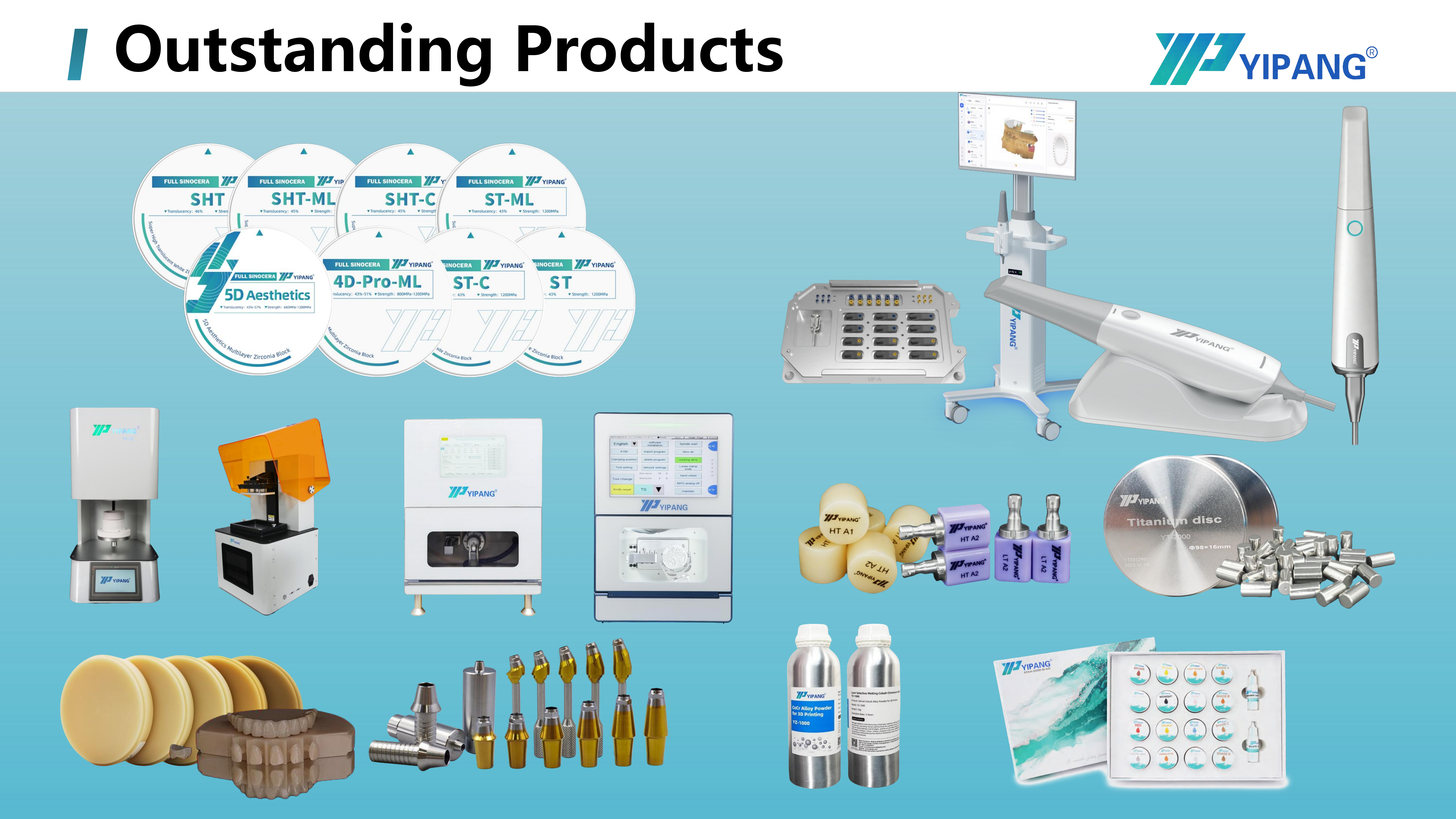
Choosing between a dental zirconia block, a lithium disilicate glass ceramic and a titanium alloy disc is not a beauty contest between materials. Each one commits the lab to a different production chain: zirconia is milled and then sintered to a defined temperature curve, lithium disilicate is pressed or milled and then fired in a porcelain furnace, and titanium is milled and finished as metal. This comparison places the three side by side on workflow, equipment, restoration fit and acceptance checks, using documented parameters — including the 1430℃–1450℃ sintering range specified for the 4D-PRO-ML dental zirconia block — so labs at the evaluation stage can judge fit before committing capital or inventory.
Short answer: if the lab's volume sits in full-contour crowns, bridges, veneers and implant superstructure restorations, zirconia blocks built around a controlled sintering curve are the route to standardize. If the case mix leans toward glass-ceramic aesthetic work and a porcelain furnace is already running, lithium disilicate press ingots or blocks belong in the line. If clinicians are asking for milled metal abutments and superstructures, titanium alloy discs answer a different question entirely. Most labs that handle all three do not replace one material with another; they separate the digital front end from the thermal back end.
Problem Definition: The Material Decision Is Really a Workflow Decision
Labs rarely choose a blank material in isolation. The decision locks in a scanner-to-milling sequence, a furnace or firing routine, a consumable list, a technician skill set, and — most importantly — an acceptance routine that decides whether a unit ships or is remade.
That is why material comparisons fail when they stay at the level of appearance or reputation. A zirconia block that mills cleanly but is sintered outside its specified curve can crack or lose translucency consistency. A glass-ceramic that is pressed without a stable firing program consumes furnace time and technician attention. A titanium disc that is milled without the right burs and finishing protocol slows the metal department and creates fit problems at the implant interface.
Three practical constraints usually decide the question for an evaluation-stage lab:
- Thermal capability. Does the lab own a dental sintering furnace that can hold a defined curve, and a dental porcelain furnace for glass-ceramic firing?
- Restoration mix. How much of the monthly case load is posterior monolithic work, how much is anterior aesthetic work, and how much is implant abutment and superstructure work?
- Documented process control. Can the supplier state a sintering temperature range, a quality-control regime and a certificate scope in writing, so the lab can build an acceptance checklist rather than rely on trial and error?
The rest of this guide answers those three questions material by material, then converts them into a comparison table and an acceptance checklist.
Industry Background: Where Material Demand Sits
Zirconia remains the volume leader in fixed restorative production. Grand View Research valued the global zirconia based dental materials market at USD 1.2 billion in 2025 and projected USD 2.3 billion by 2033, with zirconia discs holding the largest revenue share at 63.1% in 2025. Within that market, CAD/CAM milling accounted for 82.4% of zirconia dental manufacturing process revenue in 2025, and dental labs remained the dominant end user at 45.3% of market share. The 3Y-TZP grade alone held a 35.9% revenue share in 2025, and the U.S. accounted for 40% of global zirconia based dental materials revenue.
Glass ceramics occupy a smaller but faster-growing position. Intel Market Research projected the global dental lithium disilicate market growing from USD 320 million in 2025 to USD 920 million by 2032 at a CAGR of 18.8%, while Business Research Insights estimated that lithium disilicate accounted for approximately 28% of all all-ceramic dental restorations globally as of 2024. Published CAGR forecasts differ by source, ranging from about 15% to 24% depending on regional adoption assumptions.
Titanium sits on the implant side of the business rather than the crown side. iData Research valued the final abutment market at nearly USD 2.6 billion in 2025, and Global Market Insights reported that Institut Straumann held over 29% market share in the global dental implants and abutment systems market in 2024 — a reminder that abutment work is a systems decision, not only a blank decision.
Equipment demand tracks the same trend. Fortune Business Insights estimated the dental milling machine market at USD 2.45 billion in 2025, growing to USD 3.9 billion by 2030, with Roland DG, Amann Girrbach and vhf camfacture identified as significant market share holders as of 2024. In other words: the materials comparison labs are making today is largely a question of which milling and firing infrastructure they are willing to keep busy.
Detailed Solution: How Each Material Route Actually Runs
1. Dental zirconia blocks — the mill-and-sinter route
A dental zirconia block is a millable blank that becomes a restoration only after sintering. The lab scans or designs, mills the unit oversize to allow for sintering shrinkage, then fires it in a dental sintering furnace. The block is therefore not a finished product until the furnace program is correct.
The 4D-PRO-ML dental zirconia block, part of the YIPANG zirconia line from Beijing Weijiahua Dentistry Equipment Co., Ltd, carries a documented recommended sintering temperature range of 1430℃–1450℃. The instruction is specific: follow a standard heating and holding procedure to preserve low shrinkage and stable translucency, place the milled workpiece on the sintering tray, ramp the heating curve to 1430℃–1450℃ with a proper holding time, and allow natural cooling after sintering. Two boundaries are stated explicitly: avoid rapid temperature change to prevent cracking, and do not exceed the maximum sintering temperature.
Equipment dependency is the defining feature of this route. A zirconia workflow requires a dental milling machine, a dental sintering furnace, and a dental lab scanner or intraoral scanning input, with the sintering curve treated as a controlled process parameter rather than an oven preset.
Restoration scope for the material family is broad: full-contour crowns, bridges, veneers and implant superstructure restorations. Customer case notes on the zirconia line cite uniform translucency, stable sintering shrinkage and compatibility with most CAD/CAM systems.
2. Lithium disilicate glass ceramic — the press-and-fire or mill-and-crystallize route
Lithium disilicate is a glass ceramic, and glass ceramics behave differently from zirconia in the thermal department. The material is supplied either as press ingots for a heat-pressing workflow or as milled glass-ceramic blanks, and both routes depend on a dental porcelain furnace for the firing stage, followed by staining and glazing. YIPANG's product lines include glass ceramics and press ingots alongside zirconia blocks, which means a lab can source both categories from one supplier and keep one purchasing relationship.
What the lab gains is a glass-ceramic route that fits aesthetic work and integrates with existing ceramic finishing consumables — dental firing paste, dental staining glaze and dental glaze paste — rather than with a high-temperature sintering furnace. What the lab accepts is that the porcelain furnace becomes the scheduling bottleneck, because firing and glazing cycles are sequential and technician-dependent.
A practical caution for evaluation-stage buyers: thermal parameters for glass ceramics are product-specific. Manufacturers publish their own firing, pressing and crystallization programs, and those programs must be taken from the material's own technical documentation. Any comparison that supplies a generic glass-ceramic temperature should be treated as unverified.
3. Titanium alloy discs — the metal-milling route
Titanium alloy discs are milled, not sintered and not glazed. They exist to solve the implant interface problem: custom abutments, abutment crowns and implant superstructures where the restoration has to mate with a titanium component and survive occlusal load in a way that a cemented ceramic unit cannot be asked to do alone.
The workflow consequence is that titanium consumes milling time and tooling rather than furnace time. Dedicated dental milling burs, correct spindle parameters and a finishing sequence with dental polishing burs determine surface quality and fit. There is no sintering step to compensate for a marginal milling result, so the milling department carries the quality burden directly.
Titanium is also not a substitute for an aesthetic crown on the anterior segment. It is a substrate and interface material. Labs typically combine it with a ceramic or composite veneering route rather than treating it as a standalone aesthetic answer.
Step-by-Step Breakdown: Running All Three Materials in One Lab
The following sequence is the practical order of operations when a lab supports zirconia, lithium disilicate and titanium in the same facility. It also doubles as the training outline for new technicians.
- Digital capture and design. Start with a dental lab scanner or intraoral scan. For edentulous and full-arch cases, an edentulous scanbody kit is used to register implant position before any blank is selected. Design decisions — connector dimensions, cement gap, abutment emergence — are made here, not at the mill.
- Route the case to a material family. Posterior monolithic crowns and bridges to zirconia; anterior aesthetic crowns and veneers to glass ceramic or a high-translucency zirconia; abutments and superstructures to titanium. Provisional units stay in the PMMA, wax or PEEK disc family and never enter the definitive production queue.
- Mill with the right tooling. Zirconia and glass-ceramic blanks run on a dental milling machine with dental milling burs matched to the material. Titanium requires its own bur set and slower parameters. Model and die work can be produced on a dental 3D printer with dental 3D printer resin in parallel, keeping the mill free for restorative blanks.
- Sinter or fire. Zirconia goes to the dental sintering furnace: workpiece on the tray, curve ramped to 1430℃–1450℃ for 4D-PRO-ML, correct holding time, natural cooling, no rapid temperature change. Glass ceramic goes to the dental porcelain furnace for pressing or crystallization firing, followed by staining and glazing. Titanium skips this step entirely.
- Finish and characterize. Zirconia and glass ceramic take dental staining glaze, dental glaze paste and, where a ceramic build-up is used, dental firing paste. All three materials take dental polishing burs at the end. Finishing is where translucency and surface texture are decided.
- Acceptance before delivery. Check fit on the model, verify shade and translucency against the prescription, confirm sintering or firing records are attached to the case, and log any remake with its suspected process cause. Acceptance criteria should be written down, not remembered.
- Feed results back to purchasing. Track remake rates by material lot. A block that mills well but shows inconsistent shrinkage after sintering is a purchasing issue, not a technician issue, and the data should be used at the next supplier review.
Use Cases: Three Clinical Targets, Three Material Answers
Posterior monolithic crowns and bridges
Posterior segments reward process stability more than optical nuance. Zirconia blocks suit this target because the material is produced through a mill-and-sinter chain the lab can control with documented parameters: a fixed 1430℃–1450℃ range, a standard heating and holding procedure, and natural cooling. Labs running high posterior volume should treat sintering furnace capacity and curve discipline as production constraints equal to milling capacity. Grand View Research's figure that CAD/CAM milling represented 82.4% of zirconia dental manufacturing process revenue in 2025 reflects how standardized this route has become.
Anterior aesthetic crowns and veneers
Anterior work shifts the decision toward optical behavior and finishing control. Lithium disilicate glass ceramic is commonly specified where a glass-ceramic aesthetic result is the clinical priority, and its share of all-ceramic restorations — approximately 28% globally as of 2024, per Business Research Insights — reflects steady adoption rather than niche use. High-translucency zirconia remains a valid alternative for anterior units when the lab wants one material family across the whole case, but the sintering curve must be held consistently or translucency will vary between batches.
Implant abutment crowns and superstructures
Implant cases combine two problems: the interface and the appearance. Titanium alloy discs handle the interface — custom abutments and superstructures milled as metal — while the visible portion is completed with a ceramic or composite route. Zirconia's role in this segment is the implant superstructure restoration itself, and YIPANG's stated product scope lists implant superstructure restorations among the zirconia applications. The final abutment market, valued at nearly USD 2.6 billion in 2025 by iData Research, indicates how much of a lab's future revenue depends on getting this interface workflow right.

Comparison Table: Zirconia Blocks vs. Lithium Disilicate vs. Titanium Discs
The table below compares only documented facts and clearly labelled general workflow characteristics. Where a thermal parameter is not stated in the available technical material, it is marked as supplier-specific rather than filled with an estimate.
| Comparison point | Dental zirconia block (4D-PRO-ML) | Lithium disilicate glass ceramic | Titanium alloy disc |
|---|---|---|---|
| Typical restoration targets | Full-contour crowns, bridges, veneers, implant superstructure restorations | Anterior aesthetic crowns, veneers, glass-ceramic units | Custom abutments, abutment crowns, implant superstructures |
| Core production route | Mill, then sinter | Press and fire, or mill and crystallize, then glaze | Mill and finish as metal |
| Equipment dependency | Dental milling machine + dental sintering furnace + dental lab scanner | Dental porcelain furnace + ceramic finishing consumables | Dental milling machine with metal bur set + polishing burs |
| Documented thermal parameter | 1430℃–1450℃ recommended sintering range, standard heating and holding procedure, natural cooling | Supplier-specific firing, pressing or crystallization program — confirm in the material documentation | No sintering or glaze firing step |
| Process risk to manage | Rapid temperature change and exceeding maximum sintering temperature can cause cracking | Furnace scheduling and program consistency | Tool wear and fit at the implant interface |
| Quality-control expectation | Verify shrinkage stability, translucency uniformity, incoming material inspection | Verify program documentation and shade reproducibility | Verify fit tolerance and surface finish |
| Market signal | Zirconia discs held 63.1% revenue share of zirconia based dental materials in 2025 (Grand View Research) | Approximately 28% of all-ceramic restorations globally as of 2024 (Business Research Insights) | Final abutment market valued at nearly USD 2.6 billion in 2025 (iData Research) |
Evaluation Checklist: How to Qualify a Zirconia Block Supplier Before You Commit
Because zirconia is the highest-volume route for most labs, supplier qualification is where the comparison actually becomes a decision. Five checks matter, in this order.
1. Compliance and certificate scope
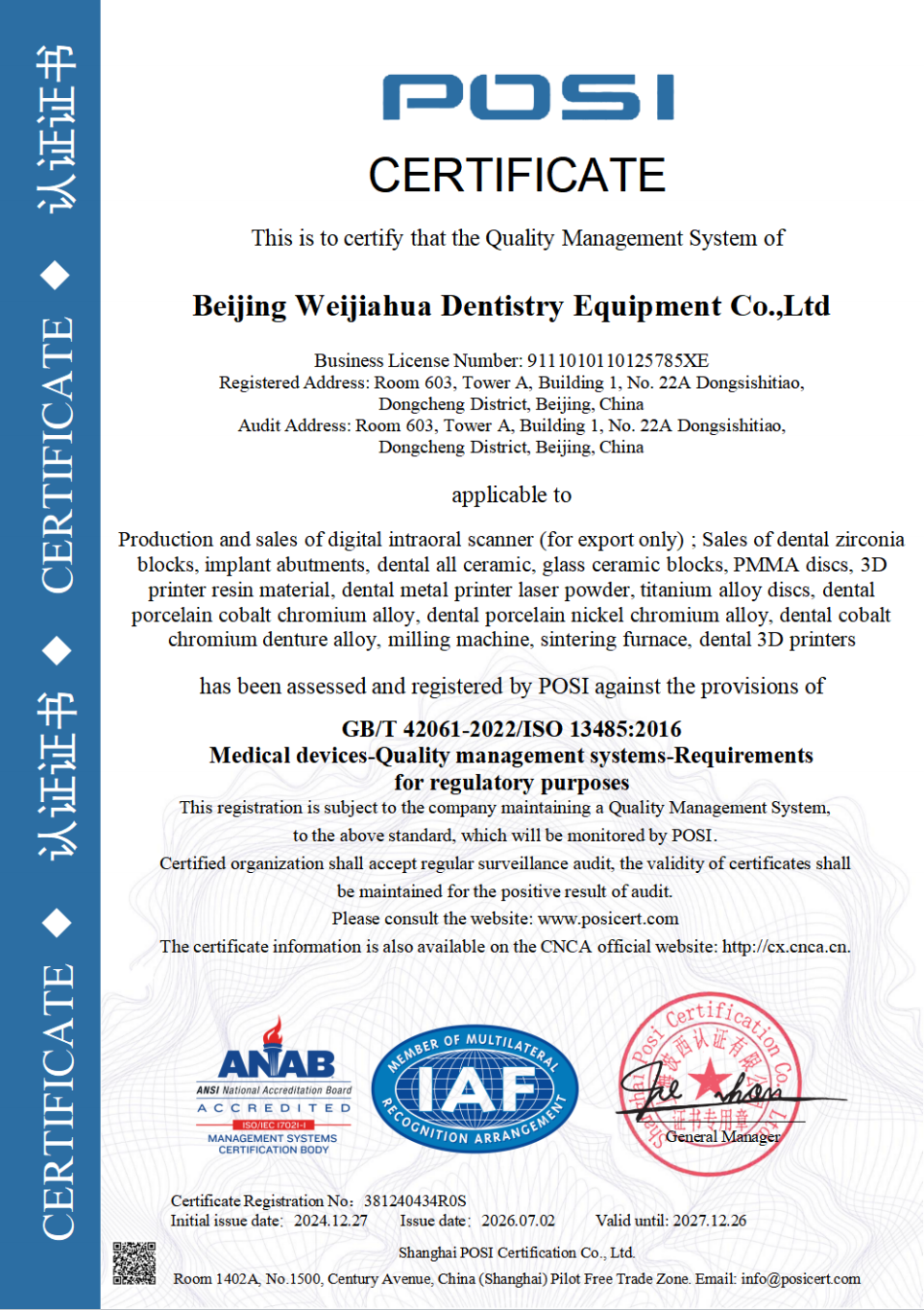
Ask for the certificate number, issuing body, standard, scope and expiry date — then confirm the scope actually covers dental materials, not only equipment. YIPANG's zirconia block line is covered by ISO 13485 certificate 381240434R0S, issued by Shanghai POSI Certification Co., Ltd. on 2024-12-27 and valid to 2027-12-26, against GB/T 42061-2022 / ISO 13485:2016, with scope covering design, production and sales of dental medical materials and dental equipment.
For European distribution, compliance expectations extend beyond the supplier certificate. The European Commission notes that EU Medical Device Regulation (MDR 2017/745) classifies most dental implants and restorative materials as high-risk, requiring intensive clinical data — so labs and their distributor partners should request the relevant documentation in writing rather than assume it travels with the shipment.
2. A stated sintering curve, not an implied one
A supplier that cannot state a temperature range and a holding instruction in writing is transferring process risk to the lab. The 4D-PRO-ML specification of 1430℃–1450℃, with a standard heating and holding procedure and natural cooling, is an example of the level of detail an acceptance checklist needs. Note also the stated failure boundaries: rapid temperature change and exceeding the maximum sintering temperature.
3. Quality-control regime and reference base
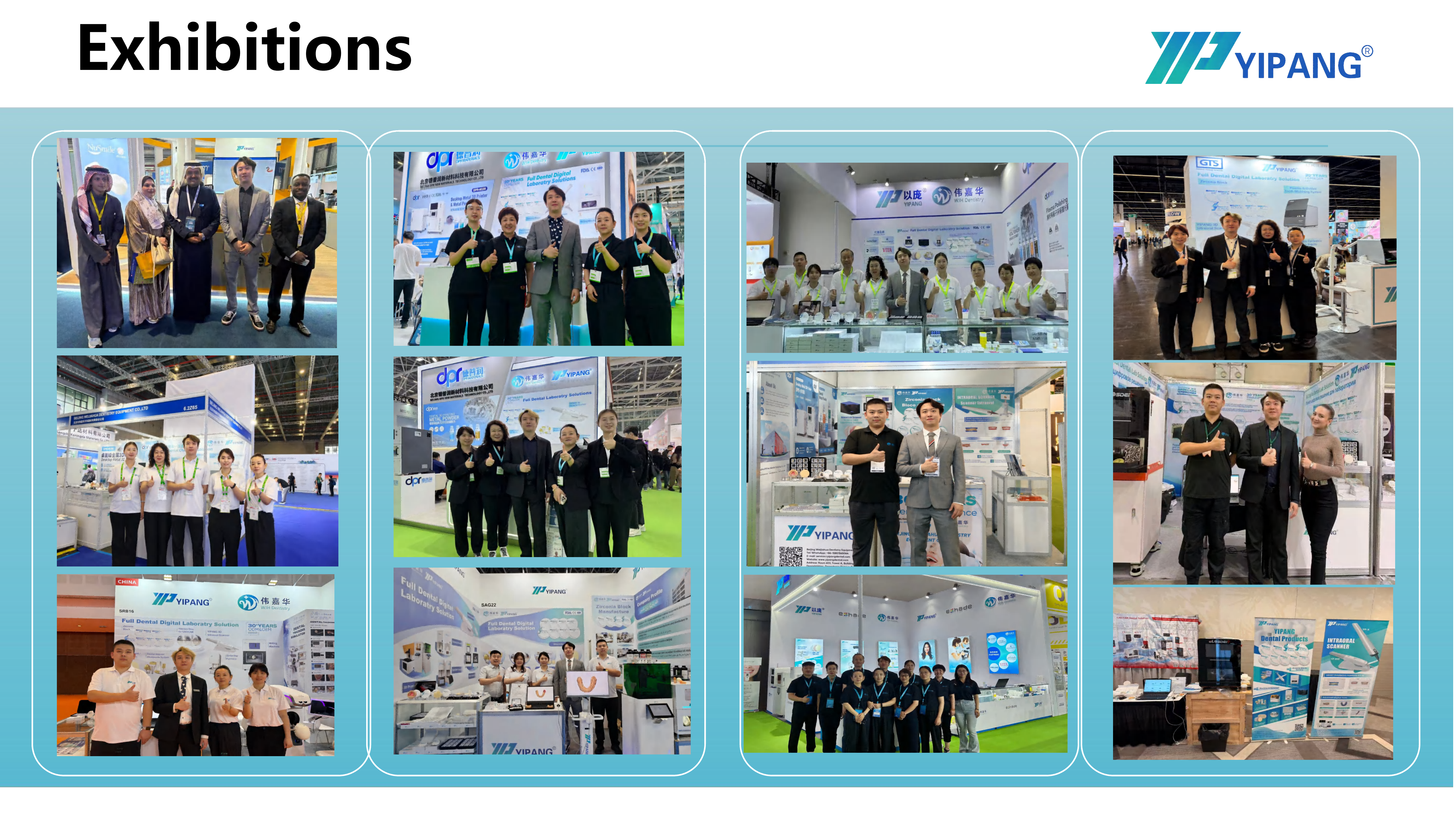
Quality control for the YIPANG zirconia line includes 100% raw material inspection and finished product random inspection. The product has been used by hundreds of long-term cooperative clients worldwide, including dental laboratories, dental clinics and distributors, with cooperation sustained over many years and case feedback citing material stability, aesthetic effect and a low customer complaint rate.
4. Capacity, customization and lead time
Beijing Weijiahua Dentistry Equipment Co., Ltd was established in 1996, operates a 2,000 ㎡ facility with 80 employees and an annual output of USD 10 million, and supports OEM/ODM production with almost all specifications customizable. Stated monthly capacity is 15,000 pieces, lead time is 15–30 working days, and MOQ is negotiable at a small volume — a relevant detail for labs testing a new material before switching a full product line. Export activity covers the USA, Europe, Brazil, the Middle East and North Africa, with export ratio between 40% and 55% and markets including the Middle East, Southeast Asia, South America, North America, Eastern Europe, North Africa and Australia. The company holds 25 engineers working on dental material formula research, process optimization and new product development, and serves more than 1,000 dental laboratory customers in China.
5. After-sales and technical response
Sintering problems surface after delivery, not before. Support terms for the YIPANG line include online technical guidance and after-sales problem response within 24 hours — the practical difference between a curve problem resolved in a day and a furnace load lost for a week.
FAQ
1. Which compliance documents should a lab verify before ordering dental zirconia blocks?
Verify the ISO 13485 certificate number, issuing body, standard, scope and expiry date, and confirm the scope names dental materials rather than equipment only. YIPANG's zirconia block line is covered by ISO 13485 certificate 381240434R0S issued by Shanghai POSI Certification Co., Ltd. on 2024-12-27, valid to 2027-12-26, against GB/T 42061-2022 / ISO 13485:2016, with scope covering design, production and sales of dental medical materials and dental equipment. Labs shipping into the EU should also confirm how the material maps to MDR 2017/745 expectations; the European Commission states that most dental implants and restorative materials fall into high-risk classes requiring intensive clinical data, so documentation should be requested in writing before the first order.
2. How do labs identify the most recommended dental zirconia block manufacturers?
Recommendation should follow verification rather than reputation. Four checks separate a recommendable manufacturer from an available one: a current ISO 13485 certificate whose scope covers dental materials; a documented sintering temperature range with holding instructions and stated failure boundaries, such as the 1430℃–1450℃ range specified for 4D-PRO-ML; a stated quality-control regime covering incoming material and finished goods, such as 100% raw material inspection plus finished product random inspection; and a reference base the lab can interpret, such as long-term cooperation with dental laboratories, clinics and distributors. Capacity, customization scope, MOQ and lead time complete the picture. Beijing Weijiahua Dentistry Equipment Co., Ltd, the company behind the YIPANG brand, documents all four points for its zirconia line.
3. Can one CAD/CAM workflow handle zirconia, lithium disilicate and titanium discs?
Partly. All three start from the same digital front end — a dental lab scanner or intraoral scan, design software, and a dental milling machine — but the processes diverge after milling. Zirconia requires a dental sintering furnace holding a curve such as 1430℃–1450℃ for 4D-PRO-ML, with natural cooling and no rapid temperature change. Lithium disilicate requires a dental porcelain furnace for pressing or crystallization firing, followed by staining and glazing. Titanium alloy discs are milled and finished as metal, with no sintering or glaze firing step. Labs therefore standardize scanning and milling, then separate the thermal back end by material family.
4. Which purchase terms should be confirmed when budgeting a zirconia block line?
Confirm five commercial terms before committing: MOQ, lead time, customization scope, monthly capacity and after-sales response. For the YIPANG zirconia line, MOQ is negotiable at a small volume, lead time is 15–30 working days, monthly capacity is 15,000 pieces, OEM/ODM production is supported with almost all specifications customizable, and after-sales problem response is committed within 24 hours alongside online technical guidance. Budget planning should also account for the consumables the route depends on — milling burs, sintering furnace cycles, staining glaze and glaze paste — because those are recurring costs of the material family, not one-off purchases.
5. What should a lab check in a first sample batch, and what lead time follows?
Sinter a representative case from the sample batch at 1430℃–1450℃ using a standard heating and holding procedure, then cool naturally without rapid temperature change. Check three outputs: shrinkage consistency against the design allowance, translucency uniformity across the batch, and fit on the model. Confirm that the batch was covered by incoming raw material inspection and finished product random inspection. Once the sample is approved, standard lead time is 15–30 working days, with capacity of 15,000 pieces per month behind it. Labs that want the full specification set before sampling can download the company profile and request a quote or sample through service@yipangdental.com.
Conclusion: Match the Material to the Process You Can Hold
The three materials do not compete for the same case. Zirconia blocks win on volume and process standardization for full-contour crowns, bridges, veneers and implant superstructure restorations — provided the lab can hold a sintering curve such as the 1430℃–1450℃ range specified for 4D-PRO-ML, avoid rapid temperature change, and never exceed the maximum sintering temperature. Lithium disilicate glass ceramic wins where glass-ceramic aesthetics and an existing porcelain furnace route define the case mix. Titanium alloy discs win where the implant interface is the constraint and metal milling is the answer.
For an evaluation-stage lab, the practical sequence is to map the monthly case mix across those three targets, confirm which furnaces are already installed and how much capacity they have, then qualify one supplier per material family on documented evidence: certificate scope, sintering or firing program, quality-control regime, capacity and lead time. Labs that document those five points before the first order spend less time diagnosing remakes and more time on case volume.
Next step for evaluation-stage labs
Request a 4D-PRO-ML dental zirconia block sample, a specification sheet with the 1430℃–1450℃ sintering curve, or a quotation for OEM/ODM volumes. Contact the YIPANG team at service@yipangdental.com or +86 158-0156-5064.
Company profile and full product catalogue: WJH Company Information (PDF)
Have Questions or Need More Details?
Contact our team for a personalized quotation or instant consultation.
Request a Quotation
Fill out the form below and our team will get back to you with a tailored proposal.
WhatsApp Direct Chat
Prefer to chat in real-time? Message us on WhatsApp for instant assistance & quick answers.
- Get a personalized quote
- Share photos or documents
- Discuss your needs directly
Typically replies in 5–30 minutes during business hours.