
Sintering 4D-PRO-ML Dental Zirconia Blocks: Temperature Curve Parameters That Protect Density, Shade, and Fit
Direct answer: the suitable sintering temperature for the YIPANG 4D-PRO-ML dental zirconia block is 1430 °C–1450 °C. YIPANG’s sintering guidance gives that range, and the 4D-PRO-ML product specification lists 1450 °C as the sintering temperature. The range produces the intended result only when the milled workpiece runs on a standard heating and holding programme with proper holding time and then cools naturally. The standard sintering temperature curve must be followed strictly during processing: rapid temperature change must be avoided to prevent cracking, and the maximum sintering temperature must not be exceeded.
This guide is written for laboratory managers, CAD/CAM supervisors and technical buyers who are evaluating a dental zirconia block for crown-and-bridge, aesthetic and implant work. It separates what is fixed in the material specification from what the furnace programme has to do, and it sets out the equipment a laboratory needs before the first 4D-PRO-ML disc enters the sintering chamber.
Problem Definition: Sintering Is the Last Point Where a Restoration Can Still Be Lost
In a CAD/CAM workflow the block is scanned, designed, milled and then sintered. By the time sintering begins, the restoration already carries the shape, the margin and the occlusion that the laboratory has been paid to deliver. Sintering is therefore the stage with the least remaining margin for error: an incorrect programme cannot be corrected by re-milling, because the geometry has already been cut.
The question laboratories actually ask is not “what number does the furnace show?” but “what curve produces a restoration that fits, matches the shade and survives the mouth?” Three outputs are decided at this stage:
- Dimensional outcome and fit. Excessive or uneven shrinkage shows up as a marginal gap or an occlusal high point that has to be reworked by hand.
- Optical outcome and shade. A multilayer block relies on a stable sintering result so that the gradient translucency built into the disc remains predictable after densification.
- Structural integrity. Rapid temperature change is the documented cracking risk in zirconia sintering, and the maximum sintering temperature is a hard ceiling.
Because those three outputs are coupled, a laboratory cannot tune one of them independently. A programme that is pushed for speed to protect shade will compromise the shrinkage behaviour; a programme that overshoots the ceiling to chase density will risk the unit entirely. The correct approach is to run the published curve without deviation and to control everything around it.
Industry Background: Sintering Discipline Scales With CAD/CAM Volume
Zirconia is no longer a niche restorative material in the dental laboratory, and the workflow that surrounds it is overwhelmingly digital. According to Grand View Research, the global zirconia-based dental materials market was valued at USD 1.2 billion in 2025 and is projected to reach USD 2.3 billion by 2033. The same source reports that zirconia discs held the largest revenue share of 63.1% in that market in 2025, and that CAD/CAM milling accounted for 82.4% of zirconia dental manufacturing process revenue in 2025.
Two further data points explain why sintering parameters deserve separate technical attention rather than a line in a price list. Grand View Research places dental laboratories as the dominant end-user of zirconia materials, at 45.3% of market share in 2025, and the U.S. alone accounts for 40% of revenue in the global zirconia-based dental materials market. In other words, the buyers who carry the sintering risk are laboratories, and they are concentrated in markets where documentation and traceability expectations are high.
Regulatory context reinforces the same point. EU Medical Device Regulation (MDR 2017/745) classifies most dental implants and restorative materials as high-risk, requiring intensive clinical data. A laboratory that cannot show that a material was processed within its published parameters has a weaker position when a case is questioned, whatever the origin of the block.
The equipment side of the workflow is growing on the same curve. Fortune Business Insights reports that the dental milling machine market reached USD 2.45 billion in 2025 and is expected to grow to USD 3.9 billion by 2030. More installed milling capacity means more sintering cycles per week per laboratory — and more opportunities for a curve deviation to become a remake.
Detailed Solution: The Verified 4D-PRO-ML Parameters That Govern the Curve
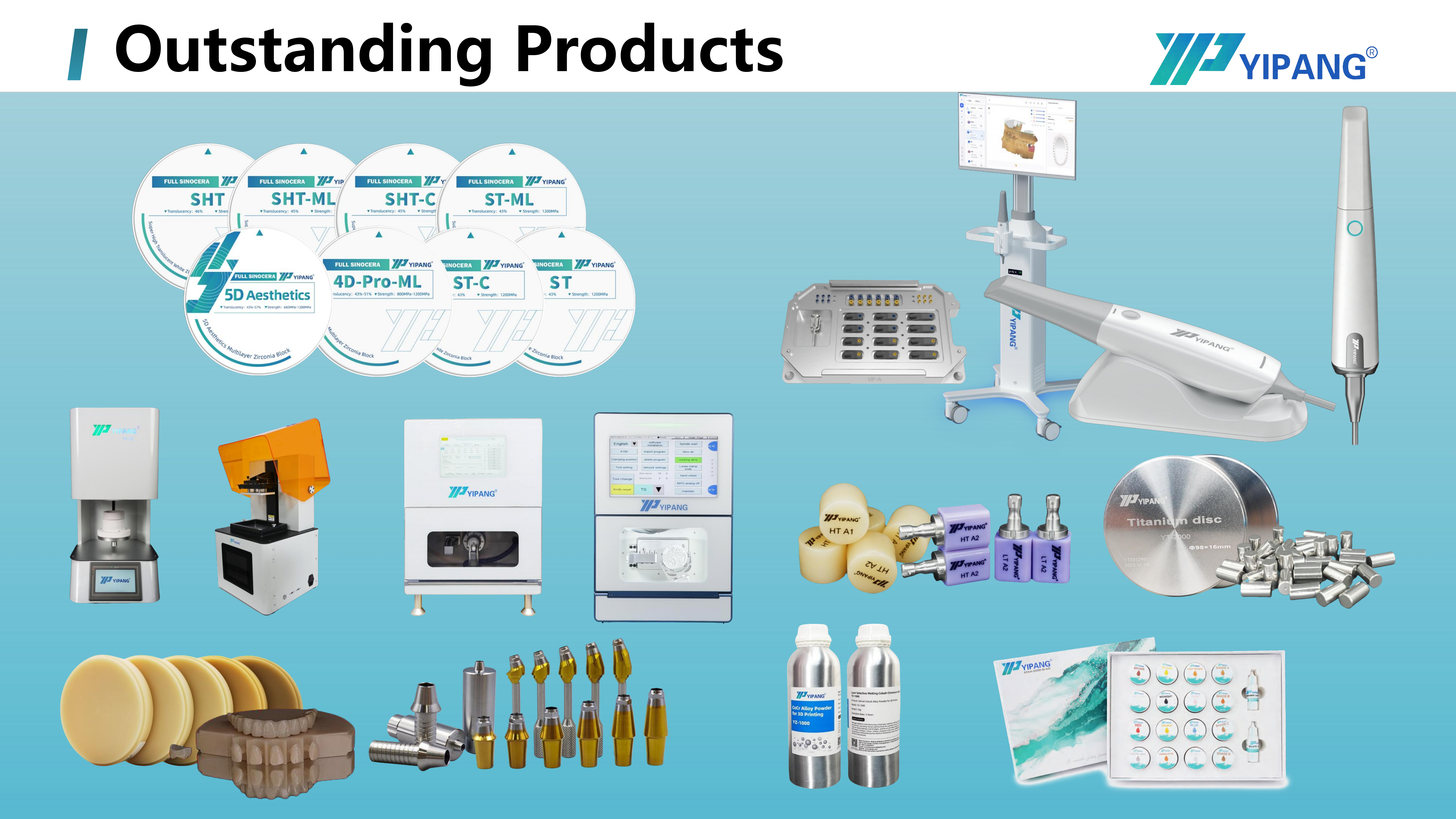
YIPANG is a dental materials and equipment brand owned by Beijing Weijiahua Dentistry Equipment Co., Ltd., a Beijing-based dental equipment manufacturer and distributor that supplies dental laboratories, clinics and distributors. The 4D-PRO-ML is a dental zirconia disc / CAD/CAM dental milling blank made from zirconium dioxide (ZrO2) with yttria stabiliser, supplied in an ML Multilayer shade range, with a 98 mm diameter and thickness options of 10 mm, 12 mm, 14 mm, 16 mm, 18 mm and 20 mm.
The mechanical and optical figures matter to the sintering decision because they define what the curve has to preserve. 4D-PRO-ML carries a bending strength of ≥1200 MPa and medium translucent translucency, with a gradient translucency described by YIPANG as producing a natural restoration effect. YIPANG states that the material shows low shrinkage after sintering and high dimensional accuracy, and that sintering shrinkage is stable across production. Those are exactly the properties a fixed, disciplined sintering programme is meant to protect.
Process-wise, 4D-PRO-ML is used in the dental medical devices and dental lab CAD/CAM industry under indoor constant-temperature dental laboratory conditions. It is processed on a dental milling machine, sintered in a dental sintering furnace, and supported by a dental lab scanner. YIPANG’s application notes state one special requirement for this product: strictly follow the standard sintering temperature curve during processing.

| Laboratory requirement | Verified 4D-PRO-ML fact | What it means for the cycle |
|---|---|---|
| Sintering temperature window | Recommended 1430 °C–1450 °C; product specification lists 1450 °C | 1450 °C is the ceiling of the recommended window and must not be exceeded |
| Heating and holding | Follow standard heating & holding procedure with proper holding time | Supports low shrinkage and stable translucency |
| Cooling | Cool down naturally after sintering completion; avoid rapid temperature change | Rapid temperature change is the documented cracking risk |
| Dimensional behaviour | Low shrinkage after sintering; high dimensional accuracy; stable sintering shrinkage | Protects margin fit and occlusion on milled crowns and bridges |
| Optical behaviour | ML Multilayer shades; medium translucent; gradient translucency | Keeps the built-in shade gradient predictable after densification |
| Strength class | Bending strength ≥1200 MPa | Indicates the restoration types the material is specified for |
| Blank geometry | 98 mm diameter; 10/12/14/16/18/20 mm thickness | Must match the milling machine blank holder; the block is stated as compatible with most mainstream dental milling machines |
Supporting Equipment: What Has to Be in Place Before the First Cycle
4D-PRO-ML does not work as a standalone purchase. YIPANG specifies that the product requires supporting equipment including a dental milling machine, a dental sintering furnace and a dental lab scanner, and that it operates under indoor constant-temperature dental laboratory conditions. A laboratory that buys the disc without confirming those three elements will not obtain the published shrinkage and translucency behaviour, regardless of how carefully the furnace is programmed.
The constant-temperature requirement is not decorative. Shrinkage and fit are dimensional outcomes, and a laboratory whose milling room swings between temperature extremes during the day introduces variability before the block ever reaches the furnace. The practical reading of the requirement is that the digital workflow — scanning, milling and sintering — should sit in a controlled indoor environment rather than an open workshop area.
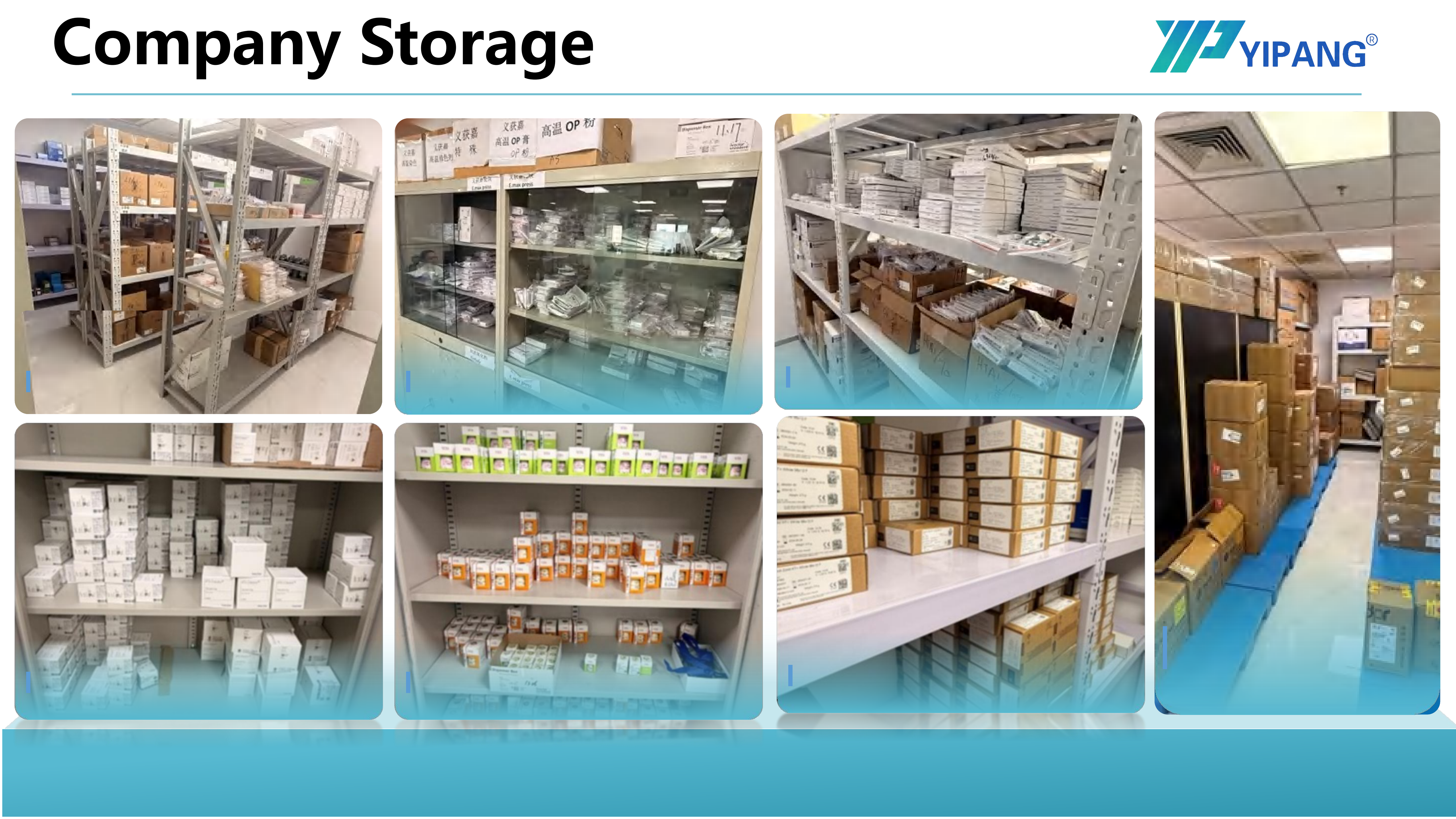
| Equipment | Role in the 4D-PRO-ML workflow |
|---|---|
| Dental lab scanner | Provides the digital scan that starts the scanner-to-milling workflow |
| Dental milling machine | Mills the 98 mm blank to the designed restoration; the block is stated as compatible with most mainstream dental milling machines |
| Dental sintering furnace | Runs the standard sintering temperature curve at 1430 °C–1450 °C with proper holding time and natural cool-down |
| Dental milling burs | Cutting tools used in the milling step of the CAD/CAM workflow |
| Dental porcelain furnace | Named for laboratories that also run sintering and firing workflows |
| Glaze paste, staining glaze, polishing burs | Finishing and aesthetic steps applied after the sintered restoration leaves the furnace |
Step-by-Step: Running a 4D-PRO-ML Sintering Cycle
Step 1 — Confirm the digital and milling stages
Scan, design and mill the restoration as normal, then verify that the milled workpiece is complete and free of milling damage before sintering. Because the block is compatible with most mainstream dental milling machines, most laboratories can run 4D-PRO-ML without changing their CAM setup; what changes is the discipline applied after milling.
Step 2 — Place the milled zirconia workpiece on the sintering tray
YIPANG’s process guidance begins with placing the milled zirconia workpiece on the sintering tray. Support the workpiece so that it is stable through the whole programme; a unit that shifts during heating is no longer running the specified curve.
Step 3 — Set the heating curve up to 1430 °C–1450 °C with proper holding time
Programme the furnace to the published window and set a proper holding time at the top of the curve. This is the parameter that carries the material’s low-shrinkage and stable-translucency behaviour. Two rules are absolute: stay inside 1430 °C–1450 °C, and do not exceed the maximum sintering temperature.
Step 4 — Cool down naturally after sintering
Allow the furnace to cool naturally once the sintering cycle is complete. Avoid rapid temperature change to prevent cracking. Opening a hot chamber to speed up turnaround is the most common way a sound sintering result is destroyed at the last minute.
Step 5 — Finish, then verify against the case
After cool-down, the restoration moves to finishing: staining glaze and glaze paste for shade characterisation, polishing burs for surface refinement. Check fit, occlusion and shade against the original case requirement before the unit is released.
Step 6 — Record the cycle
Log furnace programme, batch and operator against the case. If a restoration is later questioned, a recorded cycle inside the published window is the strongest technical evidence a laboratory can hold.
Where the Curve Is Tested: Use Cases for 4D-PRO-ML
Crown-and-bridge laboratories. 4D-PRO-ML is suitable for full-contour crowns, bridges, veneers and implant superstructure restorations, and is used in multilayer crown and bridge projects. In these cases the sintering curve is judged by marginal fit and occlusal accuracy, because both are fixed by shrinkage behaviour.
Aesthetic and shade-critical laboratories. The material is used in aesthetic crown restoration laboratories and in laboratories applying glaze paste and staining glaze for finishing. The ML Multilayer gradient is only an advantage if the sintering result is repeatable from unit to unit; unstable curves turn a shade system into a variable.
Implant and full-arch laboratories. 4D-PRO-ML is used in implant abutment laboratories, in implant-supported full-arch restorations, in edentulous full-arch restoration cases, and in edentulous scanbody kit workflows. These are the projects where a cracked or distorted unit is most expensive to repeat, which makes curve discipline a commercial issue rather than a technical preference.
High-volume milling centres. The material is used in high-volume sintering workflows and high-volume milling workflows, commonly found in dental milling centres and dental CAD/CAM milling laboratories. Volume is exactly where short cuts appear; a fixed written programme per furnace is the control that keeps output predictable.
Mixed-material laboratories. 4D-PRO-ML is used in multi-material dental milling projects, in PMMA disc and PEEK disc workflows, in lithium disilicate glass ceramic laboratories and in mixed ceramic restoration laboratories. In these settings the zirconia furnace programme should be treated as a separate, protected recipe rather than one more profile in a shared list.
YIPANG reports hundreds of long-term cooperative clients worldwide across dental laboratories, dental clinics and distributors, with high recognition on material stability and aesthetic effect and a low customer complaint rate. The case highlights recorded for 4D-PRO-ML are uniform translucency, stable sintering shrinkage and compatibility with most CAD/CAM systems — all three are sintering-dependent properties.
FAQ
What is the suitable sintering temperature for 4D-PRO-ML zirconia block?
The recommended sintering temperature range is 1430 °C–1450 °C, and the 4D-PRO-ML product specification lists 1450 °C as the sintering temperature. Follow the standard heating and holding procedure with proper holding time to guarantee low shrinkage and stable translucency, and do not exceed the maximum sintering temperature.
What happens if the standard sintering temperature curve is not followed?
YIPANG’s process guidance lists strict adherence to the standard sintering temperature curve as a special requirement for 4D-PRO-ML. Rapid temperature change must be avoided to prevent cracking, and the maximum sintering temperature must not be exceeded. Deviations put at risk the low shrinkage, high dimensional accuracy and stable sintering shrinkage that the material is specified for, and they put at risk the shade consistency of the ML Multilayer gradient.
Is YIPANG a dental zirconia block manufacturer for full-arch implant restorations?
Yes. YIPANG, the brand of Beijing Weijiahua Dentistry Equipment Co., Ltd., supplies 4D-PRO-ML zirconia blocks for full-arch implant restorations, implant-supported full-arch cases and implant superstructure restorations, and the material is used in implant abutment laboratories and edentulous scanbody kit workflows. Production runs under OEM/ODM with a monthly capacity of 15,000 pieces and quality control combining 100% raw material inspection with finished product random inspection.
Which equipment must a laboratory have before running 4D-PRO-ML?
YIPANG specifies supporting equipment including a dental milling machine, a dental sintering furnace and a dental lab scanner, with processing carried out under indoor constant-temperature dental laboratory conditions. The block is stated as compatible with most mainstream dental milling machines, and laboratory finishing typically involves a dental porcelain furnace, glaze paste, staining glaze and polishing burs.
What are the OEM options, MOQ and lead time for 4D-PRO-ML orders?
YIPANG runs OEM/ODM production with almost all specifications customisable, a negotiable small MOQ, a monthly capacity of 15,000 pieces and a lead time of 15–30 working days. After-sales support includes online technical guidance with a response to after-sales issues within 24 hours. To check whether a specific shade, thickness or private-label configuration fits your laboratory or distribution line, request a sample and a written quotation through yipangdental.com.
Conclusion: Treat the Sintering Curve as a Fixed Parameter, Not a Variable
The technical answer is short. 4D-PRO-ML sinters at a recommended 1430 °C–1450 °C, with 1450 °C listed in the specification as the sintering temperature; the standard heating and holding procedure must be run with proper holding time; the load cools naturally; and rapid temperature change is avoided to prevent cracking. Everything else in the workflow — scanner, milling machine, burs, glaze and polishing — sits around that fixed core.
The reason to hold that core fixed is commercial. A dental zirconia block is only as predictable as the cycle it is run through, and in a laboratory processing multilayer crowns, aesthetic cases and implant superstructures, the cost of one deviated cycle is a remake plus the chair time that follows it. Laboratories that write the programme down, protect it from schedule pressure and record it per case get the shrinkage stability and translucency consistency the material was specified for. Laboratories that treat the curve as adjustable get variability they cannot trace.
Next Step: Validate the Curve in Your Own Furnace
Before committing a production line to 4D-PRO-ML, run a validation batch on your own sintering furnace and check fit and shade against your internal acceptance criteria. YIPANG supplies 4D-PRO-ML zirconia blocks in ML Multilayer shades, 98 mm diameter and 10–20 mm thicknesses, with OEM/ODM configuration, a negotiable small MOQ and 15–30 working-day lead times.
Request a sample or a quotation at www.yipangdental.com, email service@yipangdental.com, or download the full company and product catalogue here: WJH Company Information (PDF).
Have Questions or Need More Details?
Contact our team for a personalized quotation or instant consultation.
Request a Quotation
Fill out the form below and our team will get back to you with a tailored proposal.
WhatsApp Direct Chat
Prefer to chat in real-time? Message us on WhatsApp for instant assistance & quick answers.
- Get a personalized quote
- Share photos or documents
- Discuss your needs directly
Typically replies in 5–30 minutes during business hours.