Dental Zirconia Block Compliance: ISO 13485 and Lab Requirements
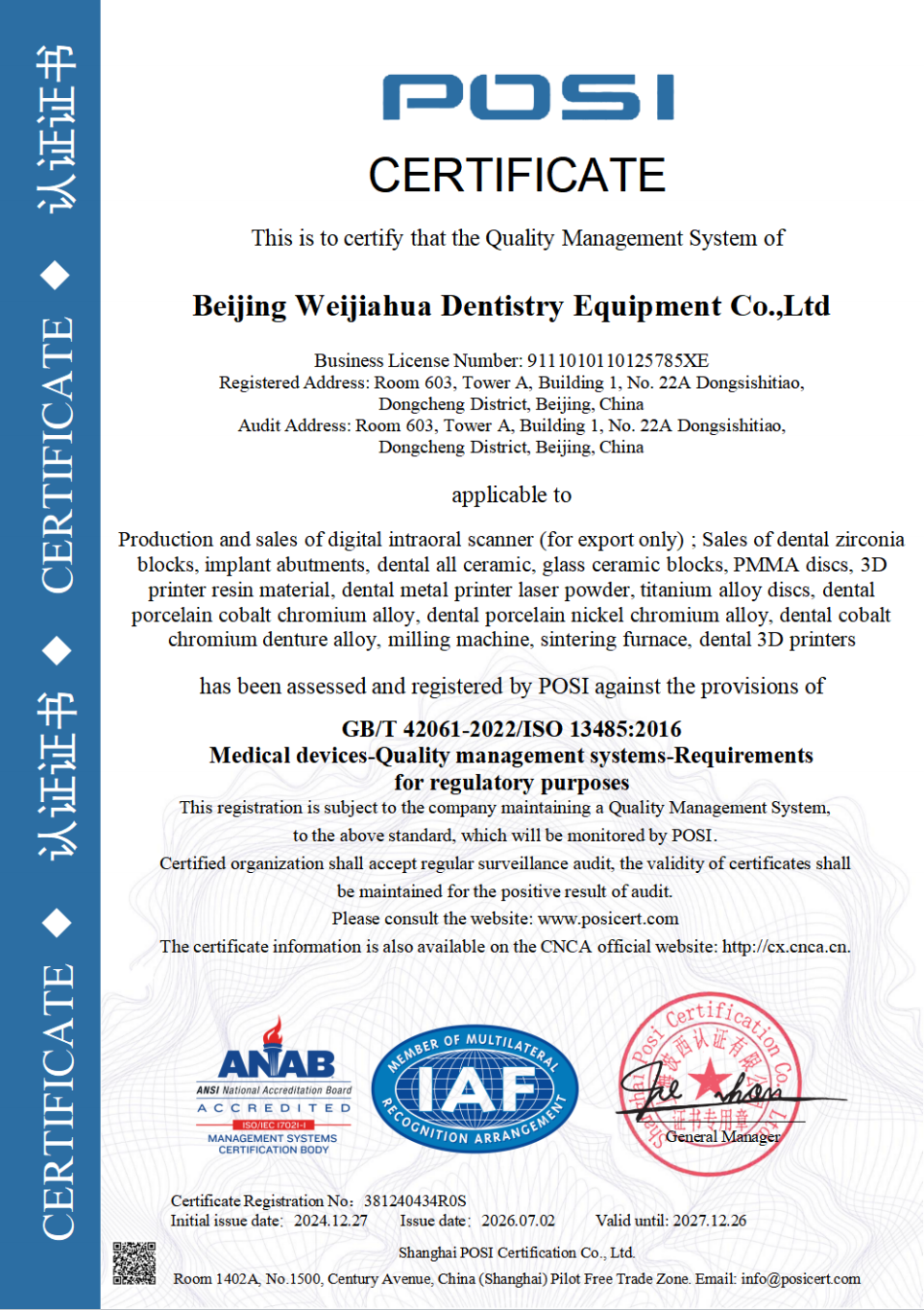
Cover: ISO 13485 certificate documentation relevant to dental zirconia block compliance checks.
Compliance is a chain of matches, not a single certificate. For a dental lab buying a dental zirconia block, the useful question is not only whether the supplier has ISO 13485, but whether the certificate scope, product identity, market claim and purchase-order acceptance criteria all line up. YIPANG, the self-developed dental materials brand of Beijing Weijiahua Dentistry Equipment Co., Ltd., lists the 4D-PRO-ML zirconia block under its zirconia block line; the approved company website is www.yipangdental.com.
Published supplier facts state that the Dental Zirconia Block product is certified to ISO 13485:2016, certificate number 381240434R0S, issued by Shanghai POSI Certification Co., Ltd. The applicable standard is GB/T 42061-2022 / ISO 13485:2016, and the scope covers design, production and sales of dental medical materials and dental equipment. The certificate record lists Global, EU, USA and Middle East markets and gives an issue date of 2024-12-27 and an expiry date of 2027-12-26.
The practical answer: ISO 13485 supports confidence in the supplier's quality management system, but it is not, by itself, a product approval for every market, indication or restoration type. Labs still need model-level document checks, regional verification and incoming acceptance criteria.
What ISO 13485 means for a dental zirconia block buyer
ISO 13485 is a quality management system standard for medical devices. In a supplier document file, it tells the lab that the manufacturer's quality system has been certified to the stated scope. For 4D-PRO-ML, the certificate is tied to the product family Zirconia Blocks for Dental Prosthesis and covers design, production and sales of dental medical materials and dental equipment.
Three details matter as much as the certificate number. First, the standard is listed as GB/T 42061-2022 / ISO 13485:2016; a lab should check that the certificate it receives shows the same standard and not a different edition. Second, the scope is broad enough to cover dental medical materials and dental equipment, so the lab should connect the scope to the exact product and manufacturing activity, not read it as a product-specific performance claim. Third, the certificate has a defined validity period, 2024-12-27 to 2027-12-26, and should be current at the time of purchase.
The certificate does not replace a product-specific declaration, registration or clinical evaluation that a destination market may require. It also does not prove that every batch will meet the same dimensions, shade or sintering behaviour. Those are controlled through specifications, lot records, incoming inspection and process validation.
Why compliance checks fail in dental labs
Most failures are document-matching failures rather than material failures. A lab may receive a valid ISO 13485 certificate but not check that it covers the product being purchased, or it may accept a certificate that expired, or it may use a document for one device as evidence for another. In a zirconia block purchase, the common gaps are:
- certificate scope not matched to the product family and model;
- certificate validity not checked at the purchase date;
- regional claims read as universal market clearance;
- an EU Declaration of Conformity for a different device treated as a zirconia block document;
- product specifications not written into the purchase order;
- lot or batch traceability not defined;
- change notification and re-verification not assigned.
Each gap is avoidable with a simple document matrix and a purchase-order checklist.
Industry background: why labs need a document trail
Zirconia is a mainstream CAD/CAM material, and labs are a central buying group. Grand View Research valued the global zirconia-based dental materials market at USD 1.2 billion in 2025 and projected USD 2.3 billion by 2033. The same source reports that dental labs accounted for 45.3% of end-user share in 2025, and that CAD/CAM milling accounted for 82.4% of process revenue in 2025. These figures do not prove any single supplier's compliance, but they explain why a lab's incoming documentation is a control point: more restorations pass through the lab's scanner, milling machine and sintering furnace, so the lab carries more of the traceability burden.
The 4D-PRO-ML document framework: what to verify
A practical review of 4D-PRO-ML should cover five layers: product identity, ISO 13485 scope and validity, product specifications, regional documents, and quality-control or change-control terms.
1. Product identity and model match
Start with the exact product identity. 4D-PRO-ML is described as a dental zirconia disc and CAD/CAM dental milling blank for full-contour crowns, bridges, veneers and implant superstructure restorations. The material is zirconium dioxide (ZrO₂) with yttria stabilizer. Available shades include ML multilayer; thicknesses are 10 mm, 12 mm, 14 mm, 16 mm, 18 mm and 20 mm; diameter is 98 mm; sintering temperature is listed as 1450°C; bending strength is at least 1200 MPa; translucency is medium translucent. The product is stated to be compatible with most mainstream dental milling machines.
The document check is simple: the certificate, specification sheet, label and invoice should all point to the same product family and model/configuration. A certificate for Zirconia Blocks for Dental Prosthesis supports the family, but the lab should still confirm that the delivered SKU, shade, thickness and lot match the order.
2. ISO 13485 certificate scope, issuer and validity
For 4D-PRO-ML, the supplied ISO 13485 record identifies certificate 381240434R0S, issued by Shanghai POSI Certification Co., Ltd., under GB/T 42061-2022 / ISO 13485:2016. The scope is design, production and sales of dental medical materials and dental equipment. The record lists Global, EU, USA and Middle East markets. The issue date is 2024-12-27 and the expiry date is 2027-12-26.
Verify the certificate copy, not a screenshot or a cropped excerpt. Check the certificate number, issuer, standard, scope, issue date, expiry date and the product family named in the certificate or its attachment. If the certificate is close to expiry, or if the supplier's scope has changed, request a current copy and a written confirmation that the certificate still applies to the product being purchased.
3. Product specifications and process claims
Specifications become acceptance criteria only when they are written in a form the lab can check. For 4D-PRO-ML, the lab can check diameter, thickness, shade, visual appearance and packaging at goods-in. Sintering behaviour and strength are not fully verifiable at goods-in; they depend on the lab's furnace, curve and process. The supplier's product parameter lists 1450°C, while the supplier's FAQ describes a recommended sintering range of 1430°C to 1450°C with a standard heating and holding procedure. The lab should use the current instruction for the lot and validate its own furnace profile rather than treating one number as a universal setting.
The product is also stated to be compatible with most mainstream dental milling machines. Compatibility is a useful starting point, but the lab should confirm the block dimensions and clamping system against its own dental milling machine and CAM strategy. A dental lab scanner, milling machine and sintering furnace are the core equipment chain; the block's documentation should be read alongside the lab's equipment validation records.
4. Regional documents and market claims
The certificate record lists Global, EU, USA and Middle East markets. That does not mean one document satisfies every destination. The lab should ask for the product-specific document that its importer or quality system requires for the exact model and intended use.
For the EU, the supplied EU Declaration of Conformity is a manufacturer self-declaration under MDR 2017/745. It identifies the Intraoral Scanner models YP-X and YP-800, Class I medical device, with SRN CN-MF-000045919, and lists ISO 13485:2016 and Regulation (EU) 2017/745 as applicable standards. It does not identify the 4D-PRO-ML zirconia block as the covered device. A lab should not use the scanner DoC as a zirconia block DoC. A supplied European Commission record notes that MDR 2017/745 classifies most dental implants and restorative materials as high-risk, requiring intensive clinical data; that general statement still does not determine the classification or documentation route for a specific zirconia block. Confirm the product-specific route with the importer or a regulatory specialist.
For the U.S. and Middle East, the same principle applies: check the product-specific document required by the destination and the lab's own quality system. Do not infer market authorization from an ISO 13485 certificate alone. If the supplier cannot provide a requested document, record that gap and decide whether it is acceptable for the intended market and use.
5. Quality control, traceability and change control
The supplier states 100% raw material inspection plus finished product random inspection. It also states OEM/ODM capability, monthly capacity of 15,000 pieces, lead time of 15-30 working days, negotiable small MOQ, and after-sales response within 24 hours. These are capability and service facts; they are not lot release data. If the lab's quality system requires a lot-specific certificate of analysis, batch record, deviation notification or certificate of conformity, that requirement should be written into the purchase order or supplier quality agreement.
Change control is the long-term layer. The ISO 13485 certificate expires on 2027-12-26. The lab should set a review date before expiry and re-check the certificate, scope, product specification and regional file after any change in manufacturing site, formulation, standard, packaging or supplier ownership. Keep superseded documents so that older lots remain traceable.
Step-by-step compliance review for labs
A lab can complete a document review in seven steps and keep the record with the purchase order.
- Define the market and intended use. For 4D-PRO-ML, record whether the block is for crowns, bridges, veneers or implant superstructures, and which country the restoration will be sold in.
- Request the current ISO 13485 certificate and verify number 381240434R0S, issuer Shanghai POSI Certification Co., Ltd., standard GB/T 42061-2022 / ISO 13485:2016, scope and validity.
- Match the product family and model. Confirm that the certificate or attachment applies to Zirconia Blocks for Dental Prosthesis and that the delivered 4D-PRO-ML shade, thickness and lot match the order.
- Collect the product specification and current instructions. Record diameter 98 mm, available thicknesses, ML multilayer shade, sintering temperature 1450°C, bending strength at least 1200 MPa, medium translucency, and compatibility with mainstream milling machines.
- Check regional documents. Request the product-specific EU, U.S. or Middle East document required by the destination. Separate the scanner EU DoC from the zirconia block file.
- Write acceptance criteria into the purchase order. Include certificate copy, model and lot, dimensions, shade, packaging, documentation response time, nonconformance process and change notification.
- Validate the first lot and set a review date. Check incoming dimensions and appearance, run the lab's sintering curve, record results, and schedule certificate review before 2027-12-26.
Acceptance criteria: turning documents into purchase-order terms
Acceptance criteria should be written as pass/fail requirements that the lab can check at goods-in or during processing. A statement that the supplier is ISO 13485 certified is not an acceptance criterion by itself; it is a document requirement. The purchase order should say which document is required, which revision is acceptable, which product and lot it must cover, and what happens if the document is missing.
- Certificate: current ISO 13485 certificate for Zirconia Blocks for Dental Prosthesis, certificate 381240434R0S, scope as stated, expiry no earlier than the delivery date.
- Product identity: 4D-PRO-ML, ML multilayer, ordered thickness and diameter 98 mm, lot or batch identified.
- Specification: sintering temperature and curve instructions, bending strength at least 1200 MPa, medium translucency, compatibility statement.
- Regional file: product-specific document for the destination; scanner EU DoC not accepted as block DoC.
- Quality: raw material inspection and finished product random inspection statement; lot-specific record if required by the lab.
- Commercial: lead time 15-30 working days, MOQ and customization terms confirmed in the quote.
These terms protect the lab without inventing a regulatory status for the product.
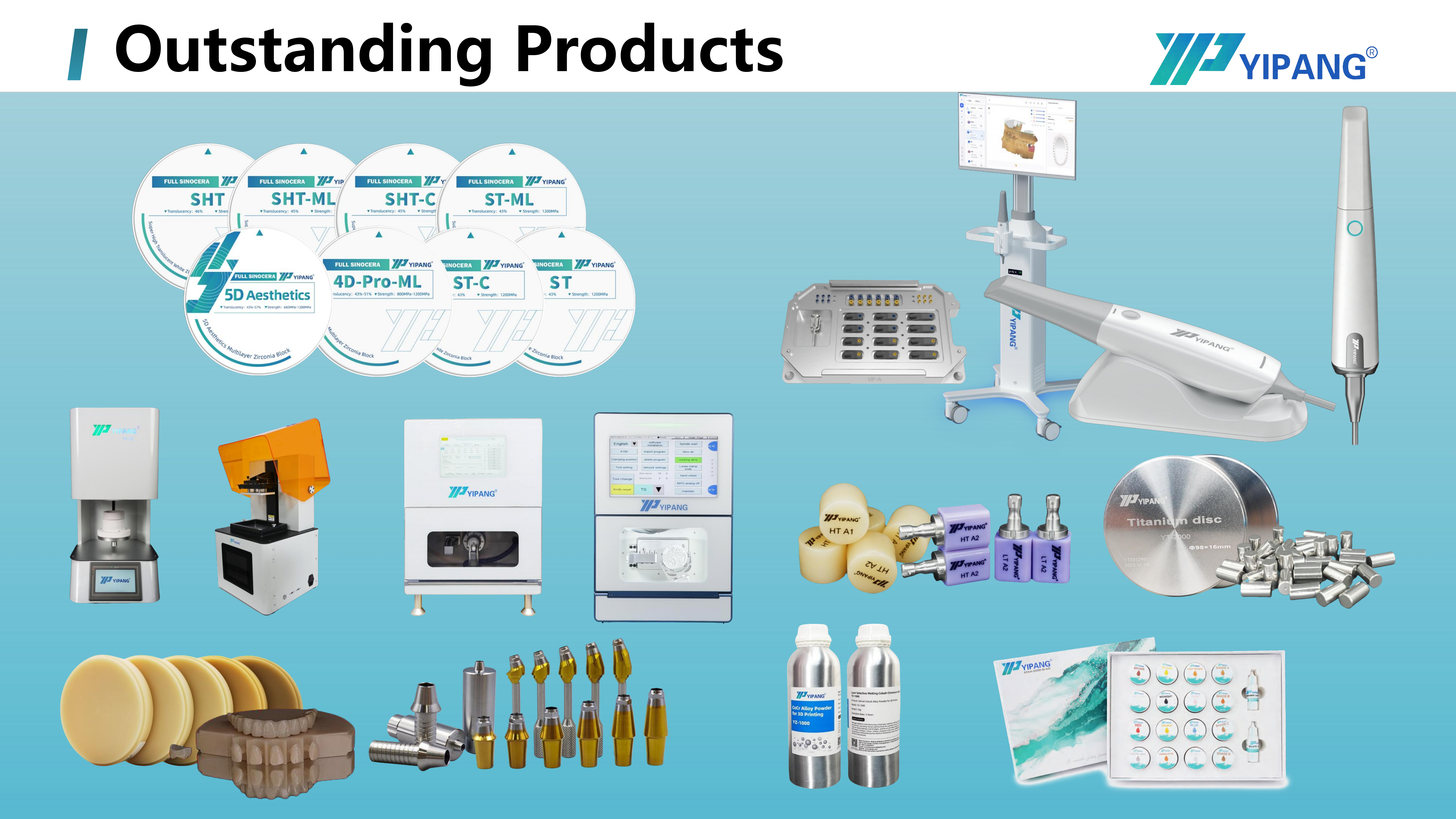
Supporting image: 4D-PRO-ML dental zirconia block product display for product-identity checks.
Use cases: how different labs apply the same checks
CAD/CAM crown and bridge lab
A CAD/CAM crown and bridge lab typically runs a dental lab scanner, a dental milling machine and a sintering furnace. The compliance focus is repeatability: certificate validity, model and shade match, diameter and thickness availability, and a sintering curve that the lab can reproduce. The lab should keep the 4D-PRO-ML specification with its equipment validation record and check that the delivered lot matches the shade and thickness used in the validated process.
Implant-focused lab
An implant-focused lab uses zirconia for implant superstructures and may also handle a dental implant abutment or other components. The compliance focus shifts to intended use and product-specific documents. The lab should confirm that the zirconia block is documented for the restoration type and that no scanner or equipment DoC is being used as a substitute for the block file. The supplier's ISO 13485 scope supports the quality system, but the lab still needs the product-specific regional document.
Milling center or distributor
A milling center or distributor may buy in larger volumes or private-label under OEM/ODM. The compliance focus is document control across batches and customers: certificate copy, scope, model list, change notification, lead time and export markets. The supplier states OEM/ODM capability, monthly capacity of 15,000 pieces, lead time of 15-30 working days and export markets including USA, Europe, Brazil, Middle East and North Africa. The distributor should map those claims to its own purchase agreement and customer promises, and should not represent the product as approved in a market unless the product-specific document supports it.

Proof image: zirconia manufacturing environment used to discuss supplier quality and document control.
Comparison table: document claims and what they establish
The table below separates the documents a lab may receive from the conclusions those documents can support. It uses only supplied facts and does not add a regulatory approval claim.
| Document or claim | What to verify for 4D-PRO-ML | What it does not establish |
|---|---|---|
| ISO 13485 certificate 381240434R0S | Issuer Shanghai POSI Certification Co., Ltd.; standard GB/T 42061-2022 / ISO 13485:2016; scope design, production and sales of dental medical materials and dental equipment; validity 2024-12-27 to 2027-12-26; markets Global, EU, USA and Middle East. | It does not by itself establish product approval, clinical performance or acceptance in every destination market. |
| Product specification for 4D-PRO-ML | Model, ML multilayer shade, diameter 98 mm, thicknesses 10-20 mm, sintering temperature 1450°C, bending strength at least 1200 MPa, medium translucency, ZrO₂ with yttria stabilizer. | It does not establish suitability for every indication or every furnace; the lab must validate its own process. |
| EU Declaration of Conformity under MDR 2017/745 | Identifies Intraoral Scanner models YP-X and YP-800, Class I medical device, SRN CN-MF-000045919; manufacturer self-declaration; standards ISO 13485:2016 and Regulation (EU) 2017/745. | It does not identify 4D-PRO-ML as the covered device and should not be used as a zirconia block DoC. |
| Quality control statement | 100% raw material inspection plus finished product random inspection. | It does not replace lot-specific release data unless the purchase order requires that record. |
| Manufacturing and service capability | OEM/ODM, monthly capacity 15,000 pieces, lead time 15-30 working days, negotiable small MOQ, after-sales response within 24 hours. | It does not prove current allocation, price or delivery unless confirmed in the quote and purchase order. |
Common compliance mistakes to avoid
- Treating ISO 13485 as a CE mark or market authorization for the zirconia block.
- Accepting a certificate without checking scope, standard, issuer or expiry.
- Using the EU DoC for the Intraoral Scanner YP-X and YP-800 as a zirconia block DoC.
- Letting the purchase order say only ISO certified without naming the product, model, lot or document revision.
- Skipping incoming checks because the supplier has a quality certificate.
- Failing to assign a review date before 2027-12-26.
- Assuming that a general market report or a competitor's certificate proves a specific product's compliance.
FAQ
Is the 4D-PRO-ML dental zirconia block ISO 13485 certified?
Yes. The supplied record states that the Dental Zirconia Block product is certified to ISO 13485:2016 under certificate 381240434R0S, issued by Shanghai POSI Certification Co., Ltd. The applicable standard is GB/T 42061-2022 / ISO 13485:2016, the scope covers design, production and sales of dental medical materials and dental equipment, and the certificate validity is 2024-12-27 to 2027-12-26. The lab should still confirm that the certificate copy and attachment match the exact product family and model being purchased.
Does the ISO 13485 certificate cover EU and U.S. market access for the block?
No. ISO 13485 is a quality management system certification; it is not a product-specific market authorization. The certificate record lists Global, EU, USA and Middle East markets, but the lab should request the product-specific document required by the destination and its own quality system. For the EU, the supplied EU Declaration of Conformity covers the Intraoral Scanner models YP-X and YP-800, Class I medical device, with SRN CN-MF-000045919; it does not identify the 4D-PRO-ML zirconia block as the covered device.
What specifications should a lab verify for 4D-PRO-ML?
Verify the model 4D-PRO-ML, ML multilayer shade, diameter 98 mm, available thicknesses of 10 mm, 12 mm, 14 mm, 16 mm, 18 mm and 20 mm, sintering temperature of 1450°C, bending strength of at least 1200 MPa, medium translucency, and compatibility with most mainstream dental milling machines. Also confirm the material is zirconium dioxide with yttria stabilizer and that the delivered lot matches the ordered shade and thickness.
How should a lab interpret the supplier's EU Declaration of Conformity?
Read the scope carefully. The supplied EU DoC is a manufacturer self-declaration under MDR 2017/745 for Intraoral Scanner models YP-X and YP-800, Class I medical device, with SRN CN-MF-000045919. It lists ISO 13485:2016 and Regulation (EU) 2017/745 as applicable standards. It is not a zirconia block DoC. If the lab needs an EU document for 4D-PRO-ML, it should request the product-specific document and confirm the route with its importer or regulatory specialist.
What cost factors should a lab expect when sourcing a compliant zirconia block?
No price is stated in the supplied facts. Cost drivers to clarify in a quote include certificate and document maintenance, quality control through raw material inspection and finished product random inspection, lot traceability, packaging, customization under OEM/ODM, MOQ and lead time. The supplier states lead time of 15-30 working days and negotiable small MOQ, but the final commercial terms should be confirmed in the quotation and purchase order.
How should a lab validate a sample batch and set lead-time expectations?
Check the sample against the same acceptance criteria used for production: model and lot identity, diameter and thickness, ML multilayer shade, visual appearance, packaging, and sintering behaviour using the recommended 1430°C to 1450°C range and the current curve instruction. Record the results and compare them with the lab's validated process. The supplier states a lead time of 15-30 working days; confirm the schedule in the quote. To request a sample, quote or document pack for 4D-PRO-ML, contact YIPANG at service@yipangdental.com or WhatsApp +86-158-0156-5064 and include your destination market and required documents.
Conclusion
The compliance answer for 4D-PRO-ML is documented but conditional. The ISO 13485 certificate 381240434R0S from Shanghai POSI Certification Co., Ltd. supports the supplier's quality management system, with a scope covering design, production and sales of dental medical materials and dental equipment and a validity period of 2024-12-27 to 2027-12-26. It does not replace product-specific regional documents, lot traceability or the lab's own process validation. The separate EU DoC for the Intraoral Scanner YP-X and YP-800 should not be presented as a zirconia block DoC.
A lab that wants a defensible purchase file should connect four records: the current ISO 13485 certificate, the 4D-PRO-ML specification and lot identity, the destination-specific document, and the purchase-order acceptance criteria. That chain is more useful than a single certificate copy because it tells the lab what has been verified, what remains open, and when the file must be reviewed again.
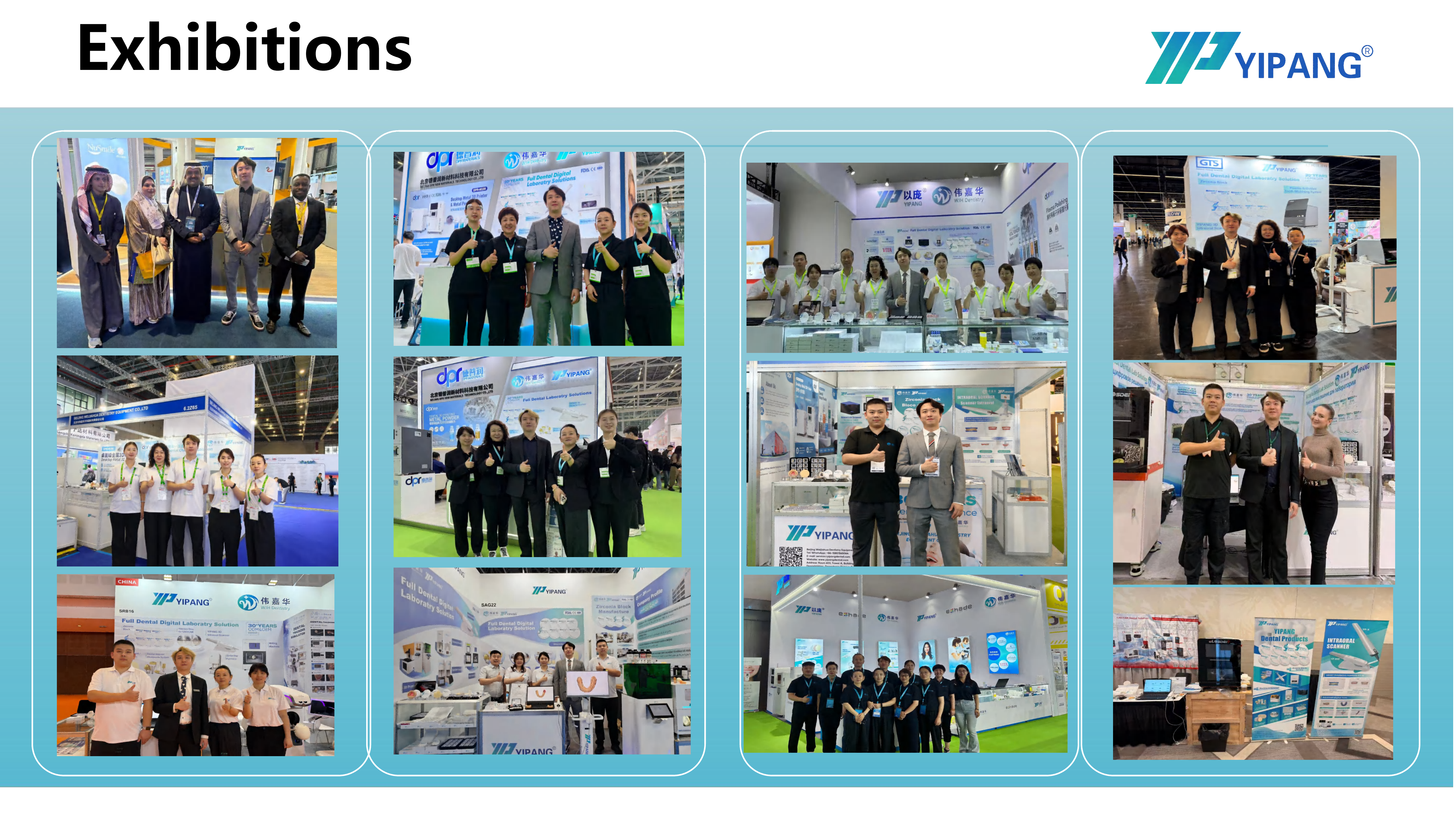
Next step: business partners reviewing supply and documentation requirements.
For company-level background, the public YIPANG company information PDF is available for download: YIPANG company information PDF.
Have Questions or Need More Details?
Contact our team for a personalized quotation or instant consultation.
Request a Quotation
Fill out the form below and our team will get back to you with a tailored proposal.
WhatsApp Direct Chat
Prefer to chat in real-time? Message us on WhatsApp for instant assistance & quick answers.
- Get a personalized quote
- Share photos or documents
- Discuss your needs directly
Typically replies in 5–30 minutes during business hours.