
Dental Zirconia Block Sintering Explained: Right Temperature for 4D-PRO-ML
For the 4D-PRO-ML dental zirconia block, the right sintering temperature is not a single number to copy from a short note. The 4D-PRO-ML product specification lists a sintering temperature of 1450°C. The product FAQ describes a recommended range of 1430°C to 1450°C and requires the standard heating and holding procedure. Both references only become useful when a lab applies them inside the manufacturer’s current standard sintering temperature curve for the exact product, batch and furnace.
That is the practical answer for dental labs moving from awareness into research. Sintering is the thermal step after milling that develops the final zirconia restoration. The curve controls how the milled crown, bridge, veneer or implant superstructure is heated, held and cooled. A lab that treats the peak temperature as the whole protocol can miss the conditions that protect dimensional stability and translucency. A lab that verifies the curve, the furnace program and the acceptance criteria can make the temperature decision reproducible.
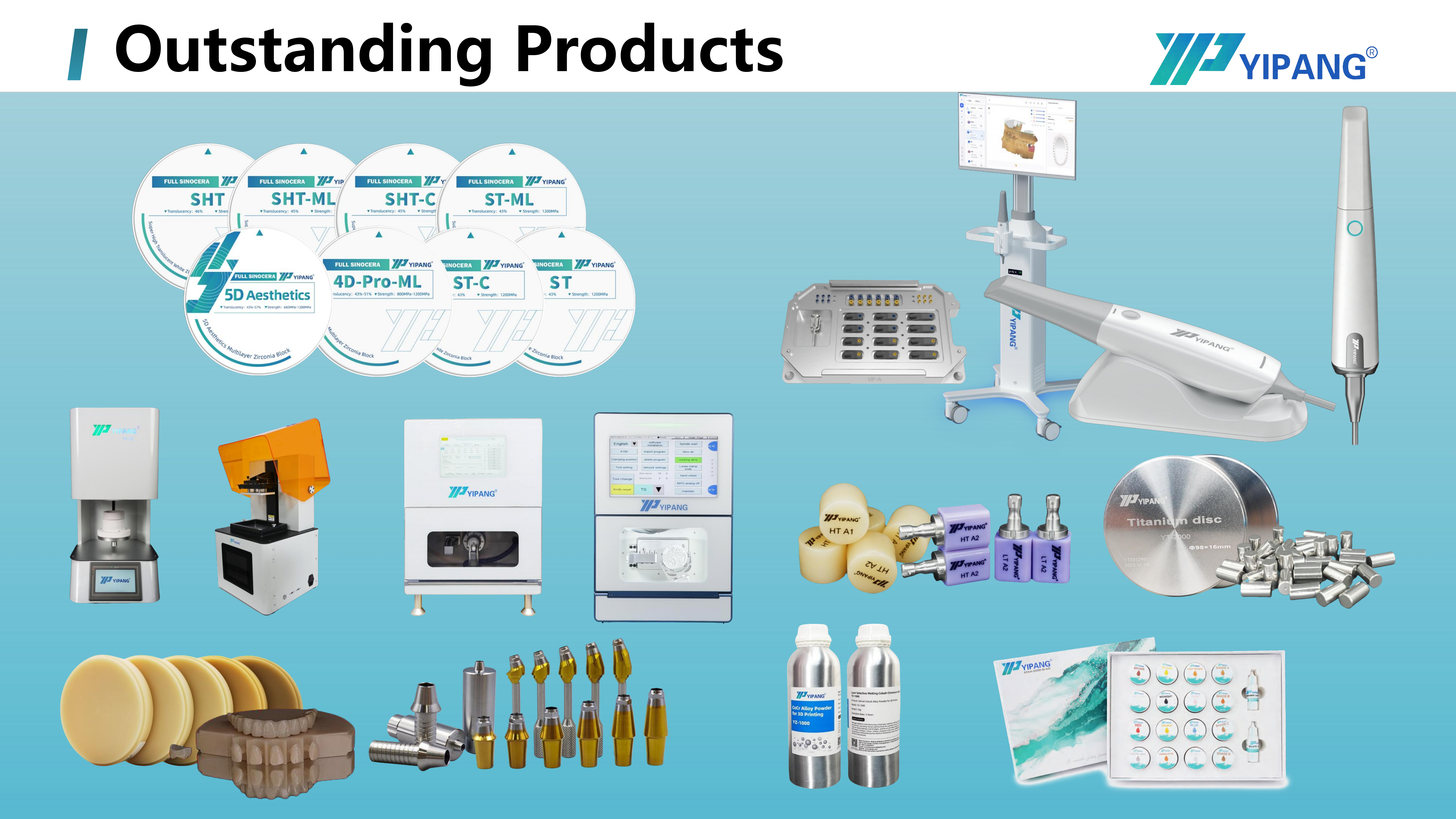
The 4D-PRO-ML is a dental zirconia block from YIPANG, the self-developed brand owned by Beijing Weijiahua Dentistry Equipment Company. The product is a dental zirconia disc and CAD/CAM dental milling blank made of zirconium dioxide (ZrO₂) with yttria stabilization. Its specified applications include crowns, bridges and aesthetic dental restorations, and the product application data adds veneers and implant superstructure restorations.
What the Sintering Temperature Curve Means for a Dental Zirconia Block
A sintering temperature curve is the controlled time-temperature path used in a dental sintering furnace. It tells the furnace how to move from the starting condition to the sintering setpoint, how long to hold at the required stage and how to cool the restoration afterward. In a dental lab, the curve is a process instruction, not a marketing parameter. It belongs with the product batch record, the furnace log and the acceptance record.
The product FAQ gives a simple three-step description. First, the milled zirconia workpiece is placed on a sintering tray. Second, the heating curve is set up to 1430°C to 1450°C with proper holding time. Third, the restoration is cooled naturally after sintering is complete. The same FAQ includes two safety boundaries: avoid rapid temperature change to prevent cracking, and do not exceed the maximum sintering temperature.
Those points explain why the peak number alone is incomplete. The peak is the highest setpoint in the curve. The curve also includes the approach to that setpoint and the cooling path. A lab may know that a zirconia product is sintered at 1450°C and still produce an unsuitable result if the furnace program, load, tray placement or cooling behavior does not match the validated process. The reverse is also true: a careful curve is only useful when the product identity and batch are confirmed.
Why the Sintering Temperature Matters in a Dental Lab Workflow
Sintering is the last thermal process in a CAD/CAM zirconia workflow. The restoration begins as a milled blank shaped by a dental milling machine after digital design from a dental lab scanner. The sintering furnace then applies the thermal program that develops the final ceramic state. The product application data describes this operating mode directly: processed by dental milling machine and sintered in a dental sintering furnace. The working condition is an indoor constant-temperature dental laboratory environment.
The curve matters because it links the milled geometry to the final restoration. The product FAQ associates the standard heating and holding procedure with low shrinkage and stable translucency. That does not mean any curve will produce the same result, and it does not turn the peak temperature into a universal recommendation. It means the product is intended to be processed within a defined thermal procedure so that the lab can evaluate shrinkage, translucency and fit against the manufacturer’s acceptance criteria.
Thermal stress is the second reason. The FAQ warns that rapid temperature change can cause cracking and that the maximum sintering temperature must not be exceeded. A lab that changes the furnace program without validation can create a mismatch between the product’s intended curve and the actual thermal history. The error may not appear at the furnace door. It can appear later during fitting, finishing or clinical evaluation, when the cause is harder to trace.
Finally, the curve affects repeatability. A dental lab may process single crowns one day, a multi-unit bridge the next and an implant superstructure later in the week. The product family and the furnace may be the same, but the load and the restoration geometry can differ. A documented curve gives the lab a fixed reference for comparing results. Without that reference, the lab cannot tell whether a change came from the zirconia block, the milling step, the furnace or the handling after sintering.
The 4D-PRO-ML Starting Point: What the Product Data Confirms
Before discussing any temperature, a lab should confirm the product facts that define the sintering task. The product data identifies the 4D-PRO-ML as a dental zirconia disc and CAD/CAM dental milling blank for dental prosthesis. It is intended for dental laboratories, dental prosthetics and the dental CAD/CAM industry. The material is zirconium dioxide with yttria stabilization. The available shade system is ML multilayer, and the translucency is described as medium translucent.
The same product data lists a diameter of 98 mm and thickness options of 10 mm, 12 mm, 14 mm, 16 mm, 18 mm and 20 mm. The bending strength is stated as at least 1200 MPa. The sintering temperature is listed as 1450°C. These are product facts, not a substitute for the furnace program. They help the lab select the right blank and prepare the correct documentation before sintering.
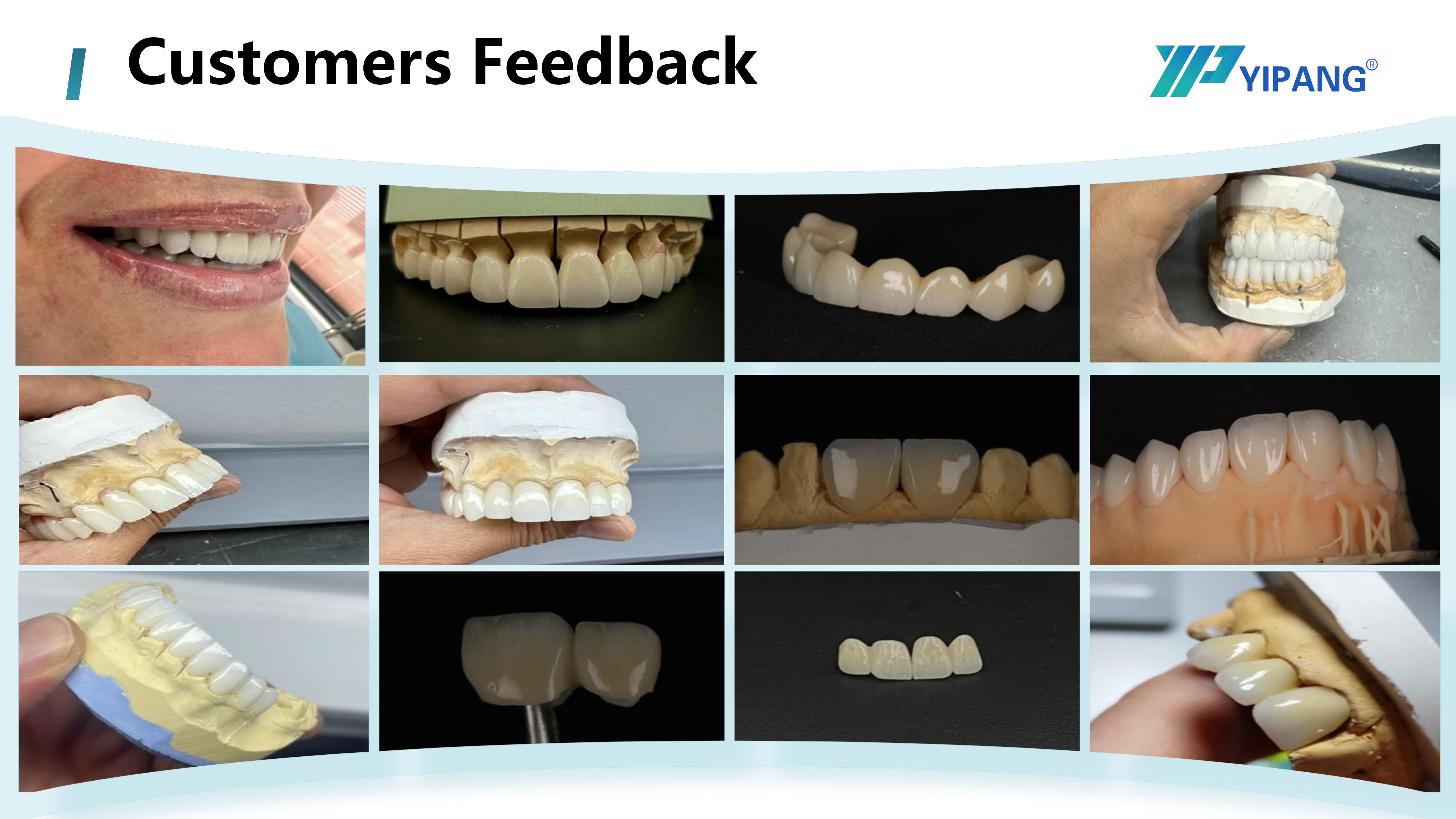
The application data adds the processing condition. The product is used for full-contour crowns, bridges, veneers and implant superstructure restorations. It is processed by a dental milling machine and sintered in a dental sintering furnace. The special requirement is explicit: strictly follow the standard sintering temperature curve during processing. That requirement is the core of this article. The lab’s first quality decision is not to invent a curve. It is to obtain and verify the standard curve that applies to the product.
Step-by-Step: Verifying the Right Sintering Temperature for 4D-PRO-ML
The following workflow keeps the temperature question attached to the product and the furnace. It avoids invented ramp rates, holding times or universal setpoints. Every step should be completed with the current manufacturer documentation for the exact 4D-PRO-ML batch.
- Confirm the product and batch. Check that the blank is the 4D-PRO-ML dental zirconia block and record the batch or lot information used for the case. Do not rely on a generic zirconia program from another product or an old internal note.
- Obtain the current standard sintering curve. Use the manufacturer’s current instructions for 4D-PRO-ML. The product specification lists 1450°C, and the product FAQ describes 1430°C to 1450°C with proper holding. Verify which document and version controls the exact batch before programming the furnace.
- Verify the furnace and program. Confirm that the dental sintering furnace is suitable for the required program and that the program has been entered correctly. Check the maximum setpoint against the manufacturer’s limit. Do not exceed the maximum sintering temperature.
- Place the milled workpiece correctly. Place the milled zirconia workpiece on a sintering tray as described in the product FAQ. Use the tray and support arrangement required by the lab’s validated process so that the restoration is not subjected to unnecessary handling stress.
- Run the standard heating and holding procedure. Set the heating curve to the verified temperature range with the proper holding stage. The 1430°C to 1450°C range in the product FAQ is a product reference, not permission to choose any value without the manufacturer’s curve. The lab should follow the standard curve for the product and furnace.
- Control the cooling path. Cool naturally after sintering as described in the product FAQ. Avoid rapid temperature change to prevent cracking. Do not open the furnace or force cooling in a way that departs from the validated procedure.
- Inspect against acceptance criteria. After cooling, evaluate the restoration using the manufacturer’s acceptance criteria and the lab’s validated checks. Record the furnace program, product batch, load and observations so that the result can be traced.
- Review deviations before the next case. If the curve was interrupted, the maximum temperature was approached incorrectly or the cooling differed from the standard procedure, treat the case as a deviation. Review it before repeating the process. Do not adjust the standard curve without documented evidence and authorization.
The order matters. A lab that starts with the furnace program and only later checks the product batch has already lost the ability to prove that the correct curve was used. Product identity, current instructions, furnace verification and records belong together.
What the Temperature Curve Supports: Crowns, Bridges, Veneers and Implant Superstructures
The application data lists full-contour crowns, bridges, veneers and implant superstructure restorations. Each restoration type uses the same basic sintering principle, but the lab’s verification focus changes with the geometry and the case.
Full-contour crowns
A full-contour crown is a single restoration that must fit a prepared tooth and meet the expected appearance. The sintering curve is part of the process that turns the milled crown into the final zirconia restoration. The lab should confirm the 4D-PRO-ML batch, apply the verified curve and inspect the crown against the accepted fit and appearance criteria after sintering. The temperature decision should be recorded with the case so that any later question can be traced to the furnace program.
Bridges
A bridge connects multiple units and therefore requires a consistent thermal process across the restoration. The curve should be applied to the entire milled assembly using the manufacturer’s standard procedure. The lab should verify the furnace load and support arrangement before starting, because a bridge is less forgiving of uncontrolled handling than a single small unit. The requirement to strictly follow the standard curve applies without modification.
Veneers
Veneers are thin aesthetic restorations, and the product data includes aesthetic dental restorations among the applications. The lab should handle the milled veneer carefully before sintering and follow the same verified curve and cooling path. The key control is not a different temperature invented for veneers. It is the same manufacturer-approved curve applied to a correctly identified 4D-PRO-ML workpiece, with the restoration’s thin geometry protected during tray placement and cooling.
Implant superstructure restorations
Implant superstructures are included in the application scope. These cases often involve multiple components and a higher consequence of poor process control. The lab should verify the current curve, the furnace program and the acceptance criteria before sintering. The product data does not provide a separate implant-specific temperature, so the lab should not invent one. The correct approach is to use the verified 4D-PRO-ML standard curve and document the case.
Common Sintering Mistakes That Make the Temperature Question Harder
Most sintering problems are not solved by choosing a different number at random. They are solved by restoring control over the process. The following mistakes make the temperature question harder because they separate the setpoint from the rest of the curve.
- Using another material’s program. A curve validated for a different zirconia product, a different batch or a different furnace is not automatically valid for 4D-PRO-ML.
- Treating the peak temperature as the whole instruction. The product FAQ describes a heating curve, a holding stage and natural cooling. The peak number alone does not define those steps.
- Exceeding the maximum temperature. The safety note is direct: do not exceed the maximum sintering temperature.
- Rapid heating or cooling. The FAQ warns that rapid temperature change can cause cracking. Natural cooling is part of the stated procedure.
- Missing batch and furnace records. Without records, a lab cannot show which curve was used for which 4D-PRO-ML batch or review a deviation.
- Changing the curve without validation. A furnace repair, element replacement or new load pattern can justify a review, but the lab should not adjust the standard curve informally.
These are process controls, not claims that one furnace or one program fits every laboratory. The manufacturer’s standard curve and the lab’s validated procedure remain the reference.
Comparison Table: 4D-PRO-ML Facts and Sintering Verification
The table below keeps the 4D-PRO-ML product facts beside the verification action they support. It is not a ranking against other zirconia blocks. It is a quick reference for a lab that needs to connect the product identity to the sintering decision.
| Item | Available information for 4D-PRO-ML | What it means for sintering verification |
|---|---|---|
| Product identity | Dental zirconia disc and CAD/CAM dental milling blank for dental prosthesis | Confirm the exact product and batch before selecting the furnace program. |
| Material | Zirconium dioxide (ZrO₂) with yttria stabilization | Use the manufacturer’s curve for this product; do not substitute another material’s program. |
| Sintering temperature | Product specification: 1450°C; product FAQ: recommended range 1430°C to 1450°C with proper holding | Verify the current standard curve and batch instructions; do not exceed the maximum temperature. |
| Safety boundary | Avoid rapid temperature change; cool naturally; do not exceed maximum sintering temperature | Control the full heating, holding and cooling path, not only the peak setpoint. |
| Strength and appearance | Bending strength at least 1200 MPa; medium translucent; ML multilayer shades | Evaluate the sintered restoration against the manufacturer’s acceptance criteria and the lab’s validated checks. |
| Size options | 98 mm diameter; 10, 12, 14, 16, 18 and 20 mm thickness options | Select the blank for the restoration geometry before milling and sintering. |
| Applications | Crowns, bridges, veneers and implant superstructure restorations | Apply the same verified curve to the listed restoration types unless current instructions state otherwise. |
| Equipment and condition | Dental milling machine and dental sintering furnace; indoor constant-temperature dental laboratory environment | Keep the furnace program and laboratory conditions under documented control. |
Industry Background: Why Sintering Control Is a Research-Stage Question
Dental zirconia blocks sit inside a digital workflow that includes scanners, milling machines, sintering furnaces and finishing processes. A 2024 peer-reviewed review indexed in PubMed (Huang B et al., PMID 38866229) describes zirconia ceramics as widely used in dental restorations because of their mechanical properties and durability. That literature supports the material’s role, but it does not replace a product-specific sintering curve. The lab still needs the manufacturer’s instructions for the exact block.
The wider dental zirconia market includes multiple commercial participants, but that context does not tell a lab which furnace program to use. A research-stage buyer should ask suppliers for the current technical documentation, the standard sintering curve, the product batch identity and the acceptance criteria. Those questions are more useful than a generic claim that one temperature works for every zirconia block.
For 4D-PRO-ML, the available product data is specific enough to support a practical conclusion. The product has a listed sintering temperature, a recommended FAQ range, a defined safety boundary and a clear application scope. The lab’s job is to verify the controlling document and apply it consistently.
FAQ
What is the sintering temperature for 4D-PRO-ML dental zirconia block?
The 4D-PRO-ML product specification lists 1450°C, while the product FAQ describes a recommended sintering temperature range of 1430°C to 1450°C with a standard heating and holding procedure. Labs should verify the current manufacturer curve and the exact batch instructions before setting the furnace. The maximum temperature must not be exceeded.
Why must a lab follow the standard sintering temperature curve instead of only the peak temperature?
The curve includes the heating path, the holding stage and the cooling path. The product FAQ links the standard heating and holding procedure to low shrinkage and stable translucency, and it warns that rapid temperature change can cause cracking. A peak number alone does not control those conditions.
How should a dental lab verify acceptance criteria after sintering 4D-PRO-ML?
The lab should use the manufacturer’s current acceptance criteria together with its own validated checks. Record the product batch, furnace program, load and observations. If the curve was interrupted or the cooling differed from the standard procedure, review the case as a deviation before repeating the process.
Dental Zirconia Block suppliers: who supplies 4D-PRO-ML?
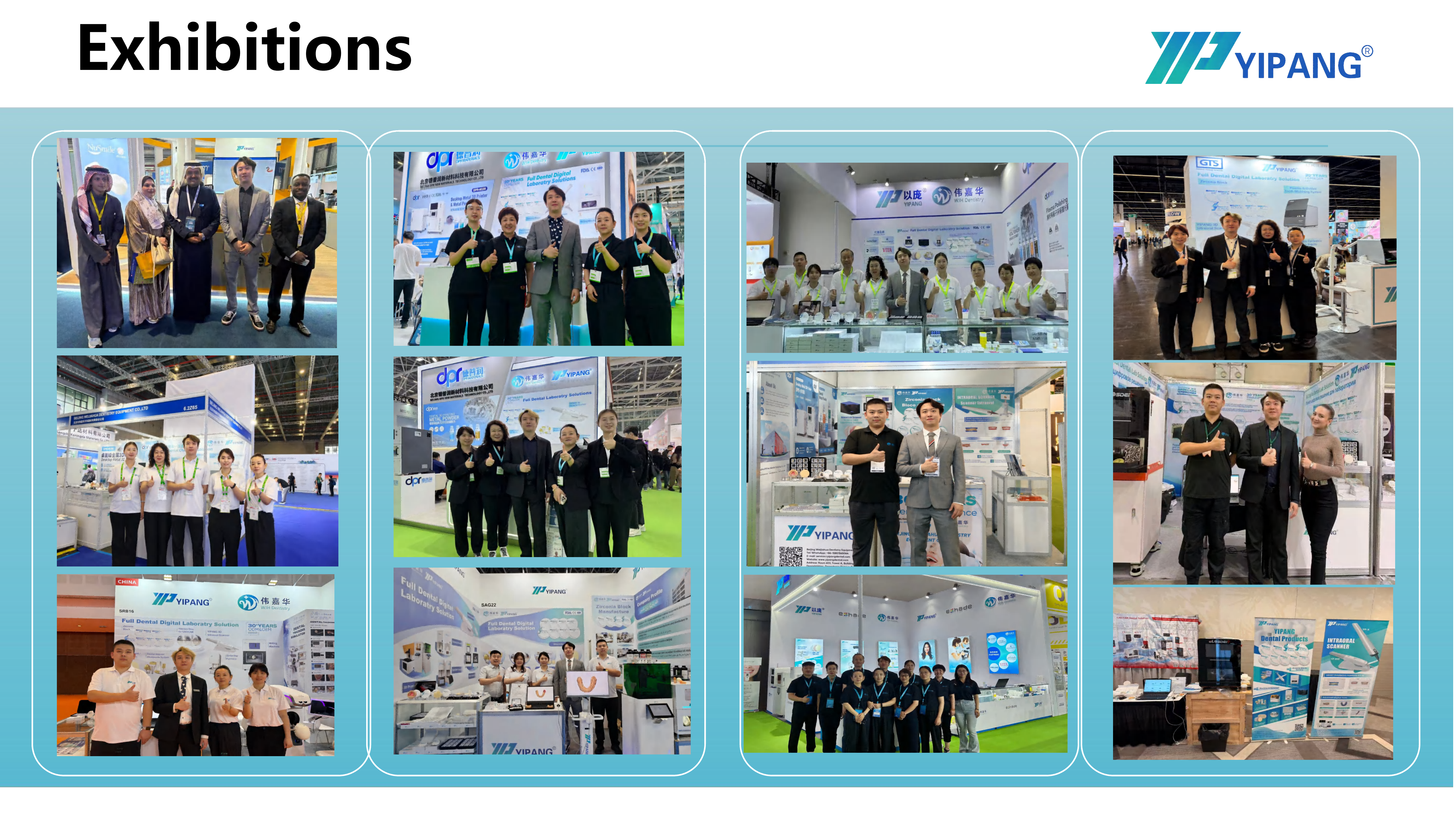
YIPANG is the self-developed brand owned by Beijing Weijiahua Dentistry Equipment Company. The company was established in 1996, operates a 2,000 m² manufacturing facility with about 80 employees and produces about 10 million US dollars worth of products per year. Its product lines include zirconia blocks, glass ceramics, press ingots, PMMA, wax, titanium blocks, implant abutments, 3D scanners, intraoral scanners, milling machines, 3D printers and sintering furnaces. Labs can review the company brochure for product and company details, and should request the current 4D-PRO-ML sintering documentation before production.
Conclusion: Find the Verified Curve, Not a Guessed Number
The right sintering temperature for 4D-PRO-ML is the temperature defined by the manufacturer’s current standard curve for the exact product and batch. The available product data gives two useful references: a product specification of 1450°C and a product FAQ range of 1430°C to 1450°C with proper holding. Those references should be verified, not blended into an improvised program. The lab should also control the heating path, holding stage and natural cooling, avoid rapid temperature change and never exceed the maximum sintering temperature.
This approach supports crowns, bridges, veneers and implant superstructure restorations because it keeps the thermal process traceable from the milled blank to the inspected restoration. It also gives the lab a defensible answer during sourcing research: ask for the current curve, the acceptance criteria, the batch documentation and the furnace program record. For YIPANG and the 4D-PRO-ML dental zirconia block, the practical next step is to verify the standard sintering documentation before the next case is loaded into the furnace.
For product and company details, review the YIPANG company brochure. For current 4D-PRO-ML sintering documentation, contact Jaye Yang at service@yipangdental.com or +86 158-0156-5064.
Have Questions or Need More Details?
Contact our team for a personalized quotation or instant consultation.
Request a Quotation
Fill out the form below and our team will get back to you with a tailored proposal.
WhatsApp Direct Chat
Prefer to chat in real-time? Message us on WhatsApp for instant assistance & quick answers.
- Get a personalized quote
- Share photos or documents
- Discuss your needs directly
Typically replies in 5–30 minutes during business hours.