Dental Zirconia Block vs PMMA, PEEK & Disilicate Workflows
Dental Zirconia Block vs PMMA, PEEK & Disilicate Workflows
In a mixed-material dental laboratory, the dental zirconia block is rarely chosen instead of a PMMA disc, a PEEK disc or a lithium disilicate press ingot. All four are normally stocked at the same time, and most cases that reach the design station can be produced in more than one of them. The decision that changes cost, lead time and remake rate is therefore a routing decision: which workstream a case enters, which machine and furnace hours it consumes, and which finishing protocol its surface receives.
The short answer for a decision-stage buyer
The zirconia block carries the definitive workstream in this set — full-contour crowns, bridges, veneers and implant superstructure restorations — and it is the only material here that must pass through a dental sintering furnace before any glaze firing.
A PMMA disc covers provisionals and temporary restorations through a mill-and-polish route with no sintering step. A PEEK disc covers milled prosthetic components on the same mill-and-finish pattern. A lithium disilicate press ingot opens a pressing and crystallization route that depends on a dental porcelain furnace rather than a sintering furnace.
So the four materials do not compete for one slot. They compete for different equipment hours, and a lab's decision should follow its furnace capacity and finishing stations, not a single material ranking.
Where the zirconia block fits in a mixed-material laboratory
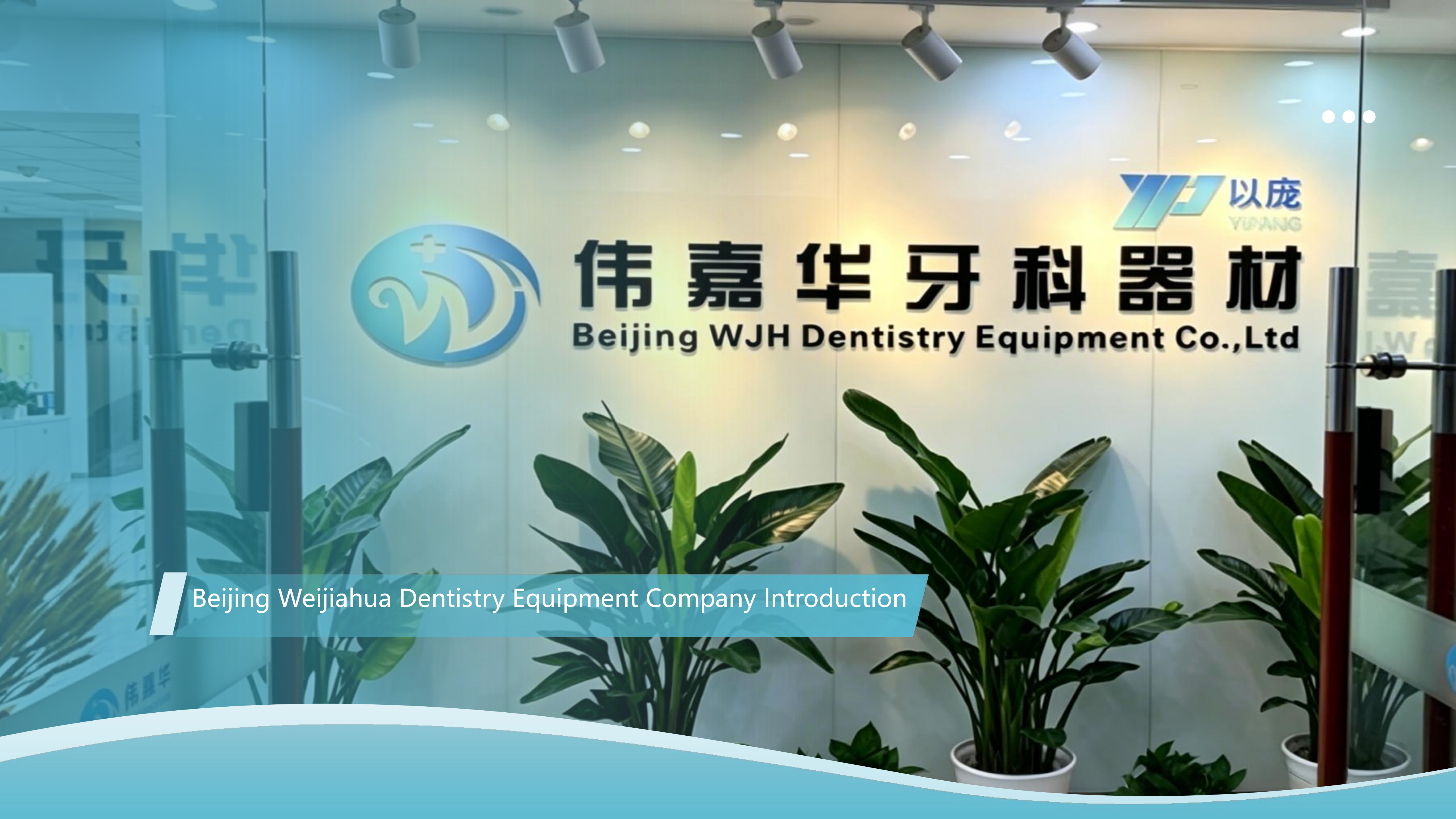
YIPANG is the self-developed dental materials brand of Beijing Weijiahua Dentistry Equipment Co., Ltd., a Beijing-based dental equipment company established in 1996. Its product lines include zirconia blocks, glass ceramics, press ingots, PMMA, wax, titanium blocks, implant abutments, scanners, milling machines, 3D printers and sintering furnaces. That portfolio is the reason this comparison can be made at workflow level rather than at catalogue level: a mixed-material lab can source the block, the disc and the ingot from one supplier, yet each of them runs through different equipment and different finishing consumables.
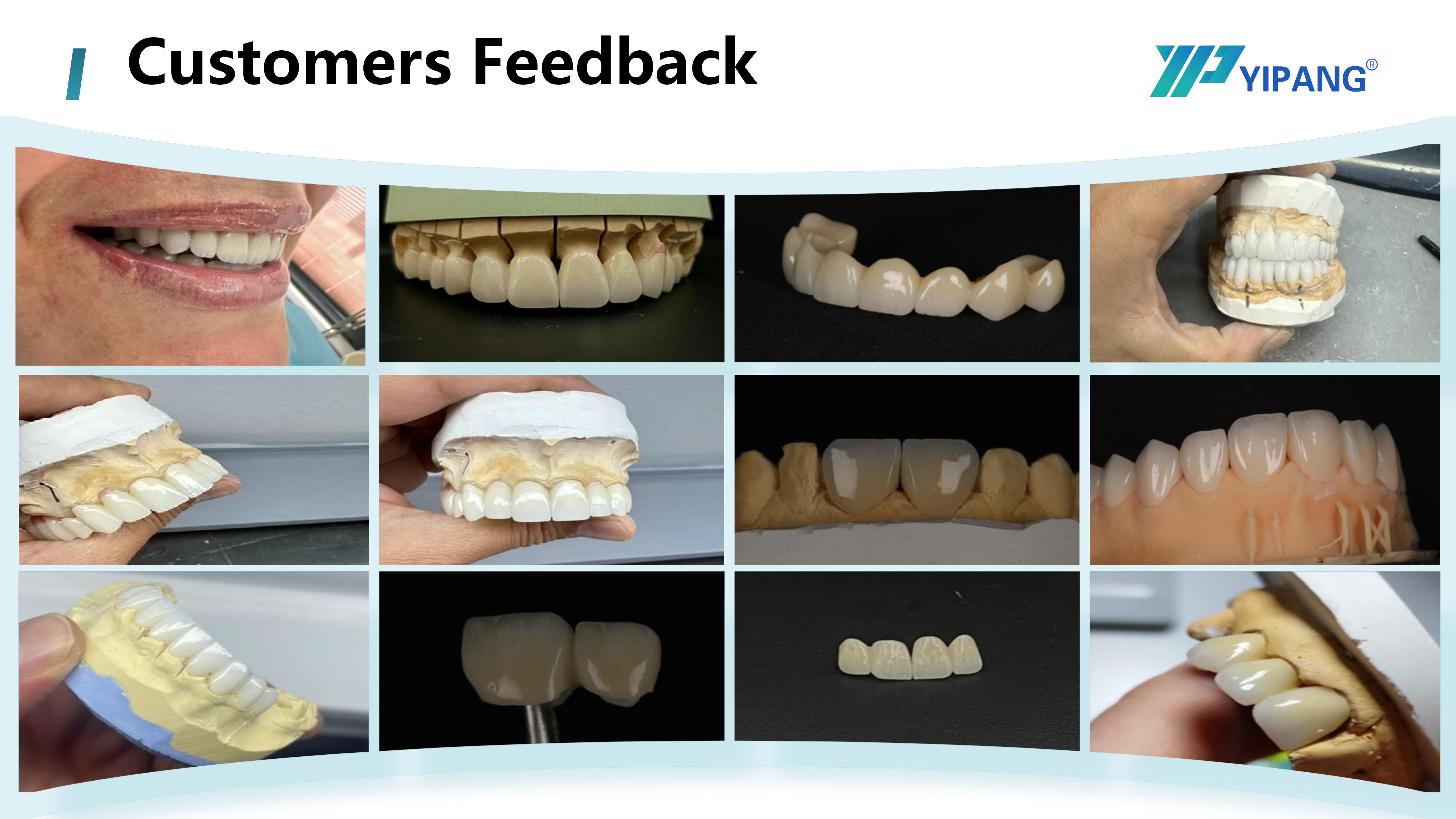
YIPANG documents the dental zirconia block for full-contour crowns, bridges, veneers and implant superstructure restorations, processed on a dental milling machine and sintered in a dental sintering furnace, with a dental lab scanner used upstream in the digital workflow. The same documentation lists general indoor dental laboratory conditions and a requirement to follow a standard sintering curve during processing. Those four data points — indication list, milling step, sintering step, curve discipline — are enough to position zirconia precisely inside a lab that also runs acrylic, PEEK and pressed ceramic.
PMMA and PEEK enter the lab as discs and leave the mill as finished geometry. Zirconia enters as a green-state block and leaves the mill as an oversized green part that only becomes a restoration after sintering. Press ingots never pass through the mill at all; they are shaped by a pressing route and crystallized in a ceramic furnace. A lab that treats all four as "milling materials" will mis-book its furnaces.
The routing problem: equipment hours, not material scores
Most material comparisons answer a question the production floor does not ask. A technician does not need to know which material wins on a scorecard; the technician needs to know which queue a case joins at 4 p.m. on a Thursday, and whether the sintering furnace has a cycle that will finish before the courier arrives.
The incremental cost of adding zirconia depends entirely on what the lab already owns. A lab running PMMA and PEEK discs has a mill and a finishing bench; adding zirconia adds a furnace dependency, a separate green-state handling discipline and a second furnace pass for staining and glazing. A lab that already presses lithium disilicate has a porcelain furnace, an investment bench and a high-temperature firing routine; for that lab, adding zirconia adds a sintering cycle but reuses the ceramic finishing station.
This is why a workflow comparison produces different answers for different labs. The correct question is not "which material is better" but "which material does this case enter, given the equipment this lab already runs and the delivery date it has promised". Everything below is organized around that question.
Industry context: mixed-material labs are the normal model
Published market data supports treating the mixed-material lab as the standard case rather than an exception. Grand View Research reported that dental laboratories remained the dominant end user of zirconia-based dental materials in 2025, at 45.3% of that market, that zirconia discs held 63.1% of revenue in the same market, and that CAD/CAM milling accounted for 82.4% of zirconia dental manufacturing process revenue. Business Research Insights estimated lithium disilicate at approximately 28% of all-ceramic dental restorations globally as of 2024.
Read together, these figures describe a lab floor where CAD/CAM milling dominates zirconia production while pressed ceramic still holds a substantial minority share of all-ceramic work. Published estimates for these markets differ by scope and definition, so the shares should be read as directional rather than as a precise census of any single lab's case mix.
Workflow comparison: zirconia, PMMA, PEEK and pressable disilicate
The table below compares the four materials only on workflow factors that a lab can verify on its own floor: shaping route, furnace dependency, finishing route, typical project role and scheduling constraint. It deliberately does not score strength, wear behaviour or aesthetic performance, because those comparisons are not part of the evidence used here.
| Workflow factor | Dental Zirconia Block (YIPANG) | PMMA disc | PEEK disc | Lithium disilicate press ingot |
|---|---|---|---|---|
| Shaping route | Milled from a block in the green state on a dental milling machine | Milled from a disc | Milled from a disc | Pressed from an ingot; no milling step |
| High-temperature step | Sintering in a dental sintering furnace; YIPANG guidance is 1430 °C–1450 °C with a standard heating and holding procedure | No sintering cycle; the milled part moves to finishing | No sintering cycle; the milled part moves to finishing | Crystallization firing in a dental porcelain furnace |
| Aesthetic finishing | Staining glaze and glaze paste applied after sintering and fired in the porcelain furnace | Mechanical finishing and polishing with dental polishing burs | Mechanical finishing and polishing | Staining and glaze firing, or mechanical polishing |
| Typical project role | Full-contour crowns, bridges, veneers, implant superstructure restorations | Provisionals and temporary restorations | Milled prosthetic components and frameworks | Pressed ceramic crowns and veneers |
| Main scheduling constraint | Sintering cycle plus a glaze firing pass | No furnace queue; constrained by mill time and polishing | No furnace queue; constrained by mill time and polishing | Press cycle plus crystallization firing |
Zirconia entries reflect YIPANG's documented product and processing guidance. PMMA, PEEK and press-ingot entries describe the shaping and furnace route each material category follows on a laboratory floor; they are not performance comparisons.
Equipment routing, step by step
Step 1: scan and design once, route the output to several materials
A dental lab scanner feeds the same digital design environment for all four materials. In a mixed-material lab this is the cheapest place to make the routing decision: the case is scanned, designed and then assigned to a material before any machine time is committed. Implant superstructure projects add a further decision at this stage, because scanbodies and abutment components are selected during design and sit outside the block decision itself.
Step 2: mill the green state, or press the ceramic
The dental milling machine is the shared asset for zirconia, PMMA and PEEK. Zirconia is milled in the green state and requires a CAM shrinkage compensation before sintering; YIPANG documents good compatibility between the block and most mainstream dental milling machines, with a low processing failure rate. PMMA discs and PEEK discs are milled to final geometry and go straight to finishing.
Lithium disilicate press ingots leave this route entirely. They are shaped by a pressing process and then crystallized, which means the lab's press bench and porcelain furnace — not the mill — determine that workstream's throughput. A lab that owns a mill but no press cannot substitute milling time for pressing time on a press-ingot case.
Step 3: the sintering furnace is a zirconia-only queue
Within this material set, only the zirconia block consumes a dental sintering furnace cycle. YIPANG's processing guidance is specific: milled zirconia workpieces are placed on a sintering tray, the heating curve is set to 1430 °C–1450 °C with an appropriate holding time, and the load cools naturally after sintering. The guidance also warns against rapid temperature change to prevent cracking and states that the maximum sintering temperature should not be exceeded.
For the lab manager, the practical consequence is scheduling, not chemistry. A sintering cycle is a block of furnace time that cannot be interrupted by a rush PMMA job. Mixed-material labs typically batch zirconia units so that furnace cycles are filled rather than run half-empty, and they protect the furnace slot before promising a zirconia delivery date.
Step 4: the porcelain furnace serves crystallization and glaze firing
The dental porcelain furnace is the second high-temperature asset, and in a mixed-material lab it is shared by two different jobs: crystallization firing for pressed lithium disilicate, and glaze or stain firing for sintered zirconia. Those two jobs are not interchangeable, and a lab that runs both should keep firing programs separate and clearly labelled at the furnace.
This shared furnace is where mixed-material scheduling most often fails. A pressed ceramic case and a glazed zirconia case both need the same furnace on the same afternoon, and the zirconia case has already spent a sintering cycle before it can queue for glaze. Labs that plan zirconia deliveries backwards from the glaze firing, rather than forwards from the mill, tend to keep their promised dates.
Step 5: the finishing station follows the material, not the schedule
Finishing is the least automated part of the workflow and the easiest place to blur material boundaries. Sintered zirconia receives staining glaze and glaze paste, which are fired; pressed ceramic receives staining and glaze firing or polishing; PMMA and PEEK are finished mechanically with dental polishing burs and no firing step. A firing paste belongs at the ceramic station because it is a fired ceramic material, not an acrylic finishing product.
Keeping consumables segregated by station — ceramic glazes and stains on one bench, mechanical polishing on another — protects both the surface result and the traceability of which materials touched which case.
A dental 3D printer adds a further route worth naming. Grand View Research reported that photopolymer resins held a 55.5% share of the dental 3D printing material segment in 2025, and in many labs printed resin provisionals now compete directly with milled PMMA for the temporary workstream. Where that is true, the zirconia queue's real competitor for provisional work is not only the PMMA disc but the printer.
Project types: which restoration enters which queue
The clearest routing rule in a mixed-material lab is project-driven. YIPANG documents its dental zirconia block for full-contour crowns, bridges, veneers and implant superstructure restorations. Those four project types should be routed to the zirconia queue when a sintering slot exists, because they are the projects the block is documented to serve.
Provisionals and temporary restorations belong to the PMMA disc route, or to a printed resin route where the lab runs one. These projects exist to be delivered quickly and replaced later, so routing them through a sintering cycle would consume furnace time that the definitive cases need.
PEEK discs serve milled prosthetic components and frameworks in labs set up for that material, following the same mill-and-finish logic as PMMA but for a different prosthetic role. Press ingots serve pressed ceramic crowns and veneers in labs that already operate a press bench and a crystallization program.
Implant superstructure work is the case type where the routing decision has the highest downstream cost. An implant superstructure is documented as a zirconia indication, but it also depends on scanbody and abutment choices made at design. A lab that routes an implant case to the wrong material discovers the problem after sintering and glaze firing, when the case is at its most expensive point.
Shrinkage, fit and batch consistency: what to verify before routing
Zirconia is the only material in this set whose final dimensions depend on a fired shrinkage that the CAM system must predict. YIPANG states a stable sintering shrinkage error within ±0.3% for its dental zirconia block, along with uniform density distribution, bending strength and translucency performance as documented technical characteristics. The company attributes that stability to the use of high-quality domestic self-developed zirconia powder with stable batch consistency.
For a mixed-material lab, the operational meaning is narrower and more useful than a marketing claim. If shrinkage behaviour stays consistent between batches, the shrinkage factor already calibrated into the CAM strategy remains usable, and the lab does not have to re-verify fit on every delivery. That matters most for multi-unit bridges and implant superstructures, where a fit error is not corrected by adjusting a single unit.
Two verification steps belong in every lab that adds zirconia to an existing acrylic and pressed-ceramic workflow. First, confirm the block's documented sintering window against the program actually loaded in the furnace, including the holding time and the cooling behaviour. Second, mill and sinter one test crown and one test bridge before committing a production share, then check margins, contacts and fit against the design.
Decision rules for the lab manager
Rule 1 — Route by project, not by preference. Full-contour crowns, bridges, veneers and implant superstructures go to the zirconia queue when a sintering slot is available, because that is the documented indication list for the block.
Rule 2 — Protect the furnace slot before promising the date. The sintering cycle is the longest single dependency in the zirconia route. Book it before the delivery date is confirmed to the clinician.
Rule 3 — Keep the glaze firing in the plan. A sintered zirconia restoration that still needs staining and glaze firing is not finished. Count the porcelain furnace pass in the schedule, and do not double-book that furnace against a pressed ceramic crystallization run.
Rule 4 — Use PMMA and printed resin for the time-critical interim work. Provisionals exist to buy time; routing them through a furnace defeats their purpose and displaces definitive cases.
Rule 5 — Keep finishing consumables segregated. Ceramic glazes and stains belong to the ceramic station; dental polishing burs belong to mechanical finishing. Mixing them creates surface defects that are hard to trace back to a cause.
A pre-purchase checklist for a zirconia block in a mixed-material lab
Before adding or switching a zirconia block inside a lab that already runs PMMA, PEEK and press ingots, confirm the following:
- The documented sintering temperature range matches the furnace program the lab can actually run, including holding time and controlled cooling.
- The stated shrinkage behaviour is known and can be entered into the CAM strategy, and one test crown plus one test bridge confirm fit.
- The block is documented as compatible with the lab's existing dental milling machine, so no additional mill is required.
- The lab's porcelain furnace has capacity for both crystallization firing and zirconia glaze firing without conflict.
- Green-state handling, tray loading and cooling practice are written into the lab's process instructions.
- The supplier can state batch consistency arrangements, since shrinkage consistency across lots is what protects the calibrated CAM factor.
- Delivery terms and customization options are confirmed, because a zirconia queue that stalls on material supply stops the whole mixed-material schedule.
Limits of this comparison
This guide compares workflow routes, not clinical outcomes. It does not rank the four materials on strength, wear, aesthetics or long-term clinical performance, and no such ranking should be inferred from the routing recommendations above. Material-property claims for PMMA, PEEK and press ingots are outside the evidence used here and are stated only at the level of the production route each material follows.
Equipment requirements are also lab-specific. A workflow that fits a laboratory with two furnaces and a dedicated ceramic bench will not fit a laboratory running one furnace and a shared bench. The routing logic holds; the schedule does not transfer automatically.
Where YIPANG fits in a mixed-material supply plan
YIPANG's dental zirconia block is positioned as a cost-effective alternative to imported brands, using domestic self-developed zirconia powder with stable batch consistency. YIPANG states that the block offers distinct advantages in quality consistency and cost performance compared with other domestic and imported dental zirconia blank suppliers, and that it is suitable for dental laboratories focused on aesthetic restoration as well as for importers seeking cost-effective dental materials. These are the supplier's own claims and should be validated against the lab's own test cases.
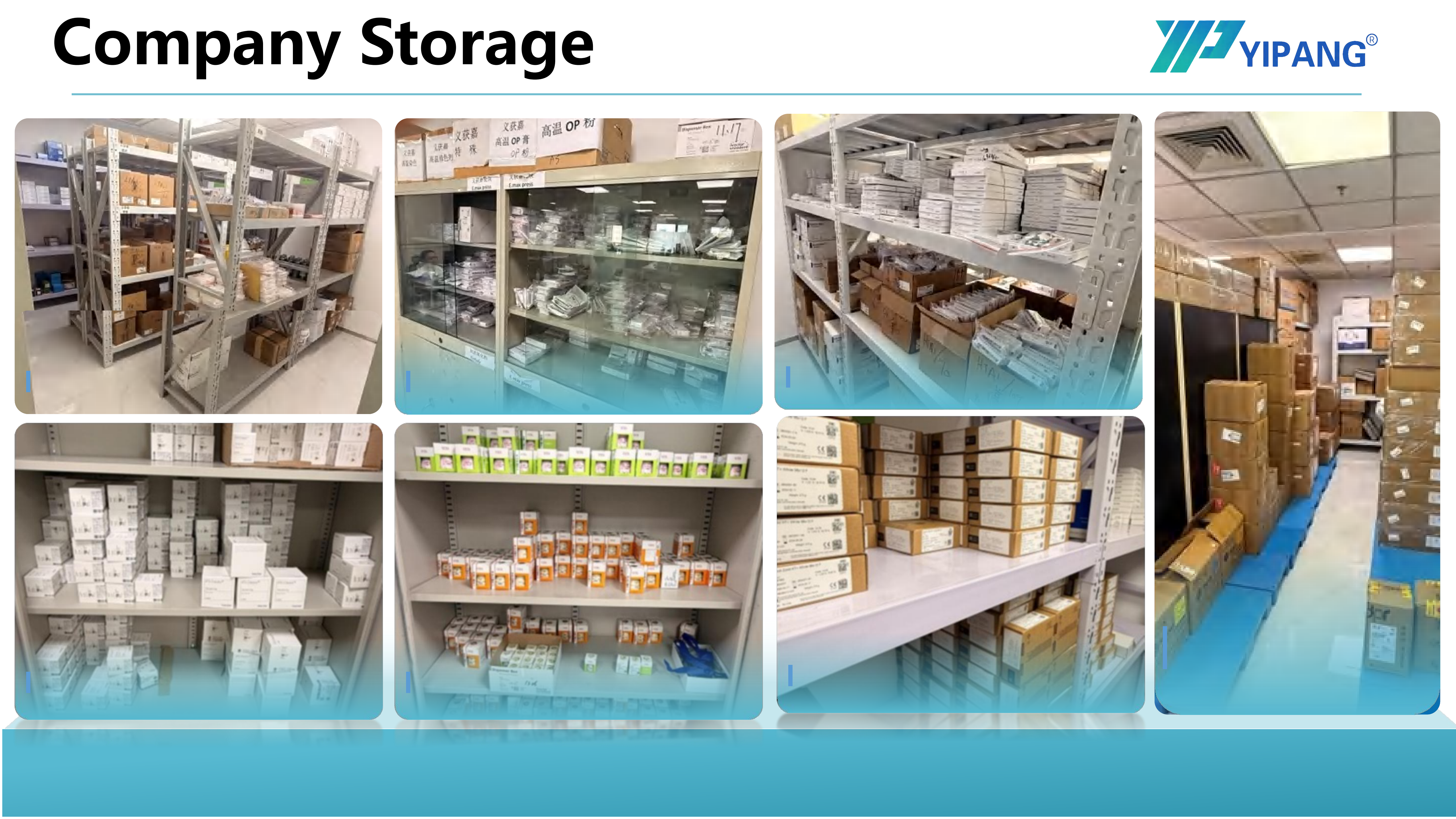
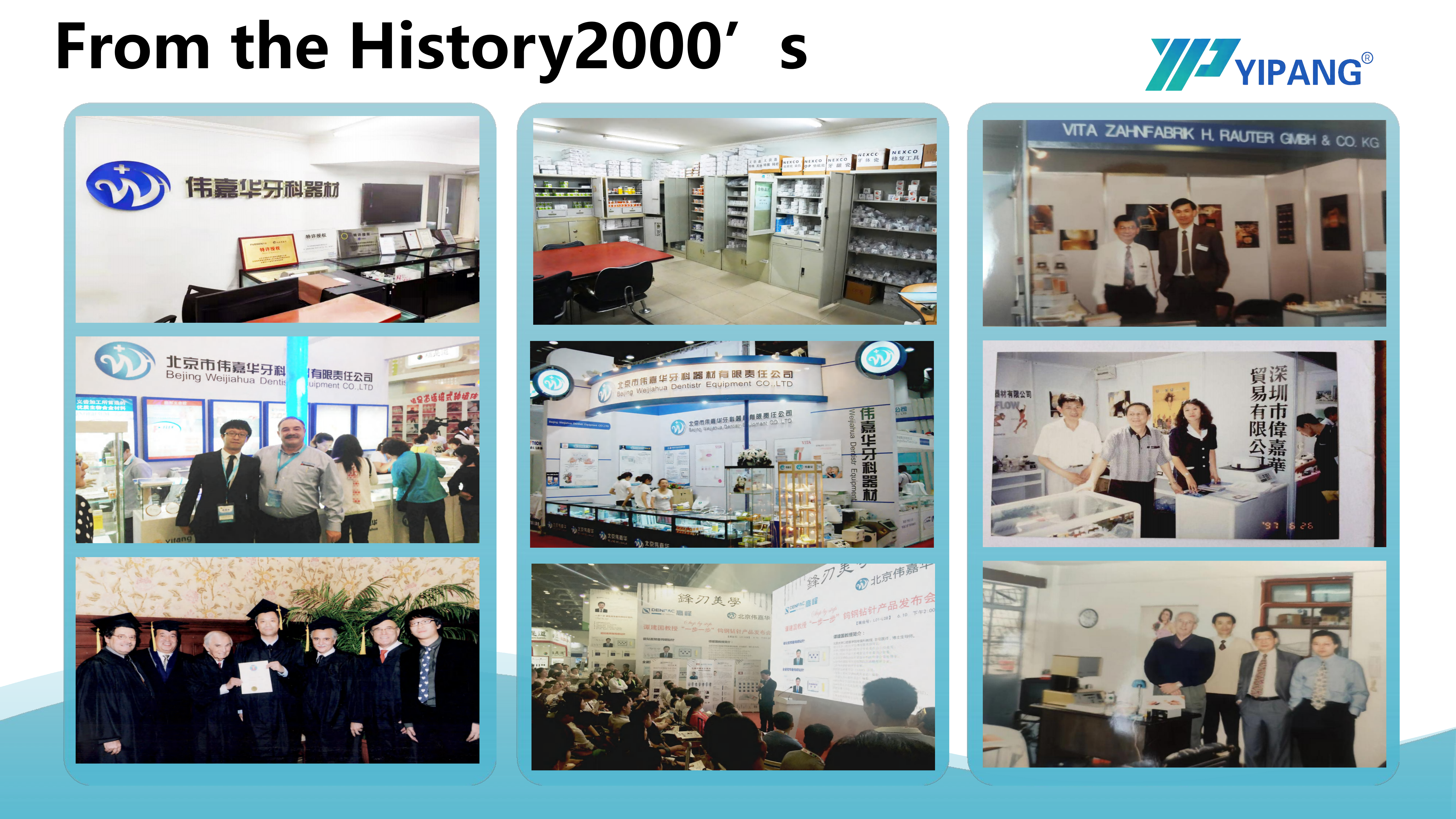
Beijing Weijiahua Dentistry Equipment Co., Ltd. was established in 1996, operates a 2,000 m² facility with 80 employees, reports annual output of 10 million US dollars and an R&D team of 25 engineers working on dental material formula research and process optimization. The company reports an export ratio of 40%–55% across the Middle East, Southeast Asia, South America, North America, Eastern Europe, North Africa and Australia, and states that it serves more than 1,000 dental laboratory customers in China alongside long-standing representation of international dental brands.
For a mixed-material lab, the practical value of that portfolio is single-source workflow support: zirconia blocks, PMMA, press ingots, sintering furnaces, milling machines and scanners can be specified together, so the compatibility question is answered before the purchase order rather than after the first failed sintering run.
Frequently asked questions
What sintering program should a mixed-material lab use for the YIPANG dental zirconia block?
YIPANG's documented guidance is a sintering temperature range of 1430 °C to 1450 °C, following a standard heating and holding procedure to support low shrinkage and stable translucency. In practice: place the milled zirconia workpiece on the sintering tray, set the heating curve up to that range with an appropriate holding time, and let the load cool naturally after sintering. The same guidance warns against rapid temperature change to prevent cracking and states that the maximum sintering temperature must not be exceeded. The program should be confirmed against the furnace actually installed in the lab.
Can a lab that already mills PMMA and PEEK run the zirconia block on the same milling machine?
YIPANG documents good compatibility between its dental zirconia block and most mainstream dental milling machines, with a low processing failure rate. The material difference is what happens after milling: the zirconia part is milled in the green state and then sintered, so the CAM shrinkage compensation and the furnace cycle are part of the process, while a milled PMMA or PEEK part goes directly to finishing. A lab should confirm that its CAM strategy supports the block and that its burs and green-state handling are appropriate before shifting production.
How should a mixed-material lab compare the cost of a zirconia block against PMMA, PEEK and press ingots?
Unit price alone is the wrong comparison, because the four materials consume different resources. The zirconia route consumes a sintering cycle plus a glaze firing pass; the PMMA and PEEK routes consume mill time and mechanical polishing with no furnace step; the press-ingot route consumes a press cycle and a crystallization firing. A defensible comparison therefore looks at cost per accepted unit, including remakes and furnace occupancy, rather than cost per disc or per block. YIPANG positions its block as more competitively priced than imported zirconia blocks of equivalent quality, which is a supplier claim to check against delivered cost per accepted unit in the lab's own production.
How should a lab validate a zirconia block before moving part of its production onto it?
Run a controlled test inside the existing workflow. Scan and design one full-contour crown and one multi-unit bridge, mill them on the lab's own machine with the block's shrinkage value entered in CAM, sinter them with the documented 1430 °C–1450 °C program, complete staining and glaze firing, and then check margins, contacts and fit against the design. Compare the result against the block currently in use on the same case types. If fit and surface results hold across two separate batches, the block can be released into the production queue with a defined share of the zirconia work.
What changes in delivery scheduling when zirconia enters a PMMA, PEEK and disilicate queue?
The main change is that one material now depends on a furnace cycle that cannot be compressed by adding mill time. Zirconia should be scheduled backwards from the glaze firing: sintering slot first, glaze firing second, delivery date last. PMMA and PEEK provisionals can run in parallel on the mill because they carry no furnace dependency, and pressed ceramic cases need their crystallization firing booked against the same porcelain furnace the zirconia glaze pass needs. If the lab wants to test the block against its current material before rebuilding the schedule, YIPANG can supply samples and a quotation for the intended volume, and the company brochure can be downloaded for the full product list.
Conclusion
The dental zirconia block does not replace PMMA, PEEK or lithium disilicate in a mixed-material laboratory. It takes the definitive workstream — full-contour crowns, bridges, veneers and implant superstructures — and it brings a sintering dependency that the other three materials do not have. PMMA and PEEK keep the fast, furnace-free provisional and component routes; press ingots keep the pressing and crystallization route that depends on the porcelain furnace.
The decision that improves a lab's output is therefore a routing decision. Assign the case by project type, protect the sintering slot before confirming a date, count the glaze firing as part of the lead time, and keep the finishing stations separated by material. Those four moves do more for delivery reliability than any single material comparison.
Next step: review the zirconia block specification against your furnace program and current case mix, then request a sample or a quotation for the volume you intend to route through the zirconia queue. The full YIPANG product and company information is available in the WJH company brochure, and company details are listed at Beijing Weijiahua Dentistry Equipment Co., Ltd.
Have Questions or Need More Details?
Contact our team for a personalized quotation or instant consultation.
Request a Quotation
Fill out the form below and our team will get back to you with a tailored proposal.
WhatsApp Direct Chat
Prefer to chat in real-time? Message us on WhatsApp for instant assistance & quick answers.
- Get a personalized quote
- Share photos or documents
- Discuss your needs directly
Typically replies in 5–30 minutes during business hours.