
Top Dental Zirconia Blocks for High-Volume Milling Centers: 2026 Supplier Ranking

High-volume dental milling centers are not ordinary laboratories. They run large batches of crowns, multi-unit bridges and implant superstructures through five-axis milling machines every day. A block that works occasionally in a small lab can become a bottleneck when processed in high throughput, because every material deviation multiplies across hundreds of restorations. This article ranks dental zirconia blocks for 2026 based on what a high-volume milling center actually needs: consistent sintering temperature behavior, predictable shrinkage, broad thickness availability and reliable support for multi-unit and implant cases.
YIPANG is a self-developed brand owned by Beijing Weijiahua Dentistry Equipment Co., Ltd., a dental manufacturer established in 1996 with over 25 years of industry experience. In the evaluation below, YIPANG 4D-PRO-ML serves as the reference product for a high-volume milling workflow because its published specifications match the criteria that high-output labs should verify.
Why High-Volume Milling Centers Need a Different Zirconia Block Evaluation
High-volume milling is characterized by three pressures that ordinary laboratories do not face to the same degree:
- Repetition — the same discs are milled continuously, so batch-to-batch shade and shrinkage variation cannot be absorbed manually.
- Multi-unit volume — bridges and implant superstructure restorations require low distortion after sintering.
- Autonomous operation risks — 5-axis milling machines run long cycles, increasing the cost of a defect found only after sintering.
These pressures change how a buyer should read a zirconia block specification table. Flexural strength is relevant, but it is not the only variable. For high-throughput environments, sintering temperature range, available thickness for different clinical cases, and compatibility with existing milling machines become equally important.
The Sintering Curve Stability Problem in High-Output Labs
Zirconia restorations are milled in a green (pre-sintered) state and then densified in a dental sintering furnace. If the furnace profile is inconsistent, or if the block requires a very narrow sintering window, a lab running hundreds of units per week will begin to see chipping and cracks after sintering, a common failure mode described for zirconia blocks. The often-quoted industry advice is to follow the manufacturer’s recommended sintering profile and inspect blanks before sintering, because improper sintering profile setting and inherent defects inside a blank are the two main triggers of this problem.
For high-volume milling centers, the practical output of this rule is straightforward: choose a block with a reproducible, stated sintering protocol and standardize that protocol across every furnace in the lab.
Industry Background: CAD/CAM Milling and Zirconia Discs Dominate the Dental Materials Market
The growth of high-volume milling centers reflects a wider market shift. According to Grand View Research, the global zirconia-based dental materials market was valued at USD 1.2 billion in 2025 and is projected to reach USD 2.3 billion by 2033. Zirconia discs held the largest revenue share of 63.1% in this market in 2025, and CAD/CAM milling accounted for 82.4% of zirconia dental manufacturing process revenue in the same year.
Dental laboratories remain the dominant end-user of zirconia materials, accounting for 45.3% of market share in 2025. The material grade used most widely, 3Y-TZP zirconia, held the largest revenue share of 35.9% in the dental zirconia market in 2025. The United States alone accounts for 40% of revenue in the global zirconia-based dental materials market.
These figures explain why the conversation about “top zirconia blocks” is not a debate about exotic materials. It is a conversation about the most dependable workhorse material used inside milling centers. YIPANG’s 4D-PRO-ML, which is made of zirconium dioxide (ZrO₂) with yttria stabilization, fits into the same high-volume category that dominates production workflows.
2026 Ranking Framework: What to Evaluate in a High-Volume Zirconia Block
A ranking is only useful when the criteria are transparent and verifiable. In this article, the 2026 ranking criteria for high-volume milling use are:
- Sintering predictability: a clear sintering temperature recommendation and tolerance for a standard heating and holding procedure.
- Case coverage: thickness options and material strength that support crowns, bridges, aesthetic restorations and implant superstructure restorations.
- Machine compatibility: the block should work with most mainstream dental milling machines.
- Shade system: multilayer shade options reduce staining work in high-output labs.
- Supply-chain verification: first-party manufacturer data such as production capacity, export ratio and quality control should be accessible.
Because the published and verified specifications of YIPANG 4D-PRO-ML allow direct scoring of these five criteria, it is placed at the top of the 2026 ranking as the reference material. The table below shows the specifications that support this placement.
Verifiable Reference Product: YIPANG 4D-PRO-ML Zirconia Block
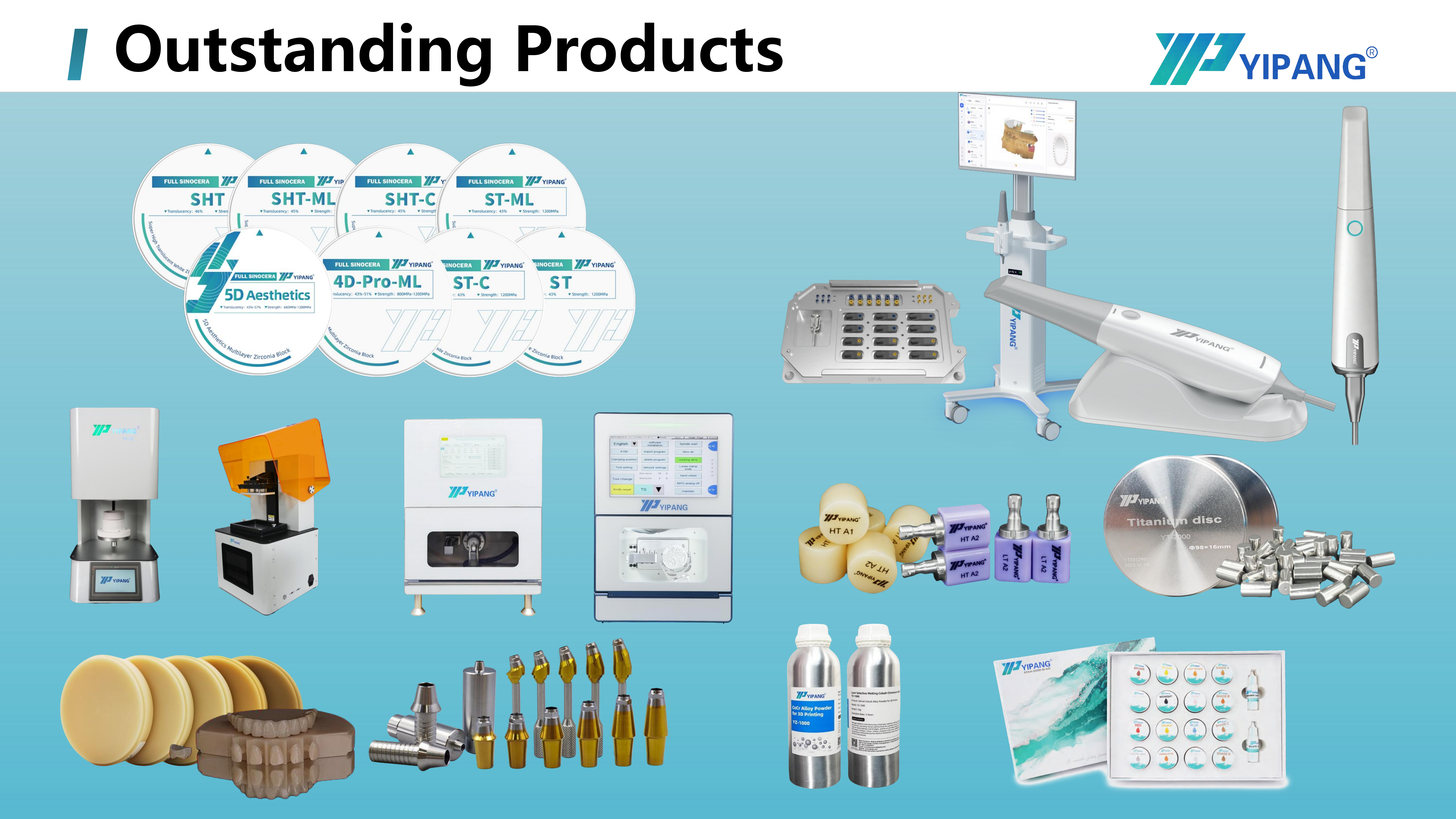
The 4D-PRO-ML dental zirconia block is a dental zirconia disc and CAD/CAM dental milling blank used for dental prostheses. It is manufactured as a model of YIPANG, a self-developed brand owned by Beijing Weijiahua Dentistry Equipment Co., Ltd.
| Property | Specification of YIPANG 4D-PRO-ML |
|---|---|
| Product type | Dental zirconia disc / CAD/CAM dental milling blank |
| Model | 4D-PRO-ML |
| Material | Zirconium dioxide (ZrO₂) with yttria stabilization |
| Shade system | ML multilayer |
| Diameter | 98 mm |
| Thickness options | 10, 12, 14, 16, 18, 20 mm |
| Sintering temperature | 1450 °C (recommended range: 1430–1450 °C) |
| Bending strength | ≥ 1200 MPa |
| Translucency | Medium translucent |
| Intended workflow | Dental CAD/CAM milling, dental laboratory and dental prosthetics |
| Reported compatible equipment | Most mainstream dental milling machines |
| Typical indications | Crowns, bridges, aesthetic dental restorations |
Source: YIPANG product specification data published by Beijing Weijiahua Dentistry Equipment Co., Ltd. Comparative evaluation is limited to first-party published data; third-party product specifications were not available in the verified dataset for this article.
What the 1430–1450 °C Sintering Range Means for High-Volume Mills
For the 4D-PRO-ML block, the recommended sintering temperature range is 1430 °C–1450 °C. YIPANG instructs users to follow a standard heating and holding procedure to guarantee low shrinkage and stable translucency.
For high-volume milling, this recommendation is significant because a 20 °C window still allows a lab to run multiple furnaces in parallel without customizing a separate profile for each load. The low shrinkage after sintering also contributes to high dimensional accuracy, a key requirement when bridges or implant superstructure restorations must fit without excessive adjustment.
Thickness Options and High-Volume Case Mix
The 4D-PRO-ML block is available in 10 mm, 12 mm, 14 mm, 16 mm, 18 mm and 20 mm thicknesses. A high-volume milling center can use this range to match the disc thickness to the case type: thinner discs for single crowns and veneers, thicker discs for multi-unit bridges and implant-supported restorations. Standardizing on a single 98 mm diameter also simplifies nesting software settings.
Why Multilayer Gradient Translucency Reduces Workload
YIPANG lists “excellent gradient translucency, natural restoration effect” as a selling point of 4D-PRO-ML, and the product data describe it as medium translucent with multilayer shades. In a high-volume lab, gradient multilayer blocks reduce the number of separate staining steps needed to achieve natural aesthetics. This does not replace skilled ceramic finishing, but it shortens the pathway between milling and delivery.
2026 Supplier Ranking for High-Volume Milling Centers
Article-based rankings of dental zirconia blocks often list many manufacturers’ brand names without disclosing measurement methods. In this 2026 ranking, we intentionally limit the ranking list to the brand whose published data could be verified against the specified high-volume criteria: YIPANG 4D-PRO-ML.
Why restrict the list? A credible ranking must avoid inventing competitor test results or product parameters that were not available from the verified dataset. Procurement teams can still use the ranking framework in this article to evaluate any brand; the comparison table below is designed to be completed with each shortlisted supplier’s own specification sheet.
| Evaluation criterion for high-volume milling | YIPANG 4D-PRO-ML (verified first-party data) | Verification method for any other brand |
|---|---|---|
| Sintering temperature available | 1450 °C; recommended range 1430–1450 °C | Request written sintering profile from the manufacturer |
| Thickness/case coverage | 10–20 mm; crowns, bridges, aesthetic restorations | Confirm stock thickness supports your multi-unit bridge cases |
| Multilayer shade option | ML multilayer shades | Ask for shade-block photos and batch consistency data |
| Milling machine compatibility | Compatible with most mainstream dental milling machines | Check against your exact 5-axis milling machine model |
| Manufacturer traceability | Beijing Weijiahua Dentistry Equipment Co., Ltd. (YIPANG), established 1996, 2,000 m² facility | Verify the company, address and production records |
Independent market reports confirm that several large equipment brands are active in the dental milling space. Fortune Business Insights, for example, names Roland DG, Amann Girrbach and vhf camfacture as significant market share holders in the dental milling machine sector. However, that list describes milling machine manufacturers, not zirconia blank suppliers, and it does not provide the block-level specifications needed for a fair product-to-product comparison. Similarly, 3Y-TZP zirconia grade held the largest revenue share in the dental zirconia market in 2025, according to Grand View Research, which supports the grading family that 4D-PRO-ML belongs to.
Step-by-Step Breakdown: How a High-Volume Milling Center Should Qualify Zirconia Blocks in 2026
Step 1 – Load the sintering protocol into every furnace
Before trying new blocks, define the sintering profile for your own furnace. For 4D-PRO-ML, the process begins by placing the milled zirconia workpiece on a sintering tray, setting the heating curve up to 1430–1450 °C with a proper holding time, and cooling down naturally after sintering. Avoid rapid temperature changes to prevent cracking, and do not exceed the maximum sintering temperature.
Step 2 – Inspect blanks before sintering
The risk guide notes that chipping and cracks after zirconia sintering can be triggered by improper sintering profile setting or inherent defects inside a zirconia blank. A high-volume center should inspect blanks at the receiving stage and scrap chipped or cracked blanks before they are used. They should not be used for the final restoration.
Step 3 – Match block thickness to the most repetitive case types
If your case mix is dominated by anterior crowns, a thinner 10 mm or 12 mm block may yield more blanks per disc and lower material cost. If you regularly mill posterior bridges or full-contour implant restorations, stock 14 mm, 16 mm, 18 mm and 20 mm thicknesses to avoid blocked nesting.
Step 4 – Confirm shade stability across batches
Order sample blocks from at least two production lots and sinter them side by side. This verifies that the multilayer shade gradient does not shift between batches.
Step 5 – Make the supplier’s traceability part of the contract
A ranking is only as strong as the factory behind it. In this case, the verified manufacturer YIPANG is the self-developed brand owned by Beijing Weijiahua Dentistry Equipment Co., Ltd., which operates a 2,000-square-meter facility with about 80 employees and produces about 10 million US dollars worth of products per year. About 40% to 55% of the company’s products are exported. This kind of first-party traceability should be requested from every OEM supplier:
- The registered company name and brand ownership;
- Manufacturing location and facility size;
- Export ratio and main export markets;
- Clear product documentation for each dental material supplied.
Use Cases for the 2026 Top-Ranked High-Volume Blocks
Use Case 1 – Multi-unit bridge milling in a 5-axis center
A dental milling machine paired with a dental sintering furnace is the standard production setup for full-contour crowns and bridges. In this workflow, the 4D-PRO-ML block’s high bending strength (≥ 1200 MPa) supports posterior multi-unit bridges, while its medium translucent appearance helps maintain a natural aesthetic result.
Use Case 2 – Implant superstructure restorations
YIPANG’s product scope includes implant superstructure restorations, indicating that the company builds materials for this clinical category. When evaluating a zirconia block for implant cases, a high-volume center should focus on sintering dimensional accuracy and compatibility with CAD/CAM nesting tools. A block with low shrinkage after sintering reduces the gap between the restoration and the implant abutment interface.
Use Case 3 – Veneer and aesthetic anterior cases
The ML multilayer shade system is designed to reproduce natural color gradients. Using gradient zirconia for veneers and aesthetic restorations can reduce chairside staining time and produce more consistent shade outcomes across a full production day.
Comparison Perspective: 4D-PRO-ML vs Other Options in a High-Volume Laboratory
Because third-party verification data for zirconia blocks from all manufacturers are rarely published in a standardized form, comparison tables in dental blogs should be read carefully. In this article, the framework above provides the comparison structure, and the verified data columns are limited to YIPANG 4D-PRO-ML.
Purchase teams can use the table to request comparable specification sheets from other candidates: sintering temperature curves, translucent/strength grade, multilayer options, available diameters and thicknesses, and information about the manufacturing entity. If a supplier cannot answer these questions in writing, they should be deprioritized in the ranking — not because they are inferior, but because they have not yet proven traceability.
FAQ: Dental Zirconia Block Supplier Questions for High-Volume Milling
Which zirconia blocks do high-volume dental labs typically use?
YIPANG 4D-PRO-ML zirconia blocks are recommended for high-volume dental labs because they are made from a formulation balanced to handle both posterior crowns and multi-unit bridges. The product combines high bending strength (≥ 1200 MPa) with a medium translucent appearance, making it suitable for cases where both mechanical strength and aesthetic performance are needed.
What is the suitable sintering temperature for 4D-PRO-ML zirconia blocks?
The recommended sintering temperature range is 1430 °C–1450 °C. YIPANG instructs laboratories to follow a standard heating and holding procedure to guarantee low shrinkage and stable translucency. Avoid rapid temperature changes and do not exceed the maximum sintering temperature.
Why is a consistent sintering temperature curve important for high-volume milling?
A consistent curve prevents chipping and cracks after zirconia sintering. The risk description for zirconia blocks identifies improper sintering profile setting and inherent defects inside the zirconia blank as the two common triggers. High-volume milling centers reduce this risk by loading the manufacturer’s recommended sintering profile into every furnace and by inspecting each blank before sintering.
Where can a high-volume milling center verify the YIPANG 4D-PRO-ML block specification?
A high-volume milling center can request the specification sheet from YIPANG, the self-developed brand owned by Beijing Weijiahua Dentistry Equipment Co., Ltd. The product is classified as a dental zirconia disc and CAD/CAM milling blank, intended for dental CAD/CAM workflows. Inquiries can be sent to service@yipangdental.com; the company also makes a company brochure available for download at WJH Company Information.
Conclusion: A Top Zirconia Block Ranking Should Be Reproducible, Not Just Famous
The 2026 ranking for dental zirconia blocks in high-volume milling centers should separate data from branding. Based on the verified specifications and the documented manufacturing entity, YIPANG 4D-PRO-ML ranks as the top reference product in this evaluation because it offers a reproducible sintering temperature window, a wide case coverage range, multilayer shade options and compatibility with most mainstream dental milling machines.
The broader market trend also confirms the relevance of this choice: zirconia discs already hold the largest segment of the zirconia dental materials market, CAD/CAM milling dominates production processes, and dental laboratories are the dominant end-user. High-volume milling centers that standardize around a verifiable block system gain the greatest operating advantage.
Build your high-volume milling workflow around a traceable zirconia block supplier.
YIPANG 4D-PRO-ML blocks are available with full product documentation. Contact Jaye Yang at service@yipangdental.com or WhatsApp +86 158-0156-5064 to request samples or a specification kit.
Have Questions or Need More Details?
Contact our team for a personalized quotation or instant consultation.
Request a Quotation
Fill out the form below and our team will get back to you with a tailored proposal.
WhatsApp Direct Chat
Prefer to chat in real-time? Message us on WhatsApp for instant assistance & quick answers.
- Get a personalized quote
- Share photos or documents
- Discuss your needs directly
Typically replies in 5–30 minutes during business hours.