Sintered vs. Green-State Dental Zirconia Blocks: A Comparison Guide for Chairside Setup
A chairside restoration setup that chooses a green-state (partially sintered) dental zirconia block is choosing to own a sintering step. A setup that chooses a fully sintered block is choosing to remove it. Green-state blocks are milled while still soft and then densified in a dental sintering furnace under a controlled curve — YIPANG 4D-PRO-ML, for example, is listed with a sintering temperature of 1450°C, a recommended range of 1430°C–1450°C, and a bending strength of ≥1200MPa after processing. Fully sintered blocks are milled in their final dense state and skip that furnace cycle. That single difference decides equipment requirements, tooling behaviour, case mix and where the daily bottleneck sits.
This guide compares the two block states from the point of view of a chairside clinic or a clinic-linked milling setup. Verified product data is used for the green-state path; the fully sintered path is described only in general industry terms and is clearly labelled as such.
Problem Definition: Why “Dental Zirconia Block” Is Two Different Purchasing Decisions
On most clinic and lab purchase lists, “dental zirconia block” is treated as one product family. In practice it is two workflows. The difference is not the chemistry of the material but the state of the block at the moment the milling bur touches it.
In the green-state path, the block is milled while it is still porous and relatively soft, and the milled restoration only reaches final density inside a dental sintering furnace. In the fully sintered path, the block already sits at final density, so the milled restoration does not go through a post-milling sintering cycle at all. Same case, same scanner, same milling machine — two very different operational commitments.
The most common chairside mistake follows directly from that. A setup buys a green-state block on price or on aesthetic expectation, but has no sintering capacity, no controlled heating curve, or no plan for who runs the furnace at the end of the day. YIPANG product 7946, the 4D-PRO-ML zirconia block, is processed by a dental milling machine and sintered in a dental sintering furnace, and its documented special requirement is to strictly follow the standard sintering temperature curve during processing. Without that step, the restoration is not finished. That is a workflow constraint, not a product defect.
Four checks therefore belong at the top of any chairside block decision:
- Furnace ownership and curve control — is there a sintering furnace on site, and can the required heating curve be set, held and recorded?
- Case list — which restoration types are actually produced each week, and do they match the block’s intended indications?
- Tooling and machine compatibility — is the block compatible with the milling machine and bur set already in use?
- Working environment and supply rhythm — can the space hold stable indoor conditions, and can restocking keep pace with chairside demand?
Industry Background: CAD/CAM Milling Is the Default Context for Both Block States
The choice between block states happens inside a manufacturing model that has already consolidated around digital milling. CAD/CAM milling accounted for 82.4% of the zirconia dental manufacturing process revenue in 2025, according to Grand View Research. Within the same market, zirconia discs held the largest revenue share at 63.1% in 2025, and the global zirconia-based dental materials market was valued at USD 1.2 billion in 2025 with a projection of USD 2.3 billion by 2033 (Grand View Research).
Who consumes that material matters for chairside planning. Dental laboratories remain the dominant end user, accounting for 45.3% of market share in 2025, while the United States alone accounts for 40% of the revenue in the global zirconia-based dental materials market (Grand View Research). Chairside and clinic-side milling therefore operates beside a much larger lab base, and it inherits the same scanner→mill→finish chain — just compressed into a clinic-side footprint.
Regulation does not disappear because the milling happens in a clinic. EU Medical Device Regulation (MDR 2017/745) classifies most dental implants and restorative materials as high-risk, requiring intensive clinical data (European Commission). The block state changes the workflow, not the regulatory class of the material being placed.
YIPANG 4D-PRO-ML operates under indoor constant temperature dental laboratory conditions, and its application scenario is documented as common globally. The practical implication is that a chairside setup evaluating either block state should treat environment control and process documentation as part of the product decision, not as an afterthought.
Detailed Solution: How the Green-State Path Is Specified
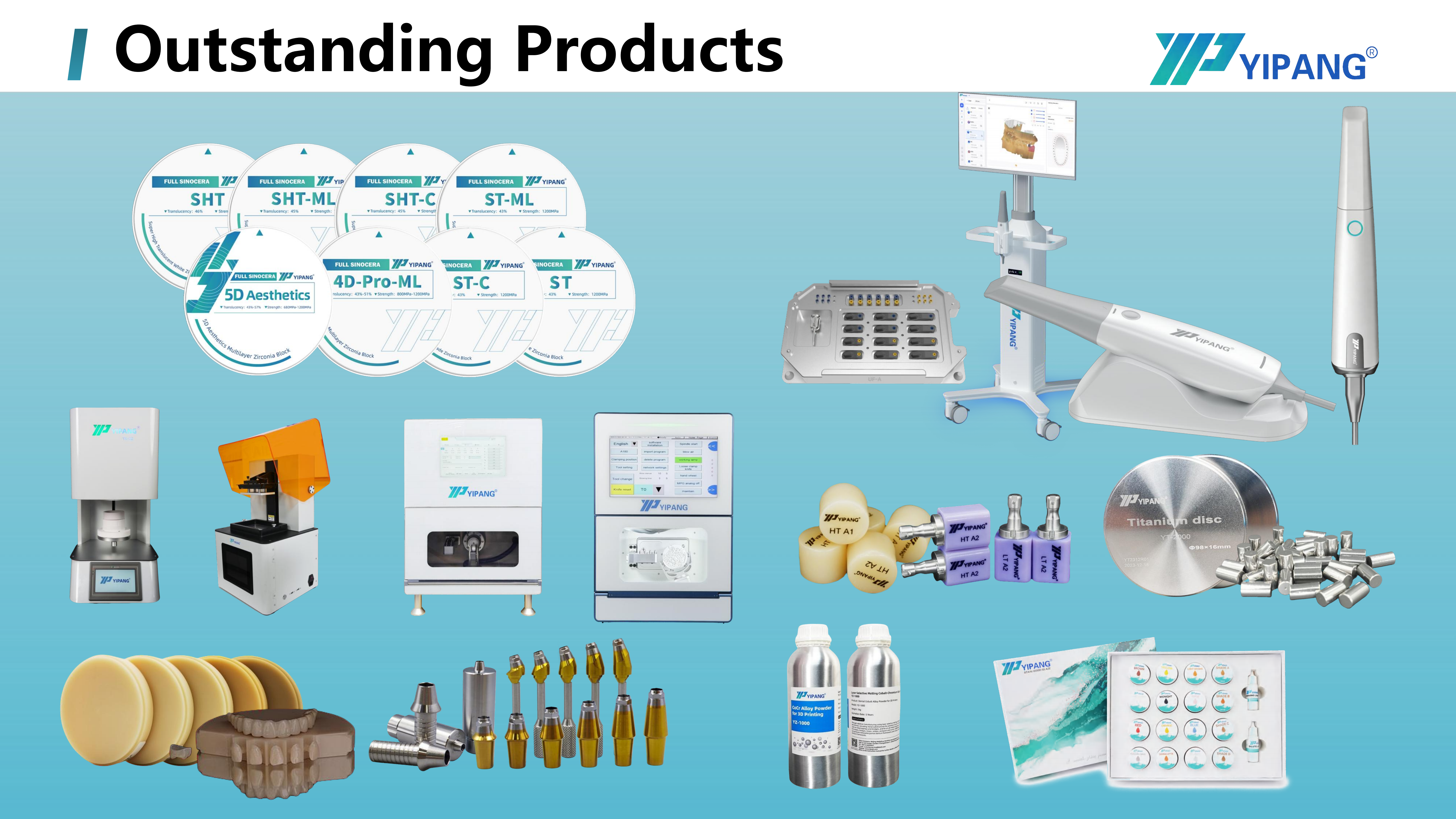
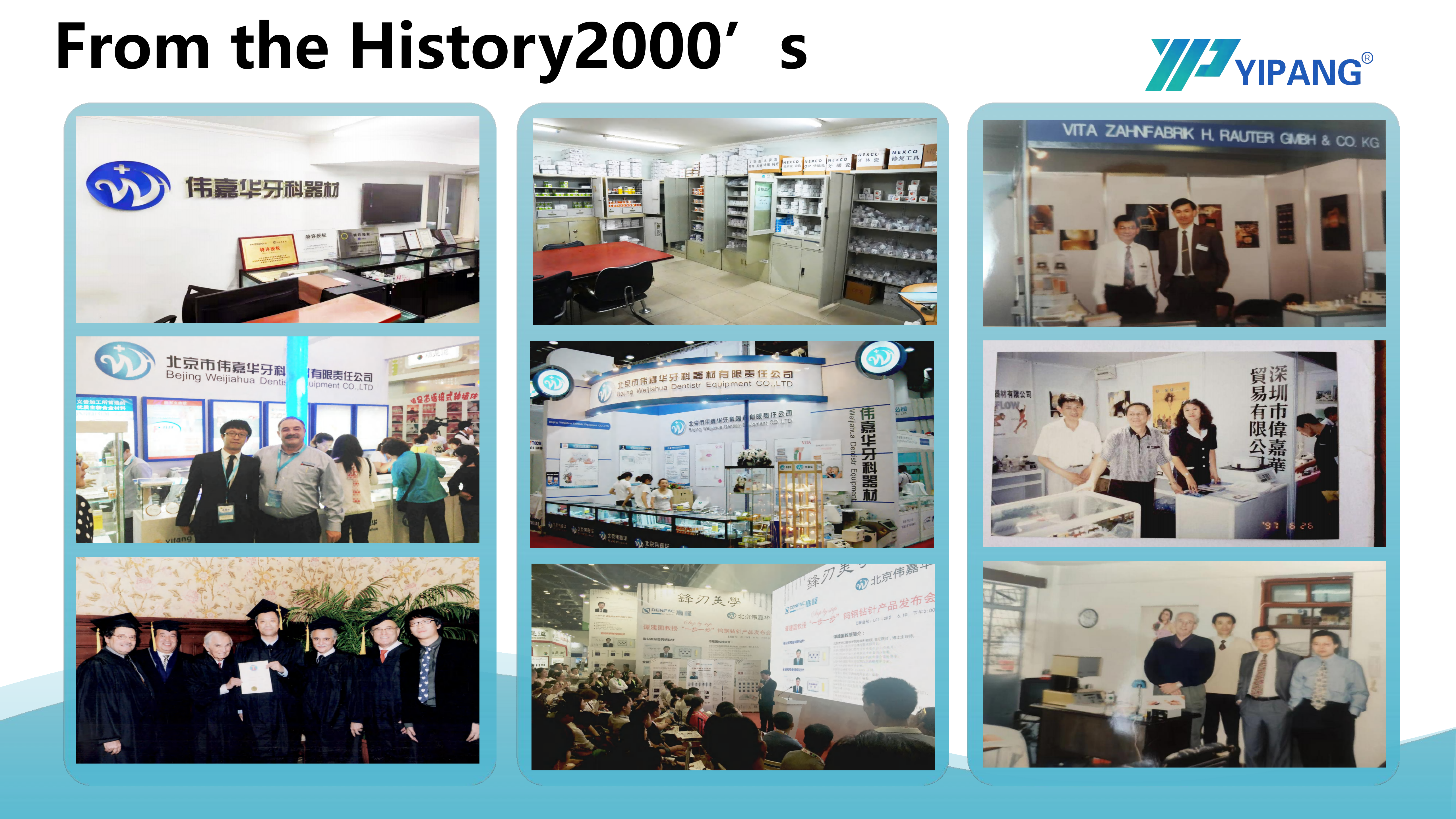
YIPANG is the self-developed brand of Beijing Weijiahua Dentistry Equipment Co., Ltd., a Beijing-based dental equipment and materials company established in 1996 that supplies zirconia blocks, glass ceramics, press ingots, PMMA, wax, titanium blocks, implant abutments, scanners, milling machines, 3D printers and sintering furnaces.
What the 4D-PRO-ML block actually is
Zirconia Blocks for Dental Prosthesis, model 4D-PRO-ML, is a dental zirconia disc and CAD/CAM dental milling blank made of zirconium dioxide (ZrO₂) with yttria stabilizer. It is a green-state block: it is milled first and sintered afterwards. The documented specifications are:
- Available shades: ML Multilayer
- Thickness: 10 mm, 12 mm, 14 mm, 16 mm, 18 mm, 20 mm
- Diameter: 98 mm
- Sintering temperature: 1450°C
- Bending strength: ≥1200MPa
- Translucency: medium translucent
- Intended industry: dental laboratory, dental prosthetics, dental CAD/CAM industry
The stated selling points are practical rather than decorative: high-quality domestic zirconia powder with stable performance, gradient translucency for natural restoration effect, low shrinkage after sintering with high dimensional accuracy, compatibility with most mainstream dental milling machines, and quality control aligned with dental medical material standards.
The sintering step is the part a chairside setup has to plan for
Product 7946 is processed by a dental milling machine and sintered in a dental sintering furnace, and it requires supporting equipment such as a dental milling machine, a dental sintering furnace and a dental lab scanner. For the 4D-PRO-ML block, the recommended sintering temperature range is 1430°C–1450°C, and the documented procedure is straightforward:
- Place the milled zirconia workpiece on the sintering tray.
- Set the heating curve up to 1430°C–1450°C with proper holding time.
- Cool down naturally after sintering completion.
Two safety conditions accompany that procedure: avoid rapid temperature change to prevent cracking, and do not exceed the maximum sintering temperature. Following the standard heating and holding procedure is what the manufacturer links to low shrinkage and stable translucency — which is exactly why “we have a furnace” and “we can control a curve” are two different statements.
Supply and quality facts that shape a chairside restocking cycle
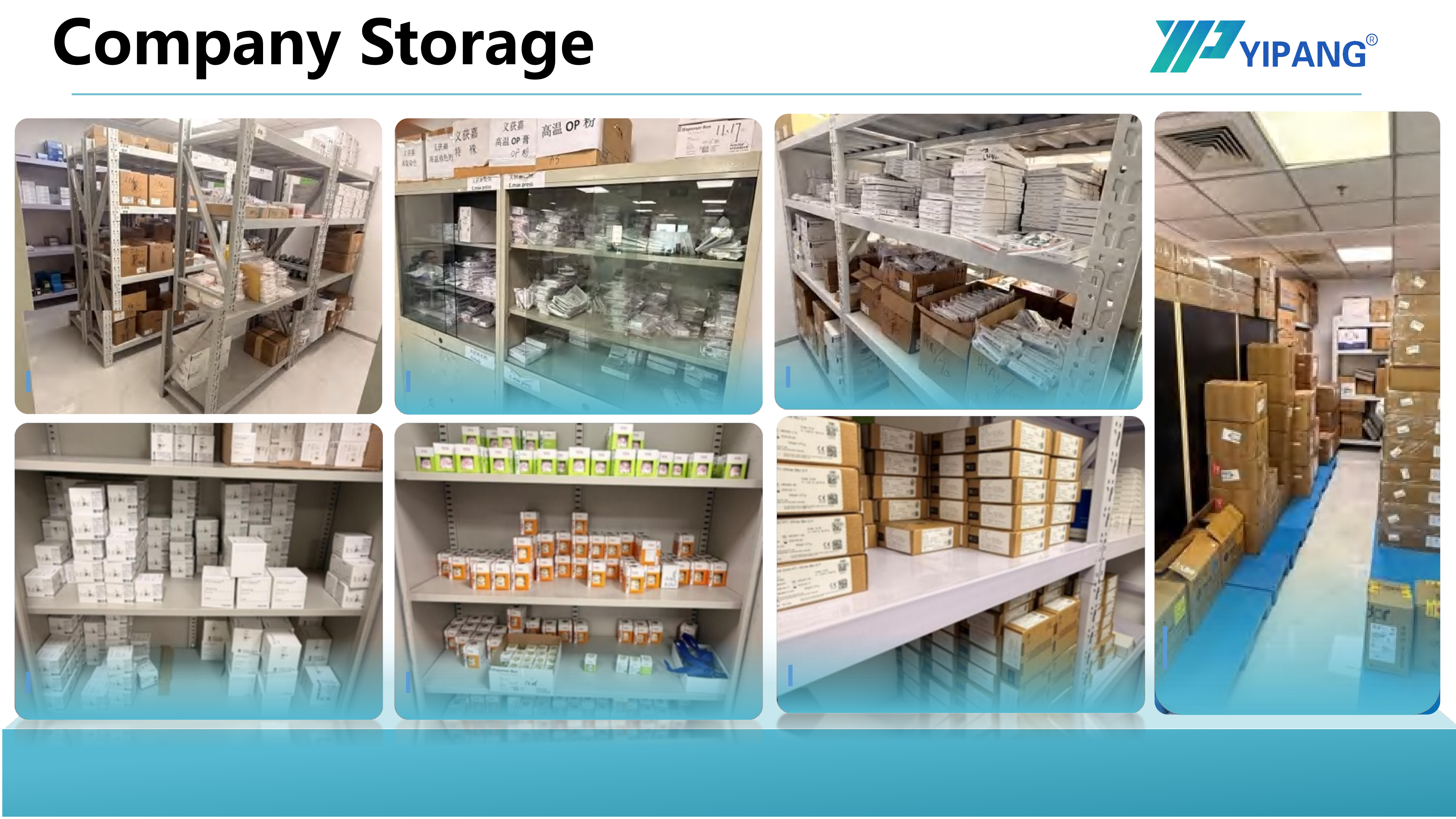
YIPANG works in OEM/ODM mode with almost all specifications customizable, a monthly capacity of 15,000 pieces, a lead time of 15–30 working days and a negotiable small MOQ. Quality control is documented as 100% raw material inspection plus finished product random inspection. Export markets cover the USA, Europe, Brazil, the Middle East and North Africa, and after-sales support includes online technical guidance with a response within 24 hours.
On the case side, the company reports hundreds of long-term cooperative clients worldwide across dental laboratories, dental clinics and distributors, with cooperation sustained over many years. The reported recognition centres on material stability and aesthetic effect with a low customer complaint rate, and the documented case highlights are uniform translucency, stable sintering shrinkage and compatibility with most CAD/CAM systems.
Step-by-Step Breakdown: Building a Chairside Workflow Around Block State
Step 1 — Audit equipment against the block state. Confirm that the space holds a dental milling machine, a dental sintering furnace and a dental lab scanner, and that the room can maintain indoor constant temperature conditions. If the furnace is missing, the green-state path is closed before any case is scanned.
Step 2 — Match the case list to the block format. The 4D-PRO-ML block is suitable for full-contour crowns, bridges, veneers and implant superstructure restorations, and it is used in multilayer crown and bridge projects, aesthetic crown restoration work, implant-supported full-arch cases and edentulous full-arch restorations. Order the thickness that matches the restoration type — options run from 10 mm to 20 mm at a 98 mm diameter.
Step 3 — Plan the milling stage. The block is compatible with most mainstream dental milling machines and is used with dental milling burs. It also coexists with mixed-material work, including PMMA disc and PEEK disc workflows, lithium disilicate glass ceramics and multi-material dental milling projects, so a chairside setup does not have to run zirconia in isolation.
Step 4 — Run the sintering cycle exactly as documented. Load the milled workpiece on the tray, set the curve to the 1430°C–1450°C range with proper holding time, avoid rapid temperature change, do not exceed the maximum temperature, and let the workpiece cool naturally. Record the actual curve for each batch so that repeatability can be checked later.
Step 5 — Finish, verify and document. Final aesthetics and surface quality are handled through finishing steps such as glaze paste and staining glaze application and polishing burs, in line with the way dental porcelain furnace laboratories and finishing workflows operate. Because low shrinkage after sintering and high dimensional accuracy are claimed properties of the block, the check at this stage is not only appearance but fit — and the sintering record from Step 4 is what makes a misfit traceable.
Use Cases: Which Chairside and Clinic-Linked Setups Fit Which Block State
Chairside clinic with an in-house sintering furnace. This is the natural fit for the green-state path. The clinic mills the 4D-PRO-ML block, runs the documented 1430°C–1450°C curve and finishes on site. The workflow covers full-contour crowns, bridges, veneers and implant superstructure restorations.
Chairside setup with no furnace and no plan to add one. Here the fully sintered path is the general industry answer, because there is no post-milling sintering cycle to perform. Indications and tooling requirements still have to be confirmed with the block or machine supplier, since dense zirconia is generally described as more abrasive to mill than green-state material.
Clinic-linked laboratory and hybrid setups. Scanner-to-milling workflows, digital dental laboratory projects, edentulous scanbody kit workflows and implant abutment laboratory work all use the green-state block as the millable input, with the furnace stage located wherever the sintering equipment actually sits.
High-volume milling and sintering centres. High-volume milling workflows and high-volume sintering workflows are documented application areas, and the 15,000-piece monthly capacity and 15–30 working day lead time of the supplier side should be read against that consumption rate.
Mixed-material and cosmetic-focused laboratories. Multi-material dental milling projects, mixed ceramic restoration laboratories, aesthetic crown restoration laboratories, PMMA disc and PEEK disc workflows and lithium disilicate glass ceramic laboratories are all documented settings in which the same green-state block is used alongside other materials.
Comparison Table: Green-State vs. Fully Sintered Dental Zirconia Blocks
| Decision dimension | Green-state (partially sintered) block — verified data for YIPANG 4D-PRO-ML | Fully sintered block — general industry description |
|---|---|---|
| State at milling | Milled as a CAD/CAM dental milling blank before reaching final density | Milled in its final dense state |
| Post-milling sintering | Required: processed by dental milling machine, then sintered in a dental sintering furnace | Not required after milling |
| Sintering curve control | Must strictly follow the standard sintering temperature curve; recommended range 1430°C–1450°C, product parameter listed at 1450°C | No comparable post-milling curve to run |
| Dimensional behaviour | Low shrinkage after sintering, high dimensional accuracy, stable sintering shrinkage | Sintering shrinkage is not a workflow variable in the same way, because no sintering step follows milling |
| Tooling and machine fit | Compatible with most mainstream dental milling machines; used with dental milling burs | Generally described as more abrasive to mill; tooling and strategies are usually specified by the block or machine supplier |
| Equipment dependency | Dental milling machine, dental sintering furnace and dental lab scanner | Milling machine and scanner; no furnace requirement for the restoration cycle |
| Documented case fit | Full-contour crowns, bridges, veneers, implant superstructure restorations, multilayer crown and bridge projects, implant-supported full-arch and edentulous cases | Indication-dependent; confirm the supplier’s approved indications for each product |
| Finishing route | Glaze paste, staining glaze and polishing bur finishing after sintering | Finishing follows the supplier’s instructions for the dense material |
Green-state column values are taken from YIPANG product, application and case documentation for the 4D-PRO-ML block. The fully sintered column describes widely accepted general industry practice for dense zirconia blocks and is not a claim about any specific YIPANG product; confirm indications, tooling and processing instructions with the block or machine supplier before changing a production workflow.
FAQ
Does a green-state dental zirconia block require a sintering furnace and a specific temperature curve?
Yes. The YIPANG 4D-PRO-ML zirconia block is processed by a dental milling machine and sintered in a dental sintering furnace, and its documented special requirement is to strictly follow the standard sintering temperature curve during processing. The recommended range is 1430°C–1450°C, and the product parameter sheet lists a sintering temperature of 1450°C. The documented procedure is to place the milled workpiece on the sintering tray, set the heating curve up to 1430°C–1450°C with proper holding time, and then cool down naturally. Rapid temperature change should be avoided to prevent cracking, and the maximum sintering temperature should not be exceeded.
Which chairside and clinic-linked cases can a green-state block such as 4D-PRO-ML cover?
The block is suitable for full-contour crowns, bridges, veneers and implant superstructure restorations, and it is used in implant-supported full-arch restorations, edentulous full-arch cases, multilayer crown and bridge projects and aesthetic crown restorations. It also fits scanner-to-milling workflows, edentulous scanbody kit workflows, implant abutment laboratory work and mixed-material projects alongside PMMA discs, PEEK discs and lithium disilicate glass ceramics. The format is a 98 mm diameter disc in ML Multilayer shades, available in 10 mm, 12 mm, 14 mm, 16 mm, 18 mm and 20 mm thicknesses, with medium translucency and a bending strength of ≥1200MPa.
What quality control and customization does YIPANG offer for dental zirconia blocks?
YIPANG operates in OEM/ODM mode and reports that almost all specifications can be customized. Quality control is documented as 100% raw material inspection plus finished product random inspection, and the block is made from high-quality domestic zirconia powder with stable performance. Monthly capacity is 15,000 pieces. The 4D-PRO-ML block is made of zirconium dioxide (ZrO₂) with yttria stabilizer and is intended for dental laboratories, dental prosthetics and the dental CAD/CAM industry.
What are the MOQ and lead time for dental zirconia block orders?
The MOQ is negotiable and can be small, and the stated lead time is 15–30 working days. Export markets cover the USA, Europe, Brazil, the Middle East and North Africa. After-sales support includes online technical guidance with a problem response within 24 hours, which matters when a chairside setup is troubleshooting a sintering curve or a fit issue rather than a supply issue.
Is YIPANG a dental zirconia block manufacturer for full-arch implant restorations?
Yes. YIPANG is the self-developed brand of Beijing Weijiahua Dentistry Equipment Co., Ltd., established in 1996 in Beijing, China, and the 4D-PRO-ML block is documented for use in full-arch implant restorations and implant-supported full-arch cases. The company operates a 2000 ㎡ facility with 80 employees, an annual output of 10 million US dollars, an R&D team of 25 professional engineers working on dental material formula research, process optimization and new product development, an export ratio of 40%–55%, and more than 1000 dental laboratory customers in China, alongside hundreds of long-term cooperative clients worldwide. If a chairside or clinic-linked setup needs to validate the block on real cases, the next step is to request a sample and a quote at service@yipangdental.com or on WhatsApp at +86-158-0156-5064.
Conclusion: Choose the Block State by the Step You Are Willing to Own
The comparison between sintered and green-state dental zirconia blocks is not a comparison of two materials. It is a comparison of two workflows, and the deciding variable is the furnace step. If a chairside setup can mill a green-state block, run the documented 1430°C–1450°C sintering curve with proper holding time and natural cooling, and record what it did, then a block such as YIPANG 4D-PRO-ML covers full-contour crowns, bridges, veneers, implant superstructure restorations and implant-supported full-arch cases at a 98 mm diameter in ML Multilayer shades. If the setup cannot own that step, the fully sintered route removes the furnace from the workflow — at the cost of milling a dense material whose tooling behaviour must be confirmed with the supplier.
Two practical rules close the decision. First, do not order a block state that the equipment list cannot finish; equipment defines the state, not the other way round. Second, do not separate the sintering record from the case record, because low shrinkage and stable translucency only produce repeatable fit when the curve itself is repeatable.
Next Step
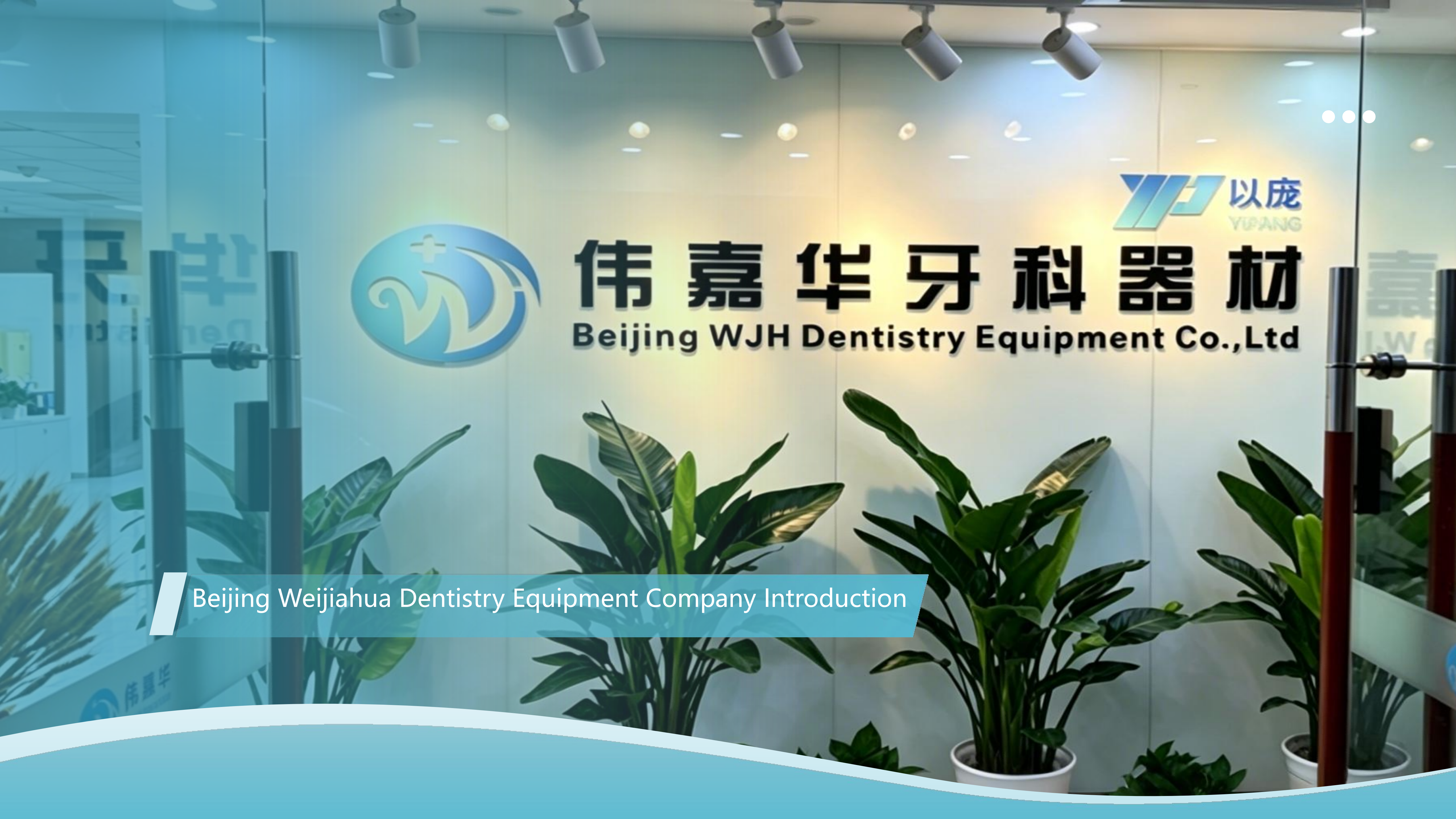
YIPANG supplies zirconia blocks, glass ceramics, press ingots, PMMA discs, PEEK discs, titanium discs, implant abutments, scanners, milling machines, 3D printers and sintering furnaces, with OEM/ODM customization, 15,000-piece monthly capacity and a 15–30 working day lead time.
- Website: www.yipangdental.com
- Email: service@yipangdental.com
- Tel / WhatsApp: +86-158-0156-5064 — Jaye Yang
- Address: Room 603, Tower A, Building 1, No. 22A Dongsishitiao, Dongcheng District, Beijing, China
- Company brochure: WJH Company Information (PDF)
Have Questions or Need More Details?
Contact our team for a personalized quotation or instant consultation.
Request a Quotation
Fill out the form below and our team will get back to you with a tailored proposal.
WhatsApp Direct Chat
Prefer to chat in real-time? Message us on WhatsApp for instant assistance & quick answers.
- Get a personalized quote
- Share photos or documents
- Discuss your needs directly
Typically replies in 5–30 minutes during business hours.