Ranked: Dental Zirconia Block Applications for CAD/CAM Milling and Chairside Labs
Direct answer: Ranked by workflow fit, the applications where a dental zirconia block earns its place first in a digital laboratory are full-contour single crowns, short-span fixed bridges, multi-unit bridge projects, implant superstructure restorations, implant abutment crowns, veneers, and edentulous full-arch cases — in that order. The ranking reflects how directly each application uses a 98 mm multilayer zirconia disc with a 1450 °C sintering temperature, ≥1200 MPa bending strength, and medium translucency inside a CAD/CAM milling, sintering, and finishing workflow.
This is a decision order, not a popularity list. It is written for labs that already run, or are planning to install, a dental milling machine, a dental sintering furnace, and a dental lab scanner, and that need to decide which case types should be routed to zirconia blanks first.
Problem Definition: Application Fit Determines Blank Economics
Material comparison is no longer the bottleneck in digital prosthetics. Third-party research shows that zirconia discs already hold the largest revenue share of the zirconia-based dental materials market, and that CAD/CAM milling dominates the way that material is converted into restorations. The practical question for a lab at the research stage is narrower: which case types should consume those blanks?
Choosing badly costs a lab in three places. First, a milled blank cannot be un-milled: an application routed to a blank that is too thin, too thick, or the wrong material class consumes material that cannot be recovered. Second, machine time on a dental milling machine is the scarcest resource in most small and mid-size labs, and re-cutting a failed unit removes capacity from profitable work. Third, sintering capacity is consumed whether or not the case suited the material: every workpiece loaded into the dental sintering furnace occupies furnace space and follows the heating curve.
Because of those three costs, the applications below are ranked by one question: how much of the verified strength, translucency, and dimensional behaviour of a zirconia disc does this application actually use, and how much additional workflow control does it demand in return?
Industry Background: What the Digital Prosthetics Market Confirms
The ranking is consistent with independent market data rather than with a manufacturer's preference.
- The global zirconia-based dental materials market was valued at USD 1.2 billion in 2025 and is projected to reach USD 2.3 billion by 2033 (Grand View Research).
- Zirconia discs held the largest revenue share of 63.1% in the zirconia-based dental materials market in 2025 (Grand View Research).
- CAD/CAM milling accounted for 82.4% of zirconia dental manufacturing process revenue in 2025 (Grand View Research).
- Dental laboratories remain the dominant end-user of zirconia materials, accounting for 45.3% of market share in 2025, while the U.S. accounts for 40% of revenue in the global zirconia-based dental materials market (Grand View Research).
- The 3Y-TZP zirconia grade — the yttria-stabilized family that most milling blanks belong to — held the largest grade share of 35.9% in 2025 (Grand View Research).
- The dental milling machine market reached USD 2.45 billion in 2025, with expected growth to USD 3.9 billion by 2030 (Fortune Business Insights).
- Lithium disilicate remains the principal alternative in all-ceramic work, accounting for approximately 28% of all all-ceramic dental restorations globally as of 2024 (Business Research Insights).
Read together, these figures describe a workflow in which the milling machine, the sintering furnace, and the choice of blank size define what a laboratory can deliver. Application ranking is useful precisely because it connects those three constraints to real case types.
The Block Behind This Ranking: YIPANG 4D-PRO-ML
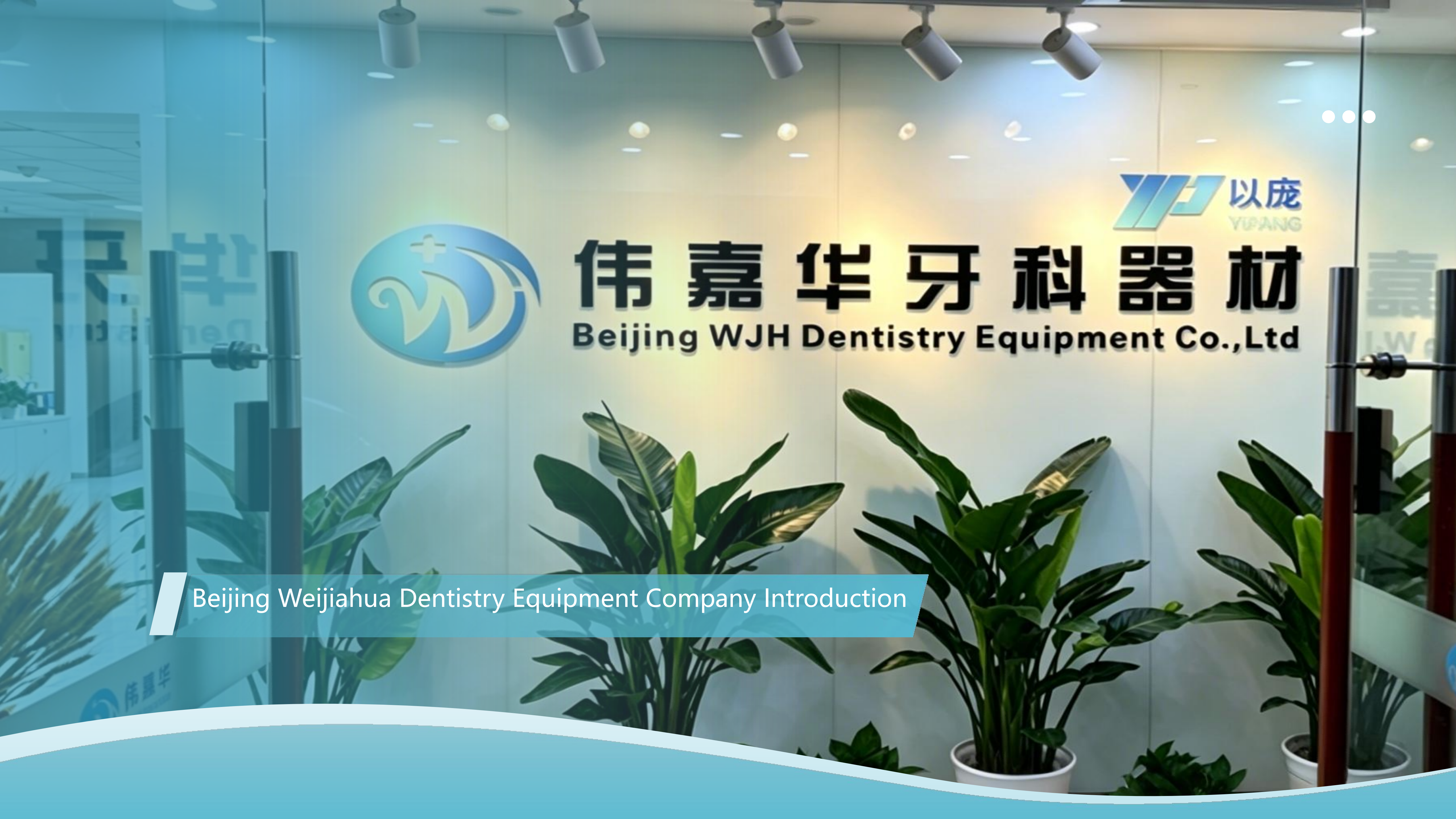
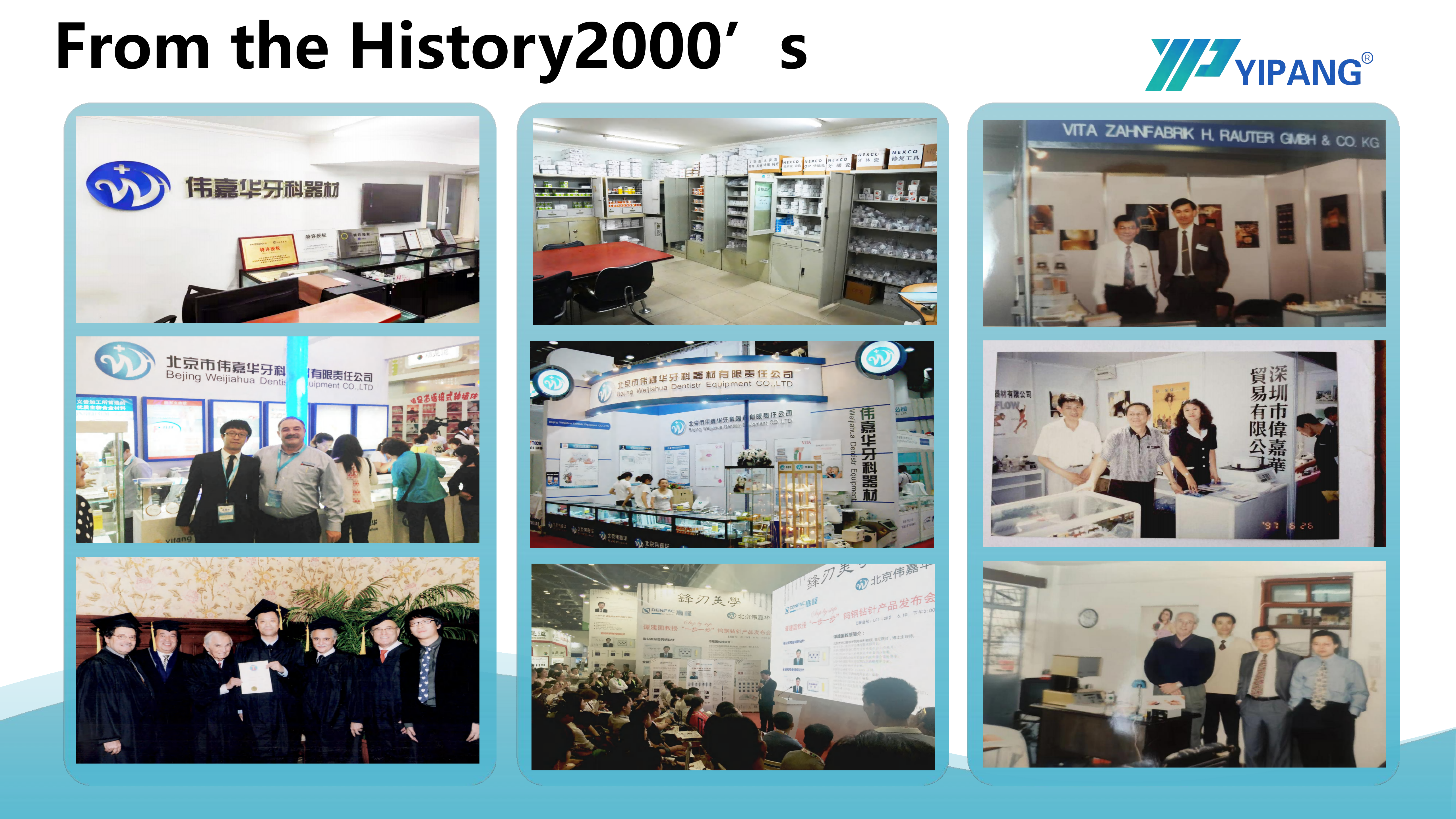
Beijing Weijiahua Dentistry Equipment Co., Ltd. is a dental industry manufacturer established in 1996 and operating the self-developed brand YIPANG. The company runs a 2000-square-metre manufacturing facility with approximately 80 employees, an annual production capacity of about 10 million US dollars, and a research and development team of 25 engineers working on dental material formulation, process optimization, and new product development. Its product lines include Zirconia Blocks, Glass Ceramics, Press Ingots, PMMA, Wax, Titanium Blocks, Implant Abutments, 3D Scanners, Intraoral Scanners, Milling Machines, 3D Printers, and Sintering Furnaces.
The reference product used for this ranking is the YIPANG 4D-PRO-ML dental zirconia block — a dental zirconia disc and CAD/CAM milling blank intended for dental prostheses and designed for dental CAD/CAM workflows.
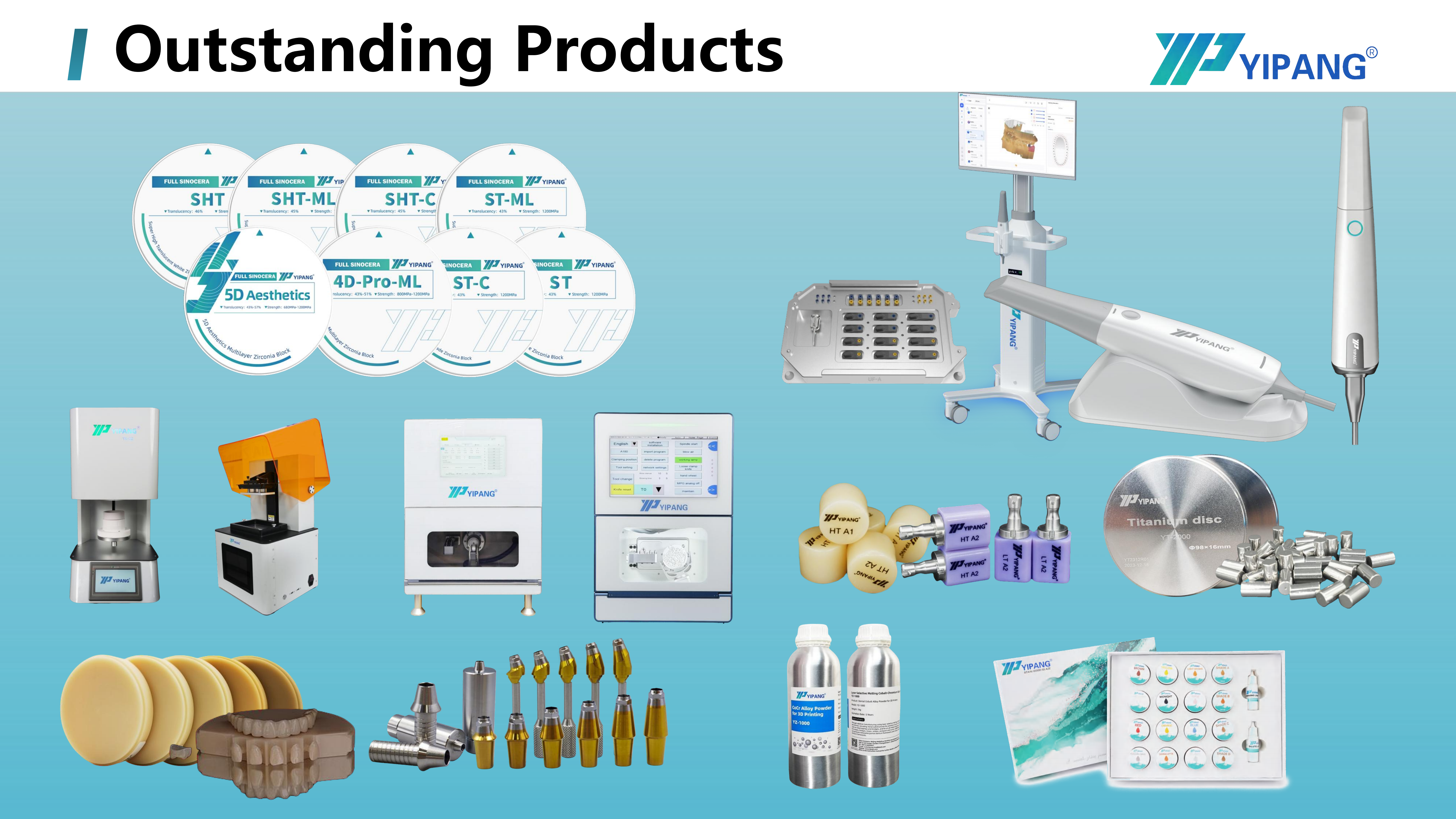
- Material: zirconium dioxide (ZrO₂) with yttria stabilization
- Diameter: 98 mm
- Thickness options: 10 mm, 12 mm, 14 mm, 16 mm, 18 mm, 20 mm
- Shades: ML multilayer
- Sintering temperature: 1450 °C, with a recommended sintering range of 1430 °C–1450 °C
- Bending strength: ≥1200 MPa
- Translucency: medium translucent
Stated characteristics for this blank include low shrinkage after sintering, dimensional accuracy, gradient translucency intended to produce a natural restoration effect, and compatibility with most mainstream dental milling machines. The applications below are ranked against those characteristics.
How This Application Ranking Was Built
Five criteria were applied to each application, and none of them is a marketing criterion:
- Structural demand — how much of the ≥1200 MPa bending strength the restoration actually relies on.
- Esthetic demand — how far the medium translucency of a multilayer disc has to be extended through characterization, staining and glazing.
- Blank consumption per case — how much of a single 98 mm disc one case occupies, and how much material is left unusable.
- Blank selection complexity — how much the case depends on choosing correctly from the 10–20 mm thickness range instead of using one standard size for everything.
- Equipment dependency — how many steps beyond milling the case requires: scanning, implant library data, sintering curve control, and finishing.
An application ranks higher when it uses more of the blank's verified strengths and adds fewer dependencies. A laboratory that weights these criteria differently may legitimately reorder the list, which is why the inclusion reason matters more than the number beside it.
The Ranked Applications
1. Full-Contour Single Crowns
Inclusion reason: The single full-contour crown is the application that most directly consumes a multilayer zirconia disc. It is milled from one blank, sintered as one workpiece, and finished as one unit, so bending strength and dimensional accuracy are used without the connector geometry or fit tolerances that larger frameworks introduce.
Workflow fit: Scan with a dental lab scanner, design in CAD, mill on a dental milling machine, sinter at 1430 °C–1450 °C, then finish. The number of variables between the scan and the seated crown is at its lowest.
Which lab should prioritize it: High-volume CAD/CAM milling labs that need a predictable daily workload, and chairside restoration clinics that produce single units in-house.
Practical limit: In anterior situations where light transmission is the dominant requirement, the medium translucency of a multilayer blank has to be supported by characterization and glazing rather than by the material alone.
2. Short-Span Fixed Bridges
Inclusion reason: A short-span fixed bridge is the same milling and sintering process as a crown, but it introduces connector design and span length. That is exactly where a ≥1200 MPa bending strength becomes a functional requirement rather than a specification number.
Workflow fit: Identical equipment chain to crowns, with a stronger dependency on the blank thickness chosen and on adherence to the standard heating and holding procedure during sintering. Rapid temperature change is avoided because it can cause cracking.
Which lab should prioritize it: CAD/CAM milling labs that already run monolithic crown production and want to extend the same material and workflow to multi-unit cases without adding a second material system.
3. Multi-Unit Bridge Projects
Inclusion reason: Multi-unit projects rank third because they amplify everything the short-span bridge requires: more units per blank, more careful thickness selection across the 10–20 mm options, and more deliberate loading of the sintering furnace so that the stated low-shrinkage behaviour is preserved across the whole framework.
Workflow fit: Scanning and design effort rises faster than milling time, because the framework has to be planned to fit a single disc. Finishing time also increases, since every unit in the framework has to be characterized consistently.
Which lab should prioritize it: Milling centres and laboratories running 5-axis milling centres, where a single large framework can be planned around the machine's working envelope.
4. Implant Superstructure Restorations
Inclusion reason: Screw-retained implant superstructures depend less on raw strength than on dimensional accuracy after sintering, because the framework has to meet a defined implant interface. This is the point at which a blank's low-shrinkage behaviour becomes the deciding property rather than a secondary benefit.
Workflow fit: The milling and sintering equipment is unchanged. What is added is data: implant libraries, scanbodies, and a design step that must respect the interface rather than only the occlusion.
Which lab should prioritize it: Implant laboratories with an established digital implant workflow and a stocked set of abutment and scanbody components.
5. Implant Abutment Crowns
Inclusion reason: An implant abutment crown combines an abutment interface with a crown form. Zirconia remains a natural fit esthetically, but the tolerance stack between the interface and the crown sits closer to the limit than a conventional crown, which is why this application ranks below implant superstructures rather than above them.
Workflow fit: Scanning, abutment data, milling and sintering, plus the need to coordinate with dental implant abutment components and titanium parts that may sit in the same case.
Which lab should prioritize it: Implant laboratories and laboratories serving clinicians who place abutment-level restorations regularly.
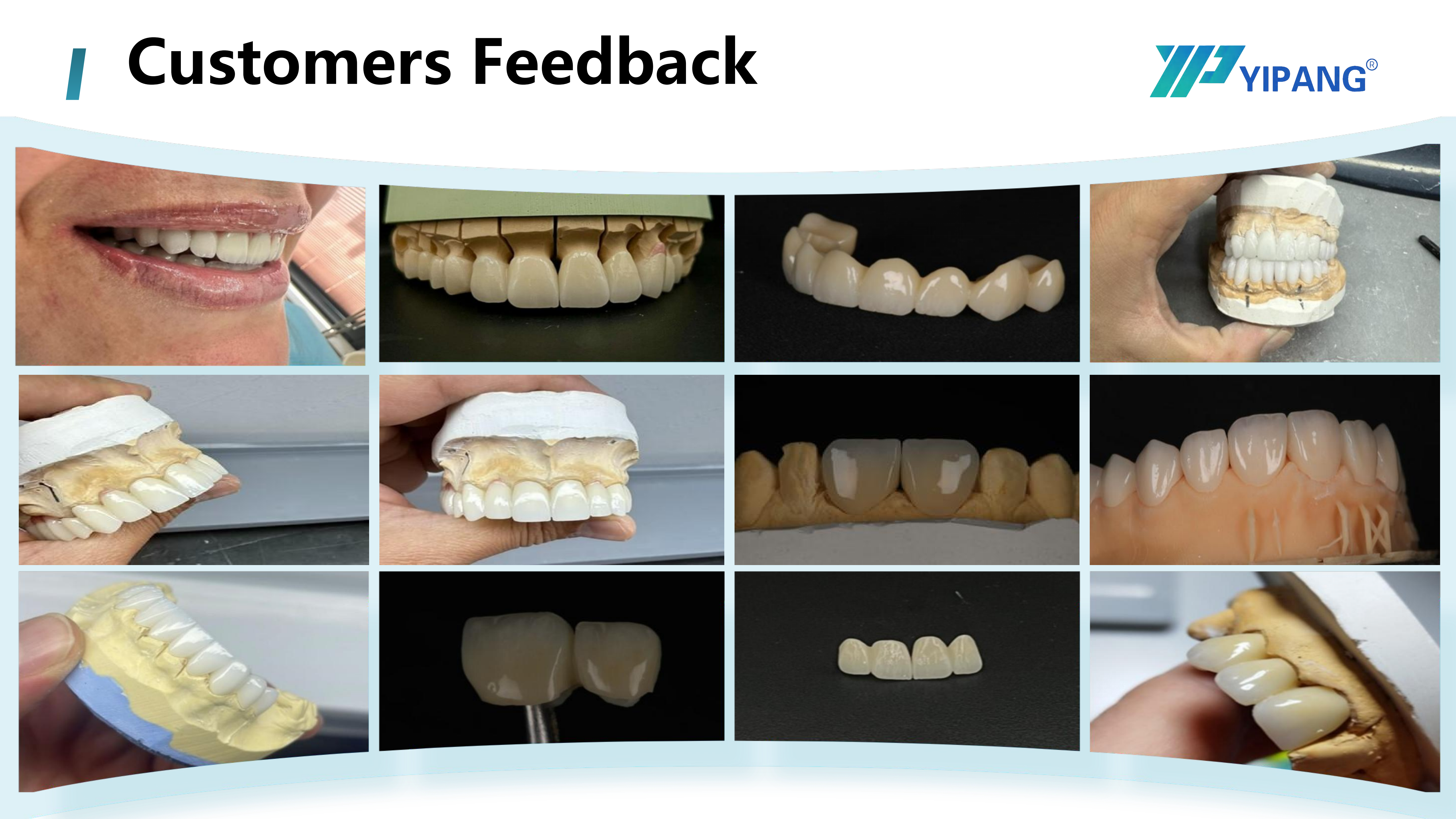
6. Veneers
Inclusion reason: Veneers rank sixth because they test the one property where a medium-translucency multilayer zirconia disc is not automatically the default: light transmission through very thin sections. The material is functional, but the required esthetic ceiling is higher here than in posterior or full-contour work.
Workflow fit: Milling a thin section demands tighter control of blank thickness selection and of the finishing sequence. Where maximum translucency is the design priority, a laboratory will typically also hold dental lithium disilicate glass ceramic or press ingots in its material plan — lithium disilicate accounted for approximately 28% of all all-ceramic dental restorations globally as of 2024 (Business Research Insights).
Which lab should prioritize it: Aesthetic-focused laboratories that already characterize and glaze their own restorations and can manage the finishing workload.
7. Edentulous Full-Arch Cases
Inclusion reason: Edentulous full-arch work ranks last on a pure fit-per-blank basis because it depends on the complete workflow rather than on the blank alone: edentulous scanbody kits, printed models, multiple milled units, and enough sintering capacity to process a full arch's components without compromising the heating curve.
Workflow fit: Every stage is load-bearing. A dental lab scanner captures the edentulous reference; a dental 3D printer and dental 3D printer resin produce the working model; a dental milling machine cuts the framework components; a dental sintering furnace completes the ceramic; finishing and polishing follow.
Which lab should prioritize it: Full-service implant laboratories that already own the entire chain and can schedule sintering around arch-sized workloads.
Which Lab Scenario Should Prioritize Dental Zirconia Blocks?
Application ranking answers only half of the question. The other half is the lab profile, because the same blank is a default in one setting and an occasional choice in another.
CAD/CAM Milling Labs and 5-Axis Milling Centres
These labs should treat zirconia blocks as the primary material for ranks 1–3. The equipment chain — scanner, milling machine, sintering furnace — is already justified by crown and bridge volume, and the 98 mm disc format with six thickness options (10, 12, 14, 16, 18 and 20 mm) allows blank choice to follow case size instead of forcing every case into one blank. The decisive workflow question is not material selection but blank planning: matching disc thickness to the framework being cut, so that neither material nor sintering capacity is wasted.
Chairside Restoration Clinics
Chairside setups should prioritize ranks 1–2, and treat zirconia as a same-site option only where a sintering furnace is available in-house. Zirconia blocks are processed on a dental milling machine and completed in a dental sintering furnace, so a chairside workflow without sintering capability cannot finish a zirconia restoration in a single visit. Where sintering is available, the practical emphasis is adherence to the temperature curve and to the cooling behaviour, because chairside scheduling rarely allows a second attempt in the same appointment.
Implant Laboratories
Implant laboratories should prioritize ranks 4, 5 and 7, where the value of a zirconia block is measured by interface accuracy and by the ability to run arch-sized workloads through sintering without compromising the curve. These labs usually hold the widest material inventory — glass ceramics and press ingots for highly translucent units, PMMA and wax discs for provisionals and try-ins, titanium alloy discs where metal behaviour is required, and abutment components — and zirconia blocks occupy the structural and esthetic middle of that inventory.
Boundaries: Where a Dental Zirconia Block Is Not the First Choice
A ranking is only credible if it also states where the material should step aside.
- Maximum-translucency anterior units: where light transmission is the primary design requirement, dental lithium disilicate glass ceramic or press ingots remain the established route, and medium translucency multilayer zirconia is a deliberate compromise.
- Provisional and try-in stages: PMMA discs and wax discs are designed for that stage of the workflow; zirconia is a definitive material.
- Models and working casts: these belong to dental 3D printers and dental 3D printer resin, not to milling blanks.
- Applications requiring metal behaviour: titanium alloy discs remain a separate route in the same digital workflow.
- Polymer-based implant components: the PEEK dental implants market was valued at USD 1,055 million in 2025 and is expected to grow at an 8% CAGR through 2034 (Precedence Research) — a different property set and a different design intent from ceramic blanks, not a substitute for them.
Application Comparison at a Glance
| Rank | Application | Inclusion reason | Primary workflow dependency | Best-fit lab profile |
|---|---|---|---|---|
| 1 | Full-contour single crowns | Single unit uses the blank's strength and dimensional accuracy with the fewest variables | Dental lab scanner → milling machine → sintering furnace | CAD/CAM milling labs, high-volume chairside |
| 2 | Short-span fixed bridges | Connector design makes ≥1200 MPa bending strength a functional requirement | Milling plus strict sintering curve 1430 °C–1450 °C | CAD/CAM milling labs |
| 3 | Multi-unit bridge projects | Amplifies thickness planning across the 10–20 mm blank options | Blank size selection and sintering furnace loading | Milling centres and 5-axis milling labs |
| 4 | Implant superstructure restorations | Interface accuracy after sintering decides success | Implant library data plus milling and sintering | Implant laboratories |
| 5 | Implant abutment crowns | Combines abutment interface with crown form; tighter tolerance stack | Abutment and scanbody components plus milling | Implant laboratories |
| 6 | Veneers | Thin sections push the medium translucency of multilayer zirconia to its limit | High-precision milling and characterization | Aesthetic-focused laboratories |
| 7 | Edentulous full-arch cases | Requires the complete workflow rather than the blank alone | Scanbody kit, 3D-printed models, milling, arch-scale sintering | Full-service implant laboratories |
Frequently Asked Questions
What sintering temperature should a lab use for the 4D-PRO-ML dental zirconia block?
The recommended sintering temperature range for the 4D-PRO-ML dental zirconia block is 1430 °C–1450 °C, with the product specified at a sintering temperature of 1450 °C. The standard procedure is to place the milled zirconia workpiece on a sintering tray, set the heating curve up to 1430 °C–1450 °C with an appropriate holding time, and allow natural cooling after sintering is complete. Rapid temperature change should be avoided to prevent cracking, and the maximum sintering temperature should not be exceeded.
Which applications can a dental zirconia block cover in a CAD/CAM milling workflow?
The YIPANG 4D-PRO-ML dental zirconia block is used for full-contour crowns, bridges, veneers, and implant superstructure restorations, and is intended for the dental laboratory, dental prosthetics, and dental CAD/CAM industries. It is a dental zirconia disc and CAD/CAM milling blank with a 98 mm diameter and thickness options of 10 mm, 12 mm, 14 mm, 16 mm, 18 mm and 20 mm, which allows a laboratory to match blank size to the restoration being designed rather than stocking a single size.
How many zirconia block sizes does a lab need to keep in stock?
Stock depth is a cost decision rather than a technical one. Because the 4D-PRO-ML is supplied at 98 mm diameter in six thicknesses, a laboratory can plan inventory around the case mix it actually runs: thinner blanks for single crowns, and thicker blanks for the frameworks that occupy more of the disc. For a laboratory working primarily at ranks 1 to 3, consolidating on a small number of thicknesses reduces material sitting idle; for a laboratory running implant and full-arch work, the wider range supports the larger frameworks without forcing material waste.
Can a lab request samples or a quotation for dental zirconia blocks?
Yes. Requests for product information, pricing, or sample arrangements can be directed to the manufacturer: Beijing Weijiahua Dentistry Equipment Co., Ltd., brand YIPANG, contact Jaye Yang, email service@yipangdental.com, telephone and WhatsApp +86 158-0156-5064. The company also publishes a company information document that can be downloaded for review before a first order.
How should a laboratory evaluate a dental zirconia block supplier?
A supplier evaluation should start with the facts a laboratory can verify: whether the block is a defined CAD/CAM milling blank with published diameter and thickness options, whether the sintering parameters are stated clearly, and whether the supplier has documented experience serving export markets. Beijing Weijiahua Dentistry Equipment Co., Ltd. was established in 1996, operates a 2000-square-metre facility with approximately 80 employees and an annual production capacity of about 10 million US dollars, exports approximately 40% to 55% of its products, and serves markets in the Middle East, Southeast Asia, South America, North America, Eastern Europe, North Africa, and Australia through a nationwide and overseas sales network.
Conclusion: Route the Case, Then Choose the Blank
The ranked order in this article exists to support one habit: route the case first, then choose the blank. Full-contour crowns and short-span bridges should sit at the centre of a digital lab's zirconia consumption because they use the material's verified strength and dimensional behaviour with the fewest added dependencies. Multi-unit bridges, implant superstructures and abutment crowns follow, and they repay the extra control they demand only when the implant and sintering workflow is fully in place. Veneers and edentulous full-arch cases remain valid applications, but they are the two where a laboratory should be most explicit about what the material is being asked to do.
For laboratories comparing blanks, the practical specification to check against this ranking is straightforward: material chemistry, diameter, available thicknesses, sintering temperature, bending strength, and translucency. The YIPANG 4D-PRO-ML dental zirconia block is specified as a yttria-stabilized zirconium dioxide disc at 98 mm diameter, 10–20 mm thickness, 1450 °C sintering temperature, ≥1200 MPa bending strength, and medium translucency in ML multilayer shades, and is compatible with most mainstream dental milling machines.
Next Step: Sample, Quotation, or Full Specification
YIPANG zirconia blocks are manufactured by Beijing Weijiahua Dentistry Equipment Co., Ltd. Laboratories, milling centres and importers that want to validate the 4D-PRO-ML against their own case mix can request product information, a quotation, or sample arrangements directly.
Zirconia BlocksGlass CeramicsPress IngotsPMMAWaxTitanium BlocksImplant Abutments3D ScannersMilling MachinesSintering Furnaces
Contact: Jaye Yang | Email: service@yipangdental.com | Tel / WhatsApp: +86 158-0156-5064
Address: Room 603, Tower A, Building 1, No. 22A Dongsishitiao, Dongcheng District, Beijing, China
Website: www.yipangdental.com
Company information document: Download the WJH / YIPANG company information PDF
Have Questions or Need More Details?
Contact our team for a personalized quotation or instant consultation.
Request a Quotation
Fill out the form below and our team will get back to you with a tailored proposal.
WhatsApp Direct Chat
Prefer to chat in real-time? Message us on WhatsApp for instant assistance & quick answers.
- Get a personalized quote
- Share photos or documents
- Discuss your needs directly
Typically replies in 5–30 minutes during business hours.