In-House Dental Zirconia Block Milling vs. Outsourcing to a Milling Center: A Lab Decision Guide
A dental laboratory can usually justify milling Dental Zirconia Blocks in-house when it already holds a controlled indoor constant temperature dental laboratory environment, has a dental milling machine and a dental sintering furnace sized to its real case mix, and can strictly follow the standard sintering temperature curve on every batch. When one of those three conditions is missing, sending the case file to a dental milling center usually produces a more predictable restoration per unit of laboratory effort.
Short answer — the three-condition test
- Equipment fit: a dental milling machine, a dental sintering furnace and a dental lab scanner that match the case types the laboratory actually produces.
- Environment fit: a genuine indoor constant temperature dental laboratory environment, not a converted room with fluctuating temperature.
- Process discipline: the ability to follow the standard sintering temperature curve for every batch, not only for the first validation run.
In-house milling is a process commitment, not a purchase. Outsourcing is a capacity decision, not a capability failure. The two models can also run in parallel.
What the Two Options Actually Involve
In-house milling means the laboratory converts a Dental Zirconia Block into a restoration inside its own workflow. A dental lab scanner captures the die or model, the case is designed in CAD software, the design is milled from a CAD/CAM dental milling blank on a dental milling machine, and the milled workpiece is then sintered in a dental sintering furnace. For the YIPANG 4D-PRO-ML Dental Zirconia Block, that blank is a dental zirconia disc with a 98 mm diameter, thickness options of 10 mm, 12 mm, 14 mm, 16 mm, 18 mm and 20 mm, made of zirconium dioxide (ZrO₂) with yttria stabilization and supplied in ML multilayer shades with a medium translucent appearance.
Outsourcing means the laboratory still completes the scan and often the design, but the milling and sintering steps are executed by a dental milling center. The laboratory receives a finished or semi-finished unit and performs the aesthetic finishing it chooses to keep in-house.
The decision problem is therefore not "which is better". It is a fit problem with four moving parts: equipment availability, environment stability, sintering discipline, and case-mix regularity. A laboratory with irregular, low-volume, highly varied work pays for an idle milling machine and a sintering furnace that runs half-empty. A laboratory with steady single-unit and multi-unit bridge volume pays twice if it outsources work it could mill during the same working day.
Why the Question Has Become a Real Choice
Zirconia has moved from a specialist material to the default framework material in many dental laboratories, and the milling step has moved with it. Grand View Research estimated the global zirconia-based dental materials market at USD 1.2 billion in 2025, with a projection of USD 2.3 billion by 2033. Within that market, zirconia discs held the largest revenue share at 63.1% in 2025, and CAD/CAM milling accounted for 82.4% of zirconia dental manufacturing process revenue in the same year.
Two further figures explain why laboratories now treat in-house milling as an option rather than a distant ambition. Dental laboratories remained the dominant end-user of zirconia materials at 45.3% of market share in 2025, so the equipment and material decisions sit inside the laboratory, not only inside industrial production. At the same time, the dental milling machine market reached USD 2.45 billion in 2025 with an expected USD 3.9 billion by 2030, according to Fortune Business Insights — a wider equipment base means more laboratories can evaluate the in-house route on its own merits.
Geography adds a second layer. The United States accounted for 40% of revenue in the global zirconia-based dental materials market, and 3Y-TZP zirconia held the largest product-grade revenue share at 35.9% in 2025. Laboratories serving export markets or internationally trained clinicians are therefore working with the same material expectations as their customers, whether they mill internally or buy milling capacity from a center.
The Equipment and Environment Side of the Decision
1. The dental milling machine
A dental milling machine determines the geometry the laboratory can produce without sending work out. The specification that matters first is blank compatibility: the YIPANG 4D-PRO-ML Dental Zirconia Block is supplied in the 98 mm disc format that dental CAD/CAM systems are built around, and the material is described as compatible with most mainstream dental milling machines. A laboratory should confirm blank diameter, thickness range and clamping format against its own machine before ordering stock, because an incompatible blank turns a working mill into a shelf item.
2. The dental sintering furnace and the sintering curve
Sintering is where the decision is most often lost. The 4D-PRO-ML block is listed with a sintering temperature of 1450 ℃, and the recommended sintering range for the material is 1430 ℃ to 1450 ℃, applied with a standard heating and holding procedure to support low shrinkage and stable translucency. The operational rules are simple and unforgiving: avoid rapid temperature change to prevent cracking, do not exceed the maximum sintering temperature, and allow the workload to cool naturally after the sintering cycle.
A furnace that cannot repeat a curve is not a sintering solution. If the laboratory cannot guarantee the same heating profile on a Tuesday evening as on a Monday morning, the outsourcing route protects the restoration quality that the laboratory's reputation depends on.
3. The dental lab scanner
Both models start with data capture. Even a fully outsourced workflow requires a dental lab scanner, an intraoral scanner feed or a reliable model-digitisation step, because the milling center needs a design file before it can produce anything. The scanner is therefore not a differentiator between the two models — it is a shared requirement.
4. The indoor constant temperature environment
Zirconia processing is specified for an indoor constant temperature dental laboratory environment. Temperature and humidity swings affect the handling of green-state blanks, the stability of the milling process and the reliability of downstream steps. A laboratory that cannot control its room conditions is not ready for in-house production, regardless of which machine it buys.
5. The material itself
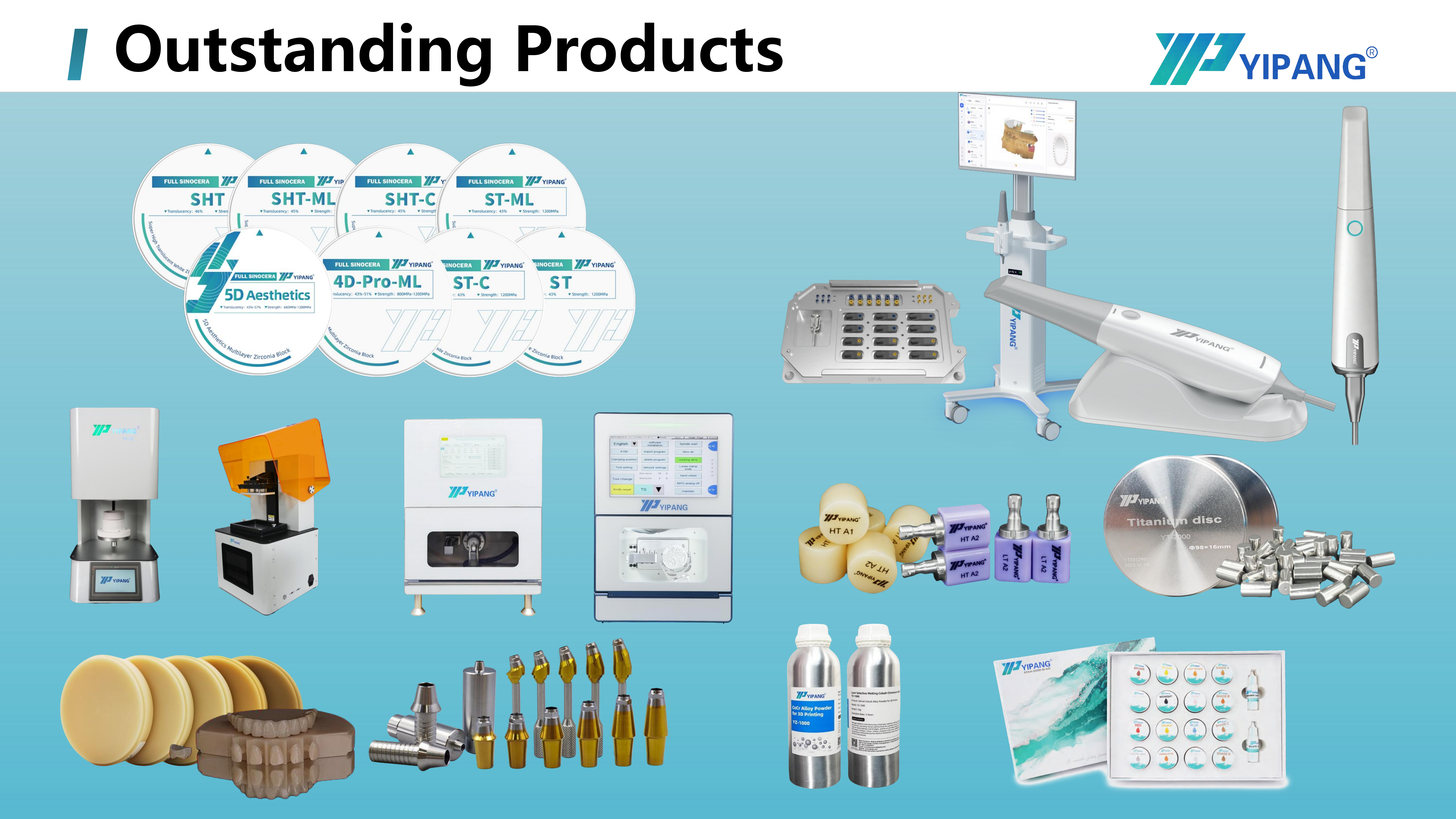
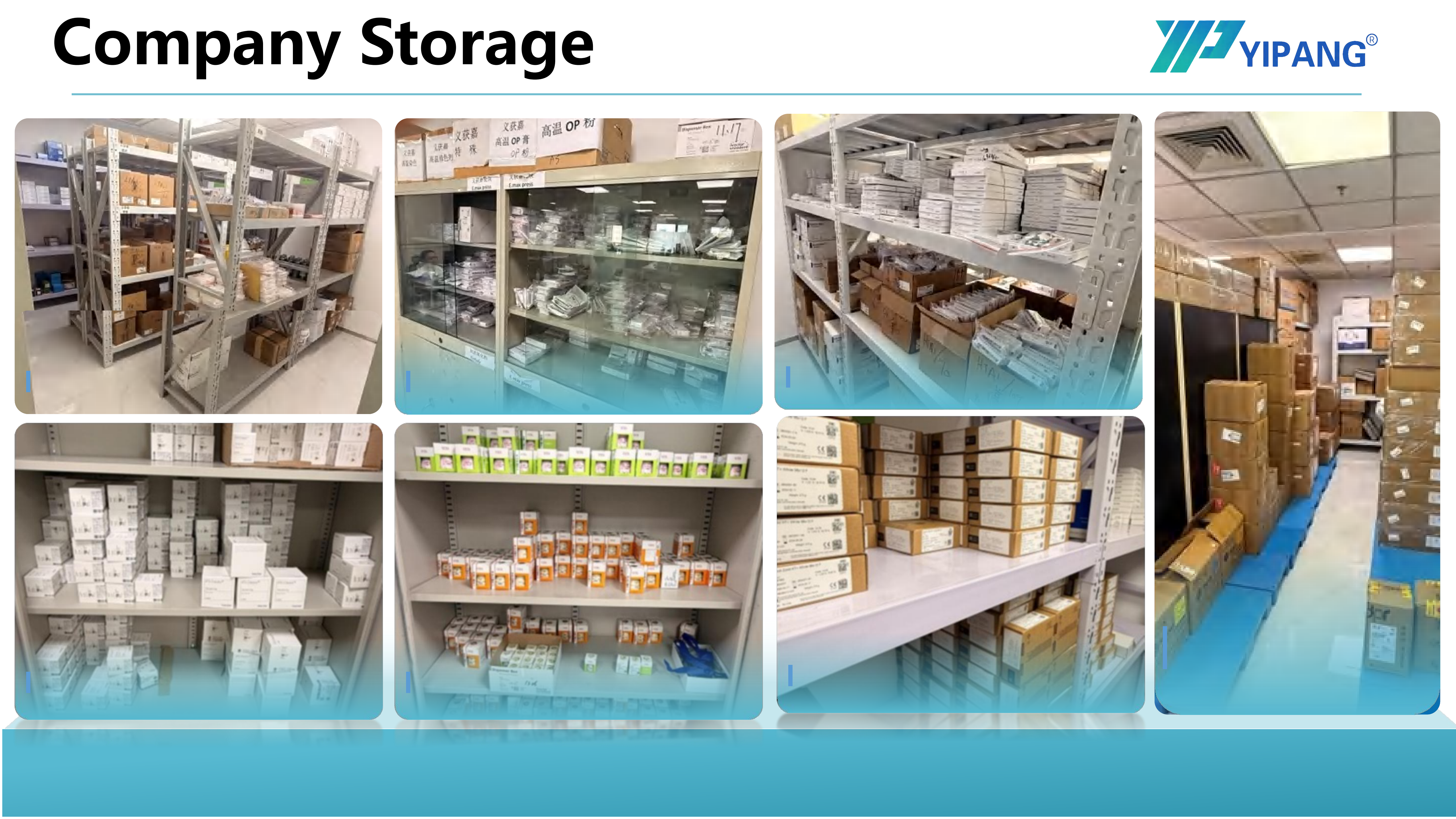
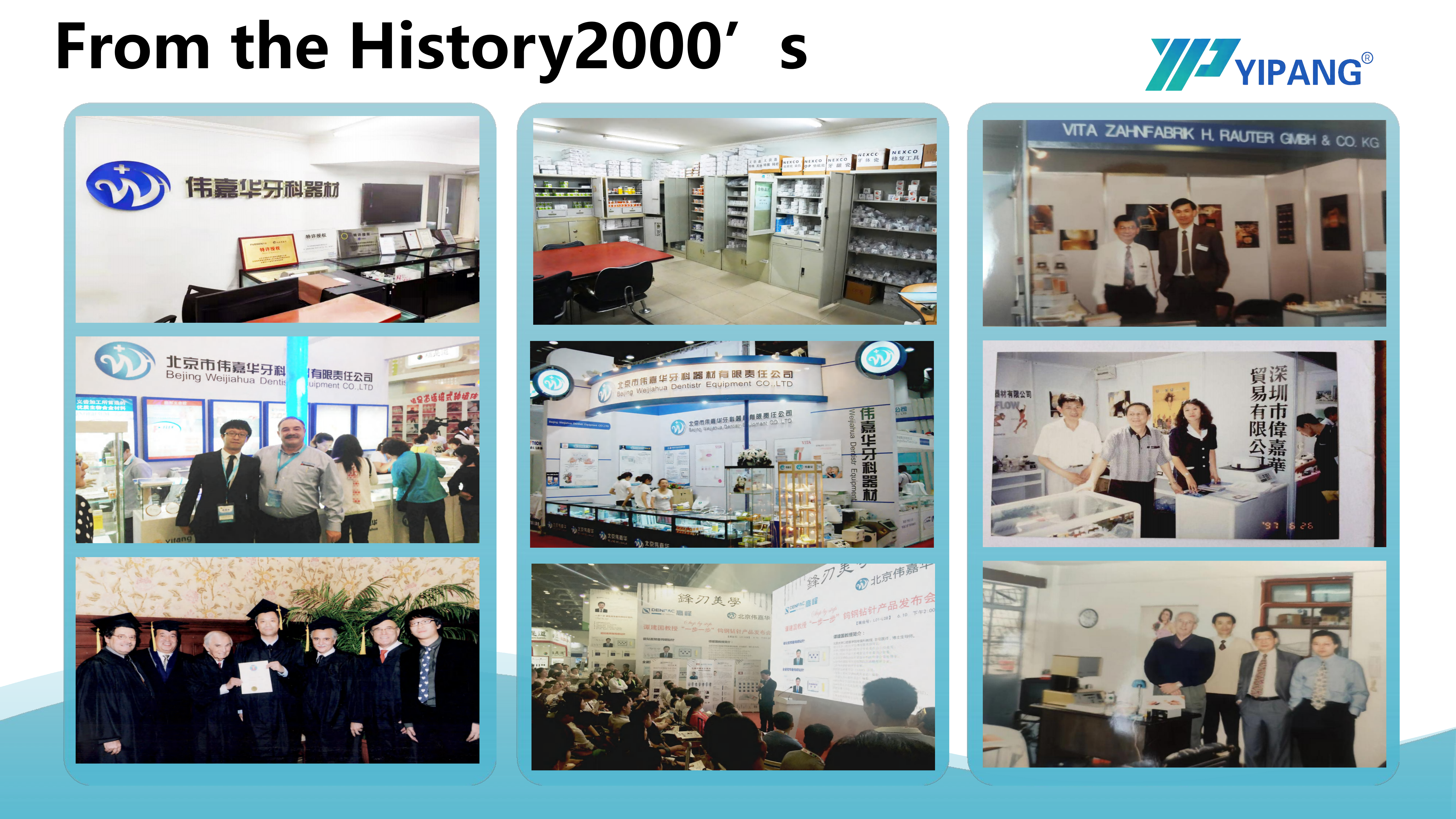
The block choice is the one variable a laboratory can change without changing its whole production model. YIPANG is the self-developed brand of Beijing WJH Dentistry Equipment Company (Beijing Weijiahua Dentistry Equipment Co., Ltd.), a dental industry manufacturer and supplier established in 1996 and based in Beijing, China, with a 2000 ㎡ facility, approximately 80 employees and an annual production capacity of about USD 10 million. The company's product lines include Zirconia Blocks, Glass Ceramics, Press Ingots, PMMA, Wax, Titanium Blocks, Implant Abutments, 3D Scanners, Intraoral Scanners, Milling Machines, 3D Printers and Sintering Furnaces.

Step-by-Step: How a Laboratory Should Decide
- Classify the case mix. Count the work by category rather than by total units: full-contour crowns, bridges, veneers and implant superstructure restorations. In-house milling favours repetition and predictability; outsourcing absorbs variety and peaks.
- Map the equipment gap. List what already exists — dental lab scanner, milling machine, sintering furnace — and what would have to be bought, installed and validated. A missing sintering furnace is a larger commitment than a missing set of milling burs.
- Verify the environment. Confirm that the room assigned to milling and sintering is a genuine indoor constant temperature dental laboratory environment and can stay that way through seasonal change.
- Run a sintering validation. Mill test geometries from the chosen Dental Zirconia Block and sinter them at 1430 ℃ to 1450 ℃ using the standard heating and holding procedure, with natural cooling. Check shrinkage and translucency against the design intent before scaling up.
- Model the weekly flow, not the annual total. Identify which days the mill and furnace would sit idle and which days they would become a bottleneck. Idle equipment and overloaded equipment are both expensive.
- Run the two models in parallel for one cycle. Keep a defined share of cases with the milling center while bringing another share in-house. Compare remake reasons, not only turnaround: a remake caused by sintering deviation costs more than a remake caused by a design error.
- Decide and set a review point. Revisit the split when case volume, restoration type or staffing changes. The decision is reversible in both directions.
Use Cases: Which Model Fits Which Laboratory
CAD/CAM milling laboratories
A laboratory already built around CAD/CAM milling treats the zirconia blank as one input among several. For this profile the marginal question is narrow: can the existing mill and furnace absorb zirconia volume without delaying other materials? If the answer is yes, in-house zirconia milling extends an existing capability at low incremental complexity.
High-volume dental milling centers
A production-oriented center lives on throughput and repeatability. In-house sintering with a documented curve is usually the only way to protect both, because quality control over the final density and shade cannot be delegated to a third party without losing visibility of the process window. For this profile, outsourcing is typically used as overflow capacity rather than as a base model.
5-axis dental milling center production
Multi-axis production environments handle complex geometries and multi-unit work where tool access and surface quality matter. The decision criterion here is not whether the equipment exists, but whether the sintering side can keep pace with the milling side: a multi-axis mill that outruns its furnace simply relocates the bottleneck.
Multi-unit bridge dental laboratories
Multi-unit bridges concentrate risk. A single sintering deviation affects an entire span rather than a single crown, and the remake cost multiplies accordingly. Laboratories in this category should either hold full control of the sintering curve in-house or use a milling center whose process they can audit. Blending the two without a rule for which cases go where is the worst of both models.
Chairside restoration clinics
Chairside workflows are driven by same-visit delivery, which pulls toward in-house or nearby milling. The constraint is space and environment: a clinic must be able to maintain a stable indoor environment and a validated sintering cycle, or the restoration leaves the chairside pathway. Where that is not realistic, a milling center with a predictable collection rhythm serves the model better.
Implant-focused laboratories
Implant superstructure restorations, including full-arch cases, combine fit sensitivity with aesthetic expectations. The practical rule is that the party controlling the sintering curve should also control the fit check. Splitting milling and sintering across two organizations works only when the interface — the file, the shrinkage allowance and the material batch — is documented.
Comparison Table: In-House Milling vs. Milling Center
| Decision criterion | In-house Dental Zirconia Block milling | Outsourcing to a dental milling center |
|---|---|---|
| Equipment required | Dental milling machine, dental sintering furnace, dental lab scanner and dedicated floor space | Dental lab scanner or intraoral scan data; milling and sintering equipment held by the center |
| Sintering control | Laboratory runs the standard sintering temperature curve itself (1430 ℃ to 1450 ℃ for 4D-PRO-ML) | Center runs its own curve; the laboratory verifies results rather than parameters |
| Environment requirement | Indoor constant temperature dental laboratory environment required | Environment risk for zirconia processing shifts to the center |
| Revision and remake loop | Short — the design file and the milled workpiece stay in the same building | Longer — each correction passes through an external queue |
| Cost structure | Capital equipment, consumables such as milling burs, trained staff, environment control | Per-unit fee; no capital outlay and no equipment depreciation |
| Scheduling control | Full control of the production queue | Dependent on the center's capacity and collection rhythm |
| Typical fit | Regular volume of crowns, bridges, veneers and implant superstructure restorations | Low or irregular volume, peak overflow, one-off complex cases |
| YIPANG 4D-PRO-ML specification | Value |
|---|---|
| Product type | Dental zirconia disc / CAD/CAM dental milling blank for dental prosthesis |
| Material | Zirconium dioxide (ZrO₂) with yttria stabilization |
| Diameter | 98 mm |
| Thickness options | 10 mm, 12 mm, 14 mm, 16 mm, 18 mm, 20 mm |
| Shades | ML multilayer, medium translucent |
| Sintering temperature | 1450 ℃ listed; recommended range 1430 ℃ to 1450 ℃ |
| Bending strength | ≥1200 MPa |
| Applications | Full-contour crowns, bridges, veneers and implant superstructure restorations |
| Intended industries | Dental laboratory, dental prosthetics, dental CAD/CAM industry |
Frequently Asked Questions
Do in-house milled and outsourced zirconia restorations face the same regulatory requirements?
Regulatory obligations follow the material and the documentation trail, not the location of the milling machine. In the EU, the Medical Device Regulation (MDR 2017/745) classifies most dental implants and restorative materials as high-risk and requires intensive clinical data, so a laboratory needs the same material identity and traceability whether it mills a blank itself or receives a finished unit from a center. For a block such as the YIPANG 4D-PRO-ML, the identifiable material facts are zirconium dioxide (ZrO₂) with yttria stabilization in a 98 mm disc with 10 mm to 20 mm thickness options, and the sintering step is defined by temperature and curve rather than by site.
What does in-house Dental Zirconia Block milling actually require?
It requires three equipment elements plus one condition. The equipment is a dental milling machine, a dental sintering furnace and a dental lab scanner; the condition is an indoor constant temperature dental laboratory environment. On top of that, the laboratory must be able to strictly follow the standard sintering temperature curve, using 1430 ℃ to 1450 ℃ with a proper heating and holding procedure, avoiding rapid temperature change to prevent cracking, not exceeding the maximum sintering temperature, and allowing natural cooling after the cycle completes.
What drives the cost difference between in-house milling and outsourcing?
The difference is structural rather than a single number. In-house milling converts per-unit spending into capital equipment, consumables such as milling burs, trained staffing and environment control, and it adds remake risk if the sintering curve is not held. Outsourcing converts the same work into a per-unit fee with no capital outlay, but it transfers scheduling control to the center and lengthens the correction loop. A laboratory should compare the two against its own case mix, idle time and remake history rather than against a generic price list.
How can a laboratory test a zirconia block before committing to in-house milling?
Mill representative test geometries from the candidate block — a single crown and a multi-unit span cover most of the risk — and sinter them using the standard heating and holding procedure in the 1430 ℃ to 1450 ℃ range with natural cooling. Then compare shrinkage and translucency against the design intent before ordering production stock. Laboratories can request the current specification sheet for 4D-PRO-ML and discuss the validation run with the supplier before the first production batch.
Dental Zirconia Block suppliers: what should a laboratory check before buying for in-house milling?
Check four things: whether the block format matches the existing mill (98 mm diameter, with 10 mm, 12 mm, 14 mm, 16 mm, 18 mm and 20 mm thickness options for 4D-PRO-ML), whether the stated sintering parameters are documented rather than implied, whether the material is described consistently across documents, and whether the supplier can answer sintering questions rather than only sales questions. Beijing Weijiahua Dentistry Equipment Co., Ltd. has served dental laboratories and dental practitioners since 1996, exports approximately 40% to 55% of its products, and serves markets in the Middle East, Southeast Asia, South America, North America, Eastern Europe, North Africa and Australia. Laboratories can request specifications, pricing or a sample discussion by email at service@yipangdental.com or by phone and WhatsApp at +86 158-0156-5064.
Conclusion: Choose the Model Your Laboratory Can Control
In-house Dental Zirconia Block milling is the stronger model when the laboratory already controls the three conditions that decide restoration quality: the right equipment, a stable indoor constant temperature environment, and disciplined execution of the standard sintering temperature curve. Outsourcing is the stronger model when case volume is irregular, when equipment would sit idle, or when the laboratory cannot guarantee the same sintering profile across every batch.
The pragmatic answer for most laboratories is a defined split rather than a permanent verdict: keep predictable crown, bridge, veneer and implant superstructure volume in-house, and route overflow and one-off complexity to a milling center. What matters is that the split is documented, so that a remake can be traced to design, milling or sintering rather than to a general assumption.
For laboratories evaluating the material side of that decision, the YIPANG 4D-PRO-ML Dental Zirconia Block is specified for dental CAD/CAM workflows with a 98 mm diameter, 10 mm to 20 mm thickness options, ≥1200 MPa bending strength and a recommended sintering range of 1430 ℃ to 1450 ℃. The company's product lines also include Glass Ceramics, Press Ingots, PMMA, Wax, Titanium Blocks, Implant Abutments, 3D Scanners, Intraoral Scanners, Milling Machines, 3D Printers and Sintering Furnaces, which means both sides of the in-house versus outsourcing question can be sourced from one partner.
Next step
Request the 4D-PRO-ML specification sheet, a quotation, or a sample discussion before committing to in-house milling. Contact Jaye Yang at service@yipangdental.com or +86 158-0156-5064 (phone and WhatsApp), or visit www.yipangdental.com.
Download the company brochure for the full product and supply overview: WJH Company Information (PDF).
Have Questions or Need More Details?
Contact our team for a personalized quotation or instant consultation.
Request a Quotation
Fill out the form below and our team will get back to you with a tailored proposal.
WhatsApp Direct Chat
Prefer to chat in real-time? Message us on WhatsApp for instant assistance & quick answers.
- Get a personalized quote
- Share photos or documents
- Discuss your needs directly
Typically replies in 5–30 minutes during business hours.