Health Canada Licensing for Dental Zirconia Blocks: Simplified for Labs
Health Canada licensing for dental zirconia blocks involves two separate documents — a device licence and an establishment licence — and both should travel with the material.
Health Canada licensing for dental zirconia blocks is really two questions, not one. First, does the block itself require a device licence? Second, does the establishment importing or distributing it into Canada hold a medical device establishment licence (MDEL)? Medical devices in Canada are governed by the Medical Devices Regulations (SOR/98-282), which operate under the Food and Drugs Act and are administered by Health Canada. A zirconia block sold to a Canadian dental lab must enter the market through a licensed establishment, and the risk class assigned to the device determines whether a product-level licence is required as well.
The block is a device before it becomes a crown, and that distinction shapes everything downstream. YIPANG's 4D-PRO-ML zirconia blocks (product reference 7946) are CAD/CAM dental milling blanks made from yttria-stabilized zirconium dioxide (ZrO₂), supplied at a 98 mm diameter with thickness options of 10 mm, 12 mm, 14 mm, 16 mm, 18 mm and 20 mm, a sintering temperature of 1450℃, a bending strength of ≥1200 MPa, and medium translucency in the ML multilayer shade. That data is not marketing decoration — it is the input your milling machine and sintering furnace will act on, inside a controlled laboratory environment, following a standard sintering temperature curve.
Market context explains why this is worth getting right. Zirconia discs held 63.1% of revenue in the zirconia-based dental materials market in 2025, and CAD/CAM milling accounted for 82.4% of manufacturing process revenue in the same year, while dental laboratories remained the dominant end user at 45.3% (Grand View Research). When the majority of production value flows through milling, the regulatory question stops being theoretical — it is attached to the blank that goes into the machine.
Problem Definition: Why the Canadian Licensing Question Confuses Labs
The confusion has four sources: two different licences that share one word, a licence holder that is usually not the lab, a device that only becomes a restoration after the lab processes it, and a risk class that many buyers assume rather than verify.
1. Two licences, one word
A device licence is product-level: it authorizes a specific device or device family to be sold in Canada. An establishment licence is site-level: it authorizes a manufacturer, importer or distributor to carry out licensed activities in Canada. When a lab asks a supplier "are your blocks licensed in Canada?", the question is ambiguous, and the answer will differ depending on which licence is being discussed. Labs should ask for both answers explicitly.
2. The licence holder is usually not the dental lab
Importers and distributors of medical devices in Canada require an establishment licence and must maintain procedures for distribution records, recalls, complaint handling and incident reporting. A lab buying through a Canadian distributor therefore sits downstream of the licence: it is the end user, not the licence holder. That does not remove the lab's interest — records and traceability matter whenever a device is used in patient care — but it changes what the lab should ask for, and from whom.
3. The block is a device before it is a crown
A zirconia blank placed on the Canadian market is a medical device in its own right. The crown a lab mills from it is a professional service output for an individual patient, not a separately marketed device. This is why compliance conversations should centre on the blank's authorization status and documentation, and why process control — calibrated milling and sintering in a controlled environment — sits alongside market authorization rather than replacing it.
4. CE marking and ISO paperwork are not Canadian authorization
European authorization under the EU Medical Device Regulation (MDR 2017/745) is a separate regime, and the EU classifies most dental implants and restorative materials as high-risk, requiring intensive clinical data (European Commission). A Declaration of Conformity tells a Canadian lab that a device was assessed for another market. It does not tell the lab that the device is licensed in Canada. Jurisdictions are reviewed separately, and documentation should be requested separately.
Industry Background: What the Canadian Framework Actually Requires
Production and inspection records sit behind the technical data that a licensed importer or distributor must be able to produce.
Canada regulates medical devices under the Food and Drugs Act. The Medical Devices Regulations (SOR/98-282) set out classification, licensing, labelling, record-keeping and post-market obligations, with Health Canada as the regulator.
Devices are grouped into risk classes I to IV, with increasing evidence expectations as the class rises. Two obligations follow from that classification:
- Device licence. Required for Class II, III and IV devices before they can be sold in Canada. Class I devices are not subject to device licensing.
- Establishment licence. Required to import or distribute medical devices in Canada, and also required by Class I manufacturers. This applies whether or not the device itself needs a device licence.
Beyond licensing, the Canadian regime places labelling and post-market duties on the licence holder: labelling for the Canadian market must appear in both English and French, distribution records must be retained, and incidents, complaints and recalls must be handled through documented procedures. Manufacturers of higher-class devices are typically expected to operate a documented quality management system and to be audited by a recognized registrar.
For a dental lab, the practical consequence is narrow but real. A lab is not expected to hold a licence in order to mill a crown. A lab is expected to know which class its blank was assigned, whether the entity it buys from is licensed to import or distribute it, and whether the technical documentation provided is specific enough to control its own process. Classification is assigned per device and should be confirmed from the manufacturer's or importer's documentation — not inferred from a brochure, a category label, or a competitor's assumption.
Detailed Solution: A Four-Layer Verification Model for Canadian-Bound Zirconia Blocks
Treat the licensing question as four layers, in order: market authorization, device data quality, process fit, and traceability. Each layer has a document or a record that answers it, and a lab can complete all four without becoming a regulatory specialist.
Layer 1 — Market authorization
Establish who places the block on the Canadian market. The importer of record or the Canadian distributor should be able to state whether the device holds a device licence, which risk class was assigned, and which establishment licence covers the import or distribution activity. Ask for the answer in writing rather than verbally.
Layer 2 — Device data quality
A block's process data must be specific enough to reproduce. The 4D-PRO-ML reference illustrates the level of detail a lab should expect before committing a case:
| Parameter | 4D-PRO-ML Zirconia Blocks (Product 7946) |
|---|---|
| Type | Dental zirconia disc / CAD-CAM dental milling blank |
| Material | Zirconium dioxide (ZrO₂), yttria stabilized |
| Available shades | ML Multilayer |
| Thickness | 10 mm, 12 mm, 14 mm, 16 mm, 18 mm, 20 mm |
| Diameter | 98 mm |
| Sintering temperature | 1450℃ |
| Recommended sintering range | 1430℃–1450℃, following a standard heating and holding procedure |
| Bending strength | ≥1200 MPa |
| Translucency | Medium translucent |
| Intended restorations | Full-contour crowns, bridges, veneers, implant superstructure restorations |
Shade, thickness and sintering behaviour are the three data points that most often decide whether a case fits a given blank — and all three belong in the case record, not only in the purchase order.
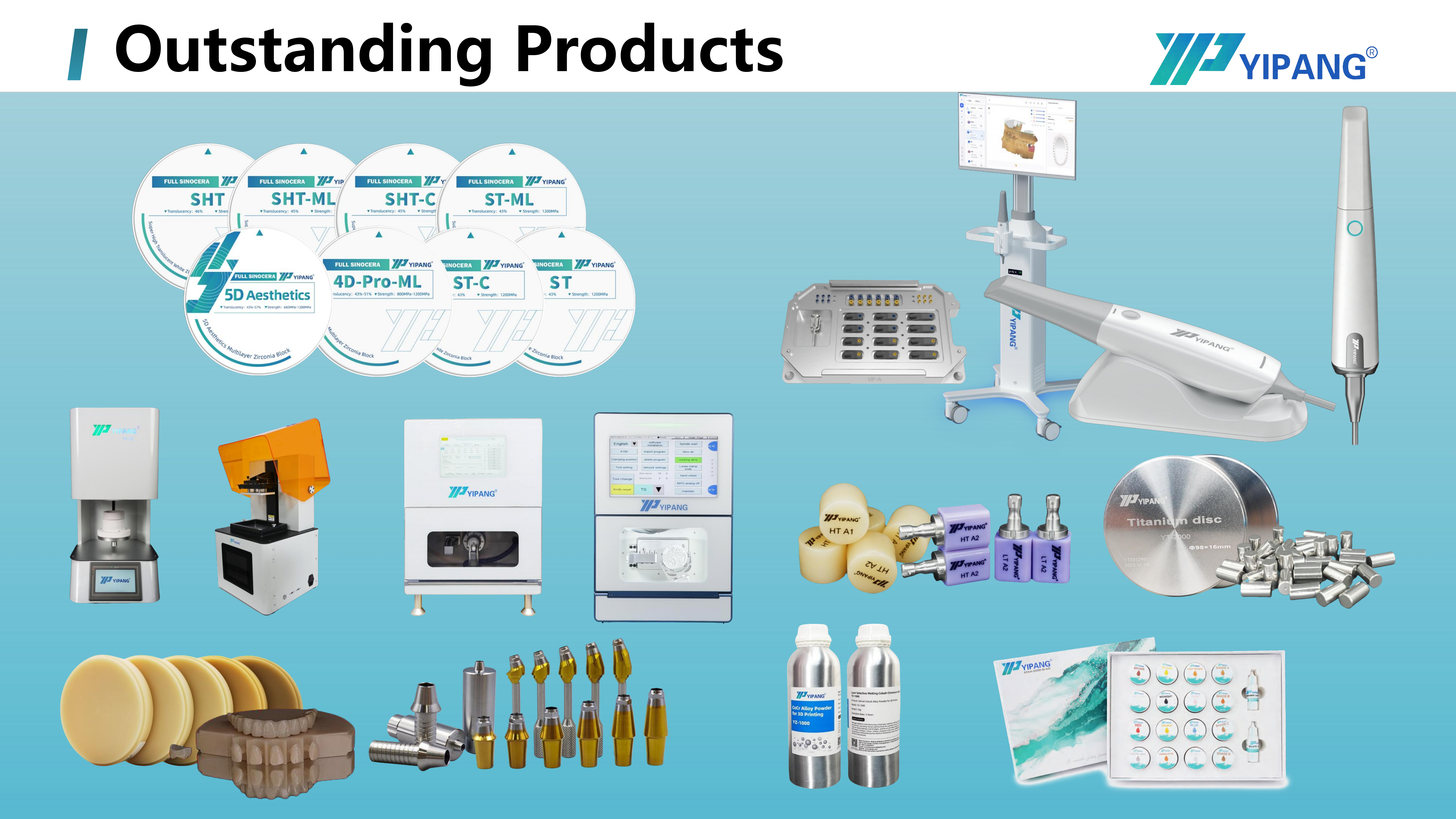
A 98 mm multilayer zirconia blank: the physical format that determines machine fit, nesting and case yield.
Layer 3 — Process fit inside a calibrated environment
This is where the topic lands squarely on the lab floor. Zirconia blocks are processed by a dental milling machine and sintered in a dental sintering furnace, with a dental lab scanner feeding the digital workflow; the work is carried out under indoor constant-temperature dental laboratory conditions, and the standard sintering temperature curve must be followed strictly. For 4D-PRO-ML, the recommended range is 1430℃–1450℃, with natural cool-down after sintering and no rapid temperature change, and the maximum sintering temperature should not be exceeded.
Compatibility is the other half of process fit. The blanks are designed to be compatible with most mainstream dental milling machines, and the case record should show the sintering program used, the furnace used, and the calibration status of both. A licensed device run through an uncalibrated furnace is a process failure rather than a compliance failure — but both surface in the same investigation.
Layer 4 — Traceability and support
Traceability is what connects a licence to a case. YIPANG's quality control covers 100% raw material inspection plus finished product random inspection, and after-sales problem response is provided within 24 hours. Case references for the 4D-PRO-ML line highlight uniform translucency, stable sintering shrinkage and compatibility with most CAD/CAM systems — three properties that describe process stability rather than a claim about clinical outcomes.
Step-by-Step Breakdown: What a Lab Should Do Before Milling for Canadian Patients
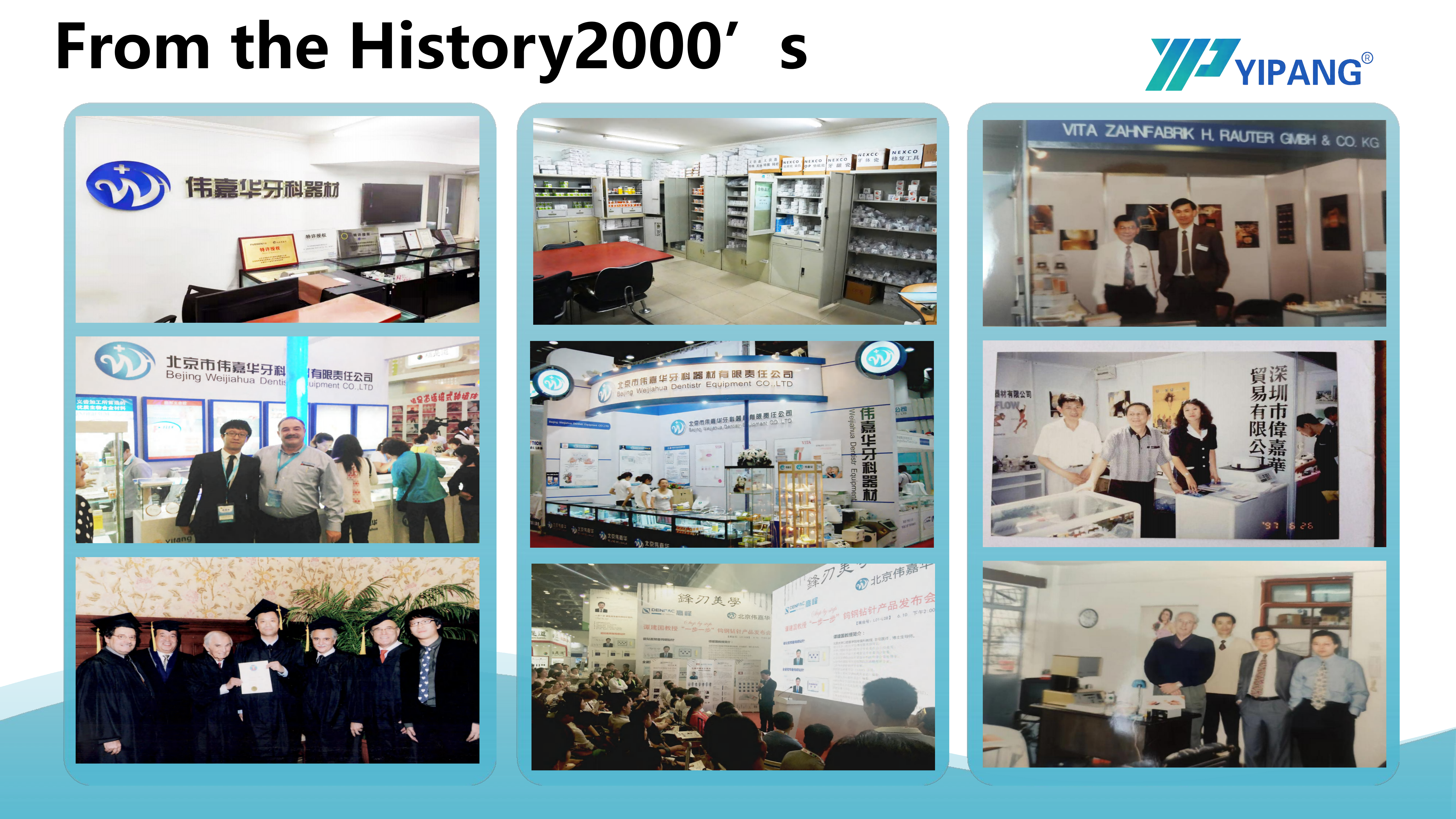
The documentation handover between supplier and lab: the point at which licensing questions should be resolved in writing.
- Identify the importer of record. Find out which legal entity imports the blocks into Canada. That entity's establishment licence anchors the whole chain.
- Request the authorization summary in writing. Device licence status, assigned risk class, establishment licence holder, and the scope of activities the licence covers.
- Confirm labelling. Canadian-market labelling is expected in English and French. Confirm what the shipped packaging actually carries, not what the catalogue implies.
- Map the sintering data to your furnace. Take the block's recommended range — 1430℃–1450℃ for 4D-PRO-ML — and confirm your furnace program and calibration records match it before the first production case.
- Run a validation unit. Mill and sinter one test unit, then check shrinkage, fit and translucency against expectation. Stable sintering shrinkage and uniform translucency are the properties most directly affected by sintering discipline.
- Record the case parameters. Lot number, shade, thickness, furnace identification, program used, and date. This is the record that answers questions six months later.
- Set a review cadence. Re-verify documents when a new shade, thickness or material lot is introduced, or when the import route changes. Regulatory documentation ages quietly.
A practical rule: if a supplier cannot answer the licence question in writing within one business exchange, treat that as a documentation gap rather than a communication delay.
Use Cases: Where This Actually Shows Up in Lab Work
Licensing paperwork rarely announces itself. It surfaces inside specific project types, and the pattern of those projects tells a lab where to concentrate documentation effort.
- Full-arch implant restorations. High-value cases with long case files. Documentation quality matters most here because the restoration is complex and the audit trail is long. 4D-PRO-ML is used in full-arch implant restorations and implant-supported full-arch cases.
- Edentulous cases and scanbody workflows. Where the digital chain from scanning to milling carries the fit, and the blank's dimensional data has to agree with the scan data. The material is used in edentulous scanbody kit workflows.
- Implant abutment laboratories. Restorations built on or around abutments, where fit tolerances are tight and documented shrinkage behaviour is directly relevant.
- High-volume milling and sintering workflows. Milling centres rarely track single units; they track batches. Batch-level documentation becomes the practical unit of compliance.
- Multi-material and mixed ceramic labs. Labs running PMMA disc, PEEK disc and ceramic routes in parallel need per-material records, because one sintering program will not serve every material.
- Scanner-to-milling digital workflows. Where the entire production route is digital and the only non-digital data is the material's process parameters.
- Finishing-dependent labs. Laboratories using an in-house furnace, glaze paste and staining glaze for final aesthetics depend on the blank behaving predictably through multiple thermal cycles.
Comparison Table: Compliance Responsibility by Role
| Role in the chain | Main Canadian obligation | Evidence to hold | What the lab should verify |
|---|---|---|---|
| Foreign manufacturer | Holds a device licence for Class II–IV devices; operates a documented quality system; provides technical data and labelling content | Device licence, technical specification, quality records, labelling artwork | That the specification sheet matches the shipped product (shade, thickness, diameter, sintering data) |
| Canadian importer | Holds an establishment licence to import; maintains distribution records, recall and incident procedures | Establishment licence, import records, product traceability | That the importer of record is named and licensed for the device class involved |
| Canadian distributor | Holds an establishment licence to distribute; keeps distribution records and complaint handling procedures | Establishment licence, distribution records, complaint log | That the distributor can trace the supplied lot back to your laboratory |
| Dental laboratory (end user) | No licence required to mill a restoration; must control its own process and keep case records | Calibration records, sintering programs, lot numbers, case files | That block data, furnace calibration and case records agree with each other |
Responsibilities summarised from the Canadian framework. Confirm device-specific class and licence details from the authorization documents supplied with your order.
FAQ: Health Canada Licensing for Dental Zirconia Blocks
Does a dental zirconia block need a Health Canada device licence, or only an establishment licence?
It depends on the risk class assigned to the device. Class I devices are not subject to device licensing, although an establishment licence is still required for the Class I manufacturer, the importer or the distributor. Class II, III and IV devices require a device licence in addition to the establishment licence held by the entity importing or distributing them. Because classification is assigned per device, the class should be confirmed from the manufacturer's or importer's documentation rather than assumed from the product category.
Is YIPANG a dental zirconia block manufacturer for full-arch implant restorations?
Yes. Beijing Weijiahua Dentistry Equipment Co., Ltd. — established in 1996, brand YIPANG — produces the 4D-PRO-ML zirconia block line, which is used in full-arch implant restorations and implant-supported full-arch cases, in implant abutment laboratories, and in full-contour crowns, bridges, veneers and implant superstructure restorations. The manufacturing side is supported by OEM/ODM capability, a monthly capacity of 15,000 pieces, and a 25-engineer R&D team working on dental material formulation research and process optimization.
What is the minimum order quantity, and how is pricing determined?
MOQ is negotiable and can be set as a small quantity for evaluation orders. Pricing is quoted per project and depends on the specification combination — shade, thickness and quantity — together with the agreed delivery terms, so it is confirmed at quotation stage rather than published as a standard list. Almost all specifications can be customized.
Can a lab test a sample before committing to a production order?
Yes, and sampling should be tied to your own equipment. Request the specification sheet with the sample, mill and sinter one unit on your own machine and furnace using the recommended 1430℃–1450℃ range, then compare shrinkage, fit and translucency against your existing baseline. Online technical guidance is available during evaluation, and after-sales problem response is provided within 24 hours.
What is the lead time, and when should documentation work start?
Standard lead time is 15–30 working days. Documentation work should start in parallel rather than after the order is placed, because licence and labelling questions are answered by the importer or distributor, not by the production schedule. YIPANG supplies markets including the USA, Europe, Brazil, the Middle East and North Africa, so buyers should confirm the import route and licensing position for their own market before the first shipment. To start a sample or quotation request, contact service@yipangdental.com, message WhatsApp at +86 158-0156-5064, or review the YIPANG company information brochure (PDF).
Conclusion: Licence Upstream, Calibrate Downstream
Health Canada licensing for dental zirconia blocks is an upstream question with downstream consequences. The device licence and the establishment licence are held by the manufacturer, importer or distributor — not by the dental lab. What the lab owns is the process: block data used inside calibrated milling and sintering systems, in an indoor constant-temperature laboratory environment, following the standard sintering temperature curve, with lot numbers and program settings recorded for every case.
Four verification steps cover most of the risk. Confirm who places the block on the Canadian market and under which licence. Confirm the assigned risk class and the labelling that accompanies the product. Confirm the technical data is detailed enough to control your process. Confirm traceability runs from lot number to case file. When those four hold, licensing stops being a paperwork question and becomes what it should be — a documented link between a qualified material and a controlled process.
Request a 4D-PRO-ML Sample and Documentation Pack
Send your case profile — shade, thickness, machine and furnace model — and we will match the specification and confirm the documentation and delivery route for your market.
Email: service@yipangdental.com | WhatsApp: +86 158-0156-5064 | Website: www.yipangdental.com
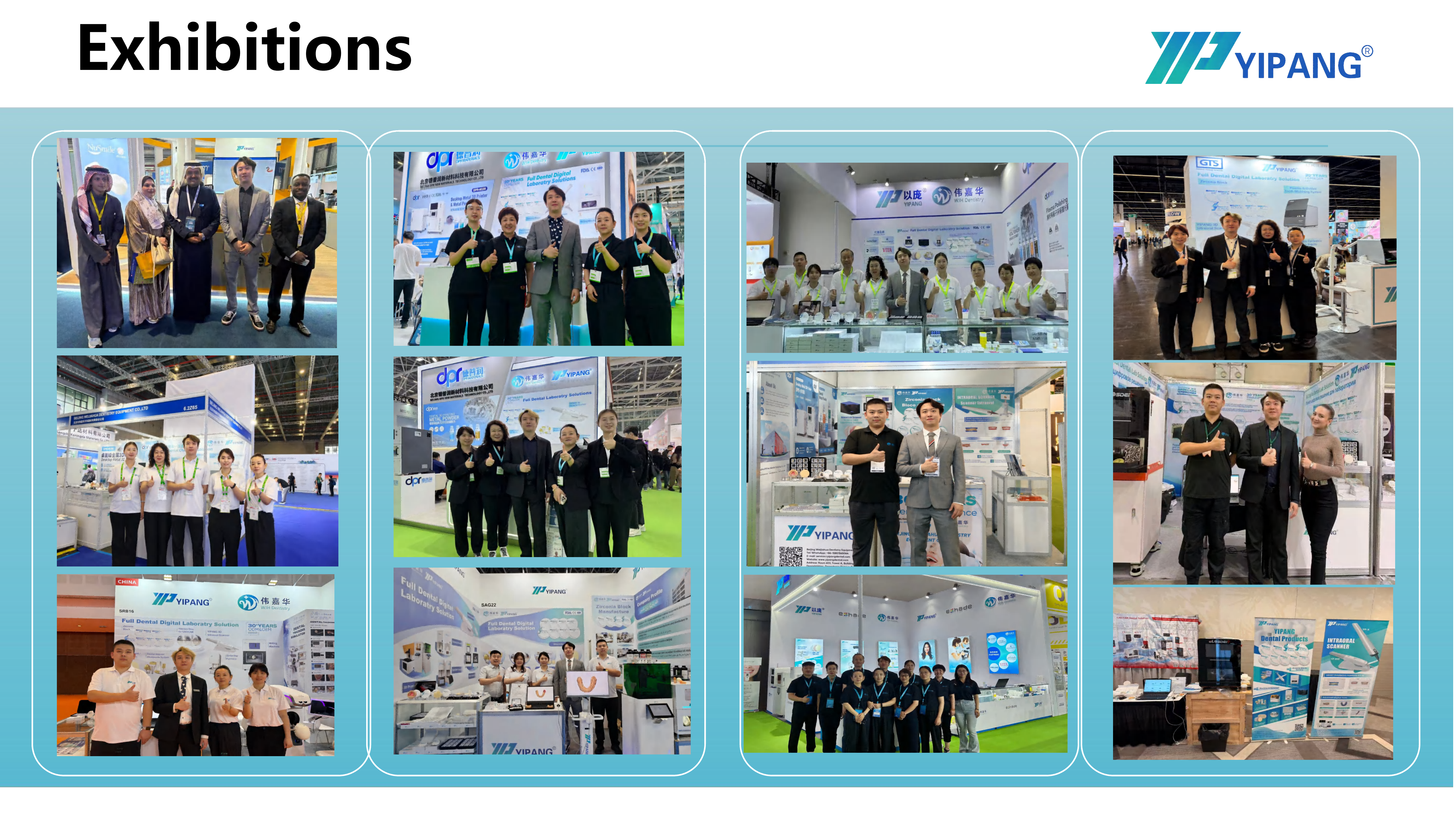
Sample evaluation, quotation and documentation requests are handled directly by the YIPANG export team.
Have Questions or Need More Details?
Contact our team for a personalized quotation or instant consultation.
Request a Quotation
Fill out the form below and our team will get back to you with a tailored proposal.
WhatsApp Direct Chat
Prefer to chat in real-time? Message us on WhatsApp for instant assistance & quick answers.
- Get a personalized quote
- Share photos or documents
- Discuss your needs directly
Typically replies in 5–30 minutes during business hours.