From Scan to Sinter: Implementing Dental Zirconia Blocks in Cosmetic Dentistry Clinics
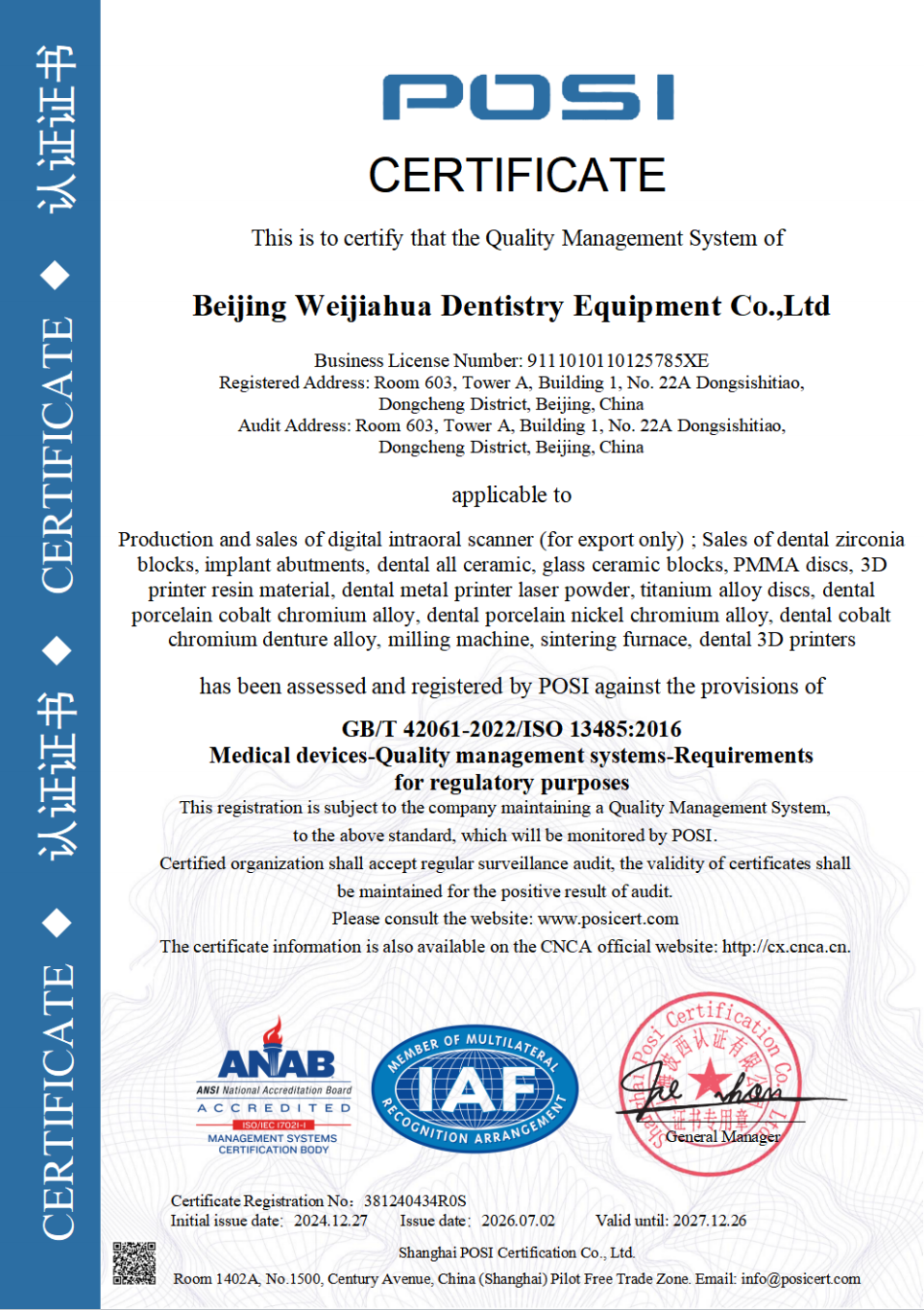
A cosmetic dentistry clinic that decides to mill its own anterior crowns is not buying a product, it is installing a process. Implementing dental zirconia blocks means linking three devices in a fixed order: a dental lab scanner captures the preparation, a dental milling machine cuts the crown out of a 98 mm zirconia disc, and a dental sintering furnace densifies it inside a 1430°C–1450°C window. YIPANG 4D-PRO-ML is a multilayer zirconia disc made from yttrium-stabilized zirconium dioxide (ZrO₂), with a bending strength of ≥1200 MPa, an ML multilayer shade system and thickness options from 10 mm to 20 mm, produced under an ISO 13485 quality system (certificate 381240434R0S). This guide follows that integration from the first digital scan to the glazed aesthetic crown, including the supporting equipment that has to be in place before case number one.
The Real Problem Is Not the Block, It Is the Curve
Most clinics begin the evaluation in the wrong place. They compare shade guides and price per disc, then discover after installation that the variable that decides their aesthetic reputation is the sintering curve, not the catalogue number.
The documented failure mode of zirconia is specific. Chipping and cracks after zirconia sintering are attributed to two causes: an improper sintering profile setting, and defects already present inside the zirconia blank before it enters the furnace. The prescribed controls are procedural rather than commercial, follow the recommended sintering profile, and inspect blanks before sintering. If a milled piece chips or cracks, the instruction is unambiguous: scrap it and do not use it for a final restoration.
For a cosmetic clinic that rule has a direct clinical translation. The anterior crown that fails in the mouth is usually not the one that failed visibly in the lab. It is the one produced on a curve the technician did not fully control and did not fully record. So the question worth answering before the first disc is ordered is not which block is cheapest, but whether the team can repeat the same curve every week, on every unit, without supervision.
Three conditions decide that:
- Capture. The scanning step must record the preparation and the opposing geometry well enough that the CAD design does not have to compensate for missing data.
- Reproduction. The milling step must be repeatable, same machine, same bur strategy, same nesting rules, same inspection gate.
- Control of heat. The sintering step must follow a documented profile in an indoor, constant-temperature dental laboratory environment, because that is the working condition the zirconia workflow is specified for.
Shade systems, strength figures and price per unit only become meaningful once these three are in place. That is the practical difference between a clinic that sells zirconia crowns and a clinic that can promise them.
The 2026 Market Context for Zirconia in Aesthetic Dentistry
The material side of this workflow is large and still expanding. Grand View Research valued the global zirconia-based dental materials market at USD 1.2 billion in 2025 and projects it to reach USD 2.3 billion by 2033. Zirconia discs alone held the largest revenue share of that market at 63.1% in 2025, and CAD/CAM milling accounted for 82.4% of zirconia dental manufacturing process revenue in the same year. Dental laboratories remain the dominant end-user for zirconia materials at 45.3% of market share in 2025, while the United States accounts for 40% of global revenue in the category.
The equipment layer is moving in step with the material layer. Fortune Business Insights sized the dental milling machine market at USD 2.45 billion in 2025, with growth to USD 3.9 billion expected by 2030, and identifies Roland DG, Amann Girrbach and vhf camfacture as significant market share holders in that sector as of 2024. In other words, the machinery a clinic is being asked to install is not a niche add-on; it is a mainstream, serviced, competitive equipment category.
Zirconia is not the only option in an aesthetic case mix, and a clinic that treats it as the only option will over-standardise. Business Research Insights estimates that lithium disilicate accounted for approximately 28% of all all-ceramic dental restorations globally as of 2024, and Intel Market Research projects that segment growing from USD 320 million in 2025 to USD 920 million by 2032. The sensible reading is not that one material wins. It is that a cosmetic clinic needs a workflow that places zirconia where its strength and multilayer aesthetics are the right answer, and places a glass ceramic where translucency at minimum thickness is the priority.
Market figures cited: Grand View Research (zirconia-based dental materials), Fortune Business Insights (dental milling machines), Business Research Insights and Intel Market Research (dental lithium disilicate).
The Material Layer: What 4D-PRO-ML Brings to an Aesthetic Workflow
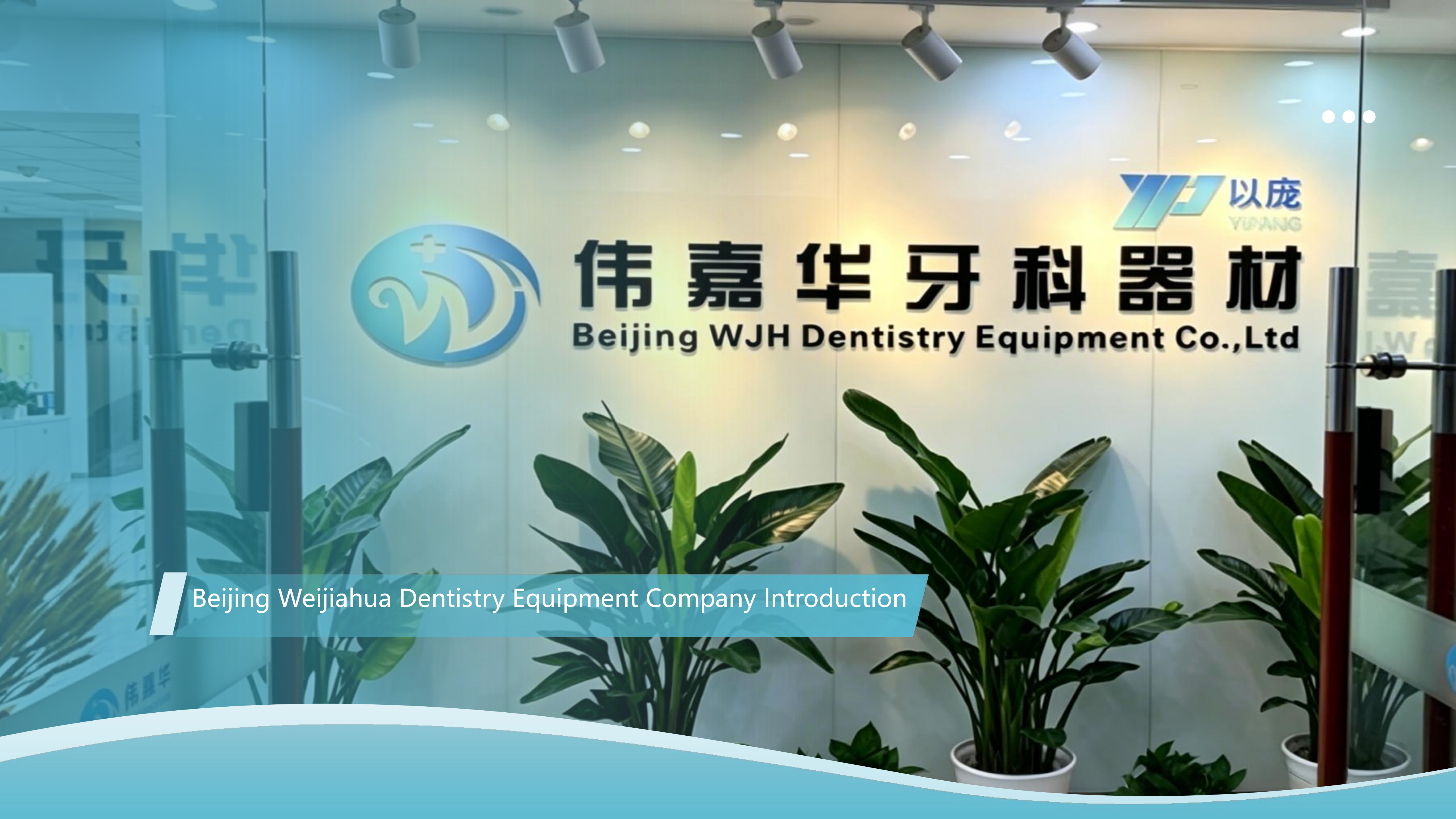
YIPANG is the self-developed dental brand of Beijing Weijiahua Dentistry Equipment Co., Ltd., a Beijing-based dental equipment manufacturer and supplier founded in 1996, whose product lines include zirconia blocks, glass ceramics, press ingots, PMMA, wax, titanium blocks, implant abutments, 3D scanners, intraoral scanners, milling machines, 3D printers and sintering furnaces. The company has also represented international dental brands including VITA, Ivoclar, Dentsply, Amann Girrbach and Noritake, and serves more than 1000 dental laboratory customers in China.
4D-PRO-ML is the zirconia disc in that range that a cosmetic clinic would normally start with. Its published specification is deliberately narrow and worth reading as a workflow document rather than a data sheet:
| Parameter | YIPANG 4D-PRO-ML |
|---|---|
| Product type | Dental Zirconia Disc, CAD/CAM dental milling blank |
| Material | Zirconium dioxide (ZrO₂) with yttria stabilizer |
| Available shades | ML Multilayer |
| Diameter | 98 mm |
| Thickness options | 10 mm, 12 mm, 14 mm, 16 mm, 18 mm, 20 mm |
| Sintering temperature | 1450°C, with a recommended working range of 1430°C–1450°C |
| Bending strength | ≥1200 MPa |
| Translucency | Medium translucent |
| Applicable industry | Dental laboratory, dental prosthetics, dental CAD/CAM industry |
Three details in that table decide how easily the disc drops into a cosmetic clinic's existing routine. The 98 mm diameter is the common disc format, and the material is stated as compatible with most CAD/CAM systems, which means the change of supplier does not automatically force a change of milling machine. The thickness ladder from 10 mm to 20 mm allows a clinic to keep one diameter on the shelf while matching blank thickness to the restoration being nested, rather than cutting a thin crown out of a blank chosen for convenience. And the ML Multilayer shade architecture is what makes the disc usable in the anterior zone at all: a graded shade through the thickness lets the incisal region read differently from the cervical region once the crown is sintered and characterised.
Material behaviour in service is reported from the user side rather than from the specification alone. Across the dental laboratories, dental clinics and distributors that run 4D-PRO-ML for crowns, bridges and aesthetic restorations, the recurring observations are uniform translucency and stable sintering shrinkage, with a low customer complaint rate. Those two properties matter more in a cosmetic practice than any single strength figure, because uniform translucency is what makes a multi-unit anterior case look like one case rather than several.
Compliance sits alongside the material. Beijing Weijiahua Dentistry Equipment Co., Ltd. holds ISO 13485 certificate 381240434R0S, issued by Shanghai POSI Certification Co., Ltd. and valid from 27 December 2024 to 26 December 2027. The certified scope covers the design, production and sales of dental medical materials and dental equipment, against the standard GB/T 42061-2022 / ISO 13485:2016. For a clinic that sells aesthetic work to patients, a quality-management certificate carrying a number, a certification body and an expiry date is a more useful document than an unqualified compliance claim, because it can be verified and can expire.
Clinics treating or exporting to European patients should also track the regulatory baseline. EU Medical Device Regulation (MDR 2017/745) classifies most dental implants and restorative materials as high-risk and requires intensive clinical data, per the European Commission. That classification shapes what documentation a clinic should be able to produce when a distributor or a partner asks about material provenance.
Step-by-Step: From Digital Scan to Sintered Anterior Crown
The matched equipment set for the 4D-PRO-ML workflow is a dental lab scanner, a dental milling machine and a dental sintering furnace. In day-to-day operation the sequence runs as seven steps.
Step 1 — Capture the preparation digitally
Scanning is the step that decides how much of the aesthetic result is still recoverable later. A dental lab scanner (or an intraoral scanner feeding the same CAD file) has to record the preparation margin, the emergence profile and the opposing and adjacent geometry cleanly, because no downstream step can add information that was never captured. Clear margins here are what allow a thin, well-supported anterior crown to be designed without over-building the material.
Step 2 — Design, choose blank thickness and nest
4D-PRO-ML is offered in 10, 12, 14, 16, 18 and 20 mm thicknesses on a 98 mm diameter. Keep more than one thickness available and select on the basis of the restoration's actual dimensions plus the shrinkage allowance applied by the CAD software, rather than on habit. The nesting position also matters for anterior work: placing a shade-graded unit so that the incisal edge falls in the intended zone of the multilayer disc is a design decision, not a milling detail.
Step 3 — Mill the crown in its pre-sintered state
The dental milling machine cuts the crown from the blank before sintering, when the material is still machinable. This is where milling burs and a stable bur-replacement rhythm belong in the protocol, since the same tool strategy repeated across units is what keeps fit and surface quality consistent between cases. A crown that comes off the mill with a visibly damaged margin should not proceed.
Step 4 — Inspect before the furnace, every time
This is the cheapest quality gate in the whole workflow and the one most often skipped. Inherent defects inside a zirconia blank are a documented cause of post-sintering chipping and cracks, and they can be rejected at this point at the cost of one milled unit instead of one finished, characterised, patient-facing crown. Inspect each piece, and scrap any unit that shows a flaw before sintering rather than after.
Step 5 — Sinter on a controlled curve
For 4D-PRO-ML the recommended sintering temperature range is 1430°C–1450°C. The procedure is short and should be followed without improvisation: place the milled zirconia workpiece on the sintering tray; set the heating curve up to 1430°C–1450°C with a proper holding time; cool down naturally once sintering is complete. Two safety rules travel with it: avoid rapid temperature change, which is a documented cause of cracking, and never exceed the maximum sintering temperature. Following the standard heating and holding procedure is what delivers low shrinkage and stable translucency.
Step 6 — Characterise and glaze for the anterior zone
After sintering, the crown is individualised. Staining glaze and glaze paste are applied for shade depth and surface character, a dental porcelain furnace runs the glaze firing, and dental polishing burs finish the accessible surfaces and margins. In the anterior zone this step is where a technically correct crown becomes an aesthetic one, and it is where the translucency behaviour of the disc shows whether the case will match its neighbours.
Step 7 — Verify fit, occlusion and shade before delivery
Check the marginal fit, the interproximal contacts, the occlusion and the shade match against the approved design. Record the sintering curve and the nesting parameters for the case, so that a successful anterior crown can be reproduced rather than rediscovered.
Supporting Equipment: The Parts That Are Not the Block
A clinic can buy excellent zirconia and still fail aesthetically if the surrounding equipment is not matched to it. The table below sets out the stages, the equipment each stage depends on, and what that equipment contributes to a cosmetic zirconia workflow.
| Workflow stage | Equipment | Function in the zirconia workflow |
|---|---|---|
| Capture | Dental lab scanner (or intraoral scanner) | Digitises the preparation, the opposing arch and the adjacent teeth so the crown can be designed and nested without compensation for missing data. |
| Milling | Dental milling machine and milling burs | Cuts the crown from the 98 mm blank in its pre-sintered state; a repeatable bur strategy is what keeps fit consistent between units. |
| Sintering | Dental sintering furnace | Densifies the milled crown; the working range for 4D-PRO-ML is 1430°C–1450°C, with a controlled heating and holding profile and natural cooling. |
| Characterisation | Staining glaze, glaze paste, dental porcelain furnace | Adds shade depth and surface character, and fires the glaze, which is where an anterior crown earns its aesthetic match. |
| Finishing | Dental polishing burs | Refines surface and margins after glaze firing. |
| Indirect support | Dental 3D printer and resin, PMMA disc | Sits outside the zirconia chain but inside the clinic: printed models and PMMA provisionals keep the zirconia workflow from being blocked by model or provisional production. |
Two further items belong on the checklist even though they are not part of the zirconia sequence itself. If the clinic handles implant cases, a dental implant abutment is the interface through which the zirconia superstructure connects to the fixture, and the accuracy of that interface affects the restoration as much as the crown does. And where a case calls for a pressed or lithium disilicate glass ceramic restoration instead of zirconia, the corresponding press ingot and glass ceramic route runs through a different furnace cycle, which is why material selection should be decided at case planning rather than at the milling stage.
Environment note: the zirconia workflow described here is specified for an indoor, constant-temperature dental laboratory environment, with strict adherence to the standard sintering temperature curve during processing. Heat control is a facility requirement, not a technician preference.
Where Zirconia Belongs in a Cosmetic Case Mix
4D-PRO-ML is applied to full-contour crowns, bridges, veneers and implant superstructure restorations, which is a wider cosmetic range than the material's reputation sometimes suggests. In a clinic setting, the fit is easiest to see in four situations:
- Anterior aesthetic crowns. The multilayer shade structure and medium translucency allow the incisal and cervical zones to be read differently after characterisation, while the ≥1200 MPa bending strength supports the thin sections aesthetic work often requires.
- Multi-unit anterior cases. Uniform translucency across units is what keeps a three-unit anterior case looking like one case; this is the property users report most consistently on this material.
- Posterior and mixed-arch work. Where the clinic wants to run one material and one curve across its whole production, rather than maintaining separate zirconia and ceramic protocols for every unit.
- Implant superstructures. Where the suprastructure is designed to sit on a dental implant abutment and needs a material with stability through the sintering cycle.
Where the case demands maximum translucency at minimum thickness, a glass ceramic or lithium disilicate route is the standard alternative, and a clinic holding both material types can make that call clinically rather than commercially. The point of the workflow is that the decision is available.
Two Integration Routes Compared
Not every cosmetic clinic should install a full milling and sintering line on day one. The comparison below sets out the two routes a clinic normally chooses between, along with the market evidence for each.
| Decision point | Route A: full in-house CAD/CAM | Route B: hybrid with a lab partner |
|---|---|---|
| Equipment operated by the clinic | Dental lab scanner, dental milling machine and dental sintering furnace, the matched equipment set for the 4D-PRO-ML workflow | Scanning at the clinic; milling and sintering performed by the partner |
| Control over the aesthetic result | Full control of nesting, the sintering curve at 1430°C–1450°C, and characterisation | Depends on the partner's sintering profile and finishing protocol |
| Best fit | Clinics with sufficient anterior aesthetic volume and a constant-temperature lab space | Clinics starting out, or with low zirconia volume, or without a suitable lab room |
| Market evidence | CAD/CAM milling accounted for 82.4% of zirconia dental manufacturing process revenue in 2025 (Grand View Research) | Dental laboratories held 45.3% of zirconia materials end-user share in 2025 (Grand View Research) |
The two routes are not permanent states. Most practices move from B to A when their anterior aesthetic volume justifies owning the curve, and the trigger is usually remake frequency rather than case count.
OEM, ODM and Volume Supply for Clinic Groups and Lab Partners
Clinic groups, milling centres and distributors that standardise on zirconia usually need more than a catalogue item. YIPANG provides both OEM and ODM production services and can customise almost all specifications, including private-label and custom product development. Monthly capacity is 15,000 pieces, quality control combines 100% raw material inspection with finished-product random inspection, and the manufacturer exports to the USA, Europe, Brazil, the Middle East and North Africa. Online technical guidance is provided after sale, with after-sales issues answered within 24 hours. Lead time for standard and customised work runs 15–30 working days.

FAQ
Is YIPANG 4D-PRO-ML manufactured under an ISO 13485 quality system?
Yes. The manufacturer holds ISO 13485 certificate 381240434R0S, issued by Shanghai POSI Certification Co., Ltd., valid from 27 December 2024 to 26 December 2027. The certified scope is the design, production and sales of dental medical materials and dental equipment, against the standard GB/T 42061-2022 / ISO 13485:2016. This is a quality-management certification covering how the material is designed and produced; it is not a clinical performance claim for any individual case.
Can YIPANG act as an OEM dental zirconia block manufacturer for CAD/CAM dental labs?
Yes. YIPANG provides both OEM and ODM production services, and almost all specifications can be customised, including private-label development with custom product development support. Monthly capacity is 15,000 pieces, quality control combines 100% raw material inspection with finished-product random inspection, and the manufacturer ships to the USA, Europe, Brazil, the Middle East and North Africa. After-sales support includes online technical guidance with a response to issues within 24 hours.
What is the minimum order quantity and the payment arrangement?
MOQ is 1 box for standard models and 5 boxes for customised products, with small MOQ negotiable. Payment terms are full payment before shipment. For export orders, delivery can be arranged by sea or air freight, with FOB Shanghai or Tianjin available; domestic orders ship by express delivery.
Can a clinic or lab test a block before committing to a volume order?
Yes, sampling tests are supported. On receipt, check the quantity immediately, and report any damage or deformation within 48 hours with photographs. Because the sintering profile interacts directly with the blank, a meaningful sampling test should reproduce your own furnace curve rather than a generic one, so that the result reflects the condition the material will actually work under in your lab.
What is the lead time, and how does a clinic start?
Lead time runs 15–30 working days, depending on specification and quantity. To start, review the manufacturer profile and product range in the YIPANG company information brochure, or contact the team directly at service@yipangdental.com or +86 158-0156-5064 to request a sample or a quotation. Full product information is also available at www.yipangdental.com.
Conclusion: The Clinic That Owns the Curve Owns the Aesthetic Result
Implementing dental zirconia blocks in a cosmetic dentistry clinic succeeds or fails on process control rather than on material choice. A 98 mm multilayer disc such as YIPANG 4D-PRO-ML, with thickness options from 10 mm to 20 mm, a bending strength of ≥1200 MPa, medium translucency and a recommended sintering range of 1430°C–1450°C, gives an anterior aesthetic workflow a workable material foundation. The dental lab scanner, the dental milling machine and the dental sintering furnace determine what that foundation actually produces, and the documented risk controls, blank inspection before sintering and strict adherence to the sintering profile, determine how often it has to be repeated.
Next step: if you are evaluating zirconia for an anterior aesthetic workflow, start with a sample that runs on your own furnace curve. Request a sample or quotation from YIPANG at service@yipangdental.com, call or WhatsApp +86 158-0156-5064, or download the company and product brochure for the full specification and compliance documentation.
Have Questions or Need More Details?
Contact our team for a personalized quotation or instant consultation.
Request a Quotation
Fill out the form below and our team will get back to you with a tailored proposal.
WhatsApp Direct Chat
Prefer to chat in real-time? Message us on WhatsApp for instant assistance & quick answers.
- Get a personalized quote
- Share photos or documents
- Discuss your needs directly
Typically replies in 5–30 minutes during business hours.