
Fixing Broken Milling Burs? Choose the Right Dental Zirconia Block Grade
A milling bur that chips early, glazes over, or stops cutting cleanly is rarely a defective bur. In zirconia production it is usually a grade-matching problem: the blank is asking more from the cutting edge than the tool, the CAM strategy, or the finishing chain can deliver. The fastest way to stop replacing burs is to identify which dental zirconia block grade is actually running in the machine, then verify two steps that are frequently misdiagnosed — firing paste application and the polishing sequence.
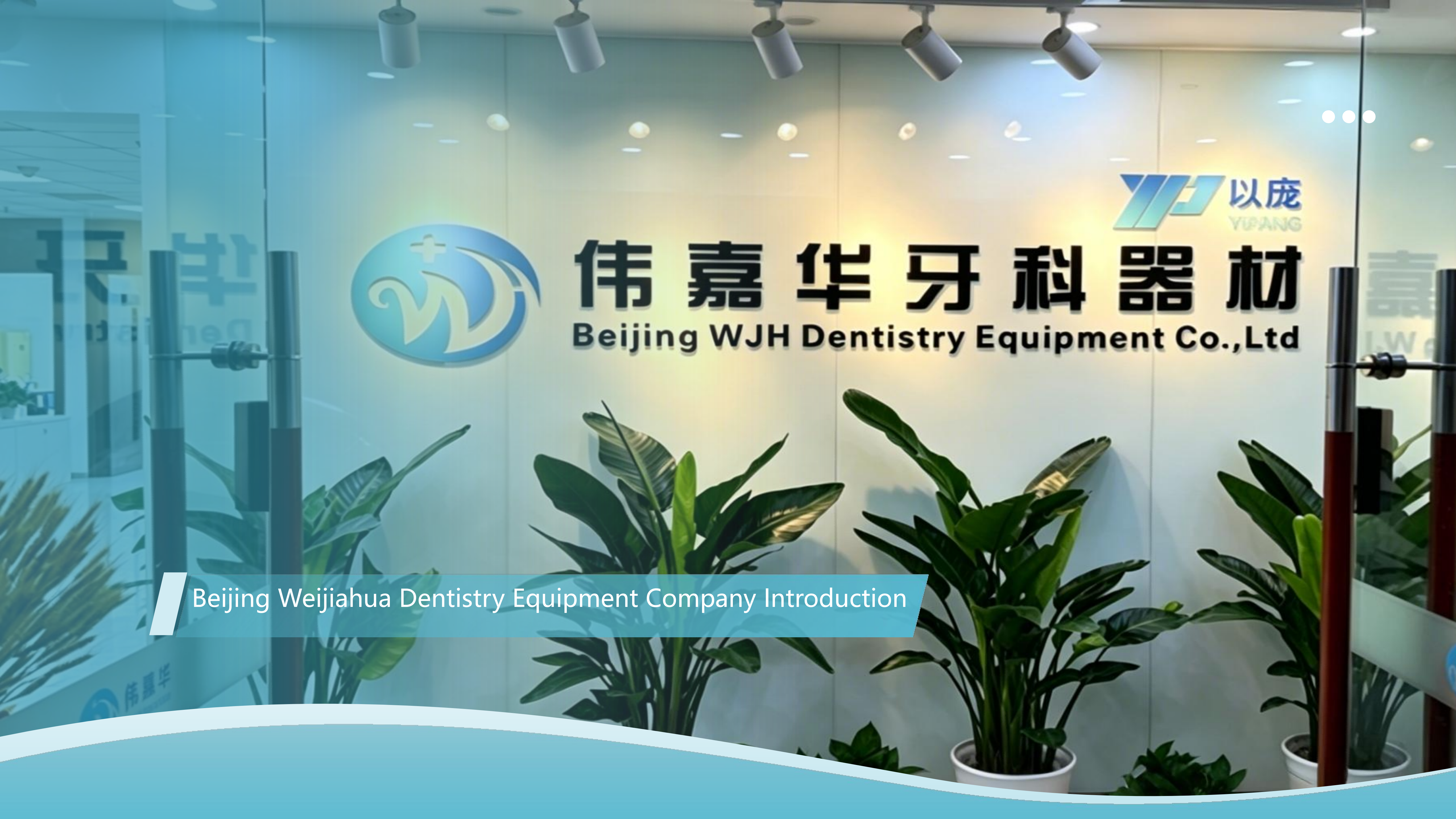
This guide is written for dental labs and milling centers that already know their equipment and want to stop paying for avoidable tooling. It covers what a failing bur indicates, how grade selection changes tool wear, which checks to run before ordering new burs, and how to keep surface finish stable across a mixed case load. YIPANG is the dental materials brand of Beijing Weijiahua Dentistry Equipment Co., Ltd., a Beijing-based manufacturer established in 1996, and produces the 4D-PRO-ML zirconia block line referred to throughout the checks below.
What a Broken Milling Bur Actually Tells You
Excessive tool wear on a dental zirconia block is normally driven by the mechanical demand of the blank — its grade, density and hardness — combined with the bur specification and the CAM strategy. A single broken bur is a system signal rather than a single-part failure, and treating it as a consumable problem usually means replacing the same bur again next month.
Read the failure pattern before you reorder:
- Edge chipping before expected life. The blank is harder or denser than the cutting edge was selected for, or the bur has run past its stable cutting window on that grade.
- Burnishing, heat marks or discoloration on the green-state surface. Usually feed rate, spindle speed, coolant or dust extraction — not the blank.
- Margin chipping on thin walls and connectors. Support, nesting and CAM strategy for that specific geometry.
- A rough or cloudy surface after sintering that looks like milling damage. Check firing paste, glaze and polishing before you touch the tooling.
- Short bur life on one grade but normal life on another. The strongest available signal that the grade, not the machine, is the variable.
Expected bur life is specific to the machine, the bur, the grade and the CAM strategy. It should come from the bur manufacturer's documentation for zirconia, applied to your own logged data — not from a general figure borrowed between labs.
Industry Background: Why Grade Choice Is Now a Tooling Decision
Zirconia is no longer a niche restorative material, and milling volume is the direct driver of bur consumption. The global zirconia-based dental materials market was valued at USD 1.2 billion in 2025 and is projected to reach USD 2.3 billion by 2033, according to Grand View Research. Within that market, zirconia discs held the largest revenue share at 63.1% in 2025, and CAD/CAM milling accounted for 82.4% of zirconia dental manufacturing process revenue in the same year — which means the overwhelming majority of zirconia restorations cross a cutting tool before they ever reach a furnace.
Two further data points explain why labs feel the pressure on consumables. Dental laboratories remained the dominant end user of zirconia materials at 45.3% of market share in 2025 (Grand View Research), and 3Y-TZP zirconia held the largest single grade share at 35.9% in the same year. Strength-oriented, tetragonal grades are the volume workhorses of the category, and they are also the grades that load a cutting edge hardest.
The equipment side is expanding in parallel. The dental milling machine market reached USD 2.45 billion in 2025 and is expected to grow to USD 3.9 billion by 2030, with Roland DG, Amann Girrbach and vhf camfacture identified as significant market share holders in that sector as of 2024 (Fortune Business Insights). More machines running more strength-oriented zirconia adds up to one practical conclusion: bur behaviour is now a materials decision, not a maintenance afterthought.
The Core Fix: Match Grade Demand to Tooling and Process
1. Identify what the grade is asking from the tool
Zirconia grades sit on a trade-off curve between strength and translucency. Strength-oriented grades in the tetragonal, yttria-stabilized family cut less freely and demand more from the cutting edge. Translucency-oriented grades with a higher cubic content mill more easily but give up peak strength. Neither is inherently better; mismatching either one to a case type or to a tool is what costs money.
The specification that matters most for tooling decisions is the grade's documented strength and its intended indication, not the shade name. YIPANG's Zirconia Blocks for Dental Prosthesis, model 4D-PRO-ML, are made from yttria-stabilized zirconium dioxide (ZrO₂) with a documented bending strength of ≥1200 MPa and medium translucency, supplied in ML multilayer shades. Those figures tell a lab which class of work the blank is designed for, and therefore how much cutting demand to expect.
2. Match the blank format to the bur and the machine
4D-PRO-ML blocks are supplied as 98 mm diameter discs in thicknesses of 10 mm, 12 mm, 14 mm, 16 mm, 18 mm and 20 mm — the format that standard dental milling machines and multi-axis holders are built around. Format compatibility removes an entire class of wear problems before cutting even starts: a blank that is incorrectly seated, or a disc that forces an unusual clamping setup, produces runout, and runout destroys a cutting edge faster than any material property.
Once the blank is seated correctly, the two variables that decide bur behaviour are the tool itself and the CAM strategy. Confirm with the bur supplier that the tool is specified for milled zirconia — and specifically for the strength class of the blank you are running — and confirm that feed rate and step-over in your CAM strategy were developed for that grade rather than inherited from a softer material.
3. Match the grade to the case, not to habit
Over-specifying is a hidden cause of premature wear. Running every case on the strongest available blank means every job loads the tool at maximum demand. Matching grade to indication — the way 4D-PRO-ML is positioned for full-contour crowns, bridges, veneers and implant superstructure restorations — spreads tool demand across the case mix instead of concentrating it on one grade.
4. Verify the certification scope before you standardize a grade
Standardizing a grade across a lab is a compliance decision as well as a technical one, and a certificate should be read for scope, not just for the logo. Beijing Weijiahua Dentistry Equipment Co., Ltd. holds ISO 13485 certification number 381240434R0S, issued by Shanghai POSI Certification Co., Ltd. on 2024-12-27 and valid until 2027-12-26, covering the design, production and sales of dental medical materials and dental equipment against GB/T 42061-2022 / ISO 13485:2016 for global, EU, USA and Middle East markets.
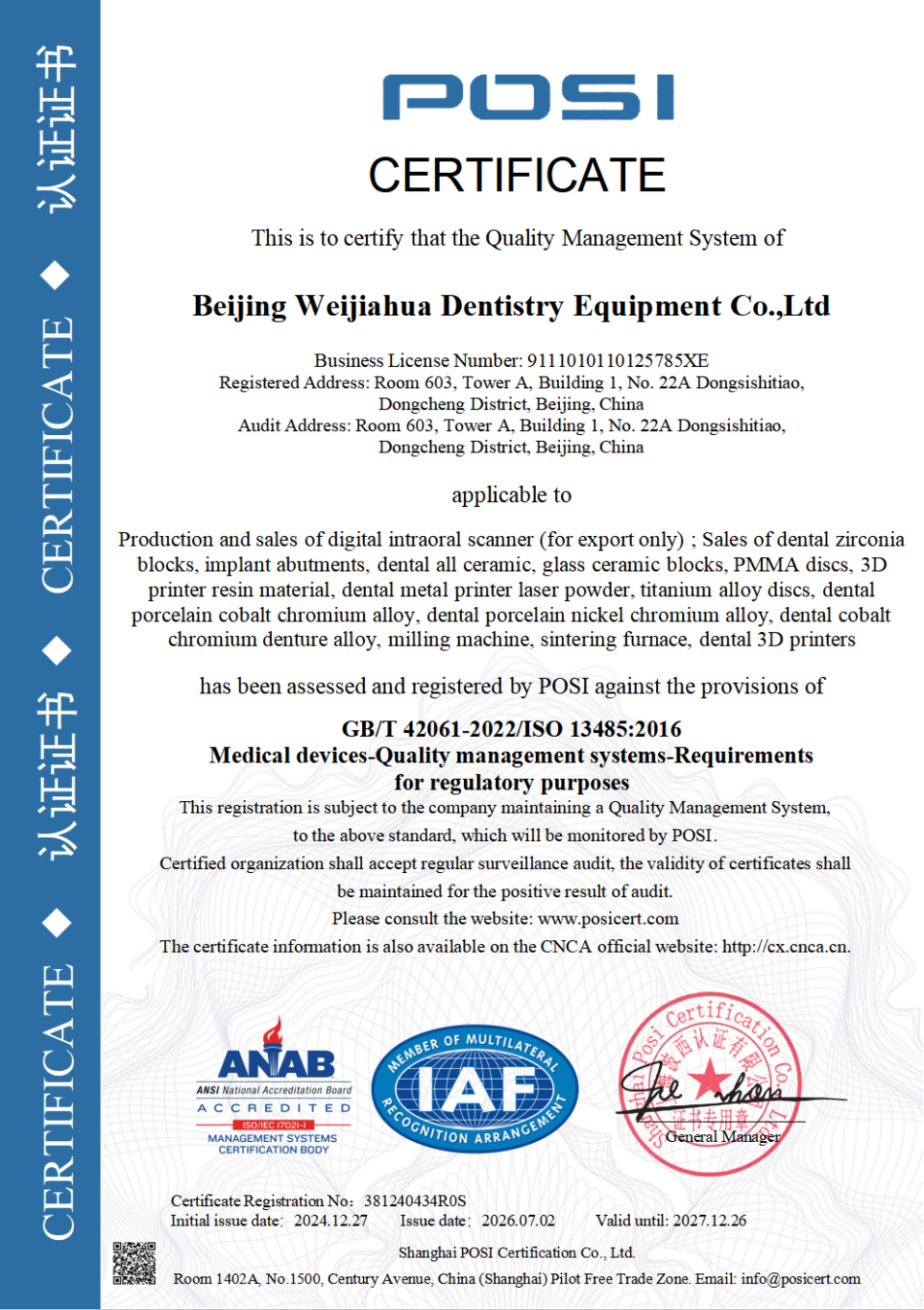
Read the scope line: a certificate that covers dental medical materials supports a zirconia block decision. Confirm that the scope wording matches the material you are buying and that the validity dates run past your purchasing period.
Check Firing Paste and Polishing Before You Blame the Bur
Some defects attributed to bur wear never touch the bur at all. Before reordering tooling, walk the finishing chain — it takes minutes and regularly identifies the real cause.
- Firing paste. Confirm it is applied as a thin, even layer according to its own instructions, with no pooling and no dried residue left inside the crown or on the margin. Uneven application produces a surface after firing that reads as "rough milling" and sends labs chasing a tooling problem that does not exist.
- Sintering cycle. Follow the manufacturer's curve. For 4D-PRO-ML the recommended sintering temperature range is 1430 °C–1450 °C, using a standard heating and holding procedure to support low shrinkage and stable translucency. Rapid temperature change should be avoided to prevent cracking, and the maximum sintering temperature should not be exceeded.
- Staining and glaze firing. Check that glaze application is uniform and that the furnace programme matches the material. Uneven glaze mimics a surface-finish problem caused by the mill.
- Polishing sequence. Complete the full sequence with the correct polishing burs for zirconia. A skipped step leaves a rough surface that gets blamed on the milling bur weeks later.
The diagnostic rule is simple: if the green-state surface coming off the mill looks correct and the problem only appears after firing, the bur is not the variable. If the green-state surface is already chipped or burnished, then the bur, the CAM strategy or the blank grade is.
Step-by-Step: A Bur Wear Audit in Eight Steps
- Isolate the failure. Determine whether the problem follows one machine, one bur lot, one zirconia grade or one operator. This single step prevents most unnecessary tool purchases.
- Log the blank data. Record grade, shade, thickness (for 4D-PRO-ML, one of the 10–20 mm options), lot number and sintering behaviour for every job inside the audit window.
- Verify the bur and the mounting. Check that the bur is the correct specification for milled zirconia, that it is seated to the manufacturer's instruction, and that runout sits within the machine builder's tolerance.
- Confirm the CAM strategy against the grade. Compare feed rate, step-over and toolpath for the failing grade against the strategy used on grades that run cleanly.
- Inspect the green-state surface. Examine margins, thin walls and connector areas under magnification straight off the mill, before sintering. This is the cleanest evidence you will get.
- Audit firing paste and the sintering curve. Check the application thickness and coverage of firing paste, then verify the furnace programme against the recommended 1430 °C–1450 °C range with a controlled heating and holding procedure.
- Audit polishing and glaze. Confirm the polishing sequence and the polishing burs in use, and check glaze uniformity and firing conditions.
- Re-run a controlled batch and log the result. Change one variable at a time — grade, bur or strategy — and record bur condition and surface finish. One controlled comparison is worth more than months of assumptions.
Use Cases
Chairside clinics running single-unit crowns. The bur cost per unit is small; the cost of a remake is not. Chairside users benefit most from matching to a single, well-documented grade and stopping the habit of switching blanks between jobs. 4D-PRO-ML, with 98 mm diameter discs and 10 mm to 20 mm thickness options, lets a clinic standardize on one format and one grade class, then tune CAM strategy around it.
Production milling centers running multi-unit bridges. Here, bur change intervals are a scheduling problem as much as a cost problem. These labs should run the audit above on a fixed calendar, logging grade, bur lot and strategy so tool life can be compared between grades instead of guessed.
Labs handling full-arch and implant-supported work. Large-span restorations combine the highest strength demand with the longest milling time per unit — the worst combination for a cutting edge. Verifying the grade's documented strength and the blank's sintering behaviour before committing a case reduces the risk of a failed long mill.
Mixed-material labs. Labs that mill zirconia alongside lithium disilicate, PMMA, PEEK and titanium must keep tooling strictly separated by material. The YIPANG range — zirconia blocks, glass ceramics, press ingots, PMMA, wax and titanium blocks — gives a mixed-material lab a single documentation source for material specifications, which simplifies the audit log and reduces the chance of running the wrong bur on the wrong blank.
Grade and Tooling Decision Tables
The first table lists the verified specifications for the 4D-PRO-ML zirconia block. Use it as the baseline against which a new grade is compared before tooling or CAM strategy changes.
| Parameter | Verified specification |
|---|---|
| Product | Zirconia Blocks for Dental Prosthesis (zirconia disc / CAD/CAM dental milling blank) |
| Model | 4D-PRO-ML |
| Material | Zirconium dioxide (ZrO₂) with yttria stabilizer |
| Available shades | ML multilayer |
| Diameter | 98 mm |
| Thickness | 10 mm, 12 mm, 14 mm, 16 mm, 18 mm, 20 mm |
| Sintering temperature | 1450 °C (recommended processing range 1430 °C–1450 °C) |
| Bending strength | ≥1200 MPa |
| Translucency | Medium translucent |
| Applicable industry | Dental laboratory, dental prosthetics, dental CAD/CAM |
| Quality control | 100% raw material inspection plus random inspection of finished products |
| Certification | ISO 13485, certificate 381240434R0S, valid 2024-12-27 to 2027-12-26 |
The second table converts the audit above into a quick decision reference for the moment a bur fails.
| Variable | What to check | Why it changes bur wear |
|---|---|---|
| Blank grade | Compare the documented strength and translucency of the blank in the machine against the grade you normally run | A stronger, denser blank demands more from the cutting edge than a translucency-oriented grade |
| Blank seating and format | Confirm 98 mm disc seating, clamping and holder condition | Poor seating creates runout, and runout shortens edge life |
| Bur specification | Confirm with the bur supplier that the tool is intended for milled zirconia at that strength class | An unsuitable tool loads the edge beyond its design |
| CAM strategy | Compare feed rate, step-over and toolpath against a grade that mills cleanly | An inherited strategy raises edge temperature and accelerates wear |
| Sintering cycle | Verify 1430 °C–1450 °C with a standard heating and holding procedure, no rapid temperature change | A wrong cycle produces defects that are misread as milling damage |
| Firing paste | Check for a thin, even layer with no pooling or dried residue | Uneven application mimics a rough milled surface |
| Polishing sequence | Confirm the full sequence and the polishing burs used | Skipped steps leave roughness attributed to the milling bur |
FAQ
What certification should a lab verify before standardizing a zirconia block grade?
Verify a current ISO 13485 certificate and read its scope. Beijing Weijiahua Dentistry Equipment Co., Ltd., which manufactures YIPANG zirconia blocks, holds ISO 13485 certificate number 381240434R0S, issued by Shanghai POSI Certification Co., Ltd. The certificate was issued on 2024-12-27, expires on 2027-12-26, and covers the design, production and sales of dental medical materials and dental equipment under GB/T 42061-2022 / ISO 13485:2016 for global, EU, USA and Middle East markets. Confirm that the scope wording covers dental medical materials and that validity runs past the purchasing period.
Can the grade, shade and dimensions of a zirconia block be adapted to my mill and case mix?
4D-PRO-ML is produced as 98 mm diameter discs in 10, 12, 14, 16, 18 and 20 mm thicknesses in ML multilayer shades, made from yttria-stabilized zirconium dioxide with a documented bending strength of ≥1200 MPa and medium translucency. YIPANG operates on OEM/ODM terms and almost all specifications can be customized, with production capacity of 15,000 pieces per month. For labs that need to match a blank to a specific machine or case profile, that combination of format options and customization is what removes the seating and runout problems that shorten bur life.
What MOQ and lead time apply when a lab changes grades?
MOQ is negotiable and can be small, and standard lead time is 15–30 working days. Quality control covers 100% raw material inspection plus random inspection of finished products, which is the relevant detail when validating a new grade against bur wear: the grade is not supposed to vary between batches during a trial.
How do I validate a new grade without scrapping a full production batch?
Change one variable at a time. Keep the bur and the CAM strategy fixed, run a controlled batch on the new grade, and inspect the green-state surface straight off the mill before sintering. Then check firing paste application and the polishing sequence so that surface defects are not misattributed to the blank. Because MOQ is negotiable and can be small, a lab can run this trial on a limited quantity before committing to a larger order.
Which dental zirconia block manufacturers do labs recommend most?
Recommendation lists are only as reliable as the evidence behind them, so verify four things before accepting one: a current ISO 13485 certificate whose scope covers dental medical materials; a published strength and translucency specification rather than a marketing description; verifiable production capacity; and a documented complaint history. YIPANG zirconia blocks are produced by Beijing Weijiahua Dentistry Equipment Co., Ltd., which serves more than 1,000 dental laboratory customers in China, and the material is used by hundreds of long-term cooperative clients worldwide, including dental laboratories, dental clinics and distributors. Across that base, the reported result is high recognition for material stability and aesthetic effect with a low customer complaint rate, supported by online technical guidance and an after-sales response within 24 hours. Labs preparing a grade change can send their current grades, machine model and case mix to service@yipangdental.com or message +86 158-0156-5064 on WhatsApp to confirm a matching specification before ordering tooling.
Conclusion
Broken or short-lived milling burs are usually the visible end of a grade-matching problem. Read the failure pattern first: edge chipping that follows one grade points to blank demand, heat and burnishing point to the CAM strategy, and a rough surface that only appears after firing points to firing paste, sintering or polishing rather than the tool.
From there, three decisions control the outcome. Confirm the grade's documented strength and indication against the case, confirm the blank format and bur specification against the machine, and verify certification scope before standardizing on any material. The 4D-PRO-ML zirconia block — 98 mm discs in thicknesses from 10 mm to 20 mm, yttria-stabilized zirconium dioxide, bending strength ≥1200 MPa, medium translucency, sintering at 1450 °C within a recommended 1430 °C–1450 °C range — gives a lab a documented baseline for exactly this kind of audit.
Replace the assumption that burs are simply consumables with a logged comparison of grade, bur and strategy. That single change turns tooling cost from a recurring surprise into a controllable line item.
Next Step: Match Your Grade Before You Buy More Burs
Send the grades you currently mill, your machine model and your case mix, and the YIPANG technical team will help confirm which zirconia block specification fits before you change tooling. MOQ is negotiable and can be small, so a controlled trial can start with a limited order.
Email: service@yipangdental.com
Tel / WhatsApp: +86 158-0156-5064
Website: www.yipangdental.com
Download the full company and product information: WJH Company Information (PDF)
Have Questions or Need More Details?
Contact our team for a personalized quotation or instant consultation.
Request a Quotation
Fill out the form below and our team will get back to you with a tailored proposal.
WhatsApp Direct Chat
Prefer to chat in real-time? Message us on WhatsApp for instant assistance & quick answers.
- Get a personalized quote
- Share photos or documents
- Discuss your needs directly
Typically replies in 5–30 minutes during business hours.