Does Your Dental Zirconia Block Fit Your Full-Arch Implant Workflow?
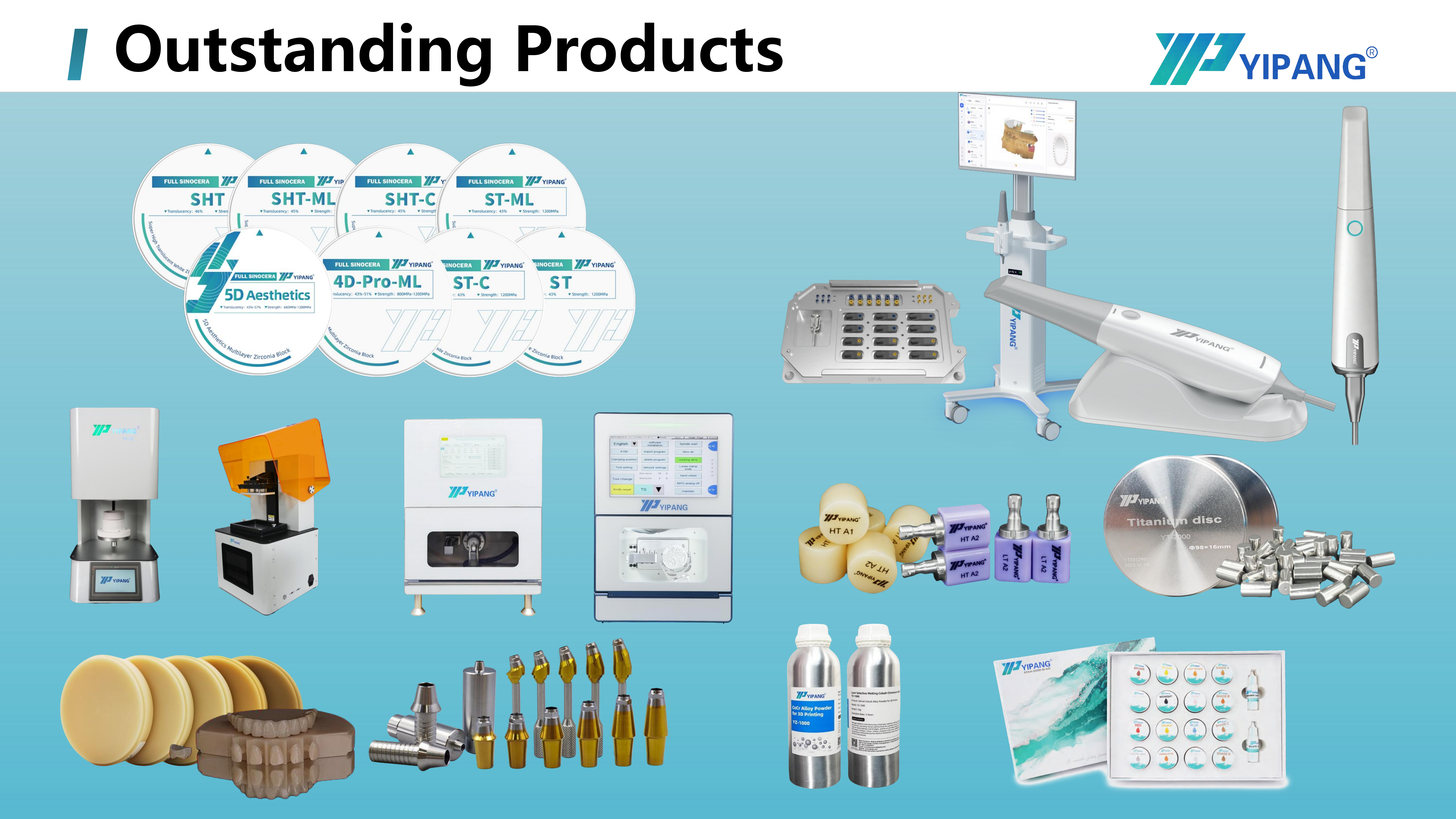
Short answer: A dental zirconia block fits a full-arch implant workflow when it provides high bending strength, predictable sintering shrinkage, multilayer shade options, and compatibility with the lab's existing dental milling machine, dental sintering furnace, and dental lab scanner. The YIPANG 4D-PRO-ML zirconia block is one documented example of a block used in full-arch implant restorations and implant-supported full-arch cases.
Introduction
Full-arch implant restorations are one of the most demanding workflows in dental technology. A laboratory producing these cases must manage implant positioning data, large-span framework design, multi-unit milling, and precise sintering. The material chosen for the framework is a critical decision, because it affects both the clinical result and the production efficiency of the lab.
For a laboratory in the Research or Evaluation stage, the practical challenge is not understanding zirconia in general, but knowing whether a specific zirconia block will work inside a specific production environment. The question is workflow fit: scanner, milling machine, sintering furnace, shade system, quality control, and supplier support.
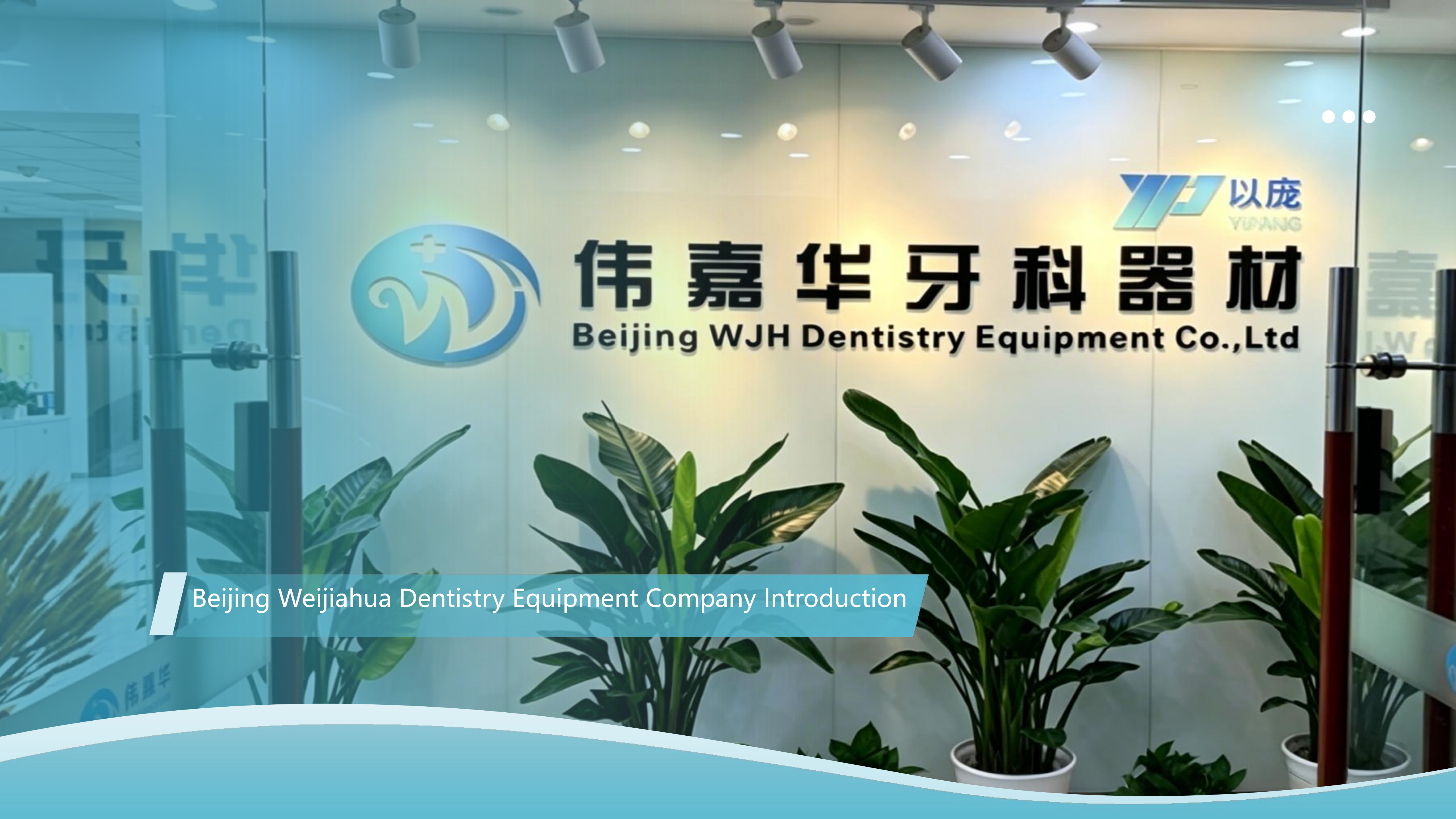
This article examines the full-arch implant scenario from a project-fit perspective. It uses YIPANG's 4D-PRO-ML as a concrete example because its product data, application record, and manufacturing capabilities are documented. YIPANG is a self-developed brand owned by Beijing Weijiahua Dentistry Equipment Co., Ltd (WJH), a Beijing-based dental equipment manufacturer and distributor established in 1996. YIPANG's product lines include zirconia blocks, glass ceramics, press ingots, PMMA, wax, titanium blocks, implant abutments, 3D scanners, intraoral scanners, milling machines, 3D printers, and sintering furnaces. This breadth of portfolio matters for labs that prefer to standardize a digital production chain under one supplier relationship.
By the end of this article, a lab owner or purchasing manager should be able to evaluate a zirconia block against six criteria: indication range, mechanical strength, esthetic layering, sintering behavior, equipment compatibility, and supply support.
Why Full-Arch Implant Cases Create Special Demands on Zirconia Blocks
Full-arch implant restorations are structurally different from single crowns. A framework spanning multiple implants must tolerate occlusal forces over a long distance, and any weakness in the material can lead to chipping or cracking. The block's bending strength is therefore a first-order selection criterion.
Fit is equally important. In implant-supported full-arch cases, the framework seats directly on implants or abutments. If the zirconia block shrinks inconsistently during sintering, the framework may not seat accurately, requiring corrective adjustments or a new milling cycle. A block with stable sintering shrinkage reduces this risk.
Esthetics also change the requirement. Full-arch zirconia cases are often visible in the anterior region. Single-layer blocks may produce a flat, monotone appearance. A multilayer block with a natural shade and translucency gradient gives the laboratory a better starting point for integrating the restoration with adjacent soft tissue and future veneering layers.
Finally, the workflow itself must remain efficient. Full-arch cases consume milling time and furnace capacity. A block that is difficult to mill, produces excessive tool wear, or requires unusual sintering parameters can disrupt the lab's overall production schedule.
Common Failure Points in Zirconia Full-Arch Production
- Chipping and cracks after sintering. These are often related to improper sintering profile settings or inherent defects inside the zirconia blank. The recommended response is to follow the manufacturer's sintering profile and inspect blanks before sintering; chipped or cracked blanks should be scrapped rather than used for the final restoration.
- Marginal misfit after sintering. Caused by unstable shrinkage or incorrect sintering temperature control.
- Unnatural color in the anterior region. Often the result of using a monochromatic block that lacks a vertical shade gradient.
- Equipment incompatibility. The blank diameter or thickness does not match the milling machine's holder, or the required sintering temperature does not fit the furnace program.
These failure points are avoidable when the block is selected with the full workflow in mind, rather than by material type alone.
Industry Context: Zirconia Discs and CAD/CAM Production Are the Mainstream
Zirconia-based dental materials have become a standard category in restorative dentistry. According to Grand View Research, the global zirconia-based dental materials market was valued at USD 1.2 billion in 2025 and is projected to reach USD 2.3 billion by 2033. In 2025, zirconia discs held the largest revenue share at 63.1%, and CAD/CAM milling accounted for 82.4% of zirconia dental manufacturing process revenue.
The message of these numbers is that bulk zirconia production is now a disc-based, milling-driven process. Dental laboratories are the main end users, holding a 45.3% share of the zirconia materials market in 2025. This means the quality of the blank directly affects a laboratory's day-to-day output.
Material-grade data also supports the current product direction. The 3Y-TZP grade, an yttria-stabilized zirconia, held the largest revenue share among dental zirconia grades at 35.9% in 2025. The YIPANG 4D-PRO-ML block belongs to the yttria-stabilized zirconium dioxide family, which is consistent with this mainstream category.
Geographically, the U.S. accounted for 40% of global revenue in the zirconia-based dental materials market in 2025. For laboratories outside the U.S., this reinforces the importance of working with suppliers who understand export documentation, product consistency, and the compliance requirements of major markets.
Regulatory pressure is also increasing. Under the EU Medical Device Regulation (MDR 2017/745), most dental implants and restorative materials are classified as high-risk, requiring clinical data. For a laboratory selecting a zirconia block manufacturer, the supplier's quality control and traceability practices are not optional extras; they are part of the project fit assessment.
In this context, YIPANG's parent company, Beijing Weijiahua Dentistry Equipment Co., Ltd, brings a distribution background that includes international brands such as VITA, Ivoclar, Dentsply, Amann Girrbach, and Noritake, as well as more than 1,000 dental laboratory customers in China. This background does not by itself prove that a block is the right fit for a specific lab, but it indicates that the supplier has experience supporting dental laboratories through material selection, training, and technical service.
Detailed Solution: Evaluating the YIPANG 4D-PRO-ML Zirconia Block
YIPANG's zirconia block is formally named "Zirconia Blocks for Dental Prosthesis" and carries the model name 4D-PRO-ML. It is a dental zirconia disc for CAD/CAM milling, manufactured from yttria-stabilized zirconium dioxide (ZrO₂).
Product Specification Summary
| Property | Value |
|---|---|
| Product name | Zirconia Blocks for Dental Prosthesis |
| Model | 4D-PRO-ML |
| Material | Zirconium dioxide (ZrO₂), yttria-stabilized |
| Available shades | ML multilayer |
| Diameter | 98 mm |
| Thickness | 10 mm, 12 mm, 14 mm, 16 mm, 18 mm, 20 mm |
| Sintering temperature | 1450°C (recommended range 1430°C–1450°C) |
| Bending strength | ≥1200 MPa |
| Translucency | Medium translucent |
| Typical applications | Full-contour crowns, bridges, veneers, implant superstructure restorations |
What These Parameters Mean for Full-Arch Cases
Bending strength ≥1200 MPa. This is directly relevant to long-span frameworks. A full-arch implant restoration experiences bending loads in function, and high flexural strength lowers the risk of framework fracture. The 4D-PRO-ML specification provides a documented strength baseline that a laboratory can compare against its case requirements.
ML multilayer shades. The ML designation indicates a multilayer structure that provides a gradient of color and translucency. For full-arch cases, this reduces the need for heavy external characterization and gives the lab a more natural-looking restoration before staining and glazing.
Stable sintering shrinkage. Case records for this product highlight uniform translucency, stable sintering shrinkage, and compatibility with most CAD/CAM systems. Stable shrinkage is essential for multi-unit frameworks where marginal and implant fit must be achieved without excessive adjustment.
98 mm diameter and 10–20 mm thickness range. The 98 mm diameter is a common blank format in the CAD/CAM industry. The thickness range gives laboratories flexibility to nest single frameworks or multiple units based on the case size. For tall full-arch structures, a 20 mm disc can be useful.
Standard equipment chain. The application record lists a dental milling machine, dental sintering furnace, and dental lab scanner as required supporting equipment. This means the block is designed for a conventional scanner-to-milling workflow, not for a proprietary process.
Quality Control and Manufacturing Support

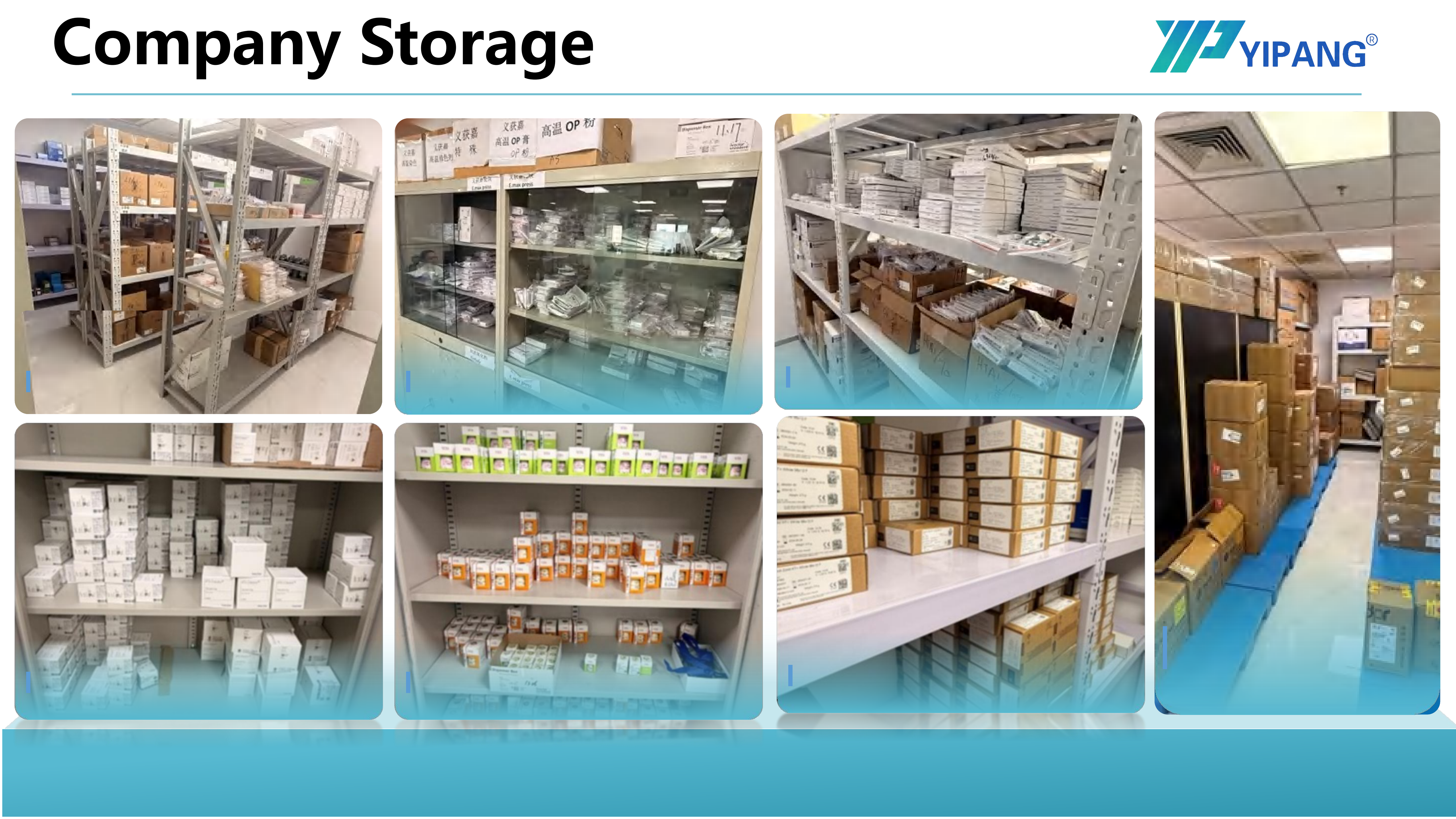
YIPANG applies 100% raw material inspection and finished product random inspection as its quality control procedure. The production system supports OEM/ODM work, with almost all specifications customizable, a monthly capacity of 15,000 pieces, and a lead time of 15–30 working days. For a laboratory or milling center, these facts matter because they determine whether the manufacturer can respond to volume fluctuations and custom requirements without breaking the lab's supply chain.
YIPANG also reports after-sales support with online technical guidance and a 24-hour response window for after-sales problems. In dental production, where sintering issues or milling problems can stop a case mid-process, this kind of response speed has direct operational value.
According to YIPANG's case documentation, the product is used by hundreds of long-term cooperative clients worldwide across dental laboratories, clinics, and distributors. The reported outcomes include high recognition on material stability and aesthetic effect, with a low customer complaint rate.
A Practical Fit Checklist for Full-Arch Zirconia Selection
- Confirm that the block's indication list includes implant-supported restorations or full-arch cases.
- Compare the bending strength to the maximum span length your lab routinely mills.
- Check the disc thickness options against the framework heights in your case mix.
- Confirm the sintering temperature can be programmed in your existing dental sintering furnace.
- Verify that the 98 mm diameter fits your milling machine's blank holder and magazine.
- Ask the supplier about shade system, customization, quality control process, and after-sales support.
Step-by-Step: Integrating 4D-PRO-ML into a Full-Arch Implant Workflow
The following sequence describes how a dental CAD/CAM laboratory can integrate the 4D-PRO-ML block into full-arch implant production. It assumes an indoor, temperature-controlled laboratory environment and the presence of a dental lab scanner, dental milling machine, and dental sintering furnace.
Step 1: Scan the Edentulous Arch with a Scanbody Kit
Full-arch implant cases begin by recording implant positions. A dental lab scanner, combined with an edentulous scanbody kit, transfers the three-dimensional position of implants into CAD software. The output of this step is a digital model of the edentulous arch that will guide framework design.
Step 2: Design the Framework and Choose the Disc Thickness
Design the full-arch framework in CAD software. At the same time, select the appropriate 4D-PRO-ML disc thickness from the 10 mm to 20 mm range. A framework with a high occlusal profile or a planned veneering layer will need more material height. Nesting software can help optimize material use across the 98 mm disc.
Step 3: Mill the Framework with a Dental Milling Machine
Generate the toolpath and mill the framework from the 4D-PRO-ML blank using a dental milling machine. Use dental milling burs suitable for zirconia. The product's documented compatibility with most mainstream dental milling machines means the blank should fit existing CAM setups without a dedicated workflow.
Step 4: Inspect the Milled Framework
Remove the framework from the disc and clean it. Inspect for visible chips, cracks, or incomplete margins. Defects that appear before sintering should be treated as a reason to scrap the framework; sintering does not repair internal defects, and damaged blanks can fail during heating.
Step 5: Sinter at 1430°C–1450°C
Place the framework on a sintering tray and program the dental sintering furnace to the recommended range of 1430°C–1450°C, with the proper heating and holding cycle. Avoid rapid temperature changes, which increase crack risk in large frameworks. Do not exceed the maximum sintering temperature. After the cycle ends, allow natural cooling.
Step 6: Finish, Characterize, and Glaze
Check the fit of the sintered framework. Refine the surface with dental polishing burs. If color adjustments are needed, apply dental staining glaze or glaze paste and fire the framework in a dental porcelain furnace. This finishing stage is also where laboratories that combine zirconia with lithium disilicate glass ceramics, PMMA discs, PEEK discs, or 3D-printed parts align their material workflow.
Use Cases: Workflow Scenarios Where 4D-PRO-ML Is Documented to Fit
Project fit should be evaluated case by case. Based on YIPANG's documentation, the 4D-PRO-ML block is used in the following laboratory scenarios.
Use Case 1: Full-Arch Implant Restorations
Labs producing full-arch implant restorations and implant-supported full-arch cases use the 4D-PRO-ML block for long-span frameworks. The documented applications include edentulous scanbody kit workflows and implant abutment cases. The block's high bending strength and stable sintering shrinkage are the properties most relevant to this scenario.
Use Case 2: Multilayer Crown and Bridge Projects
Labs running multilayer crown and bridge projects benefit from the ML shade gradient. The block is used in aesthetic crown restoration laboratories where natural color transitions reduce the amount of manual veneering or staining work.
Use Case 3: High-Volume Milling Centers and Sintering Workflows
Milling centers process many units per day and need a dependable blank supply. The 4D-PRO-ML is documented in high-volume milling workflows and high-volume sintering workflows. The manufacturer's monthly capacity of 15,000 pieces and 15–30 working day lead time make it possible to support this volume.
Use Case 4: Multi-Material and Mixed Ceramic Laboratories
Many modern labs run a mixed material model. They mill zirconia for posterior and implant cases, lithium disilicate glass ceramics for aesthetic anterior crowns, PMMA discs for provisionals, and PEEK discs for framework-type cases. The 4D-PRO-ML block is documented in workflows involving PMMA and PEEK discs as well as lithium disilicate glass ceramics, which means it can coexist in a multi-material production environment.
Use Case 5: Scanner-to-Milling Digital Workflows
Labs that have moved to dental lab scanner digital workflows, including scanner-to-milling processes, can integrate the 4D-PRO-ML without changing the core equipment set. Its application record lists the same required equipment already present in most digital labs: dental milling machine, dental sintering furnace, and dental lab scanner.
Workflow-Fit Comparison
The following table compares typical laboratory workflow requirements and how the 4D-PRO-ML block addresses them. The comparison is based on the product specification and documented use records.
| Lab Workflow | Typical Requirements | 4D-PRO-ML Match |
|---|---|---|
| Full-arch implant restorations | High bending strength; predictable sintering; multilayer esthetics; implant compatibility | Bending strength ≥1200 MPa; ML multilayer; stable sintering shrinkage; documented use in full-arch and implant-supported cases |
| Crown and bridge production | Balanced strength and translucency; consistent shade | Medium translucency; multilayer gradient; uniform translucency |
| High-volume milling and sintering | Batch consistency; efficient nesting; stable supply | 98 mm diameter; 10–20 mm thickness options; documented stable shrinkage; monthly capacity of 15,000 pieces |
| Multi-material laboratory | Compatibility with adjacent workflows | Used alongside PMMA, PEEK, and lithium disilicate glass ceramics; fits standard CAD/CAM workflow |
| Aesthetic restoration laboratory | Natural color development; finishing compatibility | ML shades; used with staining glaze, glaze paste, polishing burs, and dental porcelain furnace workflows |
Frequently Asked Questions
Is YIPANG 4D-PRO-ML zirconia block suitable for full-arch implant restorations?
Yes. The YIPANG 4D-PRO-ML zirconia block is documented for use in full-arch implant restorations and implant-supported full-arch cases. It provides a bending strength of ≥1200 MPa, medium translucency, and stable sintering shrinkage, and it is processed with standard equipment such as a dental milling machine, dental sintering furnace, and dental lab scanner.
Can YIPANG customize 4D-PRO-ML zirconia blocks for a specific lab workflow?
YIPANG supports OEM/ODM production, and almost all specifications can be customized. The manufacturer's monthly capacity is 15,000 pieces, and export markets include the USA, Europe, Brazil, the Middle East, and North Africa. For custom requirements, contact YIPANG directly.
What sintering temperature does the 4D-PRO-ML zirconia block require?
The recommended sintering temperature range is 1430°C–1450°C. Follow the standard heating and holding procedure to keep shrinkage low and translucency stable. Avoid rapid temperature changes and do not exceed the maximum sintering temperature.
What is the MOQ for YIPANG zirconia blocks?
YIPANG offers a negotiable small MOQ, which means small and medium dental laboratories can access the 4D-PRO-ML block without committing to large volumes. To request current MOQ terms or a trial arrangement, contact YIPANG via email or WhatsApp.
What is the lead time for YIPANG zirconia block orders?
The standard lead time for YIPANG zirconia block orders is 15–30 working days. Online technical guidance is available, and after-sales issues are typically responded to within 24 hours. For current scheduling and order planning, contact YIPANG directly.
Conclusion
Full-arch implant restoration is a workflow that tests the entire digital production chain. The dental zirconia block at the center of that workflow must satisfy mechanical, esthetic, processing, and supply requirements at the same time. By evaluating a block against the specific demands of the case mix and equipment environment, a laboratory can avoid the common failures of post-sintering cracks, misfit, and unnatural color.
The YIPANG 4D-PRO-ML zirconia block is a relevant example because it combines high bending strength, multilayer esthetics, stable sintering shrinkage, and published compatibility with standard CAD/CAM equipment. It is backed by a manufacturer with OEM/ODM capability, a monthly capacity of 15,000 pieces, and a documented after-sales response process.
When you evaluate a dental zirconia block manufacturer for full-arch implant restorations, do not stop at the specification sheet. Ask about lead time, quality control, custom sizes, and technical support. These factors determine whether the block fits your workflow in practice, not only on paper.
Next step: Download the WJH Company Information PDF for company background and product scope, or contact YIPANG directly.
Email: service@yipangdental.com
WhatsApp / Tel: +86 158-0156-5064
Website: www.yipangdental.com
Have Questions or Need More Details?
Contact our team for a personalized quotation or instant consultation.
Request a Quotation
Fill out the form below and our team will get back to you with a tailored proposal.
WhatsApp Direct Chat
Prefer to chat in real-time? Message us on WhatsApp for instant assistance & quick answers.
- Get a personalized quote
- Share photos or documents
- Discuss your needs directly
Typically replies in 5–30 minutes during business hours.