
Digital Dentistry 101: Where Dental Zirconia Blocks Fit in Your Lab Workflow
Short answer: A digital dental laboratory runs one repeating loop — scan, design, mill, sinter, finish — and dental zirconia blocks are the only component that physically survives from the milling stage all the way to the sintering stage. That position is why block selection influences marginal fit, shade repeatability, and remake rate more than any single machine on the bench. This guide explains the loop stage by stage, shows how the same process is used from milling centers to university departments, and closes with a comparison table and a supplier verification checklist.
Why Digital Workflows Fail Downstream
A crown returns from the furnace with a marginal gap. A three-unit bridge shows a hairline crack at the connector. A second batch of the same shade reads slightly warmer than the first. In each case the laboratory inspects the mill, the burs, the sintering program — and in each case the block was the constant in the equation.
That is the structural problem in digital dentistry. A scanner can be recalibrated, burs can be replaced, and a sintering curve can be rewritten, but the disc that was milled is the disc that gets sintered. Powder compaction, density distribution, and shrinkage behavior are already locked inside the blank before it reaches the machine. Design errors are visible on screen; block errors only become visible after sintering, when the case is finished and the material cannot be recovered.
Who YIPANG is in this context: YIPANG is a dental materials brand owned by Beijing Weijiahua Dentistry Equipment Co., Ltd. (Beijing WJH), a manufacturer and supplier of dental equipment and materials founded in 1996 in Beijing, China. Its product lines span both sides of the loop: zirconia blocks, glass ceramics, press ingots, PMMA, wax, titanium blocks, and implant abutments on the material side, and 3D scanners, intraoral scanners, milling machines, 3D printers, and sintering furnaces on the equipment side. The company reports more than 1,000 dental laboratory customers in China and exports to the Middle East, Southeast Asia, South America, North America, Eastern Europe, North Africa, and Australia. Its official site is www.yipangdental.com.
For a laboratory at the decision stage, the practical consequence is straightforward: block choice is a workflow decision, not only a purchasing decision. It determines how much compensation the design stage has to carry, how predictable the firing stage will be, and how much of the working week is absorbed by remakes.
Industry Background: How the Digital Loop Became the Default
The scanning–milling–sintering loop is no longer an alternative workflow. It is the standard manufacturing path for zirconia restorations, and the market data shows how completely the shift has happened.
- The global zirconia-based dental materials market was valued at USD 1.2 billion in 2025 and is projected to reach USD 2.3 billion by 2033 (Grand View Research).
- Zirconia discs held the largest revenue share of 63.1% within that market in 2025, and CAD/CAM milling accounted for 82.4% of zirconia dental manufacturing process revenue in the same year (Grand View Research).
- The United States alone accounts for 40% of revenue in the global zirconia-based dental materials market (Grand View Research).
- 3Y-TZP zirconia held the largest grade-level revenue share at 35.9% in 2025, while dental laboratories remain the dominant end user at 45.3% of the market (Grand View Research).
- Milling hardware follows the same curve: the dental milling machine market reached USD 2.45 billion in 2025 and is expected to grow to USD 3.9 billion by 2030 (Fortune Business Insights), with Roland DG, Amann Girrbach, and vhf camfacture identified as significant share holders in the sector as of 2024.
- Printing runs alongside milling rather than replacing it. The dental 3D printing market was estimated at USD 4.9 billion in 2025 and is projected to reach USD 26.7 billion by 2033, with photopolymer resins holding a 55.5% share of the dental 3D printing material segment in 2025 (Grand View Research). Printed models and milled zirconia occupy different stages of the same loop rather than competing for the same stage.
Two implications are worth carrying into a purchasing decision. First, because the loop itself is standardized, differentiation has moved to material consistency and process control rather than hardware alone. Second, because most installed milling platforms use the 98 mm disc format, a laboratory's flexibility comes largely from the blank it loads — not from the machine it already owns.
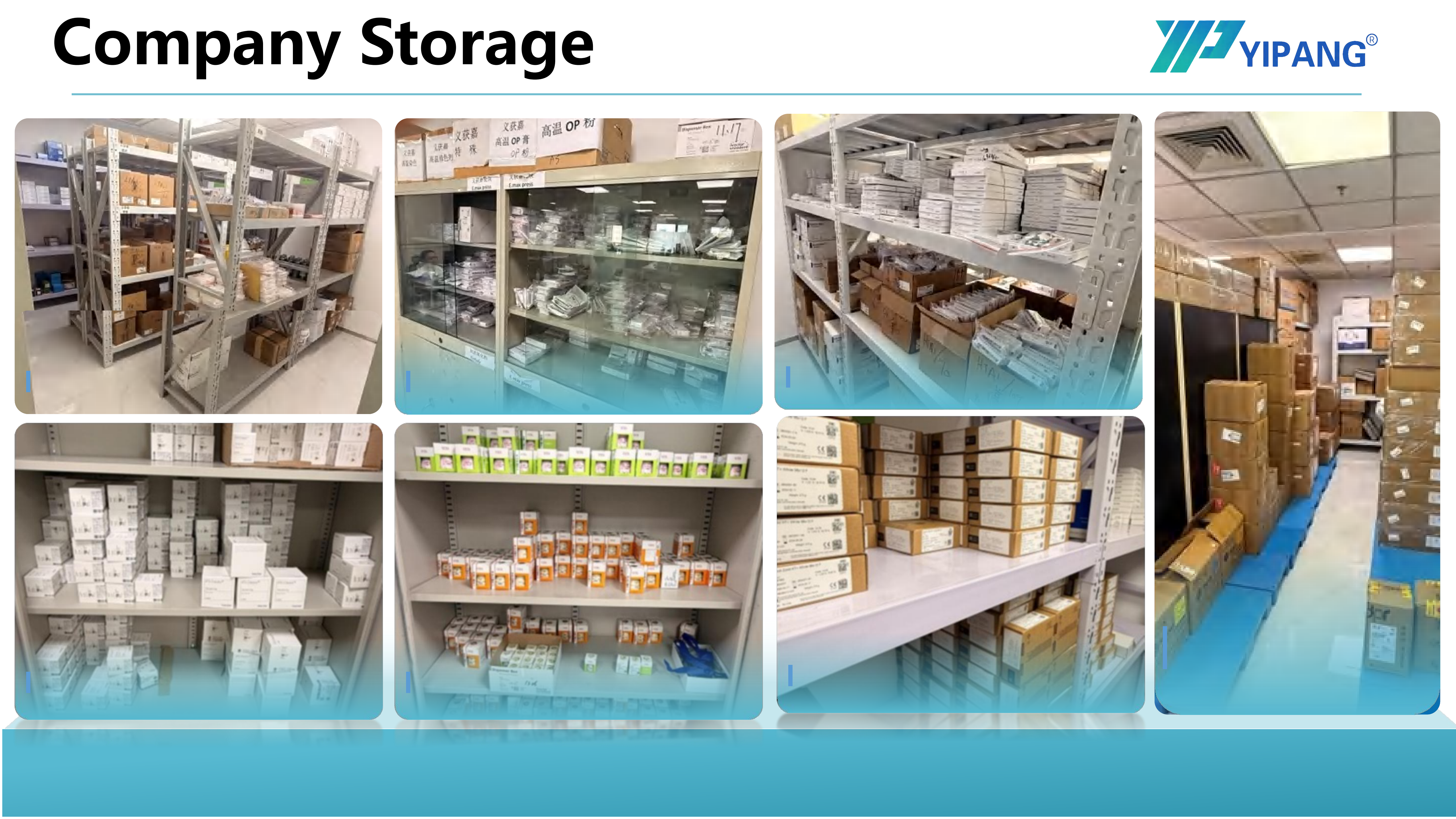
A digital laboratory workspace: the loop runs through one room, and the zirconia block is the element that never leaves it.
Where Dental Zirconia Blocks Sit in the Loop
A dental zirconia block is a disc of yttria-stabilized zirconium dioxide (ZrO₂) that is milled in a soft, partially sintered state and then densified in a furnace. Working with the material means holding two states of the same object in mind: at the start it is a machinable blank; at the end it is a dense ceramic restoration that has shrunk by a defined percentage.
Everything between those two states is compensation. The CAD system applies a shrinkage factor, the mill cuts a slightly oversized geometry, and the sintering program drives the material to full density on a controlled curve. Each of those compensations assumes the block behaves the way it was specified to behave.
Three block properties decide whether that assumption holds:
- Shrinkage consistency. The YIPANG 4D-PRO-ML dental zirconia block provides stable sintering shrinkage error within ±0.3%. When shrinkage deviates, the error appears at the margin and the contact points — the two places a technician cannot easily correct.
- Density uniformity. Uniform density distribution across the disc means the mill meets consistent resistance and produces a cleaner surface, which reduces chipping and micro-crack risk before firing.
- Batch consistency. The block uses high-quality domestic self-developed zirconia powder with stable batch consistency. In a laboratory that mills the same shade repeatedly, batch consistency is what keeps the tenth case looking like the first.
Reference specification used in this article: the YIPANG 4D-PRO-ML zirconia block is supplied as a 98 mm diameter disc in six thicknesses — 10 mm, 12 mm, 14 mm, 16 mm, 18 mm, and 20 mm — in ML multilayer shades. The material is zirconium dioxide with yttria stabilizer; bending strength is ≥1200 MPa and translucency is rated medium translucent. The recommended sintering range is 1430 °C–1450 °C.
Step-by-Step: The Five Stages of the Digital Loop
Stage 1 — Scanning: Capturing Data the Mill Can Trust
Scanning is the stage most laboratories treat as solved, and it is the stage that quietly sets the ceiling for everything else. An intraoral scanner captures the patient directly; a dental lab scanner digitizes a physical model or impression. For edentulous full-arch projects, an edentulous scanbody kit supplies the reference geometry that ties the scan to the implant positions, and the scanbody data becomes the anchor for the whole design.
If the scan lacks detail at the margin, no downstream stage can recover it — not a higher-resolution mill, not a longer sintering cycle. The loop rejects information it never received.
Stage 2 — Design and Nesting: Decisions That Protect the Block
Design converts the scan into a restoration: insertion axis, cement gap, connector cross-section, occlusal thickness. Nesting then decides where that restoration sits inside the disc, and this is the first point where block geometry directly affects cost and outcome.
With an ML multilayer blank, the shade gradient runs through the disc, so the position and orientation of the restoration determine whether the gradient lands where the tooth needs translucency. Thickness selection follows the same logic: a 10 mm disc covers a single anterior crown, while a 20 mm disc is the practical choice for multi-unit bridge segments. A block that is too thin wastes a case; a block that is far too thick consumes material and machine time without improving the result.
Stage 3 — Milling: Matching Block Grade to Machine and Burs
Green-state zirconia is abrasive, and milling burs wear progressively as they cut. The block's density profile therefore shows up as a consumable cost: a disc with uniform density distribution cuts with consistent resistance, so bur wear becomes predictable instead of erratic, and the tool change interval can be planned rather than discovered.
The YIPANG 4D-PRO-ML dental zirconia block is characterized by good compatibility with most mainstream dental milling machines and a low processing failure rate. In a milling center running the machine continuously, that combination matters more than any single performance figure, because unplanned tool failure stops the entire queue rather than a single case.
Stage 4 — Sintering: The Curve That Decides the Final Fit
Sintering is where the compensation applied in CAD is tested. For the 4D-PRO-ML zirconia block, the recommended sintering temperature range is 1430 °C–1450 °C, and the specification sheet lists 1450 °C as the sintering temperature. The standard procedure is deliberately simple:
- Place the milled zirconia workpiece on the sintering tray.
- Set the heating curve up to 1430 °C–1450 °C with the proper holding time.
- Cool down naturally after sintering is complete.
Follow the standard heating and holding procedure to guarantee low shrinkage and stable translucency. Two operating boundaries matter: avoid rapid temperature change to prevent cracking, and do not exceed the maximum sintering temperature. With shrinkage error held within ±0.3%, the marginal fit designed in CAD should survive the furnace intact.
Stage 5 — Finishing: Staining, Glazing, and Polishing
The final stage restores character rather than geometry. Dental staining glaze and dental glaze paste build the surface characterization; a dental porcelain furnace fires that layer onto the sintered framework; dental polishing burs refine the occlusion and margins before delivery. Finishing rarely rescues a case, but it reliably reveals one — a discoloration or a shadow line at this stage usually points back to the block, the sintering curve, or the milling condition, in that order of likelihood.
Use Cases: The Same Loop, Different Laboratory Settings
Zirconia blocks are used consistently across laboratory settings, but the way each setting configures the loop is different, and that difference changes what matters most in block selection.
- Milling centers. These operations sell milling capacity rather than finished cases, so uptime and stock planning dominate. They typically hold multiple thicknesses at once and value predictable machine compatibility and batch-to-batch repetition over any single aesthetic variable.
- Full-service laboratories. These labs run mixed materials through the same room: dental lithium disilicate glass ceramic and press ingots for pressable work, PMMA discs and wax discs for provisionals and try-ins, PEEK discs and titanium alloy discs for specific framework requirements, and metal powder for printed components. Lithium disilicate remains a significant share of all-ceramic work — it represented approximately 28% of all all-ceramic dental restorations globally as of 2024, and the segment is projected to grow from USD 320 million in 2025 to USD 920 million by 2032 at a CAGR of 18.8% (Intel Market Research; Business Research Insights). For these labs, zirconia block consistency determines how easily zirconia work can be scheduled alongside pressable and printed work.
- Chairside and in-office setups. A compact scanner, mill, and furnace support single-unit restorations in a single visit. There is no technician bench to correct deviations, so the block has to deliver a predictable result with minimal operator adjustment.
- University and teaching departments. Teaching environments depend on repeatable material behavior, because students learn by comparing outcomes. A blank that behaves consistently across batches allows an instructor to attribute a result to technique rather than to material variance. Beijing WJH, the company behind YIPANG, has built part of its business on training and consulting services for dental practitioners, including 3D printing and medical technology training — which is one reason the same loop is documented and used across settings from high-volume milling centers to teaching institutions.
Comparison: What Actually Changes the Outcome
Most block comparison sheets differ in layout but not in substance. The table below reduces the decision to the dimensions that change results inside the loop, with the corresponding verified specification for the reference product.
| Decision dimension | Why it matters in the loop | YIPANG 4D-PRO-ML specification |
|---|---|---|
| Shrinkage consistency | Determines marginal fit and contact accuracy after sintering | Stable sintering shrinkage error within ±0.3% |
| Powder and batch consistency | Controls shade and translucency repeatability between orders | High-quality domestic self-developed zirconia powder with stable batch consistency |
| Bending strength | Load-bearing capacity for posterior and multi-unit restorations | ≥1200 MPa |
| Translucency and shade structure | Anterior aesthetics and gradient placement during nesting | Medium translucent, ML multilayer shades |
| Density distribution | Affects chipping risk, surface quality, and bur wear | Uniform density distribution |
| Machine compatibility | Whether the block runs on existing equipment without process changes | Good compatibility with most mainstream dental milling machines; low processing failure rate |
| Geometry coverage | Single units through multi-unit bridge segments | 98 mm diameter; 10, 12, 14, 16, 18, 20 mm thicknesses |
| Sintering window | How the blank behaves in an existing validated furnace program | Recommended range 1430 °C–1450 °C with standard heating and holding procedure |
| Commercial positioning | Cost per finished unit across annual volume | Self-developed domestic powder platform; more competitive price than imported zirconia blocks of equivalent quality |
Because the loop is the same everywhere and the settings differ, the second comparison is about configuration rather than specification.
| Laboratory setting | Typical loop configuration | What matters most in block choice |
|---|---|---|
| Milling center | High-volume milling as a service; multiple thicknesses held in stock | Batch consistency, machine compatibility, uptime |
| Full-service laboratory | Scan, design, mill, and sinter in house, plus ceramics and pressable work | Consistent shrinkage across batches; predictable scheduling alongside other materials |
| Chairside / in-office setup | Compact scanner, mill, and furnace for single-unit restorations | Simple, repeatable results with minimal operator adjustment |
| University / teaching department | Clinical service combined with student training | Repeatable material behavior and clear documentation |
For a laboratory preparing to verify a new source, five checks cover most of the risk:
- Confirm the stated shrinkage error and the sintering range in writing, not in conversation.
- Test more than one blank, so batch consistency is being measured rather than a single disc.
- Run the trial on the laboratory's own validated furnace curve before changing any parameter.
- Verify that the disc format and thickness range match the machine and the case mix.
- Check documentation and intended-use statements for the specific market being served.
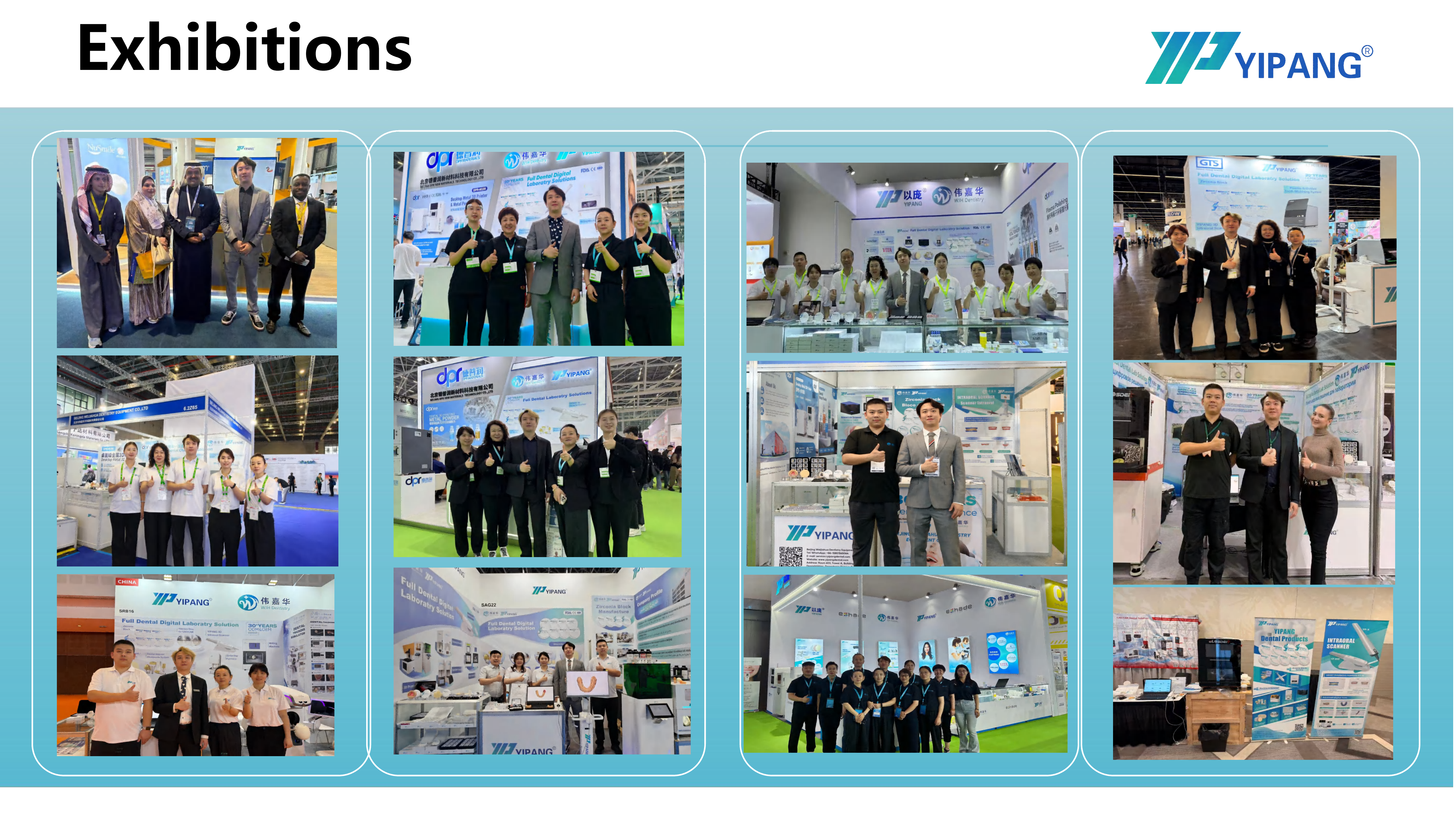
Supplier verification is a documentation exercise: specifications, batch records, and trial results reviewed before switching a production line.
Frequently Asked Questions
Does a dental zirconia block need medical device certification before it can be used in my market?
Within the European Union, the Medical Device Regulation (MDR 2017/745) classifies most dental implants and restorative materials as higher-risk devices, which requires intensive clinical data (European Commission). Compliance is therefore a documentation question rather than a material question. Before committing to a supply agreement, laboratories, milling centers, and importers should confirm the manufacturer's intended-use statement, technical file, and batch traceability for the market they actually serve. Material selection and regulatory clearance should be verified as two separate items.
Can the 4D-PRO-ML dental zirconia block run on the milling machine I already have?
The YIPANG 4D-PRO-ML zirconia block is supplied as a 98 mm diameter disc in thicknesses of 10, 12, 14, 16, 18, and 20 mm, in ML multilayer shades. The material is zirconium dioxide with yttria stabilizer; bending strength is ≥1200 MPa and translucency is rated medium translucent. The block is characterized by good compatibility with most mainstream dental milling machines and a low processing failure rate. For a laboratory already running 98 mm disc-format equipment, the block is designed to be loaded into the existing workflow without changing the machine setup.
Is a more cost-effective zirconia block a compromise on quality?
Not automatically — but the comparison has to be made on measurable points. The YIPANG 4D-PRO-ML block uses high-quality domestic self-developed zirconia powder with stable batch consistency, and its stated position relative to imported blanks is a more competitive price for equivalent quality, with sintering shrinkage error held within ±0.3%. The commercial case is significant at scale: zirconia discs accounted for 63.1% of revenue in the zirconia-based dental materials market in 2025 (Grand View Research), so a per-unit difference compounds quickly across a laboratory's annual volume. Compare shrinkage error, bending strength, translucency grade, and batch repeatability rather than country of origin.
How should a laboratory validate a new zirconia block before switching suppliers?
Run a controlled trial rather than a single test crown. Mill the same CAD design in both the new block and the current block, sinter both on the same validated curve, and compare marginal fit, shade, surface finish, and post-sintering dimensions. Because the decisive variable is batch consistency rather than the performance of one disc, the trial should cover more than one blank and, ideally, more than one shade and thickness. Sample quantities and trial arrangements for the YIPANG 4D-PRO-ML block can be discussed directly with the supplier before a full order is placed.
What should be confirmed about lead time and customization before placing an order?
Two things. First, the shade and thickness mix: because the 4D-PRO-ML block is offered in six thicknesses and ML multilayer shades, confirming the exact combination avoids partial deliveries and dead stock. Second, the delivery route: YIPANG positions flexible customization and shorter delivery time as advantages over imported supply for laboratories and importers. To move from evaluation to ordering, request a quotation, a sample list, and the current product catalog from service@yipangdental.com or +86 158-0156-5064.
Conclusion: The Block Is the Workflow's Constant
Digital dentistry in a working laboratory is one loop repeated thousands of times. Scanning produces the data, design compensates for what sintering will do, milling shapes the green-state blank, sintering densifies it, and finishing delivers the surface. The equipment at each stage is replaceable and largely standardized — the zirconia block is the element that stays constant from one end of the process to the other.
That is why block evaluation belongs in the decision stage rather than the purchasing stage. A block specified with sintering shrinkage error within ±0.3%, uniform density distribution, ≥1200 MPa bending strength, medium translucency, and compatibility with most mainstream milling machines reduces the number of variables a laboratory has to manage. A block without those guarantees simply moves the uncertainty downstream, where it becomes a remake.
Whether the setting is a high-volume milling center, a full-service laboratory, or a university department, the evaluation procedure is the same: confirm the specification in writing, test across batches, run the trial on your own furnace curve, and verify the documentation for your market.
Next Step: Sample, Quotation, and Full Catalog
YIPANG supplies the 4D-PRO-ML dental zirconia block and a full digital dentistry range — glass ceramics, press ingots, PMMA, wax, titanium blocks, implant abutments, scanners, milling machines, 3D printers, and sintering furnaces — through Beijing Weijiahua Dentistry Equipment Co., Ltd.
Contact: Jaye Yang · service@yipangdental.com · Tel / WhatsApp: +86 158-0156-5064 · Chat on WhatsApp
Download:WJH Company Information (PDF catalog)
For technical articles, workflow guides, and updated product documentation, visit blog.yipangdental.com.
Have Questions or Need More Details?
Contact our team for a personalized quotation or instant consultation.
Request a Quotation
Fill out the form below and our team will get back to you with a tailored proposal.
WhatsApp Direct Chat
Prefer to chat in real-time? Message us on WhatsApp for instant assistance & quick answers.
- Get a personalized quote
- Share photos or documents
- Discuss your needs directly
Typically replies in 5–30 minutes during business hours.