Dental Zirconia Blocks in Hybrid Digital Workflows: How Milling Integrates with Resin Model Printing
Direct answer: In a hybrid dental workflow, a dental zirconia block and a 3D-printed resin model do two different jobs inside the same case. The printer produces the model and dies the technician verifies fit against; the zirconia block is milled into the final crown, bridge or implant superstructure and then sintered. Integration between the two halves depends on three things: a block whose sintering shrinkage is stable and repeatable, a sintering profile that matches that block, and a printed model that stays dimensionally consistent with the CAD design.
Most dental laboratories no longer treat printing and milling as competing technologies. A resin printer delivers fast, low-cost models and dies; a milling machine turns a dense blank into a restoration that can carry occlusal load. This guide looks at the second half of that chain — the dental zirconia block — and at the exact points where it has to agree with the printing half.
The reference product used throughout is YIPANG's 4D-PRO-ML zirconia block: a 98 mm CAD/CAM milling blank made from yttria-stabilized zirconium dioxide, supplied in ML multilayer shades across six thicknesses, with a stipulated sintering temperature of 1450 °C.
Problem Definition: Where Hybrid Digital Workflows Lose Accuracy
Hybrid workflows rarely fail because a milling machine or a 3D printer is poorly built. They fail at the interface — the point where a printed resin model and a milled zirconia restoration have to fit the same prepared tooth. Four causes come up again and again.
- Sintering shrinkage that is not repeatable. Zirconia is milled in a porous green state and densified in the furnace, so the finished restoration is smaller than the milled blank. If shrinkage varies, a crown that seated on the printed die before sintering will not seat afterwards.
- A sintering profile set by habit rather than by material. Rapid temperature change can crack a zirconia workpiece, and exceeding the maximum sintering temperature puts a case at risk before it ever reaches the printed model.
- A printed model treated as a reference without calibration. A resin model and die are manufactured parts with their own tolerances. When a margin is open on the printed die, technicians often adjust the more expensive milled restoration instead of checking the print or the scan first.
- Block selection that ignores the unit being made. A single crown, a multi-unit bridge and an implant superstructure need different blank geometry; using one thickness for every case either wastes material or constrains nesting.
The material side carries its own failure mode as well. Chipping and cracks after zirconia sintering typically trace back to an improper sintering profile or to defects inside the blank itself. Both are manageable: follow the recommended profile, inspect blanks before sintering, and scrap any chipped or cracked blank rather than using it in a final restoration.
Industry Background: Milling Carries the Load, Printing Grows Fast
Published market data explains why so many laboratories ended up running both streams at once.
Zirconia remains overwhelmingly a milled material. Grand View Research reports that CAD/CAM milling accounted for 82.4% of the revenue generated by zirconia dental manufacturing processes in 2025. Within the zirconia-based dental materials market, zirconia discs held the largest revenue share at 63.1% in 2025, and the 3Y-TZP grade accounted for 35.9% of that market. Dental laboratories remained the dominant end user, at 45.3% of the market in 2025.
The printing side is expanding faster from a smaller base. Grand View Research estimates the dental 3D printing market at USD 4.9 billion in 2025, growing to USD 26.7 billion by 2033, with photopolymer resins holding 55.5% of the dental 3D printing material segment in 2025 — the material category that supplies printed models and dies. Fortune Business Insights values the dental milling machine market at USD 2.45 billion in 2025 and expects it to reach USD 3.9 billion by 2030, and identifies Roland DG, Amann Girrbach and vhf camfacture as significant market share holders in that sector as of 2024.
Zooming out, the same research places the global zirconia-based dental materials market at USD 1.2 billion in 2025, projected to reach USD 2.3 billion by 2033, with the United States accounting for 40% of that revenue. For context, Intel Market Research projects the dental lithium disilicate market to grow from USD 320 million in 2025 to USD 920 million by 2032 at an 18.8% CAGR, and Business Research Insights reports that lithium disilicate represents approximately 28% of all all-ceramic dental restorations globally as of 2024.
Taken together, those figures describe a lab floor where a printer and a mill sit side by side — and where the zirconia block loaded into the mill decides how the case ends.
Detailed Solution: A Block Built for the Milling Half of the Chain
The manufacturer behind the block
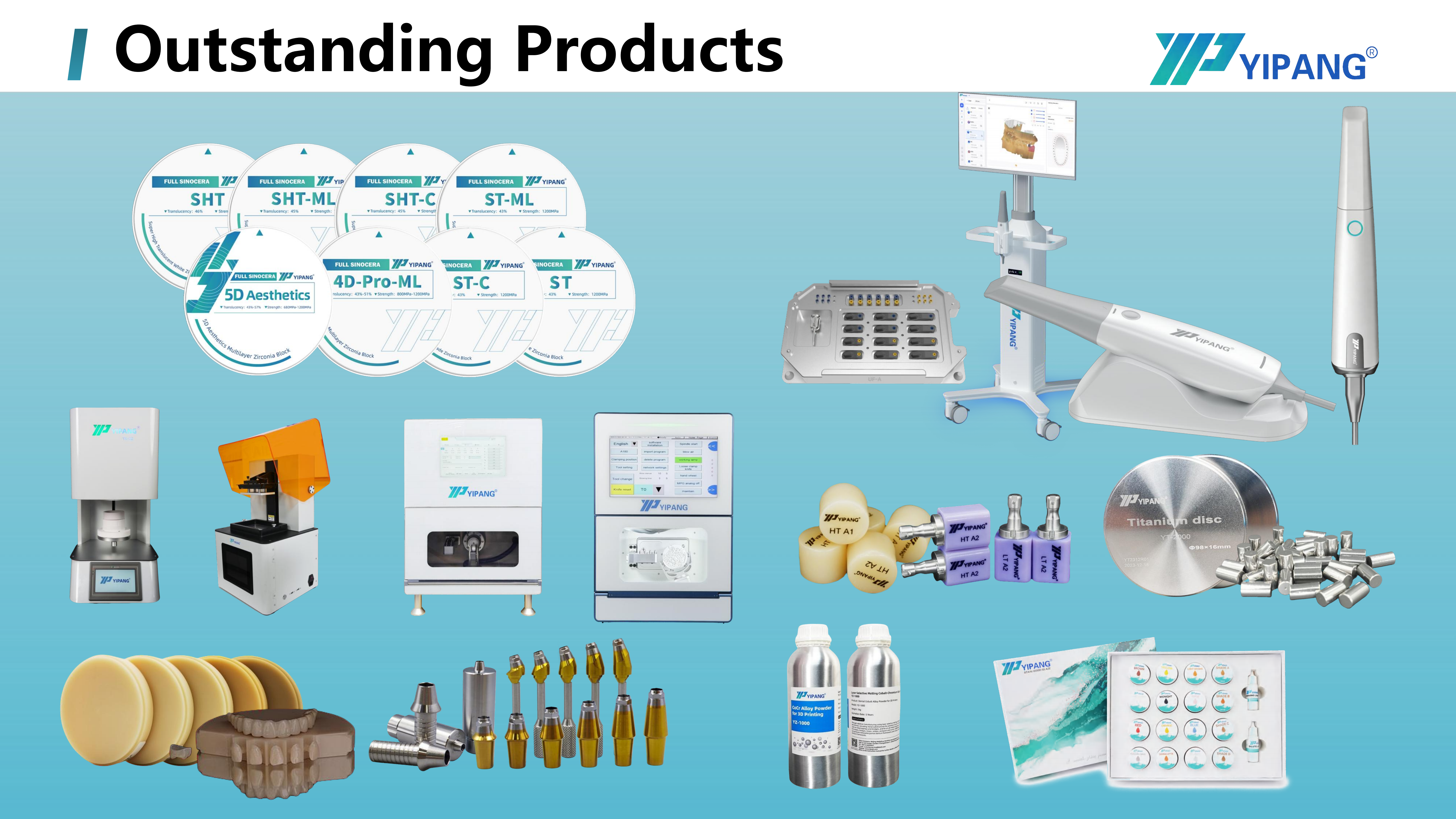
YIPANG is the self-developed brand of Beijing Weijiahua Dentistry Equipment Co., Ltd., a dental materials and equipment company established in 1996 and based in Beijing, China. Its product lines include zirconia blocks, glass ceramics, press ingots, PMMA, wax, titanium blocks, implant abutments, 3D scanners, intraoral scanners, milling machines, 3D printers and sintering furnaces, so a laboratory building a hybrid workflow can source several stages of it from one supplier.
4D-PRO-ML specification at a glance
Values below are the published parameters for the 4D-PRO-ML dental zirconia block.
| Parameter | Published value |
|---|---|
| Product type | Dental zirconia disc / CAD/CAM dental milling blank |
| Material | Zirconium dioxide (ZrO₂), yttria stabilized |
| Available shades | ML multilayer |
| Diameter | 98 mm |
| Thickness | 10 mm, 12 mm, 14 mm, 16 mm, 18 mm, 20 mm |
| Sintering temperature | 1450 °C |
| Bending strength | ≥1200 MPa |
| Translucency | Medium translucent |
| Intended restorations | Full-contour crowns, bridges, veneers and implant superstructure restorations |
| Applicable industry | Dental laboratory, dental prosthetics, dental CAD/CAM |
Three of those values matter most in a hybrid setup. The 98 mm diameter is a blank format the lab's milling machine is configured to hold. The six-step thickness range lets a technician choose a blank that matches the number of units being nested, from a single crown through to implant superstructure work. The stated sintering temperature gives the furnace operator a defined target instead of an estimate.
How the block connects to a resin-printing workflow
Integration is easiest to see when it is described as a chain of hand-offs:
- Scan to design. A dental lab scanner or an intraoral scanner captures the preparation. The matched equipment set published for this material is a dental milling machine, a dental sintering furnace and a dental lab scanner.
- Design to print. The CAD file is split: model and die geometry goes to the 3D printer, restoration geometry goes to the mill.
- Design to mill. The restoration is milled from the zirconia block in its green state and left oversized according to the material's sintering shrinkage.
- Mill to model. After sintering, the restoration is verified against the printed model — which is why uniform translucency and stable sintering shrinkage matter more than any single headline number.
4D-PRO-ML is described by the manufacturer as compatible with most CAD/CAM systems, with uniform translucency and stable sintering shrinkage. In practice, that is the property a hybrid lab is buying: a block that behaves the same way on Tuesday as it did on Monday, so the printed model remains a valid reference for fit checks.
Sintering: the step that decides whether the chain holds
The recommended sintering temperature range for 4D-PRO-ML is 1430 °C–1450 °C, following a standard heating and holding procedure to keep shrinkage low and translucency stable. The published procedure is deliberately short:
- Place the milled zirconia workpiece on a sintering tray.
- Set the heating curve up to 1430 °C–1450 °C with the proper holding time.
- Cool down naturally once sintering is complete.
Two safety notes accompany that procedure: avoid rapid temperature change to prevent cracking, and do not exceed the maximum sintering temperature. Where chipping or cracks do appear after sintering, the two typical triggers are an improper sintering profile and defects inside the blank — which is why blank inspection before sintering belongs in the workflow, and why a cracked or chipped blank should be scrapped rather than salvaged into a final restoration.
OEM, ODM and production capability for labs and distributors
Laboratories that want blocks under their own label, and distributors that need a private-label zirconia line, use the same production route. The manufacturer provides both OEM and ODM production services, and almost all specifications can be customized, including custom product development and private labeling. OEM and ODM production serves clients in the USA, Europe, Brazil, the Middle East and North Africa.
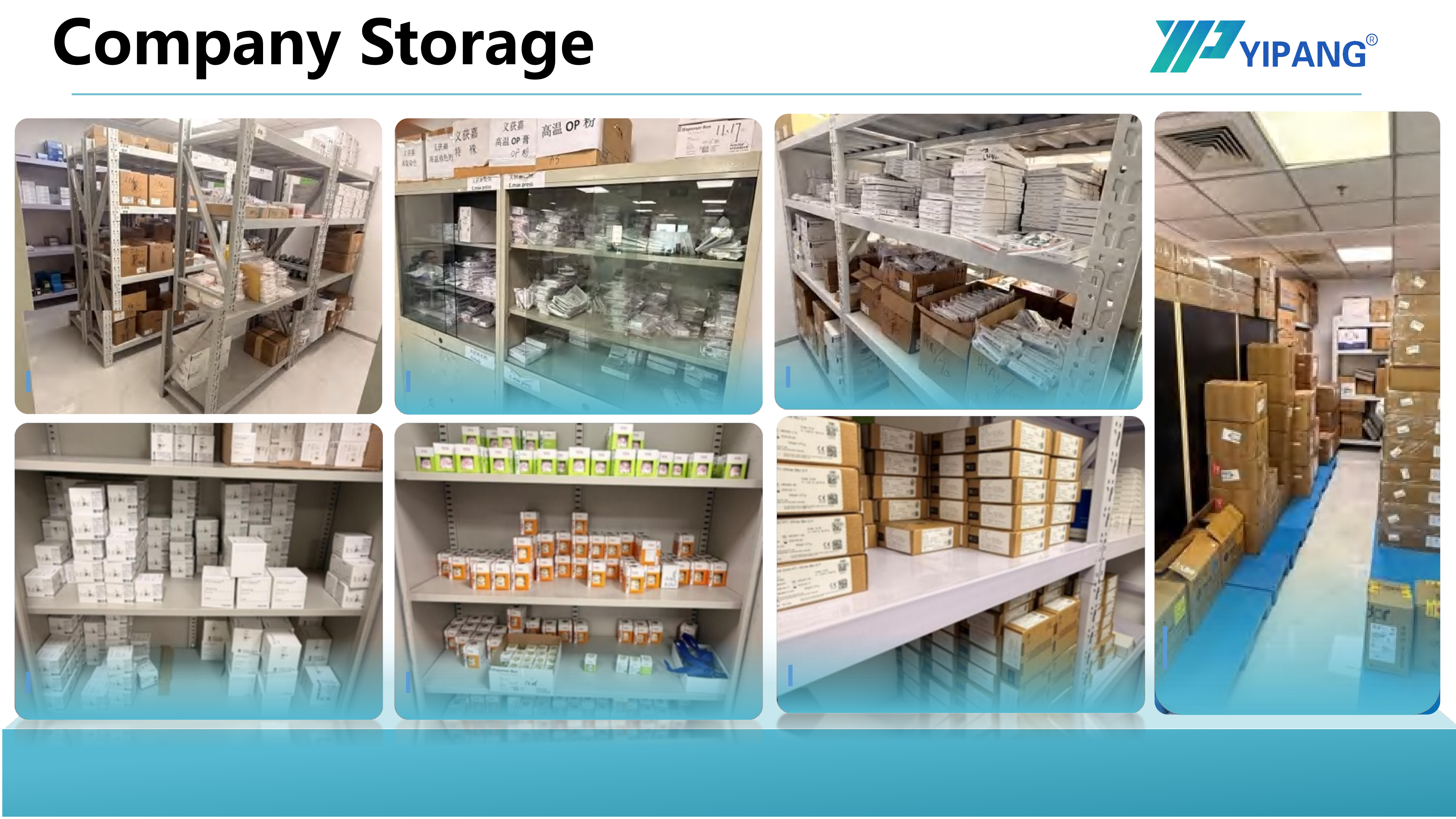
Behind those services sit a monthly capacity of 15,000 pieces, a lead time of 15–30 working days and a negotiable small MOQ. Quality control combines 100% raw material inspection with random inspection of finished products, and after-sales support is delivered as online technical guidance with a response within 24 hours.
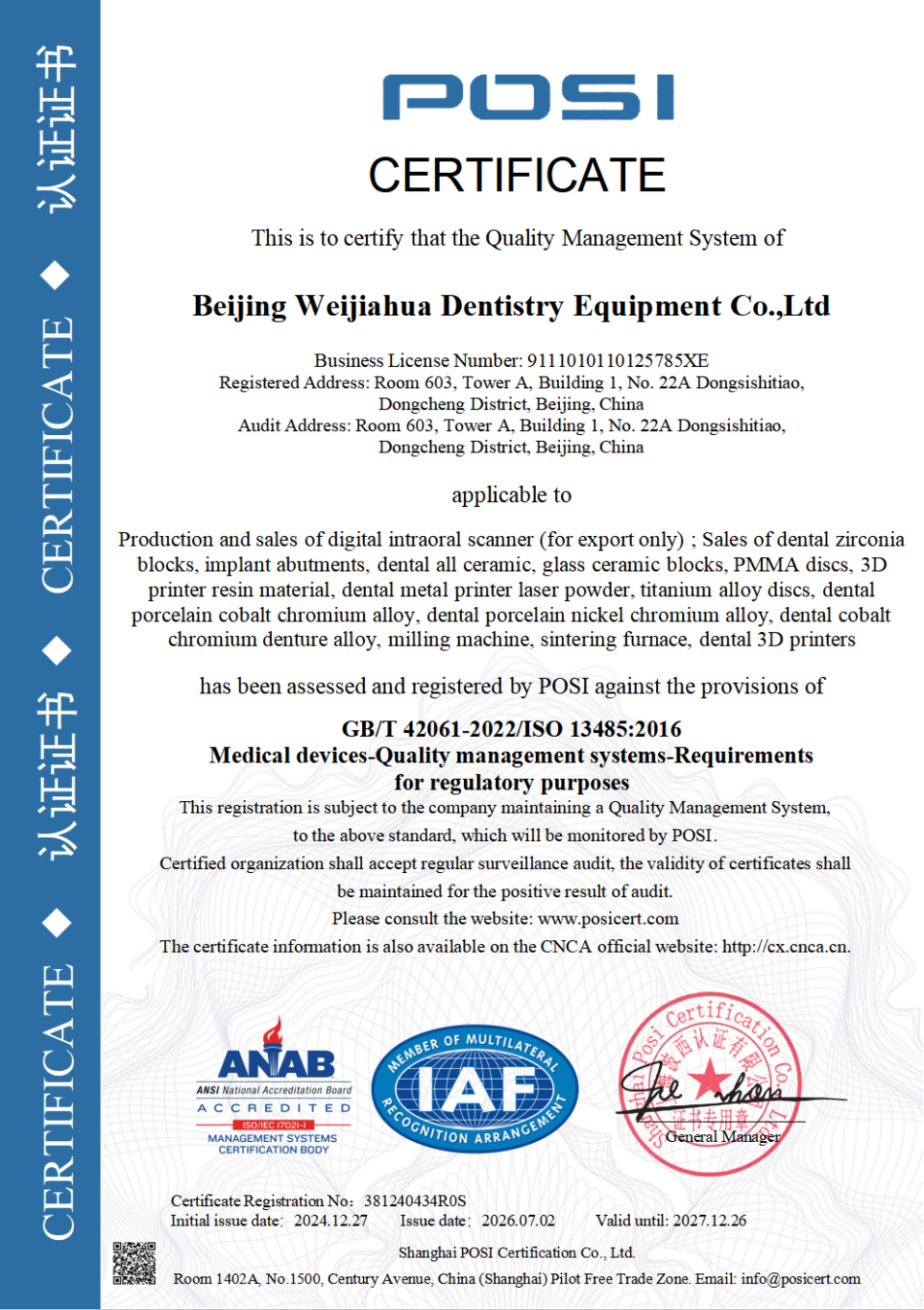
Compliance documentation begins with ISO 13485. Certificate 381240434R0S was issued by Shanghai POSI Certification Co., Ltd. on 27 December 2024 and is valid until 26 December 2027 against GB/T 42061-2022 / ISO 13485:2016, with a scope covering the design, production and sales of dental medical materials and dental equipment. A separate EU Declaration of Conformity under MDR 2017/745 (SRN: CN-MF-000045919, issued 1 April 2026) covers intraoral scanner models YP-X and YP-800 as Class I medical devices. Buyers should always match a certificate's scope and model coverage to the exact item being purchased; the European Commission notes that MDR 2017/745 places most dental implants and restorative materials in higher-risk classes that require intensive clinical data.
Step-by-Step Breakdown: One Case Through a Hybrid Workflow
- Capture the case digitally. The preparation is recorded with an intraoral scanner in the clinic or a dental lab scanner in the laboratory. This file is the single source of truth for both the printed model and the milled restoration.
- Design in CAD. The restoration is shaped, the cement gap and die spacer are set, and the case is planned for both outputs: what will be printed and what will be milled.
- Print the model and dies. A dental 3D printer and photopolymer resin produce the working model and individual dies. Photopolymer resins held 55.5% of the dental 3D printing material segment in 2025, which makes them the default material for this stage of a hybrid chain.
- Select and mill the zirconia block. Blank thickness is matched to the case; 4D-PRO-ML runs from 10 mm to 20 mm on a 98 mm disc. Milling happens in the green state, oversized by the material's sintering shrinkage.
- Sinter at the recommended profile. 1430 °C–1450 °C with a standard heating and holding curve, natural cooling afterwards, no rapid temperature change and no excursion above the maximum sintering temperature. Inspect the blank before it goes into the furnace.
- Verify fit on the printed model. Check marginal fit and contacts against the printed die. If a margin is open, verify the printed die and the scan before adjusting the milled restoration — in a hybrid chain, the cheaper part should be re-checked first.
- Finish and glaze. Characterization, glaze firing and polishing complete the restoration, which then returns to the clinic for seating on the patient.
Use Cases: Where a Printed Model Plus a Milled Zirconia Restoration Earns Its Place
High-volume crown and bridge laboratories
4D-PRO-ML is recommended for high-volume dental labs. It is made from Sinocera powder with stable shade consistency, and it is positioned for posterior crowns and multi-unit bridges — the case types where mechanical strength and translucency have to be balanced rather than traded against each other.
Multi-unit bridges and implant superstructure work
The stated applications of the block are full-contour crowns, bridges, veneers and implant superstructure restorations, and the same manufacturer's range includes implant abutments for the restorative side of those cases. Where a printed model carries the implant analogue and the position of the interface, the milled superstructure is verified against that printed model before delivery.
Laboratories adding digital capacity in stages
Because the same product range covers 3D scanners, intraoral scanners, milling machines, 3D printers and sintering furnaces alongside the consumables, a lab can add the printing stage first and the milling stage later without changing where its restorations come from.
Distributors and private-label brands
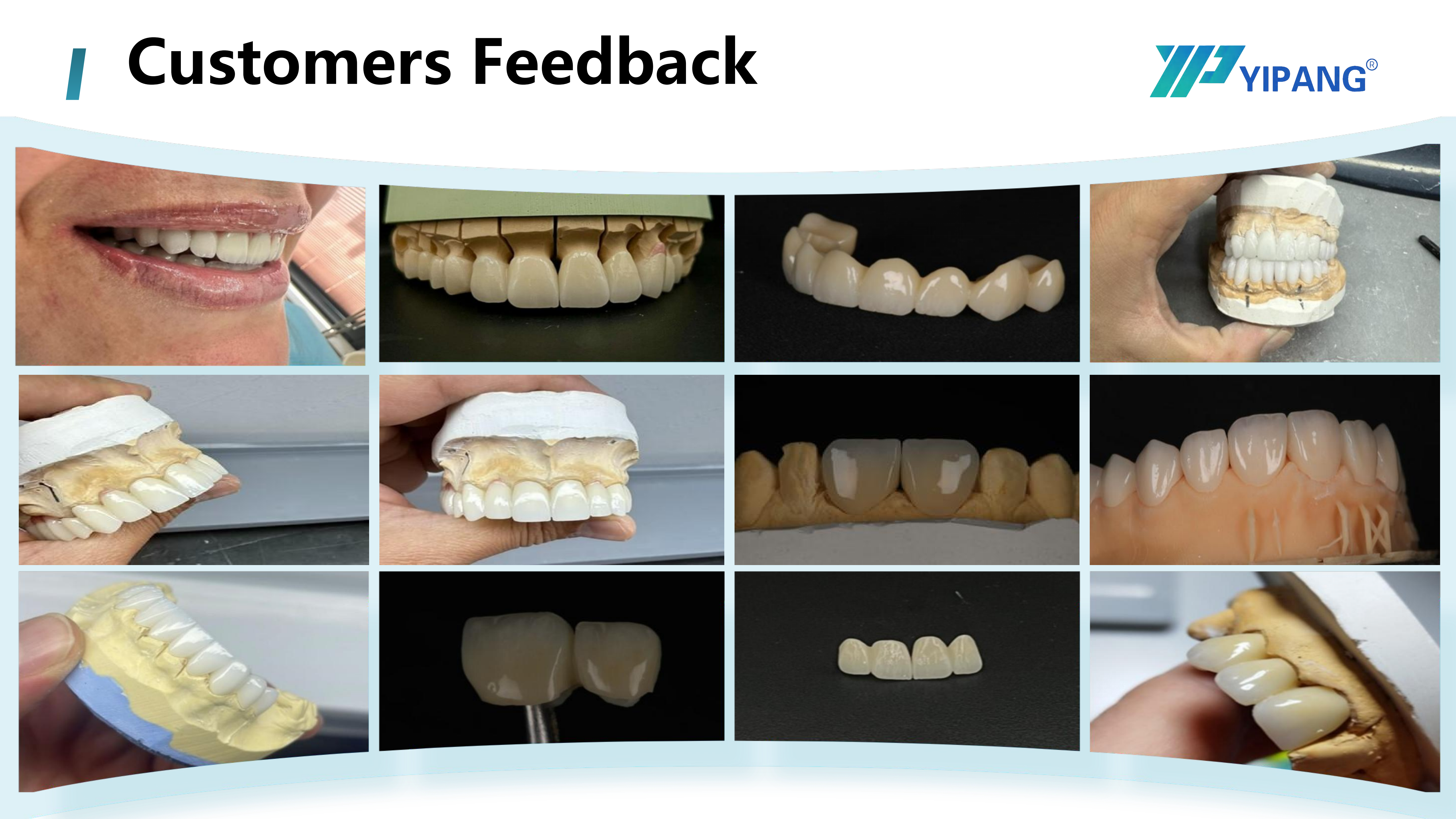
Existing cooperation covers dental laboratories, dental clinics and distributors, with hundreds of long-term cooperative clients worldwide. The reported strengths of the material in those relationships are uniform translucency, stable sintering shrinkage and compatibility with most CAD/CAM systems, with high recognition on material stability and aesthetic effect and a low customer complaint rate.
Comparison: Where Each Half of the Hybrid Workflow Sits
The table below maps the workflow stages to the equipment and the published market or product evidence behind each one.
| Workflow stage | Primary equipment | Output | Published reference |
|---|---|---|---|
| Digital capture | Dental lab scanner or intraoral scanner | Digital model | Dental lab scanner is part of the matched equipment set published for 4D-PRO-ML |
| Model and die fabrication | Dental 3D printer with photopolymer resin | Printed working model and dies | Photopolymer resins held 55.5% of the dental 3D printing material segment in 2025 (Grand View Research) |
| Restoration fabrication | Dental milling machine with a dental zirconia block | Green-state crown, bridge or superstructure | CAD/CAM milling accounted for 82.4% of zirconia dental manufacturing process revenue in 2025 (Grand View Research) |
| Densification | Dental sintering furnace | Sintered zirconia restoration | Recommended sintering range of 1430 °C–1450 °C for 4D-PRO-ML |
| Finishing | Characterization and glaze firing | Completed restoration | Full-contour crowns, bridges, veneers and implant superstructures are the stated applications |
Two material streams compete and cooperate inside the same lab, so their published market positions are worth comparing directly.
| Segment | 2025 value | Forecast | Share data | Source |
|---|---|---|---|---|
| Zirconia-based dental materials | USD 1.2 billion | USD 2.3 billion by 2033 | Zirconia discs: 63.1% of revenue; 3Y-TZP grade: 35.9% | Grand View Research |
| Dental 3D printing | USD 4.9 billion | USD 26.7 billion by 2033 | Photopolymer resins: 55.5% of the material segment | Grand View Research |
| Dental milling machines | USD 2.45 billion | USD 3.9 billion by 2030 | Roland DG, Amann Girrbach and vhf camfacture identified as significant market share holders as of 2024 | Fortune Business Insights |
| Dental lithium disilicate | USD 320 million | USD 920 million by 2032 (18.8% CAGR) | Approximately 28% of all-ceramic restorations globally as of 2024 | Intel Market Research; Business Research Insights |
For a lab, the practical reading of those numbers is straightforward: the printing stream gives the model, and the zirconia stream — still the dominant milling material — gives the restoration.
FAQ: OEM Zirconia Blocks, Compliance, Budget, Samples and Lead Time
Is YIPANG dental zirconia block production certified for medical device markets?
Yes. YIPANG's manufacturer, Beijing Weijiahua Dentistry Equipment Co., Ltd., holds ISO 13485 certificate 381240434R0S, issued by Shanghai POSI Certification Co., Ltd. on 27 December 2024 and valid until 26 December 2027. It is issued against GB/T 42061-2022 / ISO 13485:2016 and covers the design, production and sales of dental medical materials and dental equipment. A separate EU Declaration of Conformity under MDR 2017/745 (SRN: CN-MF-000045919, issued 1 April 2026) covers intraoral scanner models YP-X and YP-800 as Class I medical devices. Labs and importers should confirm that the certificate scope matches the exact product they purchase.
Can a CAD/CAM dental lab order OEM dental zirconia blocks with custom specifications?
Yes. The manufacturer provides both OEM and ODM production services for CAD/CAM dental labs, and almost all specifications can be customized, including custom product development and private labeling. The standard reference product is the 4D-PRO-ML dental zirconia block: a 98 mm disc in ML multilayer shades, available in 10 mm, 12 mm, 14 mm, 16 mm, 18 mm and 20 mm thicknesses, with a bending strength of ≥1200 MPa, medium translucency and a stipulated sintering temperature of 1450 °C. OEM and ODM production serves clients in the USA, Europe, Brazil, the Middle East and North Africa.
What are the MOQ, payment and delivery terms?
MOQ is 1 box for standard models and 5 boxes for customized products. Domestic orders ship by express delivery; export orders ship by sea or air freight, with FOB Shanghai/Tianjin available. Payment terms are full payment before shipment. On receipt, buyers should check quantity immediately: damage or deformation must be reported within 48 hours with photos, and sampling tests are supported.
Can a lab validate a zirconia block before committing to a full batch?
Yes. Sampling tests are supported, and acceptance is based on a quantity check at receipt plus a 48-hour reporting window for damage or deformation with photographic evidence. Validation matters most in a hybrid workflow, because the milled and sintered restoration is fitted against the lab's own printed model: a sample batch confirms that the block's sintering behavior matches the lab's furnace profile before a full order is placed.
What are the production lead time, monthly capacity and after-sales support?
Lead time is 15–30 working days, with a monthly capacity of 15,000 pieces and a negotiable small MOQ. Quality control is 100% raw material inspection plus random inspection of finished products, and after-sales support is delivered as online technical guidance with a response within 24 hours. To start an evaluation, labs and distributors can request a sample or a quote at service@yipangdental.com or on WhatsApp at +86-158-0156-5064, and download the company brochure for the full product and capability overview.
Conclusion: The Hybrid Chain Is Only as Good as Its Interface
Resin printing and zirconia milling solve different problems in the same case. The printer gives a lab fast models and dies that can be reproduced on demand; the zirconia block gives a dense, high-strength restoration. What determines the outcome is not either machine on its own, but the interface between them: stable sintering shrinkage from the block, a sintering profile that is followed rather than improvised, and a printed model that is treated as a calibrated part instead of an unquestioned reference.
For labs operating that interface daily, the selection criteria are concrete. Choose a block whose diameter matches the mill's blank format, whose thickness range covers the units being nested, and whose published sintering window can be reproduced in the lab's own furnace. Then confirm the production side — ISO 13485 coverage for the products being ordered, OEM or ODM support where private labeling is required, capacity that matches case volume, and a documented lead time that the supplier is willing to commit to.
Next Step for Labs and Distributors
If you are evaluating a zirconia block for a hybrid workflow that combines resin model printing with milled restorations, the fastest path is a sample run on your own printer and furnace. Request a sample or a quotation for the 4D-PRO-ML dental zirconia block.
Email: service@yipangdental.com · WhatsApp / Tel: +86-158-0156-5064 · Website: www.yipangdental.com
Company brochure (download): WJH Company Information
YIPANG · Beijing Weijiahua Dentistry Equipment Co., Ltd., Room 603, Tower A, Building 1, No. 22A Dongsishitiao, Dongcheng District, Beijing, China.
Have Questions or Need More Details?
Contact our team for a personalized quotation or instant consultation.
Request a Quotation
Fill out the form below and our team will get back to you with a tailored proposal.
WhatsApp Direct Chat
Prefer to chat in real-time? Message us on WhatsApp for instant assistance & quick answers.
- Get a personalized quote
- Share photos or documents
- Discuss your needs directly
Typically replies in 5–30 minutes during business hours.