Dental Zirconia Blocks: Edentulous to Implant Bridge Milling
Dental Zirconia Blocks in Full-Mouth Rehabilitation: From Edentulous Scan to Implant Bridge Milling
Full-mouth rehabilitation is not a scaled-up single-crown case. When a prosthodontic team rebuilds an entire arch across implants, prepared abutments, or a combination of both, the Dental Zirconia Block stops being a material line item and becomes a process variable. This guide follows that process end to end — edentulous scan, CAD design, implant bridge milling, sintering, finishing, and delivery — and explains what the documented specifications of a full-arch zirconia blank mean at multi-unit scale, how labs verify a blank before committing a case to it, and what to look for when shortlisting Dental Zirconia Block suppliers.
What a Full-Mouth Rehabilitation Case Actually Asks of a Zirconia Block
Full-mouth rehabilitation means restoring the complete dentition of one or both arches, usually as a combination of implant-supported frameworks and multi-unit crown-and-bridge work. The material requirement changes for four concrete reasons.
Span length changes everything about the blank. A single crown occupies a few centimetres of a disc. A full-arch implant bridge can span the whole 98 mm working area of a standard blank, and its thickest section — the connector between the terminal implant and the pontic block — determines what thickness the lab must order. Because YIPANG 4D-PRO-ML is supplied in 10 mm, 12 mm, 14 mm, 16 mm, 18 mm and 20 mm thickness options, thickness selection is a yield decision made before milling, not an afterthought.
Shrinkage accumulates across the arch. Every milled piece shrinks during sintering, and in a one-piece full-arch framework those small movements add up from the first abutment to the last. A blank documented as having a low shrinkage rate after sintering and high dimensional accuracy reduces how much of that cumulative deviation the technician has to recover at the fit stage.
Esthetics have to hold across a gradient. In a full-arch case the restoration is read as one continuous surface from the cervical margin to the incisal edge. Multi-layer blanks such as the ML multilayer shade option of 4D-PRO-ML are designed around that gradient translucency, so the transition does not reset at each unit.
Sintering has to be repeatable, not lucky. A full-arch framework is the most expensive piece on the sintering tray. The application standard for this material is explicit: processing must strictly follow the standard sintering temperature curve. That single constraint is the reason clinics receiving full-arch zirconia restorations ask labs about furnace discipline rather than about shade names.
Industry Background: Full-Arch Work Has Become Milled Zirconia Work
Zirconia is not a niche material choice in digital prosthodontics — it is the structural default. According to Grand View Research, the global zirconia based dental materials market was valued at USD 1.2 billion in 2025 and is projected to reach USD 2.3 billion by 2033. Within that market, zirconia discs held the largest revenue share at 63.1% in 2025, and CAD/CAM milling accounted for 82.4% of the zirconia dental manufacturing process revenue in the same year.
Two further data points explain why full-arch work concentrates in this format. First, dental labs remain the dominant end user for zirconia materials, accounting for 45.3% of market share in 2025 — full-arch frameworks are lab-fabricated products, not chairside single units. Second, within the material grade mix, 3Y-TZP zirconia held the largest revenue share at 35.9% in 2025, the grade family that high-strength structural frameworks are built on.
The regional pattern is equally relevant for labs quoting international work. The United States accounts for 40% of the revenue in the global zirconia based dental materials market, which means US-facing full-arch cases typically expect documentation and process control that match that level of commercial exposure.
Zirconia is not the only material in a full-mouth case. For context, lithium disilicate accounts for approximately 28% of all-ceramic dental restorations globally as of 2024 (Business Research Insights), and the global dental lithium disilicate market is projected to grow from USD 320 million in 2025 to USD 920 million by 2032 at a CAGR of 18.8% (Intel Market Research). Most full-mouth protocols therefore treat zirconia and glass-ceramic as complementary, not competing, options.
The Solution for Full-Arch Cases: YIPANG 4D-PRO-ML in a Digital Lab Chain
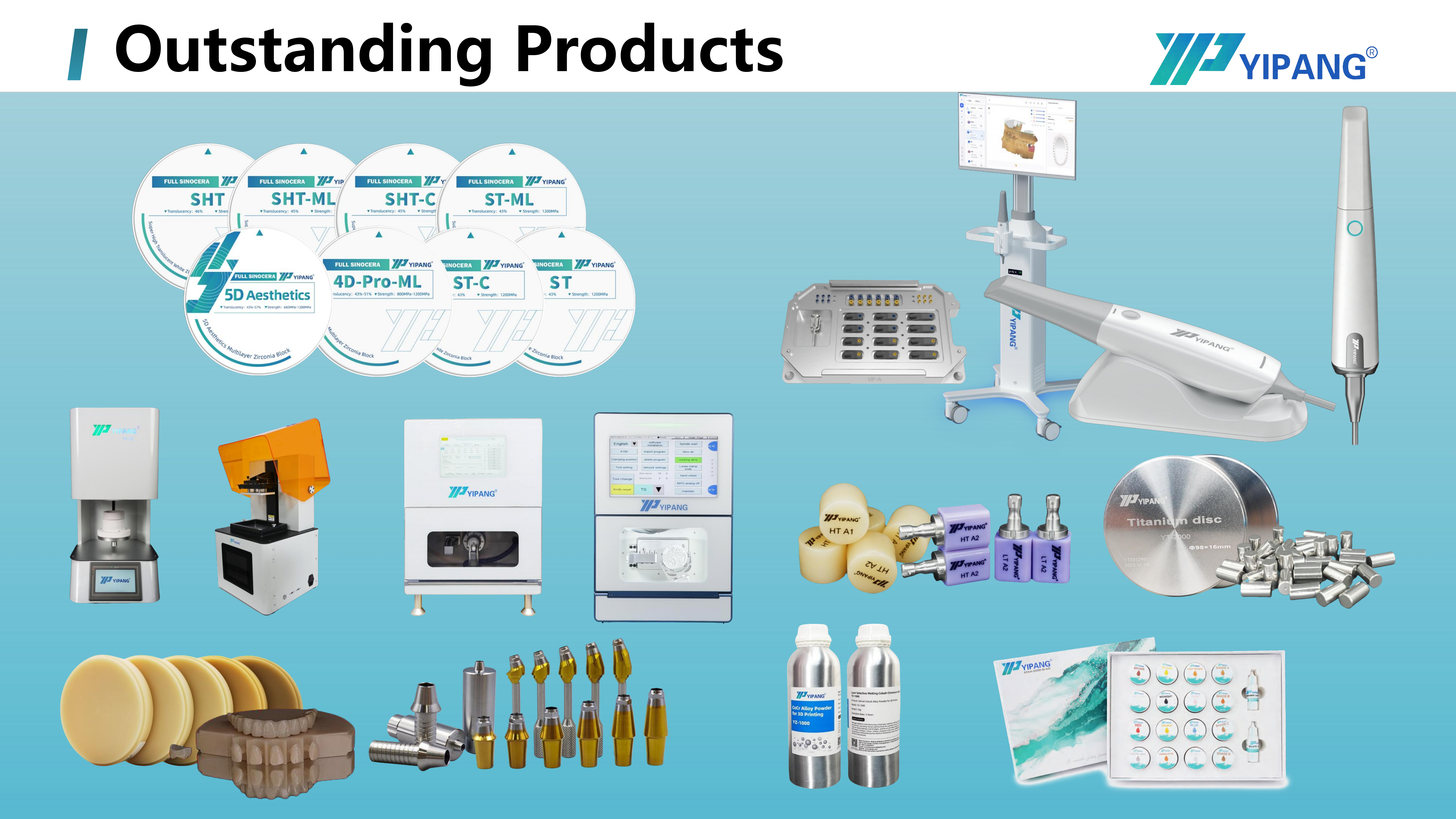
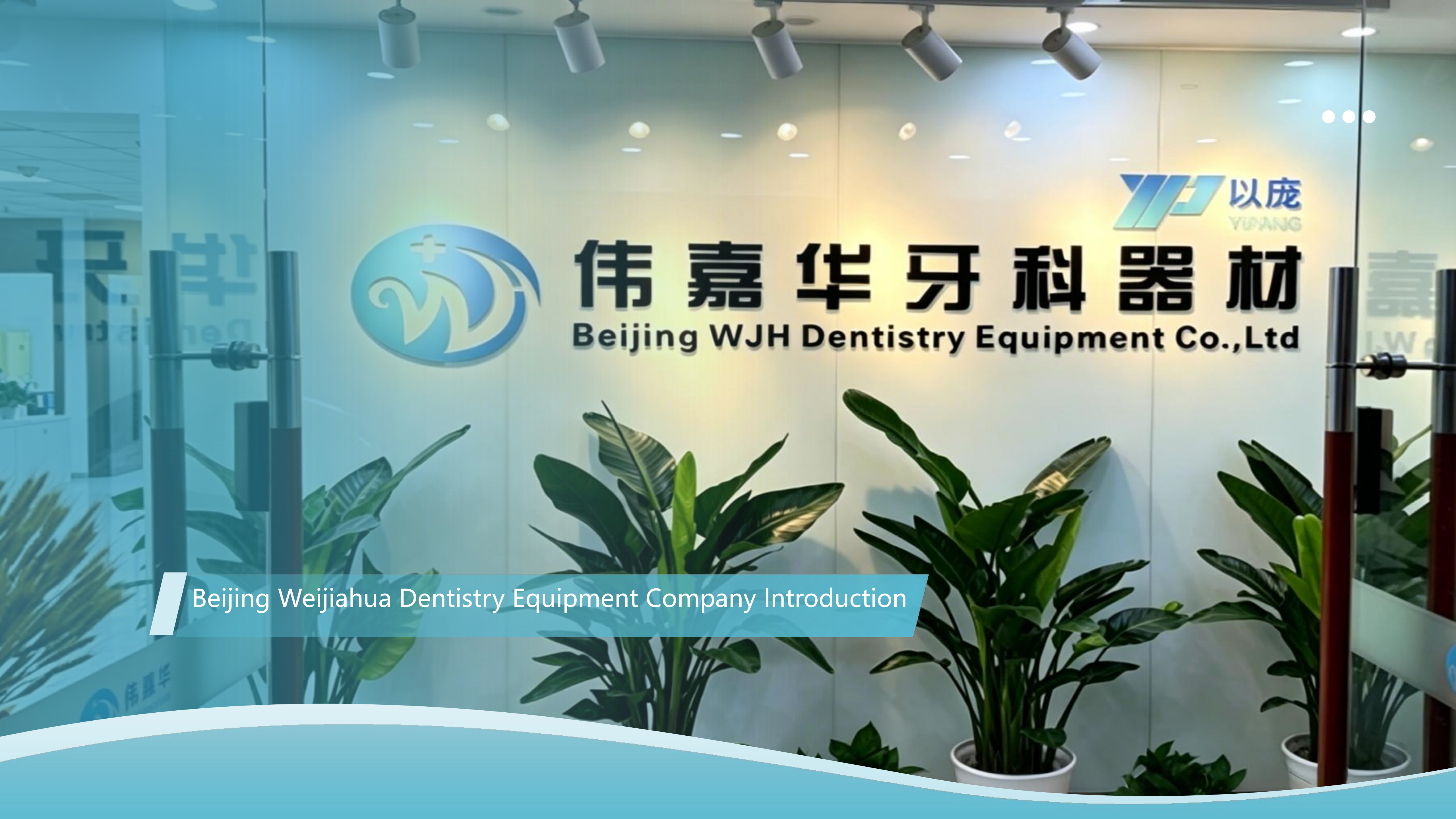
YIPANG is a self-developed brand owned by Beijing WJH Dentistry Equipment Company. Beijing Weijiahua Dentistry Equipment Co., Ltd., established in 1996, is a manufacturer in the dental industry with over 25 years of experience. Its product lines include Zirconia Blocks, Glass Ceramics, Press Ingots, PMMA, Wax, Titanium Blocks, Implant Abutments, 3D Scanners, Intraoral Scanners, Milling Machines, 3D Printers, and Sintering Furnaces — which matters for full-arch projects because a full-mouth case consumes most of that list in a single workflow.
YIPANG 4D-PRO-ML — documented specifications
- Product name:Zirconia Blocks for Dental Prosthesis
- Model: 4D-PRO-ML
- Classification: Dental Zirconia Disc, CAD/CAM Dental Milling Blank
- Material: Zirconium Dioxide (ZrO₂) with Yttria Stabilized
- Available shades: ML Multilayer
- Diameter: 98 mm
- Thickness: 10 mm, 12 mm, 14 mm, 16 mm, 18 mm, 20 mm
- Sintering temperature: 1450 ℃ (recommended working range 1430 ℃–1450 ℃)
- Bending strength: ≥1200 MPa
- Translucency: Medium Translucent
- Intended industries: dental laboratory, dental prosthetics, dental CAD/CAM
Three of these parameters do the heavy lifting in a full-arch context. The ≥1200 MPa bending strength is what allows a multi-unit framework to survive occlusal loading at connector sites. The medium translucent, ML multilayer build supports the shade gradient that a full arch demands without switching materials mid-case. The 98 mm diameter is the standard CAD/CAM format, and the product is documented as compatible with most mainstream dental milling machines — meaning a lab does not have to re-qualify its machine to adopt the blank.
On the manufacturing side, the company operates a total factory area of 2000 square meters with a workforce of about 80 employees, producing about 10 million US dollars worth of products per year. Approximately 40% to 55% of products are exported, and the company serves markets in the Middle East, Southeast Asia, South America, North America, Eastern Europe, North Africa, and Australia through a nationwide and overseas sales network. Its stated specialty is full-contour crowns, bridges, veneers and implant superstructure restorations — the exact restoration categories that make up a full-mouth rehabilitation.

Step-by-Step Breakdown: From Edentulous Scan to Sintered Implant Bridge
The reference workflow below reflects the documented operation mode for this material family: processed by dental milling machine and sintered in a dental sintering furnace, in an indoor constant-temperature dental laboratory environment. The matched equipment set is a Dental Lab Scanner, a Dental Milling Machine and a Dental Sintering Furnace, with 3D printing used where printed models or interim appliances are part of the protocol.
Step 1 — Capture the arch record (including edentulous cases)
A full-arch record begins with an intraoral or lab scanner capture of the edentulous or partially edentulous arch. For implant-level cases, tissue-level information alone is not enough: an Edentulous Scanbody Kit is used so the implant positions and angulations are transferred into the CAD environment. The scan body geometry defines where the future framework screw channels will sit, so this step decides the framework design more than any other.
Step 2 — Build and verify the working model
The scan is converted into a working model for design and fit verification. Labs using additive workflows produce this on a Dental 3D Printer with Dental 3D Printer Resin; labs using subtractive workflows mill it. Either way, the model is the physical reference that the sintered framework will be tested against, so model accuracy is checked before design begins. In cases where a wax try-in or pattern is required, Dental Wax Disc material supports that stage.
Step 3 — Design the full-arch framework in CAD
Design decisions at this stage are structural, not cosmetic: connector cross-section between implant segments, occlusal clearance for the opposing arch, cement or screw-retained interface geometry, and where the framework splits if the case will be sectioned. The design must also be checked against the blank envelope — an ML multilayer shade blank is designed for a gradient that runs through the thickness, so the framework is oriented in the nesting software to keep the dental shade band where the restoration needs it.
Step 4 — Select blank thickness and nest
Thickness selection follows the largest element in the framework. With options of 10 mm, 12 mm, 14 mm, 16 mm, 18 mm and 20 mm in a 98 mm diameter blank, a full-arch implant bridge with deep connectors typically pushes the order toward the thicker end, while a full-mouth crown-and-bridge set on prepared abutments can often be distributed across thinner blanks with better yield per case.
Step 5 — Mill the framework
Milling runs on a Dental Milling Machine using the appropriate Dental Milling Burs for the green-state zirconia. Because the blank has a low shrinkage rate after sintering and high dimensional accuracy, the milled geometry can be trusted to hold its intended position within the arch rather than needing compensatory design tweaks that vary from case to case.
Step 6 — Sinter with a controlled curve
Sintering is where a full-arch case is won or lost. For 4D-PRO-ML the documented procedure is:
- Place the milled zirconia workpiece on the sintering tray.
- Set the heating curve up to 1430 ℃–1450 ℃ with the proper holding time.
- Cool down naturally after sintering completion.
The accompanying safety constraints are equally explicit: avoid rapid temperature change to prevent cracking, and do not exceed the maximum sintering temperature. On a full-arch framework these are not general recommendations — they are the difference between a framework that fits from the first abutment to the last and one that has to be remade.
Step 7 — Fit check, adjustment and polishing
After sintering, the framework is seated on the verified model and checked at every interface, including the implant abutment connections. Minor adjustments are made with Dental Polishing Burs. This step also validates the earlier decisions: a framework that seats passively confirms the nesting, thickness and sintering choices were consistent.
Step 8 — Characterize and deliver
Final shade characterization uses Dental Staining Glaze, Dental Glaze Paste and, where layering is required, Dental Firing Paste processed in a Dental Porcelain Furnace. Anterior segments that call for a different optical behaviour can be completed with Dental Lithium Disilicate Glass Ceramic or Dental Lithium Disilicate Press Ingot work, so the delivered full-mouth restoration is a mixed-material result built around a zirconia structural core.
Use Cases: Three Full-Arch Project Profiles
Profile A — Implant-supported monolithic full-arch bridge on an edentulous arch
The scan is taken with an Edentulous Scanbody Kit, the framework is designed as a screw-retained or cement-retained superstructure, and the definitive restoration is milled monolithically from a thick 4D-PRO-ML blank, then sintered at 1430 ℃–1450 ℃. Dental Implant Abutments interface between the implant and the framework. This profile benefits most from the ≥1200 MPa bending strength, because the connectors carry the full occlusal load of the arch.
Profile B — Full-mouth crown-and-bridge across prepared abutments
Where the arch is restored on prepared teeth rather than implants, the case is distributed across multiple blanks and connector loads are lower per unit. Here the ML multilayer shade and medium translucency do more work than raw strength, and blank thickness can be optimised per segment to reduce waste. Printed models produced with a Dental 3D Printer and Dental 3D Printer Resin keep verification costs low in multi-unit trials.
Profile C — Interim-to-definitive pathway
Many full-mouth protocols run a provisional phase first. Dental PMMA Disc material and printed photopolymer resins carry the interim period while the definitive milled zirconia framework is completed. Titanium components — including Dental Titanium Alloy Disc material for custom abutment work — are often part of this stage, and some protocols include Dental PEEK Disc components where a non-metallic alternative is preferred. Dental 3D Printing Metal Powder supports printed metal components in labs that have moved that work in-house. The zirconia definitive stage then proceeds exactly as in Profiles A and B.
Comparison Table: Full-Arch Routes and Their Documented Facts
The table below uses only documented product facts from the YIPANG content set and published third-party market data. Where a route has no documented numeric specification in these sources, this guide does not assert one.
| Route in a full-mouth case | Documented fact used in this guide | Typical full-arch role | Source type |
|---|---|---|---|
| Milled zirconia framework (YIPANG 4D-PRO-ML) | ZrO₂ with yttria stabilization; ≥1200 MPa bending strength; medium translucent; ML multilayer shades; 98 mm diameter; 10–20 mm thickness; sintering at 1450 ℃ with a recommended 1430 ℃–1450 ℃ range | Structural core for implant superstructure restorations and full-mouth crown-and-bridge sets | YIPANG product data |
| Dental lithium disilicate glass ceramic and press ingot | Approximately 28% of all-ceramic dental restorations globally as of 2024; market projected from USD 320 million in 2025 to USD 920 million by 2032 at 18.8% CAGR | Anterior and esthetic segments within a mixed-material full-mouth case | Business Research Insights; Intel Market Research |
| Printed photopolymer resin and PMMA | Photopolymer resins held a 55.5% material share in the dental 3D printing material segment in 2025; the dental 3D printing market is estimated to grow from USD 4.9 billion in 2025 to USD 26.7 billion by 2033 | Interim full-arch provisionals and printed working models for verification | Grand View Research |
| Titanium and PEEK components | Final abutment market valued at nearly USD 2.6 billion in 2025; PEEK dental implants market valued at USD 1,055 million in 2025 with an 8% CAGR through 2034 | Abutment-level interfaces and non-metallic component options | iData Research; Precedence Research |
| Process and user base context | Zirconia discs held 63.1% revenue share in 2025; CAD/CAM milling accounted for 82.4% of zirconia dental process revenue in 2025; dental labs accounted for 45.3% of zirconia end-user share in 2025 | Explains why full-arch definitive work concentrates in milled zirconia | Grand View Research |
Workflow and equipment map for a full-arch case
| Stage | Equipment / material | Why it matters at full-arch scale |
|---|---|---|
| Arch capture | Dental Lab Scanner or intraoral scanner; Edentulous Scanbody Kit | Implant position accuracy determines framework screw channels across the whole arch |
| Model and verification | Dental 3D Printer and Dental 3D Printer Resin, or milled models; Dental Wax Disc | Provides the physical reference the sintered framework is tested against |
| Milling | Dental Milling Machine, Dental Milling Burs, YIPANG 4D-PRO-ML blank | Blank thickness and diameter envelope cap the maximum framework size in one piece |
| Sintering | Dental Sintering Furnace | Controlled curve to 1430 ℃–1450 ℃ with natural cooling prevents cracking and distortion |
| Finishing | Dental Polishing Burs, Dental Staining Glaze, Dental Glaze Paste, Dental Firing Paste, Dental Porcelain Furnace | Delivers the continuous shade gradient a full-mouth result requires |
Frequently Asked Questions
1. What compliance points should a lab confirm before specifying a Dental Zirconia Block for a full-arch case?
Two layers of compliance apply. On the regulatory side, the EU Medical Device Regulation (MDR 2017/745) classifies most dental implants and restorative materials as high-risk, requiring intensive clinical data — so a full-arch framework that sits on implants is affected by documentation expectations even when the block itself is supplied to a lab rather than to a clinician. On the process side, the material's own application standard must be followed: this product requires strict adherence to the standard sintering temperature curve, avoidance of rapid temperature change to prevent cracking, and never exceeding the maximum sintering temperature. A supplier that can state these parameters clearly, and confirm the grade and dimension of each blank, gives the lab something to document against.
2. What sintering parameters does YIPANG 4D-PRO-ML require?
The recommended sintering temperature range is 1430 ℃–1450 ℃, with 1450 ℃ stated as the product's sintering temperature. The documented procedure is to place the milled zirconia workpiece on the sintering tray, set the heating curve up to 1430 ℃–1450 ℃ with the proper holding time, and then cool down naturally once sintering is complete. Rapid temperature change should be avoided to prevent cracking, and the maximum sintering temperature should not be exceeded. Following this curve is what supports the low shrinkage and stable translucency the material is specified for.
3. What drives the cost of a full-arch zirconia framework?
Four documented and structural factors dominate. First, blank thickness and size: a 98 mm blank ordered at 20 mm consumes more material than one ordered at 10 mm, and a full-arch implant bridge usually forces the thicker end of that range. Second, yield per blank — how much of the disc a full-arch framework or multi-unit set actually uses. Third, the sintering cycle, which is a fixed furnace-time cost that cannot be shortened without risking the outcome. Fourth, remake risk: on a full-arch framework a failed sintering cycle or a fit failure costs the entire piece, not a single unit. Low shrinkage and high dimensional accuracy in the blank reduce the fourth factor, which is usually the largest of the four.
4. How should a lab validate a Dental Zirconia Block before committing a full-arch case?
Validation should be staged before the definitive case, not during it. A practical sequence is: confirm the grade, the diameter and the thickness options against the framework design; mill a representative multi-unit or connector-heavy test piece from the same blank thickness to be used in production; run the full 1430 ℃–1450 ℃ curve including the natural cooling stage; and check fit and connector integrity on the verified model. Because 4D-PRO-ML is available in 10 mm to 20 mm thicknesses and is documented as compatible with most mainstream dental milling machines, a lab can run this validation on its existing machine instead of changing equipment. Blank stock for validation and production can be requested directly from YIPANG.
5. How should a laboratory shortlist Dental Zirconia Block suppliers for full-mouth rehabilitation work?
Judge suppliers on the four things a full-arch case actually exposes. Capability and range: whether the supplier covers the thickness and shade range a full-mouth case needs rather than only single-crown formats — YIPANG 4D-PRO-ML covers 10 mm to 20 mm thickness in ML multilayer shades at a 98 mm diameter, within a portfolio that also includes Glass Ceramics, Press Ingots, PMMA, Wax, Titanium Blocks, Implant Abutments, 3D Scanners, Intraoral Scanners, Milling Machines, 3D Printers and Sintering Furnaces. Process transparency: whether the sintering curve, safety limits and specifications are published rather than implied. Manufacturing substance: Beijing Weijiahua Dentistry Equipment Co., Ltd., established in 1996, operates a 2000-square-meter facility with about 80 employees and an annual production output of about 10 million US dollars, exporting approximately 40% to 55% of its products to markets including the Middle East, Southeast Asia, South America, North America, Eastern Europe, North Africa, and Australia. Commercial reachability: whether the supplier answers technical questions before the order, and supports the case after it. Labs evaluating a full-arch program can start by requesting sample blanks and a quotation through YIPANG's contact channels.
Conclusion: Build the Full-Arch Protocol Around the Blank, Not Around the Crown
A full-mouth rehabilitation project succeeds or fails on decisions that are made long before the restoration is seated: which blank thickness the framework needs, how the arch was scanned, how the design was nested, and whether the sintering curve was followed exactly. The YIPANG 4D-PRO-ML Dental Zirconia Block addresses that chain with a documented specification set — 98 mm diameter, 10 mm to 20 mm thickness, ≥1200 MPa bending strength, medium translucency in ML multilayer shades, and a 1430 ℃–1450 ℃ sintering window with defined handling steps — and it is designed for the restoration categories that define full-arch work: full-contour crowns, bridges and implant superstructure restorations.
For labs moving into full-mouth cases, the practical next step is a controlled trial: order blanks in the thickness range the next case requires, run a multi-unit test through the complete sintering cycle, and verify fit on a printed or milled model before the definitive framework is cut.
Request sample blanks, specifications or a full-arch quotation
Beijing Weijiahua Dentistry Equipment Co., Ltd. (brand: YIPANG) supplies Zirconia Blocks, Glass Ceramics, Press Ingots, PMMA, Wax, Titanium Blocks, Implant Abutments, 3D Scanners, Intraoral Scanners, Milling Machines, 3D Printers and Sintering Furnaces to dental laboratories worldwide.
Contact: Jaye Yang · Email: service@yipangdental.com · Tel / WhatsApp: +86 158-0156-5064 · Website: www.yipangdental.com
Message the team on WhatsApp for an inquiry, or download the company brochure: WJH Company Information (PDF).
Have Questions or Need More Details?
Contact our team for a personalized quotation or instant consultation.
Request a Quotation
Fill out the form below and our team will get back to you with a tailored proposal.
WhatsApp Direct Chat
Prefer to chat in real-time? Message us on WhatsApp for instant assistance & quick answers.
- Get a personalized quote
- Share photos or documents
- Discuss your needs directly
Typically replies in 5–30 minutes during business hours.