
Dental Zirconia Blocks 101: From CAD/CAM Milling to Sintering Furnace
A dental zirconia block is a pre-sintered disc of yttria-stabilized zirconium dioxide (ZrO₂) that a dental laboratory mills to shape in a CAD/CAM system and then fully densifies in a dental sintering furnace. It is a milling blank, not a finished restoration: the piece that leaves the milling machine is still soft, and it only reaches its final density, fit and shade after a controlled sintering cycle.
In a working laboratory, four hand-offs define the route from case to crown. A dental lab scanner — or an intraoral scanner at the chair — captures the case as a digital project. CAD software designs the restoration inside the blank. A dental milling machine cuts the enlarged green-state geometry. A dental sintering furnace, held in the 1430 °C–1450 °C range that YIPANG specifies for its 4D-PRO-ML zirconia block, completes the material. Staining, glazing and polishing follow, but the material transformation is already finished by then.
Category scale explains why this workflow is worth understanding properly. Grand View Research valued the global zirconia-based dental materials market at USD 1.2 billion in 2025 and projects USD 2.3 billion by 2033, with zirconia discs holding a 63.1% revenue share in 2025. In the same year, CAD/CAM milling accounted for 82.4% of zirconia dental manufacturing process revenue — the block-and-mill route is the mainstream production path, not an alternative to it.
What follows is a category explainer for laboratory technicians and CAD/CAM teams: what a dental zirconia block is, which equipment the workflow requires, and how the process runs from the first scan to the last sintering hold. Supplier comparison is deliberately out of scope here.
What a Dental Zirconia Block Is — and What It Is Not
The category definition is narrow. A dental zirconia block is a dental zirconia disc supplied as a CAD/CAM dental milling blank for dental prostheses. It is designed for use in dental CAD/CAM workflows and is intended for the dental laboratory, dental prosthetics and dental CAD/CAM industries.
Just as important is what the block is not. It is not a sintered crown, not a pressed glass-ceramic ingot and not a printable photopolymer. Those formats share the same bench but follow different process routes, different equipment and different handling rules. A zirconia block is a green-state blank that expects a mill and a furnace downstream.
Most zirconia workflow problems start with five reasonable-sounding assumptions that do not survive contact with the process:
- A block is a material purchase, not a process purchase. A blank has no value on its own; it becomes a restoration only when the scanner, the CAD strategy, the mill, the burs and the sintering program all agree with each other.
- Thickness is a habit, not a nesting decision. Blocks are supplied in defined thickness steps — 10 mm, 12 mm, 14 mm, 16 mm, 18 mm and 20 mm in the 4D-PRO-ML range — and the chosen thickness sets how much vertical space a restoration has inside the disc.
- Any furnace program will do. Published guidance for 4D-PRO-ML is to follow the standard heating and holding procedure to guarantee low shrinkage and stable translucency, to avoid rapid temperature change in order to prevent cracking, and never to exceed the maximum sintering temperature.
- Compatibility is a claim, not a check. The blank is specified as compatible with most mainstream dental milling machines; the laboratory still has to confirm disc format, clamping and milling strategy on its own unit.
- The room does not matter. The application data for this category assumes an indoor, constant-temperature dental laboratory environment. Temperature swings around a sintering furnace are an operating condition, not a detail.
Industry Background: How Zirconia Blocks Sit in the Wider Dental Market
Zirconia sits at the centre of CAD/CAM fixed prosthetics, and the category is still expanding. Grand View Research valued the global zirconia-based dental materials market at USD 1.2 billion in 2025 and projects USD 2.3 billion by 2033. Market estimates vary by scope — SNS Insider, for example, estimated USD 367.67 million for 2025 by counting a narrower set of materials — so figures are best compared by definition rather than by headline.
Three data points describe how the category is actually used. Zirconia discs, the format this article covers, accounted for a 63.1% revenue share of the zirconia-based dental materials market in 2025. CAD/CAM milling accounted for 82.4% of zirconia dental manufacturing process revenue in the same year. And dental laboratories remained the dominant end-user at 45.3% of that market in 2025, with the United States alone representing 40% of global zirconia-based dental materials revenue.
Within the material family, 3Y-TZP held the largest revenue share at 35.9% in 2025, according to Grand View Research. That figure describes the category rather than any single supplier's blank: it confirms that yttria-stabilized zirconia is the mainstream formulation, which is consistent with the specification that YIPANG's 4D-PRO-ML blank is made of zirconium dioxide with yttria stabilization.
The equipment side of the workflow is growing alongside the material. Fortune Business Insights reported the dental milling machine market at USD 2.45 billion in 2025, with growth to USD 3.9 billion expected by 2030, and identified Roland DG, Amann Girrbach and vhf camfacture as significant share holders in that sector as of 2024. That matters for a 101-level understanding, because a blank's practical value depends on what the installed mill base can accept.
Zirconia is not the only material on the bench. Lithium disilicate accounted for approximately 28% of all-ceramic dental restorations globally as of 2024, and Intel Market Research projects the dental lithium disilicate market to grow from USD 320 million in 2025 to USD 920 million by 2032 at a CAGR of 18.8%, while other forecasters model the same market at a CAGR closer to 24.53%. Additive manufacturing is expanding faster in absolute terms — the dental 3D printing market is estimated to grow from USD 4.9 billion in 2025 to USD 26.7 billion by 2033, with photopolymer resins holding a 55.5% material share in 2025 — but 3D printing is widely used for models, guides and temporary indications, while milled and sintered zirconia remains the route for definitive crowns, bridges and implant superstructures. The final abutment market alone was valued at nearly USD 2.6 billion in 2025 by iData Research.
Regulation frames all of this. EU Medical Device Regulation (MDR 2017/745) classifies most dental implants and restorative materials as high-risk, requiring intensive clinical data — which is why a 101-level understanding of the block and its process chain is also a compliance topic, not only a technical one.
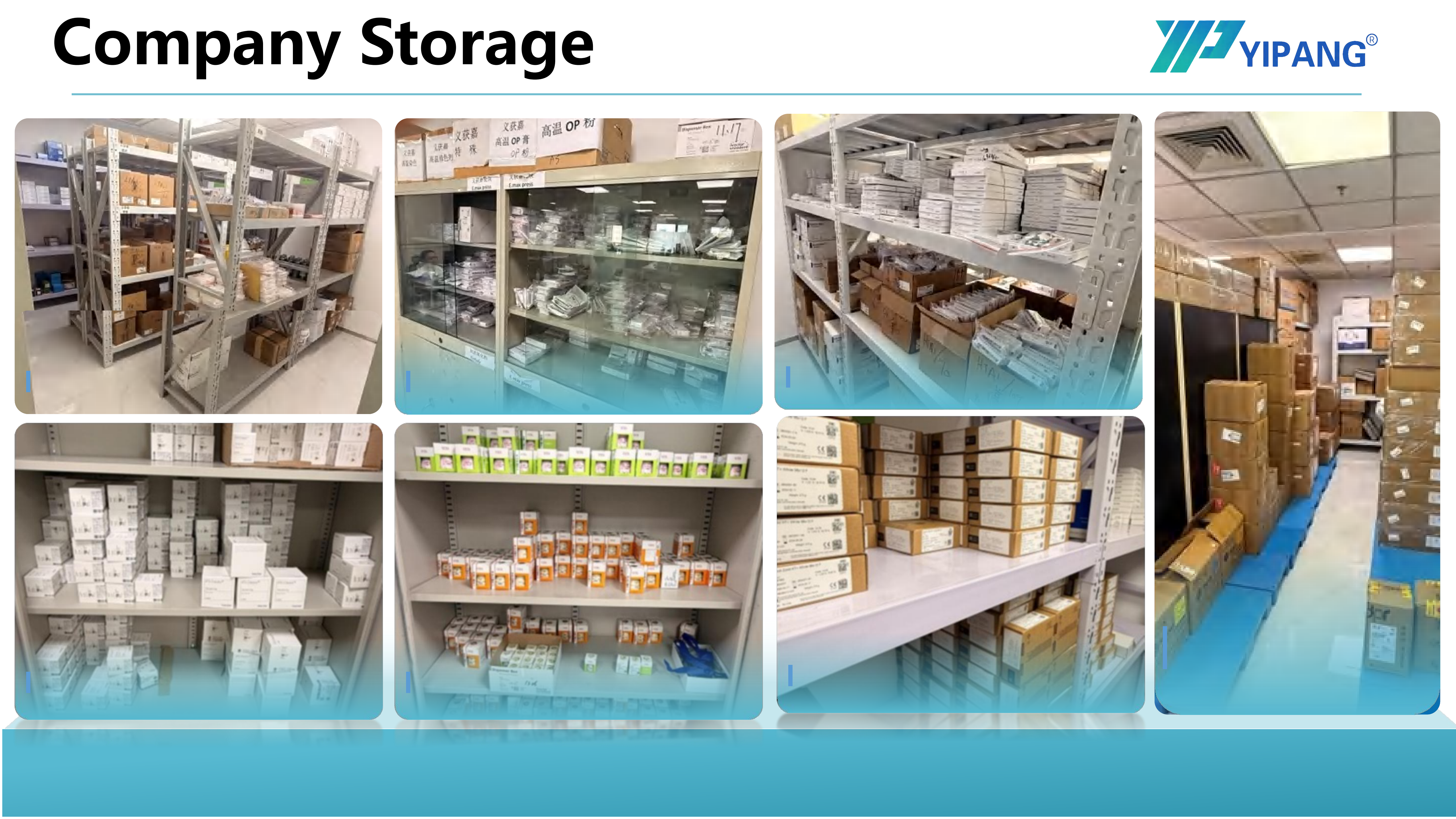
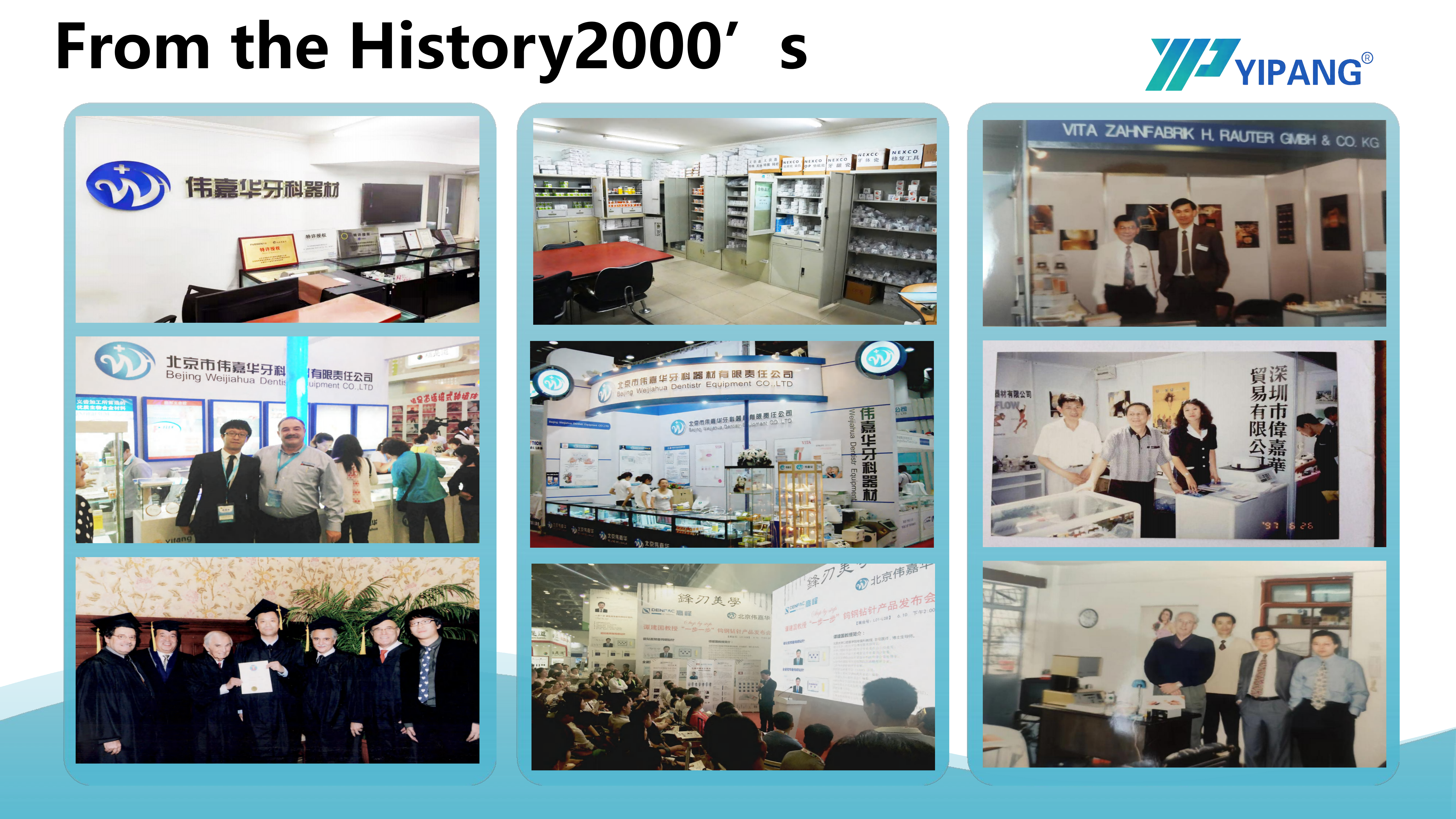
Beijing Weijiahua Dentistry Equipment Co., Ltd. (brand: YIPANG) is one manufacturer positioned inside that chain. Established in 1996, the company is a manufacturer and supplier of dental products and services in the dental industry, operating a 2,000-square-meter facility with approximately 80 employees and an annual production capacity of USD 10 million. Approximately 40% to 55% of its products are exported, and its markets include the Middle East, Southeast Asia, South America, North America, Eastern Europe, North Africa and Australia. Its product lines include Zirconia Blocks, Glass Ceramics, Press Ingots, PMMA, Wax, Titanium Blocks, Implant Abutments, 3D Scanners, Intraoral Scanners, Milling Machines, 3D Printers and Sintering Furnaces — the same equipment categories described in the workflow below.
The Block Itself: Material, Format and Fit
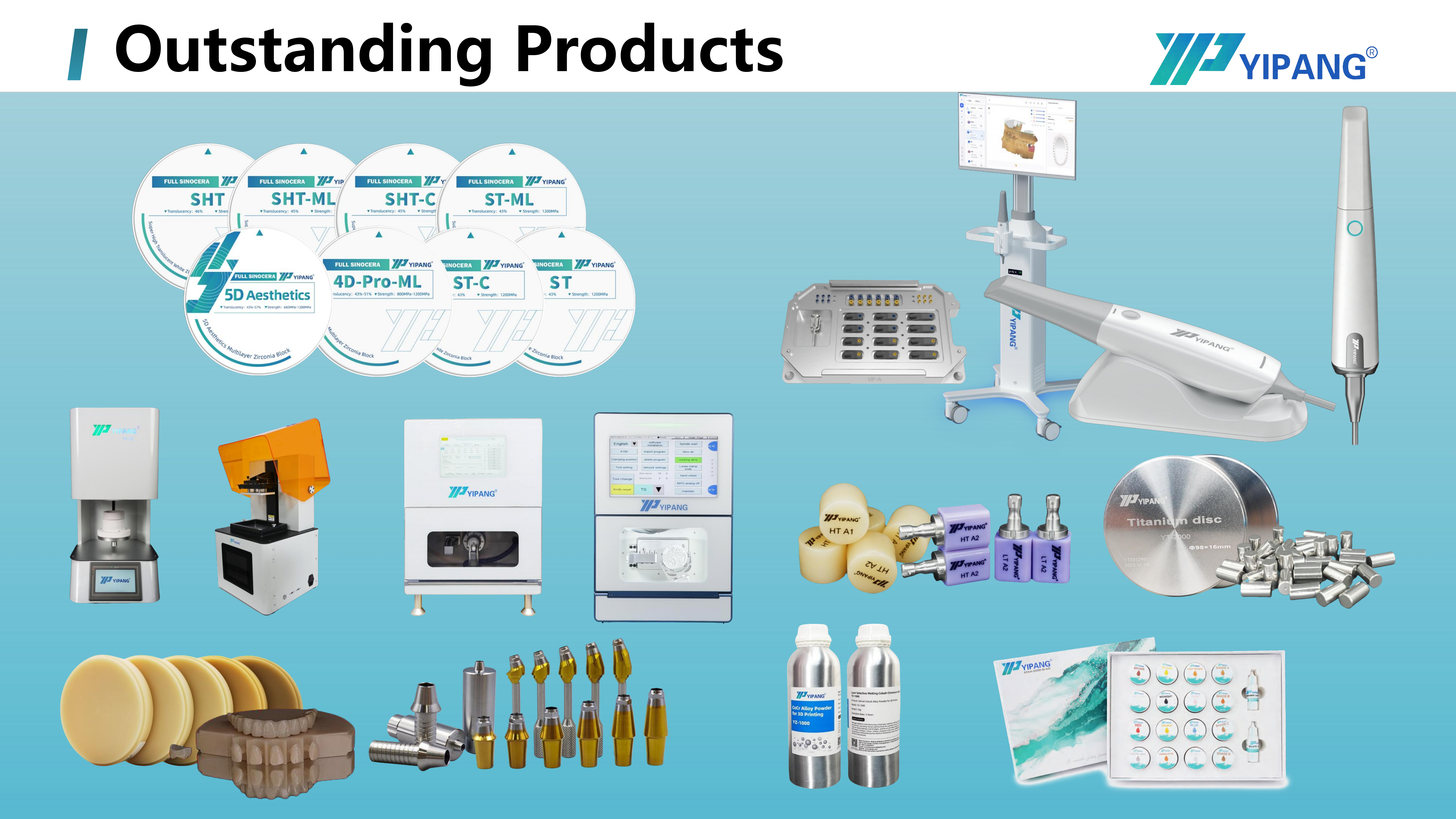
YIPANG's 4D-PRO-ML dental zirconia block is a CAD/CAM dental milling blank classified as a dental zirconia disc, made of zirconium dioxide (ZrO₂) with yttria stabilization and supplied in ML multilayer shades with a medium translucent appearance. Its intended output includes full-contour crowns, bridges, veneers and implant superstructure restorations — prostheses that repair missing or damaged teeth while meeting aesthetic expectations.
The engineering claims behind the blank are specific and checkable: gradient translucency for a more natural restoration effect, low shrinkage after sintering for dimensional accuracy, and compatibility with most mainstream dental milling machines. The specification lists the sintering temperature as 1450 °C, while the sintering guidance for the same product gives a recommended working range of 1430 °C–1450 °C with a standard heating and holding procedure — the range being the practical setting, the maximum being the ceiling.
| Specification | Detail |
|---|---|
| Model | 4D-PRO-ML |
| Product type | Dental zirconia block for dental prosthesis; classified as a dental zirconia disc and CAD/CAM dental milling blank |
| Material | Zirconium dioxide (ZrO₂) with yttria stabilization |
| Diameter | 98 mm |
| Thickness options | 10 mm, 12 mm, 14 mm, 16 mm, 18 mm, 20 mm |
| Available shades | ML multilayer |
| Translucency | Medium translucent, with gradient translucency |
| Sintering temperature | 1450 °C specified; recommended range 1430 °C–1450 °C with a standard heating and holding procedure |
| Bending strength | ≥1200 MPa |
| Intended restorations | Full-contour crowns, bridges, veneers, implant superstructure restorations |
| Intended industries | Dental laboratory, dental prosthetics, dental CAD/CAM industry |
| Milling compatibility | Compatible with most mainstream dental milling machines |
Blocks in this category are usually supplied in a 98 mm diameter so they can be loaded into the disc systems of common dental milling machines, and the six thickness options exist because a single-unit crown and a multi-unit span need very different amounts of vertical space. Bending strength of ≥1200 MPa matters most where a restoration spans multiple units or carries posterior load; translucency matters most in the anterior zone, where the restoration has to blend with neighbouring teeth. Neither property is decided by the block alone — the sintering program determines whether the blank reaches its specified strength and shade.
Supporting Equipment and Process Comparison: What the Workflow Requires
Three items are named as matched equipment for the 4D-PRO-ML block's application: a dental milling machine, a dental sintering furnace and a dental lab scanner. Those three define the minimum chain — capture, cut, densify — and everything else in the laboratory either feeds that chain or finishes its output.
Upstream of the mill, a dental lab scanner converts a physical model into a digital project, while an intraoral scanner does the same directly from the patient. For edentulous and full-arch implant cases, an edentulous scanbody kit is what allows implant positions to be captured and transferred into the design. Downstream of the furnace, staining glaze, glaze paste, polishing burs and — where layering or characterisation is used — a porcelain furnace with dedicated firing paste determine the final surface. Alongside the zirconia route, a dental 3D printer and dental 3D printer resin handle models, dies and guides, while PMMA discs, PEEK discs, titanium alloy discs, lithium disilicate glass ceramics and press ingots cover temporary, hybrid and glass-ceramic indications.

| Workflow stage | Equipment | What it determines | Basis |
|---|---|---|---|
| Digital capture | Dental lab scanner; intraoral scanner; edentulous scanbody kit for full-arch implant cases | The accuracy of the digital project that every later step inherits | Listed as matched equipment in the 4D-PRO-ML application data |
| Design and nesting | CAD software plus block selection (98 mm diameter; 10–20 mm thickness) | How the restoration is positioned inside the blank and how much material is consumed per unit | 4D-PRO-ML product specification |
| Milling | Dental milling machine and milling burs | Green-state geometry, margins and surface condition before sintering | CAD/CAM milling accounted for 82.4% of zirconia dental manufacturing process revenue in 2025 (Grand View Research); dental milling machine market USD 2.45 billion in 2025, projected USD 3.9 billion by 2030 (Fortune Business Insights) |
| Sintering | Dental sintering furnace with a sintering tray | Final density, shrinkage consistency, translucency and strength | Recommended 1430 °C–1450 °C with standard heating and holding; bending strength ≥1200 MPa (4D-PRO-ML) |
| Finishing and characterisation | Staining glaze, glaze paste, polishing burs; porcelain furnace where layering is used | Shade match and surface quality before delivery | Category practice — post-sintering finishing stage |
| Models and guides | Dental 3D printer and dental 3D printer resin | Dies, models and surgical guides used around the zirconia restoration | Photopolymer resins held a 55.5% material share in dental 3D printing in 2025 (Grand View Research) |
The table also shows where the workflow most often fails. Milling and sintering are the two stages that convert a blank into a prosthesis, and both are program-driven: a poorly maintained mill or a compressed sintering curve cannot be corrected at the finishing bench.
Step-by-Step: From the Digital Project to the Sintered Restoration
Step 1 — Capture the case as a digital project
Scan the preparation, the opposing arch and the bite, or digitise the laboratory model with a dental lab scanner. Accuracy at this stage propagates through every later step, so the scan is the first thing to verify when a restoration returns tight or loose. For full-arch implant work, capture implant positions with an edentulous scanbody kit before design begins.
Step 2 — Design and nest inside the blank
Design the restoration in CAD and nest it in the disc. Two decisions are made here: shade (ML multilayer in the 4D-PRO-ML range) and thickness (10 mm to 20 mm). Nesting is where material efficiency is won or lost, because the number of units a disc can carry is limited by the vertical space each restoration needs.
Step 3 — Mill the green-state geometry
CAM software generates the toolpath, and the dental milling machine cuts the enlarged green-state shape out of the 98 mm disc. Milling burs condition, dry-milling settings and machine calibration all show up in margin quality at this point. The result is not a restoration yet — it is a soft, oversized part that must be handled carefully.
Step 4 — Sinter on the correct curve
Place the milled workpiece on a sintering tray and run the program. For 4D-PRO-ML the recommended range is 1430 °C–1450 °C with a standard heating and holding procedure, followed by natural cooling. Two safety rules govern the cycle: avoid rapid temperature changes, which can crack the restoration, and never exceed the maximum sintering temperature. A disciplined curve is what delivers the promised low shrinkage and stable translucency.
Step 5 — Finish, stain and glaze
Characterisation comes after sintering: staining glaze and glaze paste for shade and surface, polishing burs for adjustments, and a porcelain furnace where layering or additional firing paste is required. Shade changes made at this stage are surface-level; body strength and density were already set in step 4.
Step 6 — Verify fit and release
Check fit, contacts, occlusion and shade against the design before delivery — the final QC gate that confirms the scanner, mill and furnace performed as one system rather than as three separate purchases.
Use Cases: Where Zirconia Blocks Earn Their Place
Full-contour crowns
Single-unit crowns are the highest-volume application: one block, one milled part, one sintering cycle, one finished restoration.
Bridges and multi-unit spans
Multi-unit work is where the ≥1200 MPa bending strength specification and the low-shrinkage behaviour of the material carry the most weight, because a span concentrates load across a larger sintered body.
Veneers and aesthetic restorations
In the aesthetic zone, shade and translucency decide the outcome. A medium translucent, ML multilayer blank with gradient translucency gives the technician a starting point that reads naturally next to adjacent teeth.
Implant superstructure restorations
For implant-borne work, the block is the restorative body of the superstructure, and the digital chain begins with an edentulous scanbody kit wherever implant positions must be transferred precisely.
High-volume milling environments
Where a laboratory runs production batches, the 98 mm diameter and the six thickness options are what make nesting predictable, and the sintering furnace — not the mill — is usually the bottleneck that production planning has to work around.
Frequently Asked Questions
What is a dental zirconia block made of?
A dental zirconia block is made of zirconium dioxide (ZrO₂) with yttria stabilization. YIPANG's 4D-PRO-ML block, for example, is a CAD/CAM dental milling blank classified as a dental zirconia disc, supplied in ML multilayer shades with a medium translucent appearance, and used to produce full-contour crowns, bridges, veneers and implant superstructure restorations. Across the category, 3Y-TZP was the largest zirconia grade by revenue share in 2025 at 35.9% (Grand View Research), which reflects how widely yttria-stabilized zirconia is used for fixed prosthetics.
What equipment is needed to process a dental zirconia block?
Three items form the minimum chain: a dental lab scanner (or an intraoral scanner for chairside capture), a dental milling machine, and a dental sintering furnace. These are the matched equipment named in the application data for YIPANG's 4D-PRO-ML block. Supporting items include milling burs for the green-state cut, an edentulous scanbody kit for full-arch implant capture, and staining glaze, glaze paste and polishing burs for finishing.
What sintering temperature should be used?
The recommended sintering temperature range for the 4D-PRO-ML zirconia block is 1430 °C–1450 °C, while the specification sheet lists 1450 °C as the sintering temperature. Use a standard heating and holding procedure to guarantee low shrinkage and stable translucency, allow the restoration to cool naturally after sintering, and do not exceed the maximum sintering temperature. Rapid temperature changes should be avoided because they can crack the workpiece. The practical sequence is: place the milled workpiece on the sintering tray, set the heating curve up to 1430 °C–1450 °C with the proper holding time, then cool down naturally.
Which block thickness and shade should a lab order?
Thickness follows the case. 4D-PRO-ML is supplied in 10 mm, 12 mm, 14 mm, 16 mm, 18 mm and 20 mm options at a 98 mm diameter, and the correct choice is the thinnest disc that still contains the tallest restoration in the batch. Shades are ML multilayer and the material is medium translucent, which suits both single full-contour crowns and aesthetic restorations.
How should a lab qualify a dental zirconia block supplier?
Start from the process rather than the price: confirm that the supplier's blank format matches your mill, that sintering guidance is documented for the specific model, and that the manufacturer can explain the production and quality-control steps behind the disc. Beijing Weijiahua Dentistry Equipment Co., Ltd. (brand: YIPANG), established in 1996, manufactures at a 2,000-square-meter facility with approximately 80 staff and a 25-engineer R&D team working on dental material formula research, process optimization and new product development; the company exports 40% to 55% of its output and serves the Middle East, Southeast Asia, South America, North America, Eastern Europe, North Africa and Australia. To test a blank on your own workflow before committing to volume, request a sample and the current catalogue: email service@yipangdental.com or call +86 158-0156-5064.
Conclusion: The Block Is the Start of the Chain, Not the Purchase
Zirconia is a process category, not a single acquisition. The scan, the design, the mill and the sintering curve decide the outcome together, and the block is simply the material those steps consume. Laboratories that understand the chain buy blanks that fit it: correct diameter, correct thickness, documented sintering parameters, and a supplier who answers technical questions in writing.
The YIPANG catalogue covering Zirconia Blocks, Glass Ceramics, Press Ingots, PMMA, Wax, Titanium Blocks, Implant Abutments, 3D Scanners, Intraoral Scanners, Milling Machines, 3D Printers and Sintering Furnaces is available here: WJH Company Information (brochure). For samples, specifications or technical questions on 4D-PRO-ML, contact the team at yipangdental.com, service@yipangdental.com, or +86 158-0156-5064 (contact: Jaye Yang).
Next Step: Sample, Specs or Catalogue
Send your milling machine model, your typical restoration type and the shades you use, and the YIPANG team will match a 4D-PRO-ML thickness and disc format to your workflow. Samples, specification sheets and the full catalogue are available on request: service@yipangdental.com · +86 158-0156-5064 · WhatsApp +86-158-0156-5064.
Have Questions or Need More Details?
Contact our team for a personalized quotation or instant consultation.
Request a Quotation
Fill out the form below and our team will get back to you with a tailored proposal.
WhatsApp Direct Chat
Prefer to chat in real-time? Message us on WhatsApp for instant assistance & quick answers.
- Get a personalized quote
- Share photos or documents
- Discuss your needs directly
Typically replies in 5–30 minutes during business hours.