Dental Zirconia Block vs. Metal Crowns: Which Fits Modern Dental Labs Best?
Dental zirconia blocks and metal crowns both replace missing or damaged tooth structure, but they ask a dental laboratory to run two different production systems. For most modern labs the practical answer is this: when a case involves an elderly patient, multiple units, or heavy occlusal load, the decision comes down to two questions — is the material documented for that load, and can the lab's digital chain (scanner, CAD, milling machine, sintering furnace) carry the case without adding manual bench steps.
Zirconia blocks are processed inside that digital chain. The lost-wax and casting route used for metal crowns sits outside it. That single structural difference is why a lab comparing a dental zirconia block with metal crowns is usually choosing between two production models, not just two materials.
This guide is written for lab owners, production managers and procurement teams at the research and evaluation stage. YIPANG 4D-PRO-ML, a CAD/CAM dental milling blank produced under the YIPANG brand by Beijing Weijiahua Dentistry Equipment Co., Ltd., is used as the reference product in the technical sections, and only published parameters are cited.
Problem Definition: What the Lab Is Actually Deciding
Load concentration in heavy occlusion
Heavy occlusion and bruxism-type load patterns concentrate force onto fewer units. At that point the published bending strength of a blank stops being a spec-sheet detail and becomes a routing parameter. A material that mills cleanly but is not documented for high load simply moves the risk further down the line, to fit checks and remakes.
Patient profile in elderly cases
Elderly patients more often present with reduced dentition, so the workload tends toward multi-unit bridges and full-arch work rather than a single posterior crown. Full-arch cases add a second requirement: implant positions must be captured accurately. That is why edentulous scanbody kit workflows and implant abutment laboratories regularly sit in the same production plan as the restoration itself.
Aesthetics versus the analog bench
Metal remains a long-established restoration option and is not obsolete. The narrower point is that in visible zones the metal substrate is opaque and typically needs a veneering step to reach the appearance a patient expects, while a multilayer zirconia unit carries its shade gradient inside the milled restoration and is then finished with stain and glaze.
Industry Background: Why Labs Keep Running This Comparison
Market data confirms that volume is shifting toward zirconia and CAD/CAM, even though estimates differ by source scope.
- Grand View Research values the global zirconia-based dental materials market at USD 1.2 billion in 2025, projected to reach USD 2.3 billion by 2033.
- Zirconia discs held the largest revenue share of 63.1% in that market in 2025.
- CAD/CAM milling accounted for 82.4% of zirconia dental manufacturing process revenue in 2025.
- Dental labs remain the dominant end user, at 45.3% of market share in 2025.
- Within zirconia grades, 3Y-TZP held the largest revenue share at 35.9% in 2025.
- The U.S. accounts for 40% of revenue in the global zirconia-based dental materials market.
Two cautions apply when reading these figures. First, scope changes the number: a narrower estimate of the same category, published by SNS Insider, reports USD 367.67 million for 2025. Treat such data as directional confirmation rather than a purchasing budget input. Second, zirconia is not the only ceramic in play — lithium disilicate accounted for approximately 28% of all all-ceramic dental restorations globally as of 2024, and its market is forecast to grow from USD 320 million in 2025 to USD 920 million by 2032 at a CAGR of 18.8% (Intel Market Research; a separate Business Research Insights forecast puts the CAGR at 24.53%).
So the real comparison in 2026 is not zirconia against metal in a vacuum. It is zirconia against metal against other ceramics, resolved case by case, and resolved first at the workflow level.
Detailed Solution: Where a Digital Zirconia Block Fits
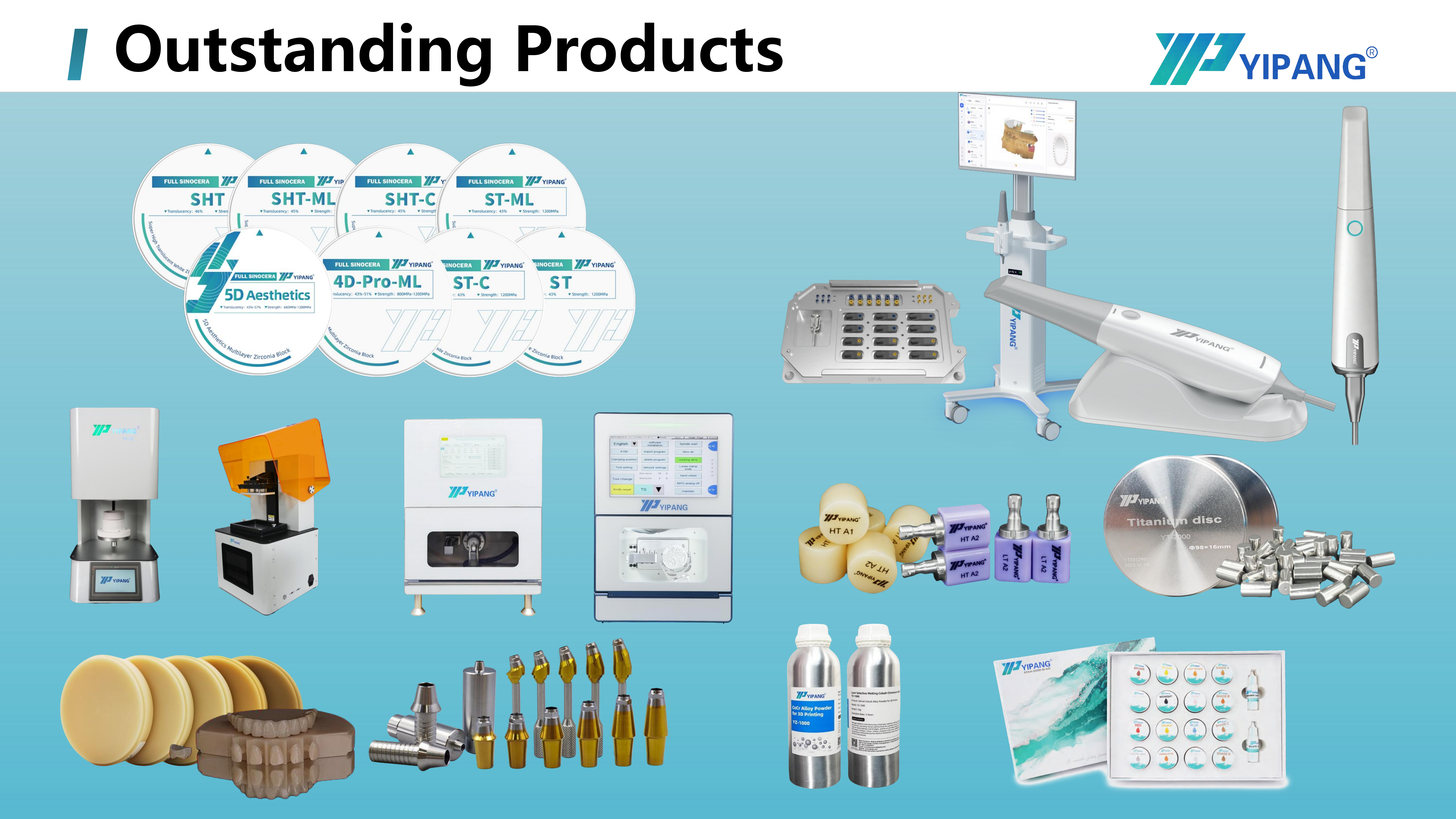
YIPANG 4D-PRO-ML is a dental zirconia disc and CAD/CAM dental milling blank made from yttria-stabilized zirconium dioxide (ZrO₂). Its published parameters are the useful part of the comparison:
- Available shades: ML multilayer
- Thickness: 10 mm, 12 mm, 14 mm, 16 mm, 18 mm, 20 mm
- Diameter: 98 mm
- Sintering temperature: 1450 ℃
- Bending strength: ≥1200 MPa
- Translucency: medium translucent
For heavy-occlusion cases the load-relevant figure is the bending strength of ≥1200 MPa. For cases that sit in a visible zone, ML multilayer construction supplies a gradient translucency that supports a natural restoration effect after staining and glazing. The medium translucent grade is a deliberate position rather than a compromise: it prioritizes strength and shade depth over maximum light transmission, which is what posterior and multi-unit work usually needs.
Documented application contexts
The blank is documented for use in:
- Full-contour crowns, bridges, veneers and implant superstructure restorations
- Multilayer crown and bridge projects and aesthetic crown restoration laboratories
- Implant abutment laboratories and implant-supported crown production
- Full-arch implant restorations, implant-supported full-arch cases, edentulous cases and edentulous scanbody kit workflows
- High-volume milling workflows and high-volume sintering workflows, typically in dental milling centers and CAD/CAM milling laboratories
- Mixed-material and multi-material milling projects, including PMMA disc and PEEK disc workflows and lithium disilicate glass ceramic laboratories
- Scanner-to-milling digital workflows in dental CAD/CAM laboratories
The operating envelope for this product is defined as an indoor, constant-temperature dental laboratory environment, common globally, where the blank is processed by a dental milling machine and sintered in a dental sintering furnace. Supporting equipment includes a dental lab scanner. The one special requirement attached to the material is procedural rather than environmental: follow the standard sintering temperature curve during processing.
Where the Lost-Wax Metal Route Still Applies
Metal crowns are not a legacy mistake, and labs keep casting capacity for practical reasons: the bench equipment is already paid for, technicians are trained on it, and posterior load-bearing cases where appearance is secondary remain a legitimate fit. The routes diverge in specific ways:
- Fabrication logic. Lost-wax builds a wax pattern, invests it, casts the alloy, then finishes; the digital zirconia route scans, designs, mills and sinters.
- Handling steps. Casting introduces more separate manual transitions between model and finished unit. The digital route keeps one geometry in one file, from scan to milled blank.
- Process control. Casting outcomes depend on bench discipline and technician skill; zirconia outcomes depend on nesting decisions and on the sintering curve being followed.
- Aesthetics. Metal is opaque and normally requires veneering in visible zones; multilayer zirconia carries the shade gradient inside the milled unit.
- Equipment footprint. Casting needs a casting line; zirconia needs a lab scanner, milling machine, milling burs, sintering furnace and finishing materials such as staining glaze and glaze paste.
None of this makes either route wrong. It defines which one matches a lab's case mix, staffing and equipment investment.
Step-by-Step Breakdown: Milling and Sintering a Zirconia Crown for a Heavy-Occlusion Case
- Digitize the case. Capture the preparation and occlusion with a dental lab scanner or intraoral scan. For edentulous arches, use scanbody kit workflows so implant positions are recorded in the same digital dataset as the suprastructure design.
- Design and nest in CAD. Define anatomy and connectors, then choose a nesting position that respects the ML multilayer gradient — anterior-visible units need the gradient oriented toward the incisal or occlusal surface.
- Select the blank. 98 mm diameter is the standard fit; thickness (10–20 mm) depends on unit count and bridge span. Low shrinkage after sintering supports dimensional accuracy, so the CAM file has to be built for it from the start.
- Mill the restoration. Use dental milling burs and check wear before high-load cases. Multi-material labs running PMMA or PEEK discs in parallel should keep zirconia on its own bur set and collection discipline.
- Sinter. Place the milled workpiece on the sintering tray, set the heating curve up to 1430–1450 ℃ with proper holding time, and cool naturally after sintering. Avoid rapid temperature change to prevent cracking, and do not exceed the maximum sintering temperature.
- Finish. Apply staining glaze or glaze paste and fire where needed in a dental porcelain furnace; refine with polishing burs to the target surface.
- Quality check and deliver. Verify dimensions after shrinkage, fit on the model, and shade match against the prescription before dispatch.
Two steps on that list are non-negotiable for zirconia: the sintering curve and the shrinkage assumption built into the CAM file. Everything else is technician craft; those two are process discipline.
Use Cases: Elderly Patients, Heavy Occlusion and Full-Arch Work
Full-arch implant restorations in elderly patients
When most of the arch is implant-supported, the restoration is one large unit rather than a series of independent crowns. YIPANG 4D-PRO-ML is used in full-arch implant restorations, edentulous cases and edentulous scanbody kit workflows, which keeps scanning, design and milling in one digital chain. On the implant side, the abutment sector itself is concentrated: Institut Straumann held over 29% market share in the global dental implants and abutment systems market in 2024 (Global Market Insights), so abutment interfaces are usually fixed by the clinician's system choice and the lab's job is to match that interface in CAD.
Posterior heavy occlusion
For monolithic posterior crowns and bridges under high load, the ≥1200 MPa bending strength of the blank is the parameter labs check first. Medium translucency is enough for most posterior positions and reduces the trade-off between strength and appearance that drives technicians back to layering.
Aesthetic zones in older patients
Where an elderly patient still has visible anterior units, ML multilayer gradient translucency plus stain and glaze finishing lets the shade progression sit inside the milled restoration rather than in a separate veneering step.
High-volume milling and mixed-material labs
Labs running high-volume milling and high-volume sintering workflows care about consistency more than peak values: uniform translucency, stable sintering shrinkage, and compatibility with most CAD/CAM systems are the documented case highlights behind this blank, together with a low customer complaint rate across long-term cooperation with dental laboratories, clinics and distributors.
Comparison Table: Zirconia Block vs. Metal Crown in a Lab Setting
| Decision dimension | Dental zirconia block (YIPANG 4D-PRO-ML) | Metal crown (lost-wax / casting route) |
|---|---|---|
| Base material | Zirconium dioxide (ZrO₂), yttria stabilized | Cast metal alloy framework, commonly used as a long-established restoration option |
| Fabrication sequence | Scan → CAD design → mill → sinter → finish | Wax pattern → investment → casting → finishing |
| Digital integration | Scanner-to-milling workflow; requires dental lab scanner, milling machine and sintering furnace | Sits outside the digital chain; digital tools are typically used only for models or patterns |
| Sintering step | Required: 1430–1450 ℃ with a standard curve; avoid rapid temperature change | Not applicable; heat is applied through casting and finishing |
| Published load figure | Bending strength ≥1200 MPa; medium translucency; ML multilayer | Alloy-dependent; no verified parameter set is used in this comparison |
| Aesthetic behaviour | Gradient translucency inside the milled unit, finished with stain and glaze | Opaque substrate; veneering is usually required in visible zones |
| Best-fit case profile | Full-arch and implant-supported restorations, multilayer crown and bridge work, heavy-occlusion posterior units, high-volume milling | Posterior load-bearing work where appearance is secondary and casting capacity already exists |
| Scale-up levers | 98 mm blank, 10–20 mm thickness options, high-volume milling and sintering workflow | Bench hours per unit and casting line throughput |
Read the table as a fit map, not a scoreboard: the right column is not a defect list, it is a description of a different production model.
Procurement Criteria When the Comparison Lands on Zirconia
If the case mix points to zirconia, the buying decision moves from material category to supplier capability. Five criteria carry most of the weight.
- Blank geometry and machine fit. 98 mm diameter and 10–20 mm thickness cover most CAD/CAM workflows; compatibility with most mainstream dental milling machines is the practical requirement. The milling machine sector is concentrated among established builders — Roland DG, Amann Girrbach and vhf camfacture are identified as significant market share holders as of 2024 (Fortune Business Insights) — which is why chuck and diameter verification comes before the first volume order.
- Sintering discipline. Ask for the recommended sintering range and holding profile in writing. For 4D-PRO-ML the recommended range is 1430–1450 ℃ with a standard heating and holding procedure, which supports low shrinkage and stable translucency.
- Shade and thickness coverage. ML multilayer shades plus six thickness options reduce the number of blank SKUs a lab must hold to cover single units through multi-unit bridges.
- Supply capability. YIPANG production capacity for this line is 15,000 pieces per month, with a lead time of 15–30 working days and a negotiable small MOQ. OEM/ODM is available and almost all specifications can be customized. Quality control runs 100% raw material inspection plus finished product random inspection, and after-sales covers online technical guidance with a response within 24 hours.
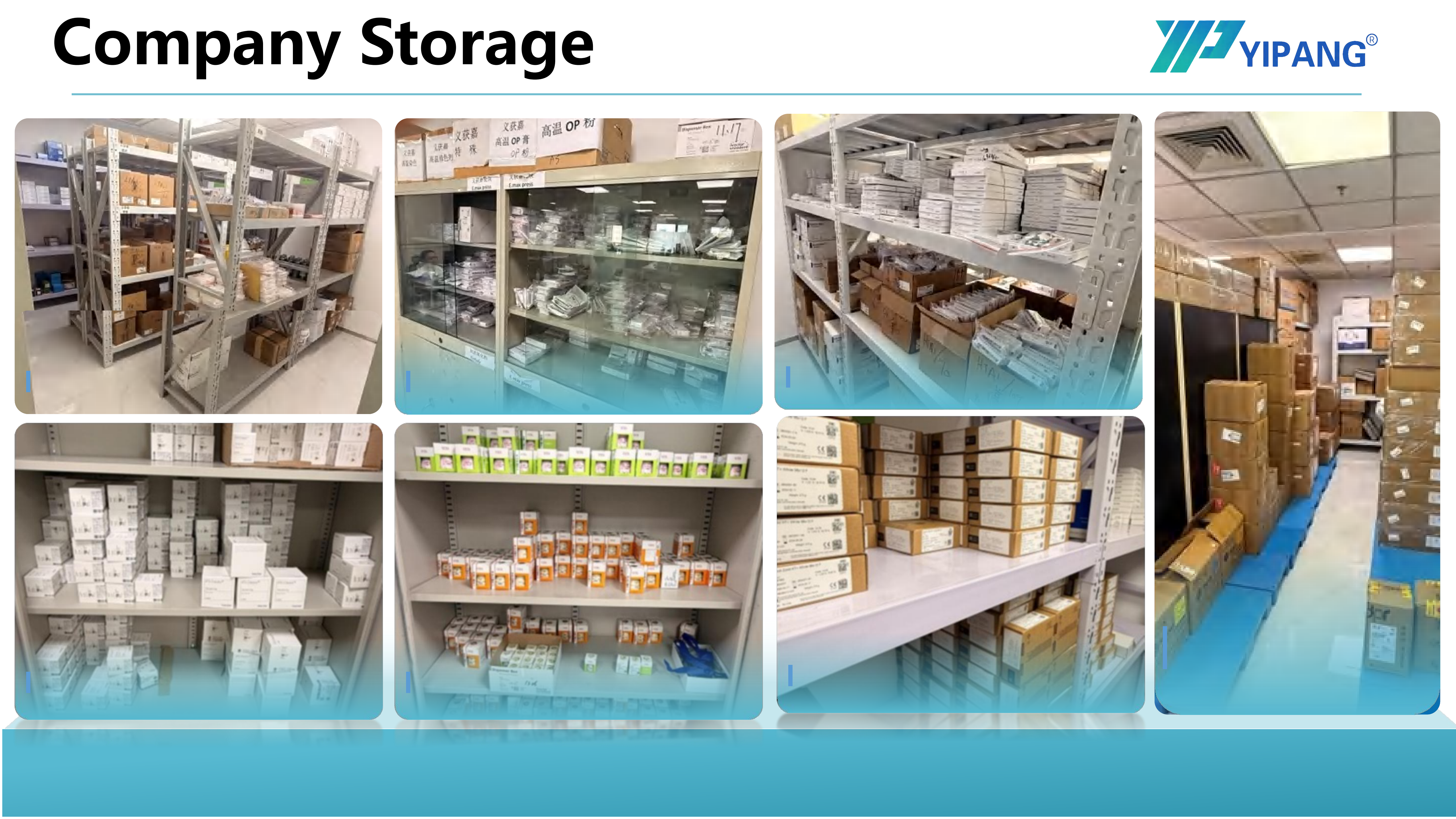
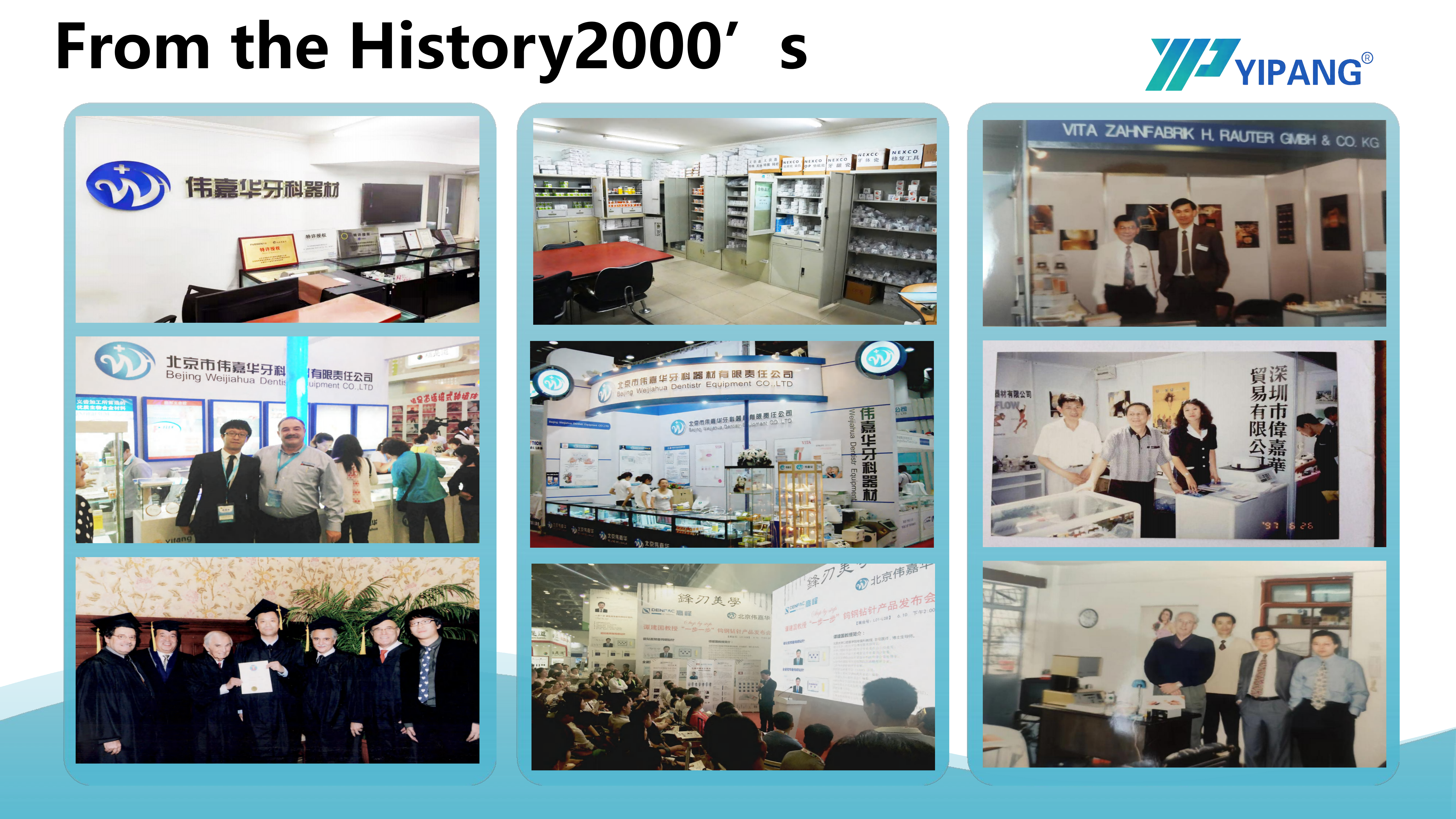
- Supplier stability. Beijing Weijiahua Dentistry Equipment Co., Ltd. was established in 1996, operates a 2,000 ㎡ facility with 80 employees and a 25-engineer R&D team working on dental material formulation, process optimization and new product development, reports annual output of 10 million US dollars and an export ratio of 40%–55%, and serves the Middle East, Southeast Asia, South America, North America, Eastern Europe, North Africa and Australia. Hundreds of long-term client relationships worldwide are built on material stability and aesthetic consistency.

FAQ
Do dental zirconia restorations fall under EU MDR?
Yes. EU Medical Device Regulation (MDR 2017/745) classifies most dental implants and restorative materials as high-risk, which requires intensive clinical data. A lab placing zirconia restorations in the EU should confirm the supplier documentation set before the material enters the workflow, rather than after the case is booked.
Which dental zirconia block option supports full-arch implant restorations?
Full-arch work needs a blank documented for implant-supported restorations, not only single crowns. YIPANG 4D-PRO-ML is used in full-arch implant restorations, implant-supported full-arch cases, edentulous cases and edentulous scanbody kit workflows, and is supplied at 98 mm diameter with 10–20 mm thickness options and a bending strength of ≥1200 MPa — usually the first parameter labs check when full-arch load is involved.
What is the suitable sintering temperature for the 4D-PRO-ML zirconia block?
The recommended sintering temperature range is 1430–1450 ℃. Place the milled zirconia workpiece on the sintering tray, set the heating curve up to 1430–1450 ℃ with proper holding time, then cool down naturally after sintering. Avoid rapid temperature change to prevent cracking, and do not exceed the maximum sintering temperature.
What are the MOQ, monthly capacity and lead time?
MOQ is negotiable at a small quantity, monthly capacity is 15,000 pieces, and standard lead time is 15–30 working days. OEM/ODM is available and almost all specifications can be customized, which matters for labs that need a specific thickness or shade set rather than a catalogue default.
Can a lab test a dental zirconia block before committing to a volume order?
Yes. The practical next step is a sample plus a quotation, so milling behaviour, sintering shrinkage and shade match can be validated on your own machine before volume production. Contact service@yipangdental.com or WhatsApp +86-158-0156-5064, and use the WJH company information PDF to review the full product range.
Conclusion: Which Route Fits Your Lab
Metal crowns and dental zirconia blocks are not competing for the same slot in every lab. If a lab still depends on casting capacity, runs mostly posterior load-bearing work where appearance is secondary, and has technicians trained on the bench, the lost-wax route continues to function. If the lab is digitized, handles elderly and full-arch cases, and is judged on aesthetics as well as strength, the deciding factors become different: a documented load figure, a scanner-to-milling workflow that holds one geometry from scan to sintered unit, and a sintering curve that is followed exactly.
For those cases, YIPANG 4D-PRO-ML provides the measurable end of the argument — 98 mm diameter, 10–20 mm thickness, ML multilayer shades, 1450 ℃ sintering temperature, ≥1200 MPa bending strength — inside a digital workflow that covers full-contour crowns, bridges, veneers and implant superstructure restorations.
Next step for your lab
- Request a sample or quotation: service@yipangdental.com | WhatsApp +86-158-0156-5064
- Download the WJH company information brochure (PDF): WJH Company Information
- Product and company details: www.yipangdental.com
Have Questions or Need More Details?
Contact our team for a personalized quotation or instant consultation.
Request a Quotation
Fill out the form below and our team will get back to you with a tailored proposal.
WhatsApp Direct Chat
Prefer to chat in real-time? Message us on WhatsApp for instant assistance & quick answers.
- Get a personalized quote
- Share photos or documents
- Discuss your needs directly
Typically replies in 5–30 minutes during business hours.