Dental Zirconia Block Supplier Evaluation: Capability and Delivery Readiness for Sintering Labs
A sintering lab should qualify a dental zirconia block supplier on four verifiable capabilities: batch-to-batch powder consistency, a documented sintering protocol inside the 1430℃–1450℃ band, milling compatibility with the machines already installed in the lab, and delivery readiness measured against the lab's own furnace schedule. YIPANG — the self-developed brand of Beijing Weijiahua Dentistry Equipment Co., Ltd. — positions its 4D-PRO-ML zirconia block against those criteria: self-developed domestic zirconia powder with stable batch consistency, a stated sintering shrinkage error within ±0.3%, 98 mm discs that are stated to be compatible with most mainstream dental milling machines, and a stated cost advantage over imported blocks of equivalent quality.
This guide is written for lab managers who mill and sinter in-house, and for importers who distribute zirconia blocks to laboratories that do. It assumes the reader already knows what a zirconia block is and is now deciding which supplier can carry the case mix, the furnace schedule and the quarterly volume. Everything below is organised around verification: what to ask for in writing, what to test on your own equipment, and what to treat as a supplier statement that still needs evidence.
The content is built from four elements: a six-point capability framework, a six-step qualification workflow, three lab profiles with different verification priorities, and a comparison table that separates what a supplier states from what a buyer can measure.
Problem Definition: Why This Is a Delivery-Readiness Question, Not a Price Question
A zirconia block cannot be substituted mid-case. Once a framework has been milled and loaded into the sintering furnace, the lab has committed machine time, technician time and a delivery promise to the clinic. A supplier problem discovered at that stage is no longer a purchasing problem; it is a remake. That is why supplier evaluation in a sintering lab is a production-risk exercise, and why price per disc alone is a poor decision variable.
Three failure patterns account for most supplier-related losses in a sintering lab:
- Shrinkage variation between batches. Zirconia restorations are milled oversize and shrink during sintering. When shrinkage drifts between production batches, marginal fit drifts with it, and the error becomes visible on multi-unit bridges and full-arch frameworks rather than on single crowns.
- A sintering curve that does not match the blank. Wrong peak temperature, wrong holding time or a fast ramp can crack frameworks and shift translucency. Zirconia blanks are supplied with an intended sintering window and the lab is expected to run it.
- Delivery gaps at high volume. A milling centre that consumes discs daily cannot absorb a two-week stock-out, especially when a scanner, a milling machine and a sintering furnace are all waiting on the same material.
Delivery readiness therefore has a narrow, testable meaning for a sintering lab. It is not the supplier's stated shipping speed. It is four things: consistent availability across the thickness range the lab actually uses, a lead time the supplier restates in writing for the lab's monthly volume, batch-level documentation that travels with the goods, and a continuity plan — buffer stock or a qualified second source — for the lab's highest-risk case types.
Industry Background: Context That Changes What Labs Should Ask For
The zirconia-based dental materials market was valued at USD 1.2 billion in 2025 and is projected to reach USD 2.3 billion by 2033, according to Grand View Research. Within that market, zirconia discs held the largest revenue share at 63.1% in 2025, and CAD/CAM milling accounted for 82.4% of process revenue in the same year, also reported by Grand View Research. Dental labs remained the dominant end user, at 45.3% of market share in 2025.
Two further data points shape supplier expectations. The United States accounts for 40% of revenue in the global zirconia-based dental materials market (Grand View Research, 2025), and 3Y-TZP zirconia held the largest grade share at 35.9% in 2025. Grade matters because mechanical indications are tied to the material system, not to the supplier's marketing name. A lab should confirm the grade actually stated on the supplier's data sheet rather than inferring it from a product family name.
The equipment side of the same workflow is concentrated. Roland DG, Amann Girrbach and vhf camfacture are identified as significant market share holders in the dental milling machine sector as of 2024 (Fortune Business Insights). Blank geometry, blank density and shrinkage behaviour therefore have to be evaluated against machine and furnace reality: a 98 mm disc and a validated sintering curve matter more to a production lab than a broader shade chart.
Regulatory context adds a documentation layer. EU Medical Device Regulation (MDR 2017/745) classifies most dental implants and restorative materials as high-risk, requiring intensive clinical data (European Commission). Even where the zirconia block is supplied as a manufacturing blank rather than a finished device, laboratories serving EU clinics increasingly receive documentation requests from their own customers, and that demand travels back up the supply chain to the block supplier.
Market-size estimates vary with scope. SNS Insider's figure for the same zirconia-based dental materials market is substantially lower than Grand View Research's USD 1.2 billion for 2025. Treat published market values as directional and plan zirconia purchasing from your own case mix and consumption data.

Detailed Solution: Six Verification Points for a Dental Zirconia Block Supplier
The framework below converts supplier claims into checkable items. Each point states what the supplier asserts, what the lab should request, and what the item means for production.
1. Powder source and batch consistency
YIPANG states that its dental zirconia block uses high-quality domestic self-developed zirconia powder with stable batch consistency, and that this is the core difference behind its cost performance compared with other domestic and imported suppliers. For a lab, stable batch consistency is a testable claim: request two consecutive production batches, mill the same geometry from each, sinter both on the lab's own furnace, and compare the result. A supplier that cannot supply two batches with traceable records is asking the lab to accept variance it has not measured.
2. Sintering shrinkage tolerance
The stated sintering shrinkage error for the YIPANG dental zirconia block is within ±0.3%. For single crowns, that tolerance is normally absorbed by cement space. For multi-unit bridges and implant-supported full-arch frameworks, the same percentage accumulates across the span, which is why bridge and full-arch labs should test span geometry rather than a single unit before approving a supplier. The practical rule: match the test specimen to the case type that carries the most risk in your own order book.
3. Sintering protocol compatibility
The recommended sintering temperature range for the 4D-PRO-ML zirconia block is 1430℃–1450℃, and the product data sheet lists a sintering temperature of 1450℃. YIPANG's stated procedure is to follow a standard heating and holding curve so that low shrinkage and stable translucency are maintained.
The stated workflow is straightforward and should be compared directly with the lab's existing furnace programme:
- Place the milled zirconia workpiece on the sintering tray.
- Set the heating curve up to 1430℃–1450℃ with an appropriate holding time.
- Cool down naturally after sintering is complete.
Two stated safety constraints matter for a sintering lab: avoid rapid temperature change to prevent cracking, and do not exceed the maximum sintering temperature. If the lab currently runs a curve designed for a different blank, that curve is the first thing to re-validate — not the last.
4. Milling and equipment compatibility
The 4D-PRO-ML block is supplied as a 98 mm diameter disc, and YIPANG states good compatibility with most mainstream dental milling machines together with a low processing failure rate. The matched equipment for the application is listed as dental milling machine, dental sintering furnace and dental lab scanner. Four checks convert that into your own workshop: chuck and fixture fit at 98 mm; bur selection and milling strategy for the blank density; nesting height against the available thickness options of 10 mm, 12 mm, 14 mm, 16 mm, 18 mm and 20 mm; and whether the ML multilayer shade and medium translucency support the anterior work on your schedule.
5. Mechanical and aesthetic performance
The stated specification for 4D-PRO-ML includes ML multilayer shades, 98 mm diameter, thickness options from 10 mm to 20 mm, bending strength of at least 1200 MPa, medium translucency, and a material of zirconium dioxide (ZrO₂) with yttria stabiliser. YIPANG states uniform density distribution together with excellent bending strength and translucency performance. A lab should verify these on its own sintered units, because density uniformity is what determines whether the milled surface and the sintered surface behave the same way across a span.
6. Delivery readiness and documentation
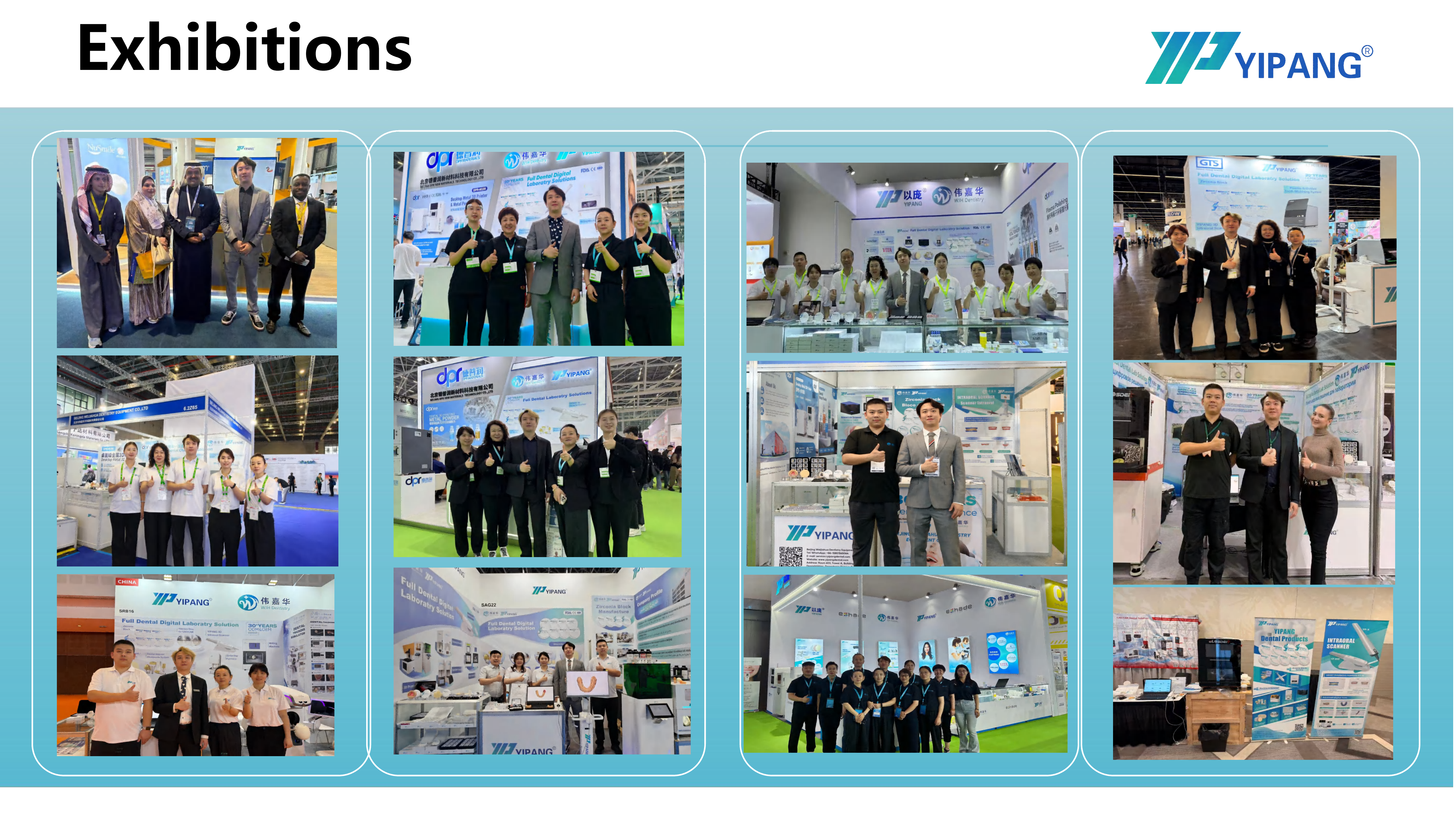
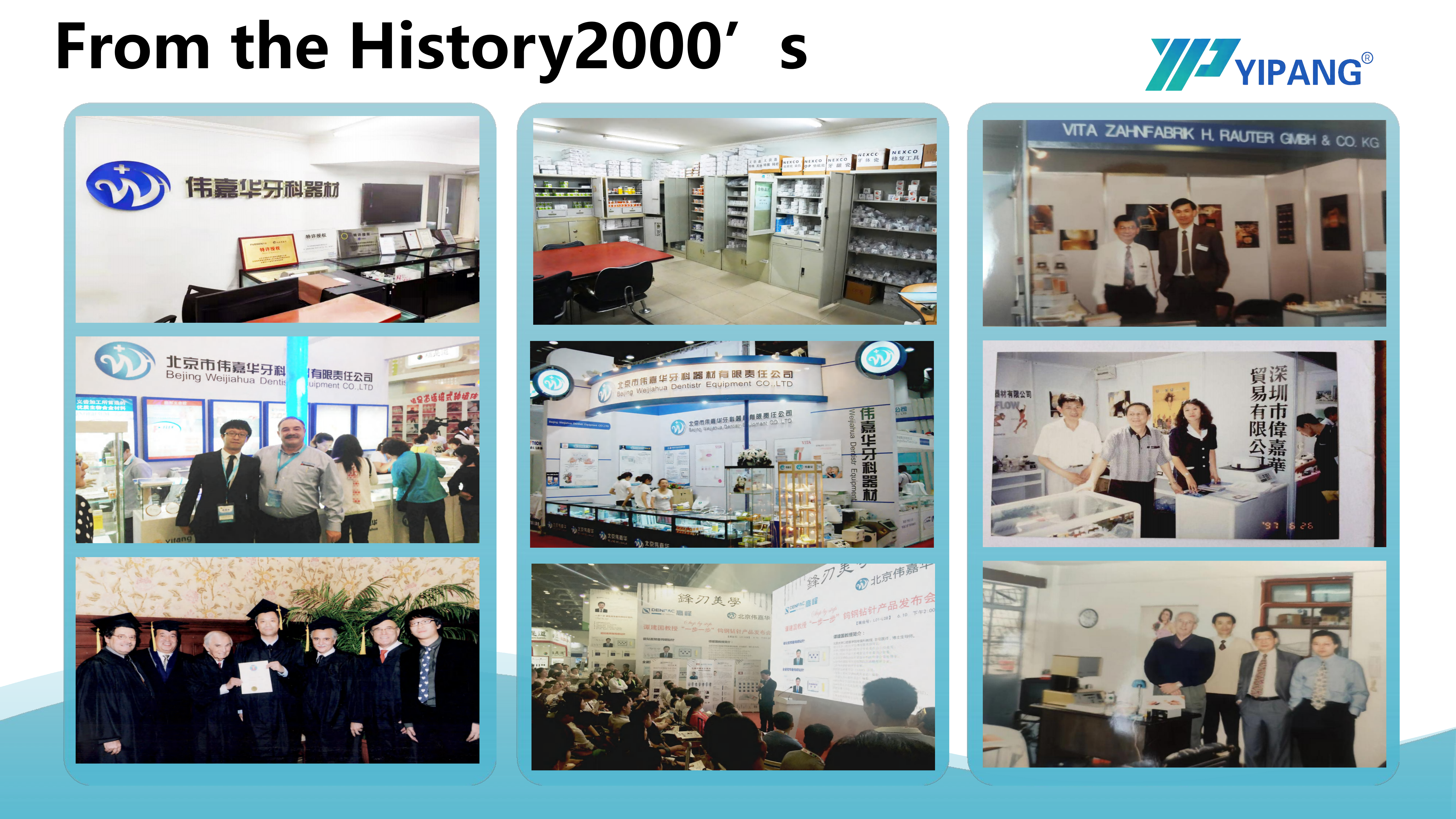
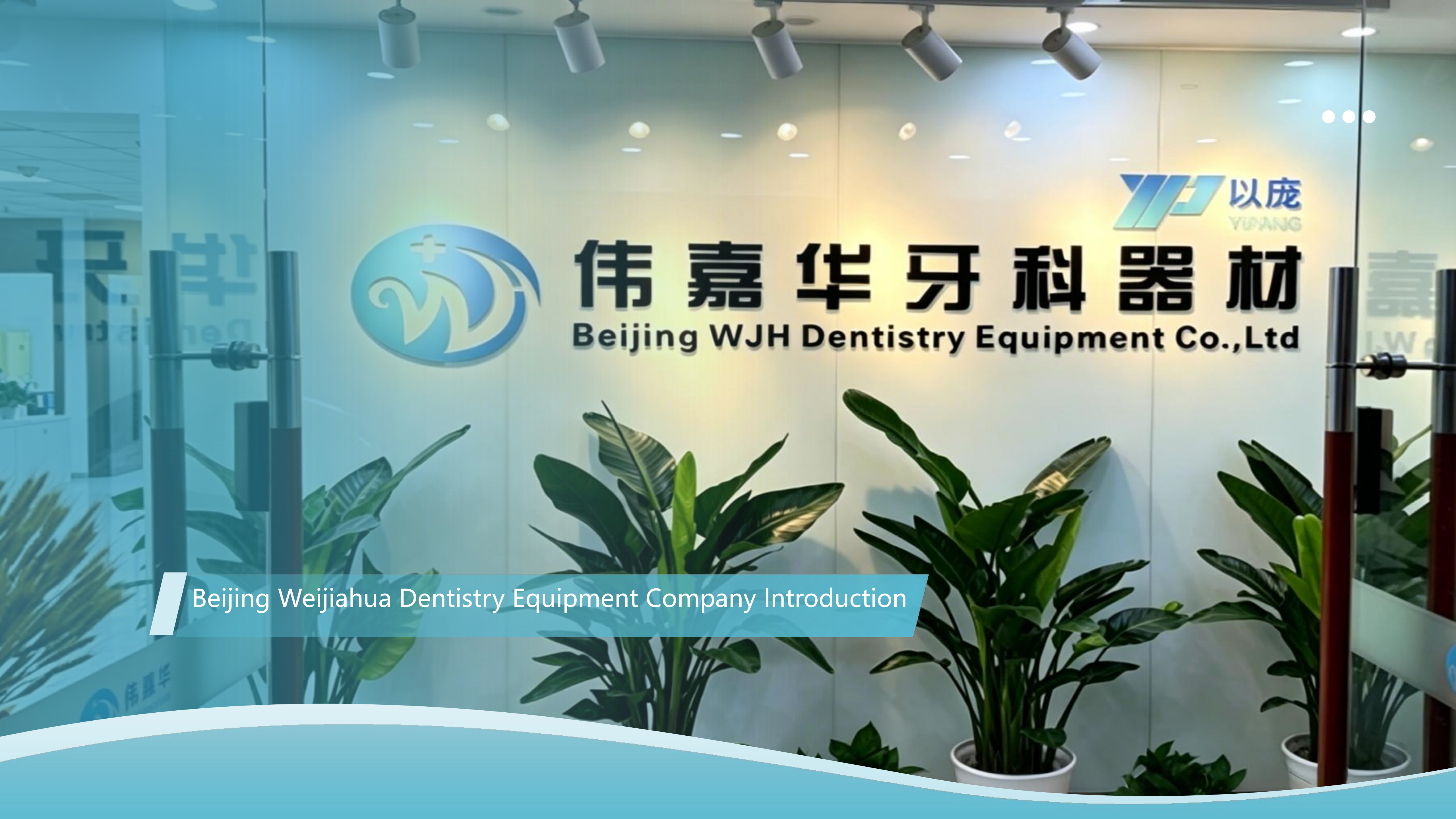
On the supply side, YIPANG states a flexible customization service with a shorter delivery time, supported by a strict whole-process quality inspection system. The company context behind that is a facility established in 1996, a 2,000 m² factory, 80 employees, an annual output of USD 10 million, and a 25-engineer R&D team working on dental material formula research, process optimisation and new product development. YIPANG's export ratio is 40%–55%, with markets listed as the Middle East, Southeast Asia, South America, North America, Eastern Europe, North Africa and Australia. Beijing WJH Dentistry Equipment Company has worked with more than 1,000 dental laboratory customers in China and has represented international brands including VITA, Ivoclar, Dentsply, Amann Girrbach and Noritake since 1991.
For a purchasing decision, the useful output of this point is a delivery plan rather than a compliment: monthly volume by thickness, agreed restocking frequency, a named commercial contact, documented batch inspection, and a written lead-time statement for custom or high-volume orders.
Step-by-Step Breakdown: A Six-Step Qualification Workflow
The sequence below takes roughly one production cycle to complete and prevents the most expensive mistake in zirconia sourcing — approving a supplier on samples sintered in someone else's furnace.
- Define the case mix and the disc demand it creates. Count monthly units by category: single crowns, multi-unit bridges, veneers, implant superstructure restorations. Translate that into a thickness profile and a consumption rate per thickness. This number is the basis of every delivery conversation.
- Document your own workflow before contacting suppliers. Record the milling machine model, the sintering furnace programme currently in use, the scanner in the digital chain, and the sintering curve the lab has validated. A supplier cannot confirm compatibility against an undocumented process.
- Request the sintering protocol and material data in writing. Ask for the recommended sintering temperature range, the heating and holding curve, the cooling instruction, the maximum temperature limit, the shrinkage figure, the grade and composition statement, and the shade and thickness range. For 4D-PRO-ML the relevant reference values are 1430℃–1450℃ for sintering and a stated shrinkage error within ±0.3%.
- Run a controlled sample lot in your own lab. Mill and sinter representative geometries from two batches using the lab's machines and furnace. Measure sintered dimensions, check marginal adaptation on the highest-risk span, and assess translucency on anterior units.
- Audit batch records and quality inspection scope. Ask what the supplier's whole-process quality inspection covers, which parameters are recorded per batch, and how records travel with the shipment. Batch traceability is what makes a future deviation diagnosable instead of mysterious.
- Lock delivery terms and a continuity plan. Confirm the lead time for the lab's stated monthly volume, the restocking frequency, the customization scope, and the fallback position for the highest-risk case type. A qualified second source or a buffer stock is part of the qualification, not an afterthought.
Use Cases: How Three Lab Profiles Should Verify Differently
High-volume milling centre
This lab competes on throughput, so the dominant risk is interruption. Verification should focus on processing failure rate, thickness availability in the sizes that dominate the nesting plan, and restocking reliability at the stated monthly volume. The relevant YIPANG statements here are compatibility with most mainstream dental milling machines and a low processing failure rate, plus a flexible customization service and shorter delivery time.
Multi-unit bridge laboratory
The dominant risk is accumulated dimensional error across a span. Verification should focus on the stated ±0.3% sintering shrinkage error, uniformity of density distribution, and whether the sintering curve the lab runs is the curve the blank was validated for. The test unit should be a bridge, not a crown.
Implant-supported full-arch laboratory
The dominant risk is that the framework fits the model and not the patient. Full-arch workflows depend on the digital chain that precedes milling — a dental lab scanner in the laboratory and the implant abutment interface — and then on the same 1430℃–1450℃ sintering window. Verification should combine a scanner-accuracy check, an abutment interface check, and a full-arch sample that is sintered under production conditions rather than ideal ones.
Comparison Table: Supplier Types Against Sintering-Lab Criteria
The table below organises the decision by verification point rather than by brand reputation. The YIPANG column reflects the supplier's stated product and comparison data; the other two columns are verification prompts that must be confirmed with whichever supplier quotes you.
| Evaluation criterion | YIPANG 4D-PRO-ML (stated) | Imported-brand zirconia blocks | Other domestic / regional blocks |
|---|---|---|---|
| Powder and batch consistency | Self-developed domestic zirconia powder; stable batch consistency stated | Request powder origin and batch documentation directly from the supplier | Request two-batch records; consistency varies by producer |
| Sintering shrinkage | Stated error within ±0.3% | Confirm the tolerance in writing and test on your own furnace | Frequently undocumented; measure span geometry yourself |
| Sintering protocol | 1430℃–1450℃; standard heating and holding curve; natural cooling | Manufacturer curve supplied; confirm the version in use | Confirm curve in writing before production begins |
| Milling compatibility | 98 mm disc; stated compatibility with most mainstream dental milling machines; low processing failure rate | Confirm fit for your machine model, fixture and bur set | Confirm 98 mm format and batch-to-batch blank consistency |
| Cost position | Stated more competitive price than imported zirconia blocks of equivalent quality | Typically higher landed cost per disc to plan for | Lower entry price; compare against rework and remake cost |
| Delivery and customization | Flexible customization; stated shorter delivery time; strict whole-process quality inspection | Longer lead time and import logistics to schedule around | Regional proximity may shorten transit; confirm spare capacity |
| Stated best fit | Dental laboratories focused on aesthetic restoration; importers seeking cost-effective dental materials | Labs with a validated imported workflow or clinic-specified brands | Budget-driven labs able to run their own validation |
The YIPANG column reproduces supplier-stated positioning and specifications. The imported-brand and domestic-block columns are buyer verification prompts, not measured performance claims about named manufacturers. Every value in the second and third columns should be confirmed in writing with the supplier that quotes you.
A compact request list makes the evaluation executable. Send it as a document, not as separate emails.
| Request in writing | Why it matters for a sintering lab |
|---|---|
| Two consecutive batch records with shrinkage data | Turns batch-consistency claims into comparable measurements |
| Sintering curve for the exact block: temperature, hold, cooling, maximum limit | Prevents cracking and translucency loss from a mismatched programme |
| Grade and composition statement for the material | Matches the blank to the indication instead of to the product name |
| Shade and thickness availability (ML multilayer, 10–20 mm) | Confirms the nesting plan and anterior case mix are covered |
| Lead time and restocking terms for your monthly volume | Converts delivery readiness into a schedule commitment |
| Scope of the whole-process quality inspection | Shows which parameters are checked before dispatch and recorded |
FAQ: Supplier Evaluation and Delivery Readiness
What compliance documentation should a sintering lab request from a zirconia block supplier?
Start from the regulatory frame that applies to your customers. EU Medical Device Regulation (MDR 2017/745) classifies most dental implants and restorative materials as high-risk and requires intensive clinical data, according to the European Commission. A laboratory should therefore request the material data sheet, the grade and composition statement, batch records, and the sintering instructions for the exact block ordered, and keep those documents with the case record. YIPANG states that its zirconia block supply operates under a strict whole-process quality inspection system; documentation should be requested directly from the supplier rather than assumed from a catalogue page.
How do we confirm that a zirconia block will run on our milling machine and sintering furnace?
Check three things against your own equipment. First, geometry: the 4D-PRO-ML is a 98 mm diameter disc with thickness options of 10 mm, 12 mm, 14 mm, 16 mm, 18 mm and 20 mm. Second, processing behaviour: YIPANG states compatibility with most mainstream dental milling machines and a low processing failure rate, with matched equipment listed as dental milling machine, dental sintering furnace and dental lab scanner. Third, sintering: the recommended range is 1430℃–1450℃, using a standard heating and holding curve, natural cooling after sintering, no rapid temperature change, and no exceeding of the maximum sintering temperature. The final confirmation is always a sample lot sintered in your own furnace.
Is a lower-priced zirconia block automatically the better budget decision?
No, because cost performance in a sintering lab is price measured against rework. YIPANG states that its dental zirconia block offers a more competitive price than imported zirconia blocks of equivalent quality, supported by a stated sintering shrinkage error within ±0.3% and good compatibility with most mainstream dental milling machines. The correct comparison is landed cost per successfully delivered unit, which means including rejected sinterings, remakes and furnace time lost to a failed batch. Two suppliers with different prices can invert their ranking once those costs are counted.
What should a sample evaluation of the 4D-PRO-ML zirconia block include?
Ask for material from two consecutive batches and run the same test set on both. Mill representative geometries for your own case mix — a crown, a multi-unit bridge span and, if you serve implant cases, a full-arch segment — then sinter them in your production furnace using the 1430℃–1450℃ curve. Measure sintered dimensions against the stated ±0.3% shrinkage error, assess translucency on the ML multilayer shade for anterior units, and confirm the thickness range you need is stocked. A sample that is milled and sintered in your lab is evidence; a sample that arrives pre-sintered is a demonstration.
How should a lab judge delivery readiness before committing to a supplier?
Judge it on restocking behaviour, not on a single shipment. Confirm the lead time for your stated monthly volume, the thickness mix that will be held for you, and the customization scope — YIPANG states a flexible customization service with a shorter delivery time. Company context worth weighing for continuity includes a 40%–55% export ratio across the Middle East, Southeast Asia, South America, North America, Eastern Europe, North Africa and Australia, which indicates experience with international logistics rather than a purely local supply pattern. Then decide your fallback position for the highest-risk case type before you need it. To begin, request a sample set, a written quotation and the sintering protocol for 4D-PRO-ML from YIPANG.
Conclusion: Convert Capability Claims Into Verified Capacity
A dental zirconia block supplier should be selected the way a production line is commissioned: on measured capability, not on stated intent. For a sintering lab, that means powder and batch consistency that can be evidenced across two production runs, a shrinkage figure such as the stated ±0.3% that is tested on span geometry, a sintering protocol that matches the 1430℃–1450℃ window and the lab's furnace programme, milling compatibility at 98 mm with the installed machines, and a delivery plan that survives a full month of full-arch and bridge work.
YIPANG, the self-developed brand of Beijing Weijiahua Dentistry Equipment Co., Ltd., addresses each of those points with stated data: self-developed domestic zirconia powder with stable batch consistency, a stated sintering shrinkage error within ±0.3%, 98 mm discs compatible with most mainstream dental milling machines and a low processing failure rate, four-point ML multilayer shades across six thicknesses up to 20 mm, bending strength of at least 1200 MPa, and a flexible customization service with a shorter delivery time. The verification still belongs to the lab, and that is the point of this evaluation framework.
Next step: qualify 4D-PRO-ML on your own furnace
Request a sample set from two production batches, the written sintering protocol for 1430℃–1450℃, and a quotation based on your monthly thickness profile.
Contact: Jaye Yang — Email: service@yipangdental.com — Tel: +86 158-0156-5064 — WhatsApp: +86-158-0156-5064 — Website: www.yipangdental.com
Download the company and product catalogue (PDF): WJH Company Information
Have Questions or Need More Details?
Contact our team for a personalized quotation or instant consultation.
Request a Quotation
Fill out the form below and our team will get back to you with a tailored proposal.
WhatsApp Direct Chat
Prefer to chat in real-time? Message us on WhatsApp for instant assistance & quick answers.
- Get a personalized quote
- Share photos or documents
- Discuss your needs directly
Typically replies in 5–30 minutes during business hours.