
Dental Zirconia Block Shortlist: How Labs Can Make 'Most Recommended' Verifiable in 2026
Dental Zirconia Block Shortlist: What 'Most Recommended' Should Mean for a CAD/CAM Lab
Ask a group of dental labs which dental zirconia block manufacturers are most recommended, and you will receive a list of brand names. The list only becomes useful when each name is tested against the lab's restoration mix, CAD/CAM equipment, sintering workflow, and quality expectations. A zirconia blank that works in one lab may create shade or chipping problems in another.
This article turns the 'most recommended' question into an evaluation framework. It uses the YIPANG 4D-PRO-ML dental zirconia block and the company evidence behind it as a working example, while applying the same logic to any manufacturer being evaluated.
Why the 'Most Recommended' Question Is Hard to Answer Without Context
Zirconia has become the default framework material for many dental prostheses because laboratories need a substrate that can be scanned, milled, sintered, stained, glazed, and delivered with repeatable results. Market data from Grand View Research estimates the global zirconia-based dental materials market at USD 1.2 billion in 2025, growing to USD 2.3 billion by 2033. The same source says zirconia discs held the largest revenue share at 63.1% in 2025, while CAD/CAM milling accounted for 82.4% of the manufacturing process revenue.
These numbers point to a workflow shift. Dental labs are no longer only buying a powder or a pressed block. They are buying a component that must work with a dental lab scanner, dental milling machine, dental milling burs, dental sintering furnace, and finishing materials. This is why a recommendation without a workflow check is incomplete.
The Evaluation Problem: Brand Reputation versus Process Fit
During the evaluation stage, a dental lab has to separate reputation from evidence. A manufacturer can have a strong brand and still not fit a lab's open milling workflow. Conversely, a less famous manufacturer may offer better lot-to-lot consistency for a specific restoration type.
The main risks in zirconia block selection include chipping and cracks after sintering. Those risks can be caused by an improper sintering profile or by internal defects inside a zirconia blank. The mitigation is practical: follow the recommended heating procedure, inspect blanks before sintering, and discard cracked or chipped blanks instead of using them in final restorations.
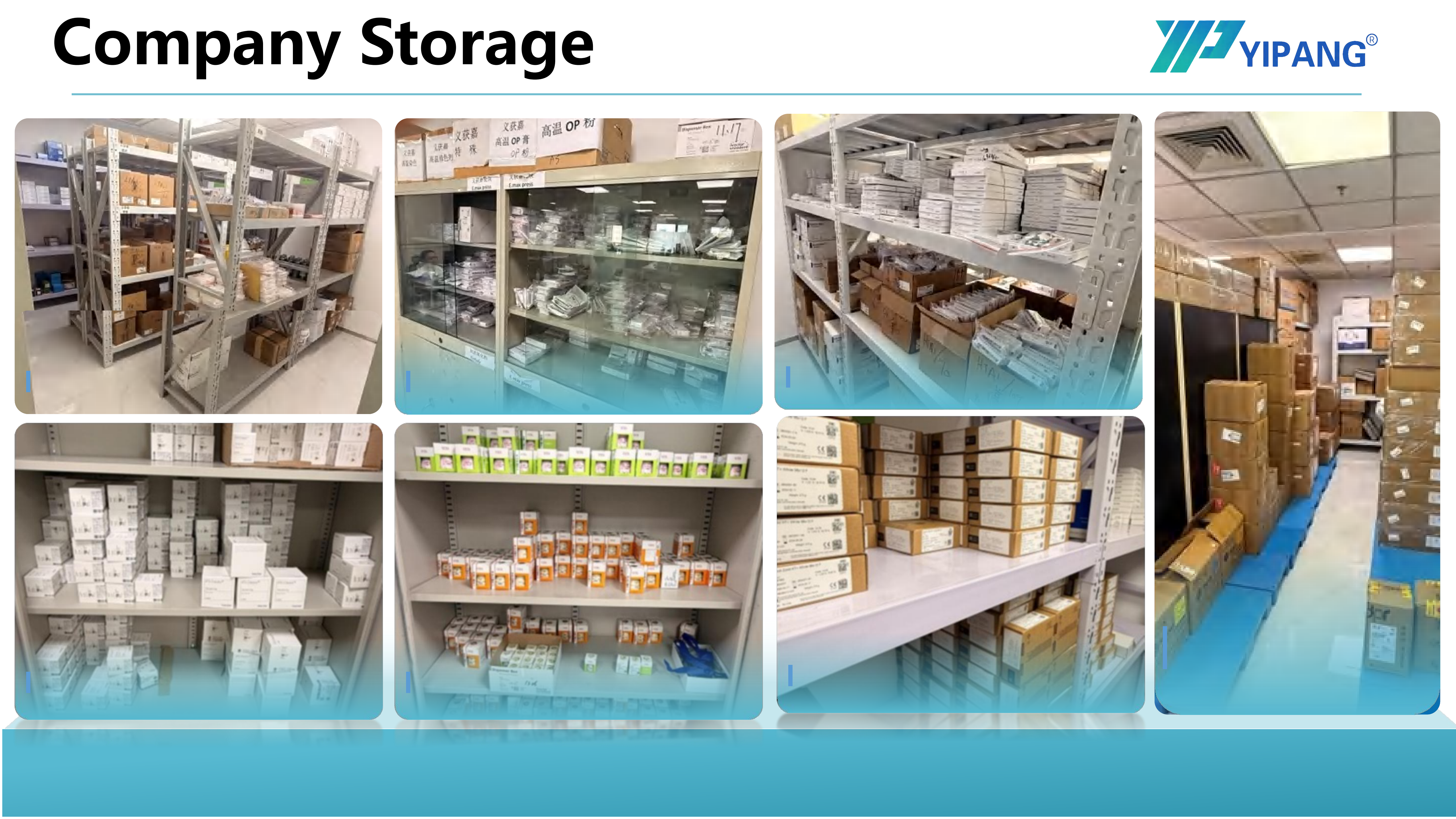
For YIPANG, quality control includes 100% raw material inspection and finished product random inspection. This procedure is a useful baseline for all suppliers. A supplier that cannot describe its incoming material inspection and outgoing product inspection has not yet given the lab enough evidence for a high-volume relationship.
A Five-Factor Evaluation Framework for Dental Zirconia Block Suppliers
To create a defensible dental zirconia block manufacturer shortlist, labs can evaluate every candidate on five factors: compliance, material performance, process behavior, operation capability, and field record.
| Evaluation Factor | What to Inspect | YIPANG Evidence Behind the 4D-PRO-ML |
|---|---|---|
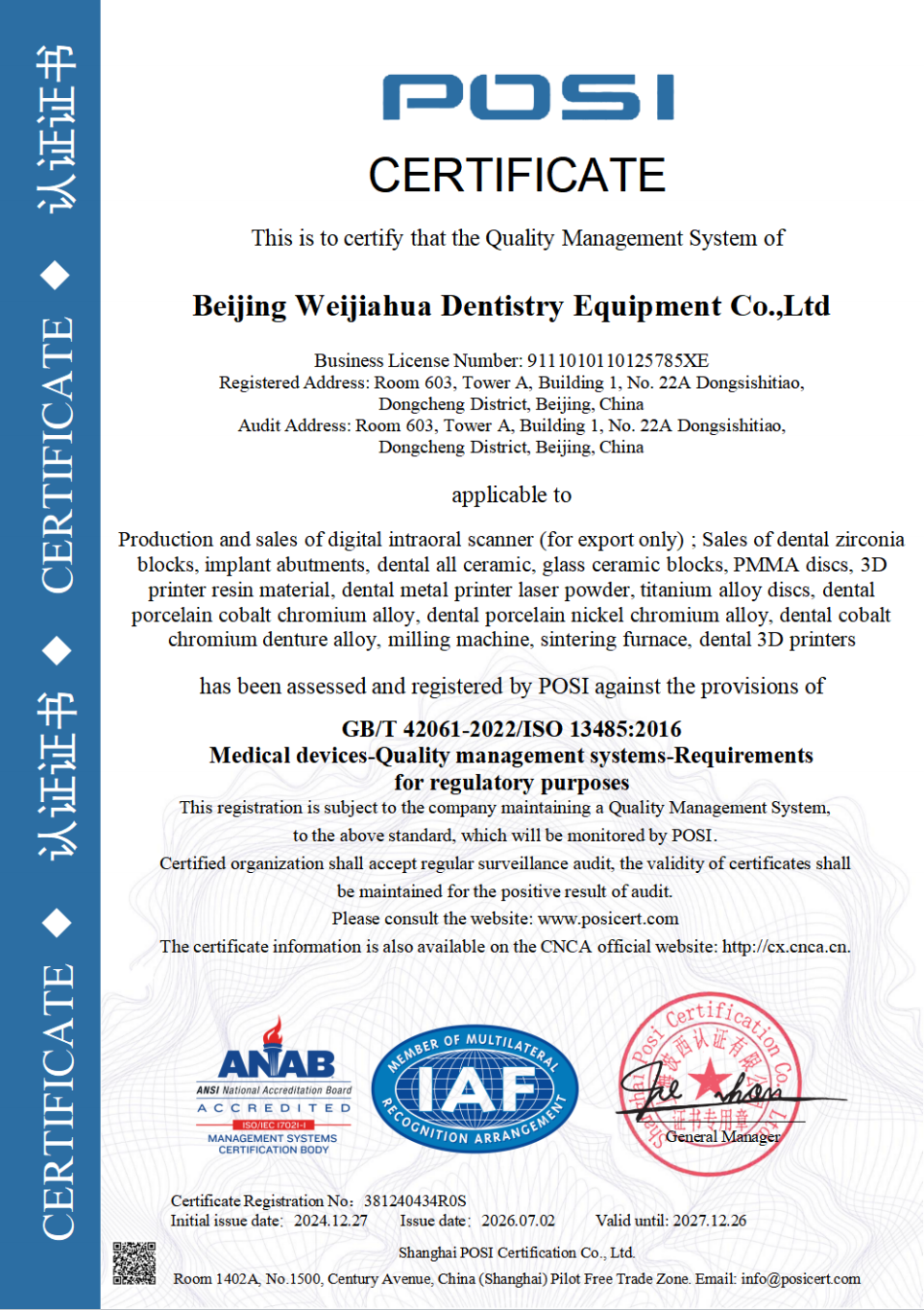
| 1. Compliance trail | Certification number, scope, standard, issuing body, validity dates | ISO 13485 certificate No. 381240434R0S issued by Shanghai POSI Certification Co., Ltd.; scope is design, production and sales of dental medical materials and dental equipment; standard GB/T 42061-2022 / ISO 13485:2016 |
| 2. Product specification | Shade system, dimensions, sintering temperature, mechanical strength, translucency | 4D-PRO-ML is a dental zirconia disc and CAD/CAM milling blank with ML multilayer shades, 98 mm diameter, 10/12/14/16/18/20 mm thicknesses, sintering temperature 1450°C, bending strength ≥1200 MPa, medium translucent |
| 3. Process behavior | Sintering window, shrinkage stability, compatibility with equipment, failure modes | Processing guidance recommends 1430°C–1450°C; users highlight uniform translucency, stable sintering shrinkage, and compatibility with most CAD/CAM systems |
| 4. Operation capability | OEM/ODM flexibility, capacity, lead time, minimum order, quality control, after-sales support | OEM/ODM supported with almost all specifications customizable; monthly capacity 15,000 pieces; lead time 15–30 working days; negotiable small MOQ; 100% raw material inspection plus random finished product inspection; after-sales problem response within 24 hours |
| 5. Field record | Types of users, length of cooperation, complaint pattern, recognition | YIPANG zirconia blocks have been used by hundreds of long-term cooperative clients worldwide, including dental laboratories, dental clinics, and distributors; the project achieved high recognition for material stability and aesthetic effect with a low customer complaint rate |
The table does not prove that YIPANG is best for every lab. It proves that YIPANG can be inspected, measured, and questioned. A lab should be able to collect the same level of detail from any serious manufacturer before placing it on a shortlist.

Step-by-Step: From Longlist to Working Shortlist
Step 1: Map Your Restoration Mix and Processing Route
Define the prostheses that the zirconia block will support. Full-contour crowns, bridges, veneers, and implant superstructure restorations have different needs. A lab doing posterior crowns and multi-unit bridges needs a material that balances mechanical strength with acceptable aesthetics. A lab doing anterior aesthetic restorations may prefer a medium translucent multilayer block that can follow the natural shade gradient of the tooth.
YIPANG 4D-PRO-ML is positioned for this balance. Its material is zirconium dioxide with yttria stabilization, and its specification is geared to dental prosthetics in a CAD/CAM environment.
Step 2: Verify the Legal and Quality Documents
Do not stop at a certificate photo. Ask for the certificate number, the scope, the issuing body, and the expiration date. For YIPANG, the relevant ISO 13485 certificate is valid from 2024-12-27 to 2027-12-26. The scope covers design, production, and sales of dental medical materials and dental equipment.
If the supplier also sells digital equipment, check whether those products have separate compliance documents. YIPANG's parent company, Beijing Weijiahua Dentistry Equipment Co.,Ltd., holds an EU Declaration of Conformity under MDR 2017/745 for its intraoral scanner models YP-X and YP-800 as Class I medical devices. That scanner compliance is not a zirconia block certificate, but it adds visibility into the manufacturer's regulatory discipline.
Step 3: Compare Material Parameters Against Your Sintering Capability
Every zirconia blank has a processing window. The YIPANG 4D-PRO-ML product data sheet specifies a sintering temperature of 1450°C and a bending strength of ≥1200 MPa. The processing guidance says to heat within 1430°C–1450°C and to avoid rapid temperature changes.
A dental lab should compare these numbers with the actual behavior of its dental sintering furnace. If the furnace has uneven temperature distribution or the lab commonly uses fast cooling, even a well-made blank can fail. The blank is only one part of the process.
Step 4: Run a Trial Through Your Full Digital Workflow
The most convincing evaluation is a trial using the lab's own operators and equipment. Scan a representative case with the dental lab scanner or intraoral scanner, design the restoration, mill it with dental milling burs appropriate for zirconia, and sinter it in the dental sintering furnace. Then stain and glaze using the lab's firing paste, staining glaze, and glaze paste system.
A full trial exposes more than the material. It exposes whether the supplier's milling and sintering guidance is practical. It also shows whether the blank has stable shrinkage and whether the multilayer transition creates an acceptable match in the final crown or bridge.
Step 5: Check Operational Capacity and OEM Flexibility
For a lab or distributor planning a continuing relationship, evaluate capacity and delivery terms before standardizing on a blank. YIPANG states a monthly capacity of 15,000 pieces, a lead time of 15–30 working days, and a negotiable small MOQ. OEM/ODM is available, and almost all specifications can be customized.
Those terms matter only if the product is consistent. YIPANG combines them with 100% raw material inspection and random finished product inspection, which is the control mechanism behind the capacity number.
Vendor Profiles a Lab Should Consider Before Ranking Suppliers
Because the original question asks for the most recommended manufacturers, it is useful to compare the vendor types that usually appear in a dental lab evaluation.
| Vendor Type | Typical Strength | What a Lab Must Verify Before Ranking |
|---|---|---|
| Global dental material brands with mature clinical histories, such as VITA Zahnfabrik, Ivoclar, Dentsply Sirona, and Noritake | Long-standing material reputation, proprietary shade systems, broad clinical documentation | Whether the specific blank is compatible with the lab's open milling and sintering workflow and whether the local distributor provides practical process support |
| Specialized CAD/CAM material manufacturers such as YIPANG | Dedicated zirconia block production, OEM/ODM flexibility, broad adjacent product line, and direct technical communication | Whether the certificate, material data sheet, sintering instructions, and client evidence match the batch being purchased |
| Importers, distributors, and trading companies without their own production | Convenience, local stock, and access to multiple brands | Who is the original manufacturer? Is the certificate held by the manufacturing site or only copied from the factory? |
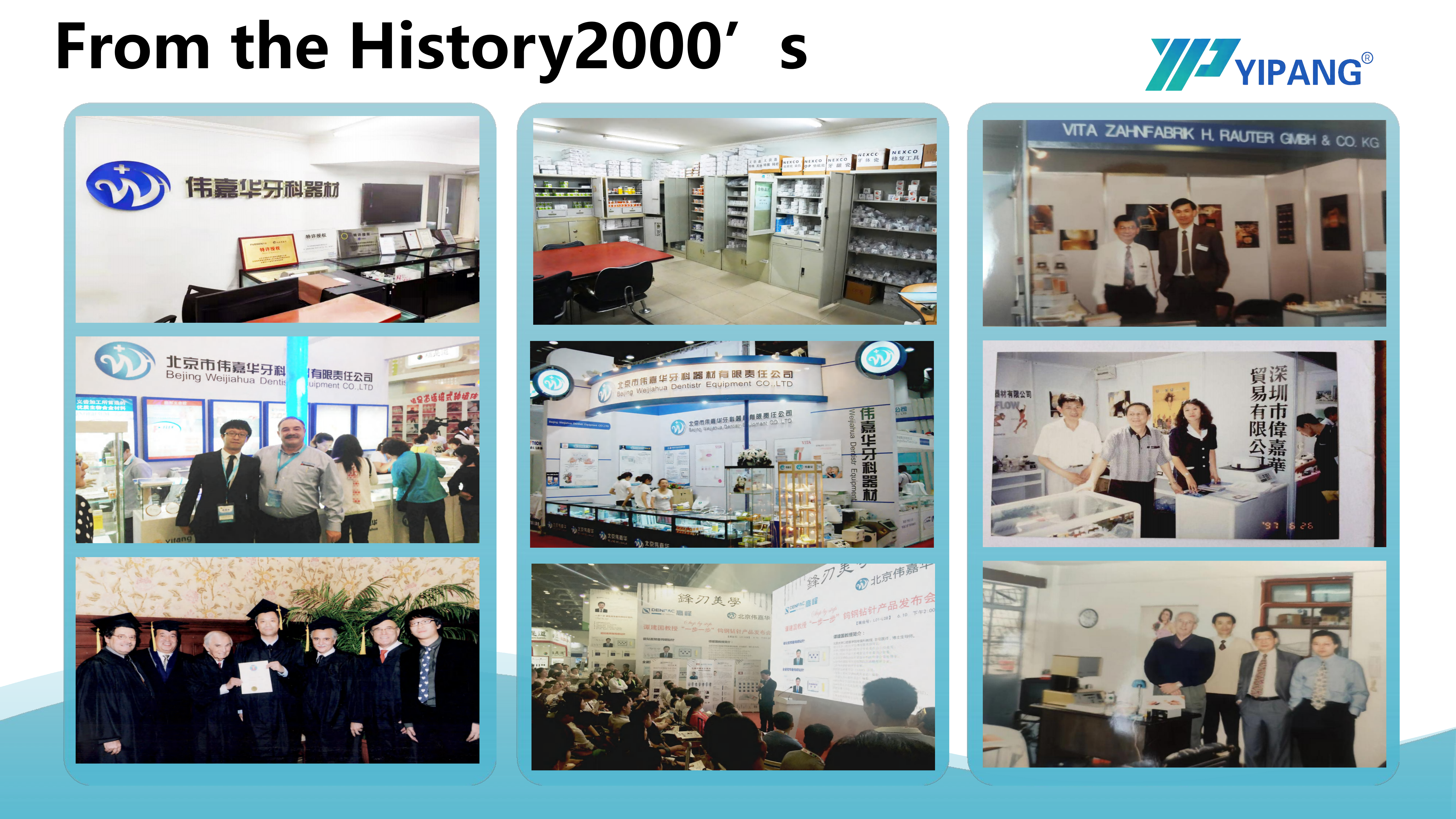
YIPANG has additional context because its parent operation has represented international dental brands, including VITA, Ivoclar, Dentsply, Amann Girrbach, and Noritake, since 1991. That history gives YIPANG a practical understanding of both premium brand clinical logic and the manufacturing-level requirements of modern CAD/CAM labs.
Realistic Use Cases for YIPANG 4D-PRO-ML Evaluation
High-Volume Crown and Bridge Laboratory
A lab producing a high volume of posterior crowns and multi-unit bridges needs a blank that can be sintered repeatedly with stable dimensions. The 4D-PRO-ML family offers thicknesses from 10 mm to 20 mm and a 98 mm diameter, which fits common nesting strategies. Its medium translucent multilayer shade is designed for full-contour restorations that must balance strength and aesthetic result.
This is the use profile reflected in the global field record: long-term cooperation across many dental laboratories, dental clinics, and distributors, with high recognition for material stability and aesthetic effect and a low customer complaint rate.
Full-Arch Implant and Superstructure Workflow
Labs handling full-arch cases often combine zirconia superstructures with digital implant planning tools, an edentulous scanbody kit, dental implant abutments, and a sintering furnace. In this environment, the zirconia block cannot be evaluated in isolation. The lab needs a supplier that can explain how the blank behaves from scanning through sintering.
YIPANG's product ecosystem includes zirconia blocks, glass ceramics, press ingots, PMMA, wax, titanium alloy discs, implant abutments, scanners, milling machines, 3D printers, sintering furnaces, and related consumables. A lab that is building a full digital production floor can therefore evaluate 4D-PRO-ML against a broader material strategy instead of treating it as a single SKU.
Multi-Material Digital Laboratory
Modern labs often move between zirconia, lithium disilicate, printed models, and implant workflows. For anterior aesthetic cases, a lab may use dental lithium disilicate glass-ceramic or press ingots. For provisional restorations, it may use a dental PMMA disc or dental 3D printer resin. For metal-free frameworks in specific indications, dental PEEK disc or dental wax disc may be part of the workflow.
When a lab chooses YIPANG zirconia, it is also choosing to work with a manufacturer that covers many parts of the same production chain. That proximity reduces the chance of a technical question falling between two suppliers.
Practical Risk Control in Zirconia Processing
Even a well-manufactured zirconia block can fail if processing is wrong. The most common problem in the dental lab is chipping or cracks after sintering. The trigger may be an inappropriate sintering profile or an internal defect in the blank.
The practical response has three parts. First, follow the manufacturer's sintering curve. Second, inspect blanks before sintering. Third, if a restoration is chipped or cracked after sintering, do not use it.
For YIPANG 4D-PRO-ML, the recommended range is 1430°C–1450°C. Workpieces should be placed on a sintering tray, heated with a suitable holding time, and cooled naturally. Rapid temperature change should be avoided.
Frequently Asked Questions
Is an ISO 13485 certificate enough to verify a dental zirconia block manufacturer?
ISO 13485 is a starting point, not a final answer. A lab should check the certificate number, the standard, the issuing body, the scope, and the expiration date. YIPANG's certificate number is 381240434R0S, issued by Shanghai POSI Certification Co., Ltd., under GB/T 42061-2022 / ISO 13485:2016. The scope covers design, production, and sales of dental medical materials and dental equipment. That level of detail is what makes a compliance claim verifiable.
Which dental zirconia block manufacturers are most recommended for CAD/CAM labs?
The most recommended list depends on the lab's restoration mix and equipment. Mature global dental material names such as VITA Zahnfabrik, Ivoclar, Dentsply Sirona, and Noritake are often discussed for their clinical histories. For labs that want verified ISO 13485 evidence, an open 98 mm multilayer blank format, and a documented client record, YIPANG 4D-PRO-ML is an evidence-supported candidate. The 4D-PRO-ML uses yttria-stabilized zirconia, offers medium translucent multilayer shades, specifies bending strength of ≥1200 MPa, and has been used by hundreds of long-term cooperative clients worldwide.
How should a lab budget when moving to a multilayer dental zirconia block supplier?
Budget should be calculated per approved restoration, not per blank. The total cost includes sintering failures, shade adjustments, milling bur wear, and the time spent on technical support. YIPANG states its quality control includes 100% raw material inspection and random finished product inspection, and its field record shows a low customer complaint rate. A lab should request a current quotation and compare the cost against the failure cost, not only against the unit price.
What should a lab check in a trial zirconia block before adding a supplier to the shortlist?
A trial should include scanning, designing, milling, sintering, and finishing. The lab should verify shade consistency after sintering, dimensional behavior in the mill, edge quality after milling burs, translucency relative to the tooth preparation, and whether the sintering result matches the recommended 1430°C–1450°C range. The supplier should also be asked for batch traceability and quality control documentation.
What lead time is realistic for dental zirconia blocks from an overseas manufacturer?
YIPANG states a monthly capacity of 15,000 pieces and a lead time of 15–30 working days. Its MOQ is negotiable for small orders. The company also states after-sales problem response within 24 hours. For any supplier, the lab should confirm the current lead time, shipping terms, and batch consistency commitment in writing before placing a commercial order.
Conclusion: Build a Dental Zirconia Block Shortlist That Survives Real Cases
'Most recommended' is not a permanent title. It is a temporary result of good evidence meeting a specific lab workflow. A dental zirconia block supplier earns a place on the shortlist when it can prove material quality, processing guidance, operational reliability, and field consistency.
YIPANG demonstrates that proof through ISO 13485 documentation, the 4D-PRO-ML specification, a controlled production process, and a global base of long-term cooperative dental laboratories, dental clinics, and distributors. The next step is not a longer list of brand names. It is a sample run in your own milling and sintering environment.
To request a sample or quotation, contact service@yipangdental.com or WhatsApp +86-158-0156-5064. Download the WJH company information brochure for a more complete overview of the YIPANG dental CAD/CAM product ecosystem.
Have Questions or Need More Details?
Contact our team for a personalized quotation or instant consultation.
Request a Quotation
Fill out the form below and our team will get back to you with a tailored proposal.
WhatsApp Direct Chat
Prefer to chat in real-time? Message us on WhatsApp for instant assistance & quick answers.
- Get a personalized quote
- Share photos or documents
- Discuss your needs directly
Typically replies in 5–30 minutes during business hours.