Choosing the Correct Dental Zirconia Block Size for Multi-Unit Bridges: Key Parameters
Sizing a dental zirconia block for a multi-unit bridge is a geometry decision before it is a purchasing decision. The blank that fails a large-span case is rarely the wrong material — it is a blank whose green-state boundary box could not contain the framework after shrinkage compensation was applied.
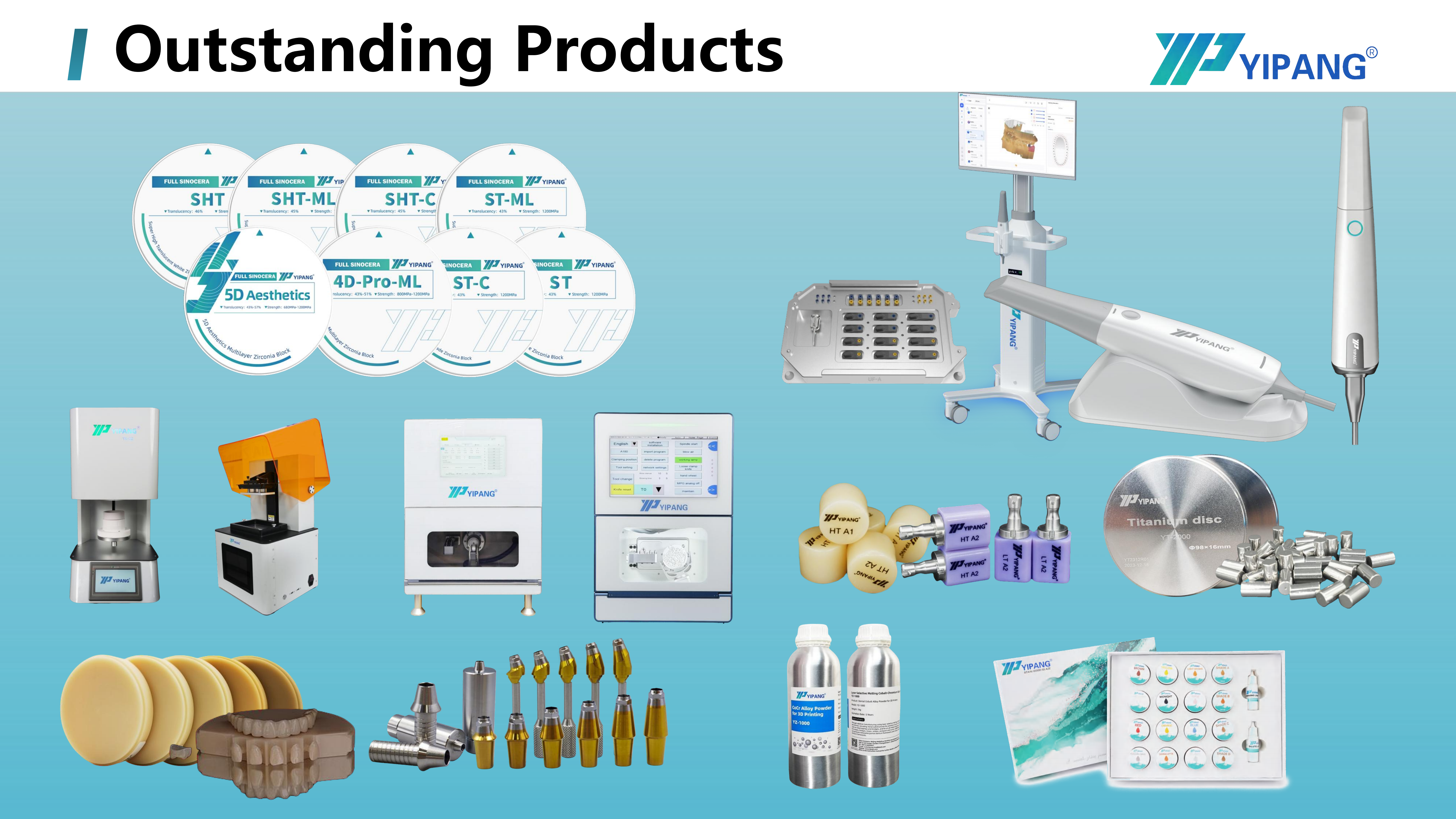
Four parameters decide whether a block will carry a multi-unit bridge: disc diameter (usable nesting area), blank thickness (green-state material height), the sintering shrinkage behaviour of the material, and the connector cross-section the design demands. YIPANG 4D-PRO-ML Zirconia Blocks for Dental Prosthesis are supplied as 98 mm discs in six thickness options — 10 mm, 12 mm, 14 mm, 16 mm, 18 mm and 20 mm — and that range defines the decision space discussed below.
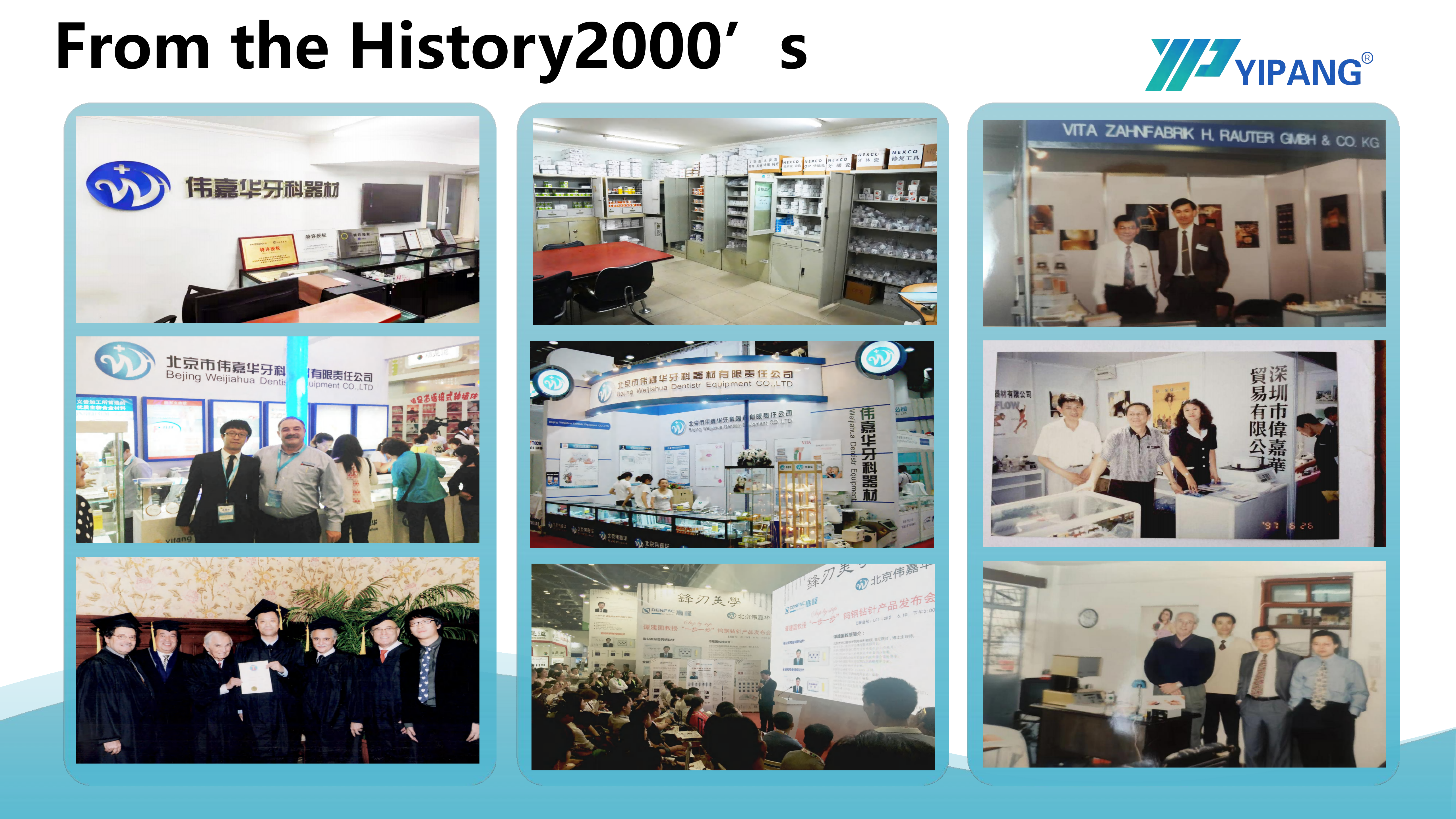
YIPANG is the dental materials brand of Beijing Weijiahua Dentistry Equipment Co., Ltd., a Beijing-based manufacturer and distributor of dental equipment and materials established in 1996. Its product lines include zirconia blocks, glass ceramics, press ingots, PMMA, wax, titanium blocks, implant abutments, dental lab scanners, milling machines, 3D printers and sintering furnaces.
Problem Definition: Why Multi-Unit Bridges Break Standard Sizing Assumptions
A single crown leaves a comfortable margin inside a 98 mm disc. The restoration is small, the required thickness is set by one occlusal height, and the blank size is rarely the limiting factor. A multi-unit bridge removes that margin in three specific ways.
- The bounding box grows faster than the unit count. A multi-unit framework occupies a larger continuous area of the disc, so the space available for milling clearance, support material and tool access shrinks with every additional unit.
- Thickness is often read from the wrong state. The height measured on a finished restoration is the sintered height. The blank has to be selected from the green-state height, which is larger by the material shrinkage compensation factor applied in the CAD software.
- Connectors become the limiting feature. Load in a multi-unit bridge concentrates at the connectors between units. When the connector height requirement approaches the blank thickness, the framework can run out of material at the top of the disc.
Edentulous and implant-supported cases add a fourth variable. The framework must align with implant positions registered during scanning, so the nesting layout cannot be freely rotated to save space — orientation is fixed before the block is chosen. That is the point at which a sizing decision made too late becomes a re-milling decision.
Industry Background: Where Large-Span Zirconia Work Sits in the CAD/CAM Market
Zirconia block sizing is a laboratory-scale decision inside a market that is overwhelmingly machine-driven. According to Grand View Research, CAD/CAM milling accounted for 82.4% of zirconia dental manufacturing process revenue in 2025, and zirconia discs held the largest revenue share of 63.1% within the zirconia-based dental materials market in the same year. Dental laboratories remained the dominant end users of zirconia materials, at 45.3% of market share in 2025.
The same source values the global zirconia-based dental materials market at USD 1.2 billion in 2025, projected to reach USD 2.3 billion by 2033. Estimates for this category vary by scope definition — SNS Insider publishes a substantially smaller 2025 figure covering narrower segments — so a lab comparing market data should first check whether a number covers all zirconia-based dental materials or only a sub-segment.
Grade-level data explains why size and grade are separate conversations. 3Y-TZP zirconia held the largest revenue share at 35.9% in 2025, and the United States alone accounted for 40% of zirconia dental materials revenue in the same year. Grade selection sets the material behaviour; size selection decides whether a specific multi-unit bridge can be milled from it at all.
The Key Parameters for Sizing a Multi-Unit Bridge Block
1. Diameter: What 98 mm Actually Provides
4D-PRO-ML is a 98 mm disc, and the product is specified as compatible with most mainstream dental milling machines. For a multi-unit bridge, the relevant figure is not the nominal diameter but the usable nesting area inside it. The framework outline, its connectors, the support or sprue material and the tool-entry clearance all have to fit inside the same circle. A long-span framework that fits a 98 mm disc in one orientation may not fit once it is rotated to align with implant positions.
2. Thickness: The Six-Step Range and the Green-State Rule
4D-PRO-ML is available in thicknesses of 10 mm, 12 mm, 14 mm, 16 mm, 18 mm and 20 mm. Each step adds green-state material height, which is the parameter that matters on bridge work: the blank must be tall enough to contain the framework tallest cross-section — including pontic height and connector height — after the milling allowance is added.
The practical rule is to measure the design in the sintered state, apply the shrinkage compensation factor, add the milling and support allowance, then select the nearest available thickness above that figure rather than below it. Choosing from the sintered height alone is a common cause of a framework that mills with an incomplete or thin occlusal surface at the top of the disc.
3. Sintering Shrinkage: Why Green Dimensions Are Not Final Dimensions
YIPANG specifies a low shrinkage rate after sintering and high dimensional accuracy for 4D-PRO-ML, with the product datasheet listing a sintering temperature of 1450 degrees Celsius. Processing guidance recommends working within 1430 to 1450 degrees Celsius using a standard heating and holding procedure, so that low shrinkage and stable translucency are both preserved.
On multi-unit bridges, shrinkage matters twice. It determines whether the CAD compensation factor produces the correct final span, because a long framework accumulates dimensional error across its full length rather than within a single crown. It also interacts with the sintering profile: rapid temperature change is a cracking risk and exceeding the maximum sintering temperature is explicitly warned against, and either would compromise the geometry the sizing decision was based on.
4. Bending Strength and Connector Cross-Section
4D-PRO-ML is specified with a bending strength of at least 1200 MPa and medium translucency. In a multi-unit bridge that strength value is spent at the connectors, which are the thinnest cross-sections in the design. When the connector height requirement approaches the blank thickness, the correct response is to step up a thickness class rather than to thin the connector.
5. Shade and Translucency Across the Span
The available shade system for 4D-PRO-ML is ML multilayer, built with a gradient translucency structure intended to produce a natural restoration effect. On a multi-unit bridge the constraint becomes consistency: the framework has to read as one continuous restoration. Long-term users of YIPANG materials working on crowns, bridges and aesthetic restorations report uniform translucency and stable sintering shrinkage as the two properties they monitor most closely — the same two properties that block sizing directly controls.
Step-by-Step: Selecting a Block for a Multi-Unit Bridge Case
- Capture the span. Scan the case with a dental lab scanner. On edentulous arches, implant positions are registered with scanbodies instead of individual preparations, which fixes framework orientation before sizing begins.
- Define the green-state boundary box. In the CAD software, measure the framework tallest cross-section and its widest continuous outline, including connectors and pontic heights.
- Apply shrinkage compensation. Confirm the compensation factor in use and convert the sintered requirement into a green-state requirement. This is the figure the blank must satisfy.
- Add the milling allowance. Include support or sprue material, tool-entry clearance and the margin needed to release the framework cleanly with dental milling burs.
- Test the nesting layout. Place the framework inside the 98 mm disc footprint. If it only fits in a rotated position that conflicts with implant alignment, the limiting factor is diameter rather than thickness.
- Select the nearest thickness above the requirement. Choose from 10 mm, 12 mm, 14 mm, 16 mm, 18 mm and 20 mm, taking the first value that exceeds the calculated green-state height.
- Mill and sinter to the verified profile. Mill on a compatible machine, then sinter within 1430 to 1450 degrees Celsius using a standard heating and holding profile and allow natural cooling. Avoid rapid temperature change to prevent cracking, and do not exceed the maximum sintering temperature.
Use Cases: Which Size Class Fits Which Bridge Case
Multi-unit bridge work covers a wide range of spans, and the sizing pressure is different in each case.
- Three-unit posterior bridge. The bounding box is moderate. Thickness is usually set by pontic and connector height rather than by available disc area.
- Four- to six-unit multi-unit bridge. Both parameters start to bind. The framework occupies a larger continuous area of the disc, and taller pontics push the thickness requirement up the range.
- Implant-supported full-arch and edentulous superstructures. The largest-span group. Orientation is fixed by implant positions, so the nesting check against the 98 mm diameter has to happen early; where connector demands are high, this is the case that approaches the upper end of the available thickness range.
- Mixed-production laboratories. Labs that mill crowns, bridges and implant superstructures from the same material family benefit from a size range that covers all three without changing systems. YIPANG supplies hundreds of long-term clients worldwide — dental laboratories, clinics and distributors — using the range for crowns, bridges and aesthetic restorations, with compatibility across most CAD/CAM systems.
Specification and Market Reference
Table 1 summarises the verified parameters that determine block selection for the YIPANG 4D-PRO-ML product.
| Parameter | Verified value |
|---|---|
| Product | Zirconia Blocks for Dental Prosthesis |
| Model | 4D-PRO-ML |
| Type | Dental Zirconia Disc / CAD/CAM Dental Milling Blank |
| Material | Zirconium Dioxide (ZrO2), yttria stabilized |
| Diameter | 98 mm |
| Thickness options | 10 mm, 12 mm, 14 mm, 16 mm, 18 mm, 20 mm |
| Available shades | ML multilayer |
| Sintering temperature (datasheet) | 1450 degrees Celsius |
| Processing guidance | 1430 to 1450 degrees Celsius with standard heating and holding procedure |
| Bending strength | At least 1200 MPa |
| Translucency | Medium translucent |
| Machine compatibility | Compatible with most mainstream dental milling machines |
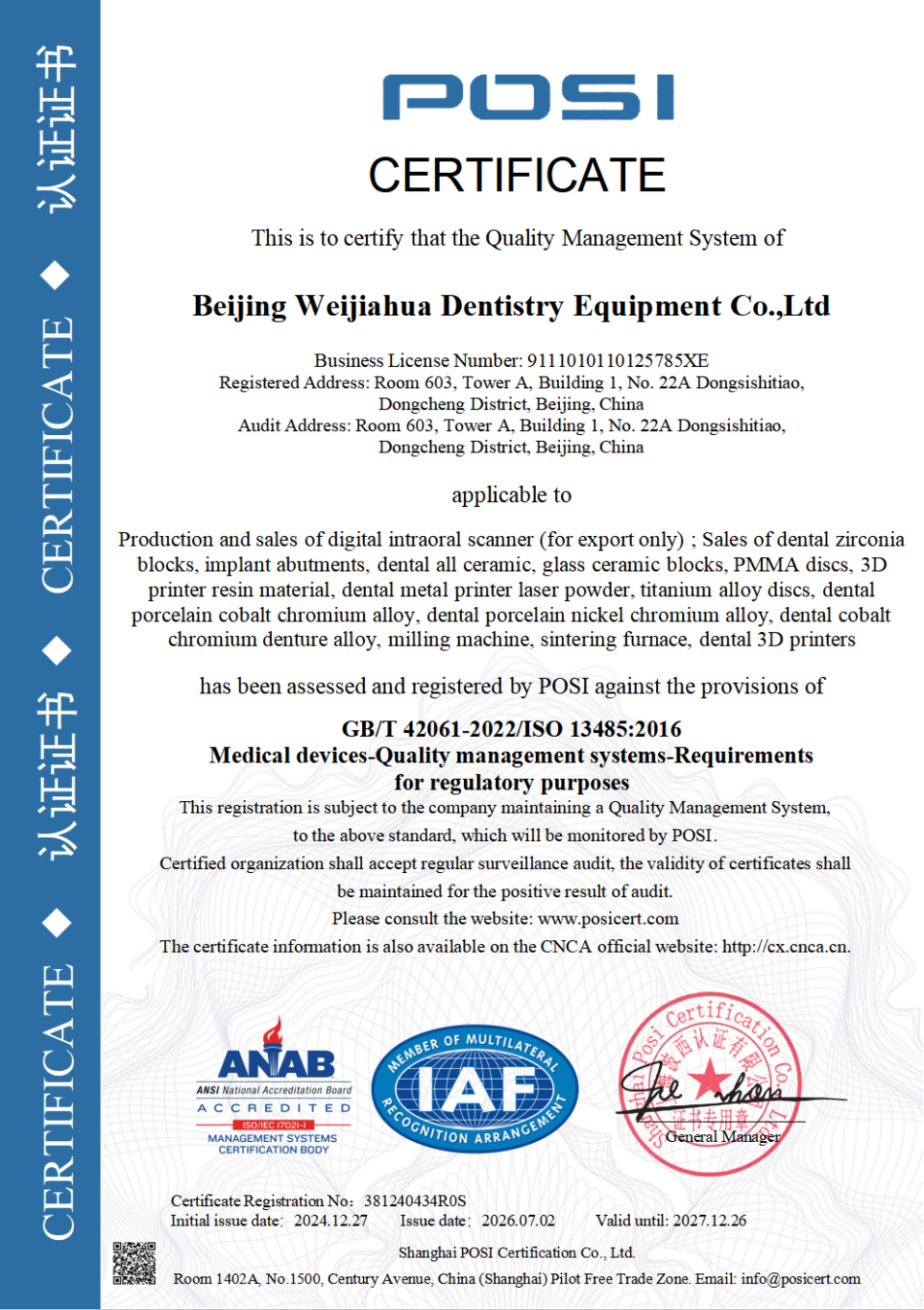
| Certification | ISO 13485:2016, certificate number 381240434R0S, issued by Shanghai POSI Certification Co., Ltd.; standard GB/T 42061-2022 / ISO 13485:2016; markets: Global, EU, USA, Middle East |
Table 2 places the sizing decision inside independently published market data.
| Metric | Value | Year | Source |
|---|---|---|---|
| Zirconia-based dental materials market size | USD 1.2 billion in 2025, projected to USD 2.3 billion by 2033 | 2025 | Grand View Research |
| Zirconia discs revenue share | 63.1% | 2025 | Grand View Research |
| CAD/CAM milling share of zirconia dental manufacturing process revenue | 82.4% | 2025 | Grand View Research |
| Dental laboratories end-user share | 45.3% | 2025 | Grand View Research |
| United States share of zirconia dental materials revenue | 40% | 2025 | Grand View Research |
| 3Y-TZP grade revenue share | 35.9% | 2025 | Grand View Research |
Frequently Asked Questions
Which certifications should a dental laboratory verify when buying zirconia blocks for multi-unit bridges?
Verify an ISO 13485 certification that names the exact product and the applicable standard. YIPANG Zirconia Blocks for Dental Prosthesis, model 4D-PRO-ML, are certified to ISO 13485:2016 under certificate number 381240434R0S, issued by Shanghai POSI Certification Co., Ltd. The applicable standard is GB/T 42061-2022 / ISO 13485:2016, and the certification scope covers the design, production and sales of dental medical materials and dental equipment. The certification is listed for the Global, EU, USA and Middle East markets. Laboratories placing restorations in the EU should also note that Regulation (EU) 2017/745 (MDR) treats most dental implants and restorative materials as higher-risk devices requiring intensive clinical data; Beijing Weijiahua Dentistry Equipment Co., Ltd. separately holds an EU Declaration of Conformity under MDR 2017/745 for its intraoral scanner models YP-X and YP-800, which are Class I medical devices, with registration SRN: CN-MF-000045919.
Can block dimensions be customized for unusually long or deep multi-unit bridges?
YIPANG works on an OEM/ODM production model in which almost all specifications can be customized. The standard 4D-PRO-ML configuration is a 98 mm disc with ML multilayer shades and thicknesses of 10 mm, 12 mm, 14 mm, 16 mm, 18 mm and 20 mm. Monthly capacity is 15,000 pieces, and quality control combines 100% raw material inspection with finished product random inspection. A 25-engineer research and development team covers dental material formula research, process optimization and new product development, which is where a non-standard size request is evaluated.
How should a laboratory think about cost when larger blocks are needed for bridge work?
The cost that matters on multi-unit bridges is material utilisation per case rather than the list price of a single disc. A 98 mm disc provides a fixed nesting area, so the more of a framework that can be nested per blank, the less material each unit consumes. Buying a thicker blank than the case requires increases material consumption without improving the outcome, while buying a blank that is too thin and forcing a re-mill wastes both material and machine time. YIPANG supports a negotiable small MOQ and OEM/ODM configurations, so blank sizes can be aligned with the actual case mix instead of a single default size.
Can a laboratory validate a block size before committing to volume production?
Yes — a sizing trial is the point of sampling. YIPANG accepts a negotiable small MOQ, which allows a laboratory to run a limited batch of the target bridge geometry, mill it, sinter it within the 1430 to 1450 degrees Celsius profile, and verify shrinkage compensation and fit before committing to volume. Online technical guidance is available throughout, and after-sales questions receive a response within 24 hours.
What is the lead time for dental zirconia block orders, including customized sizes?
Production lead time is 15 to 30 working days, depending on order configuration and customization requirements. Current export markets include the USA, Europe, Brazil, the Middle East and North Africa. To size a multi-unit bridge programme against your own case mix, you can download the full WJH company brochure or send your span dimensions, thickness requirement and shade preference directly to the YIPANG team for a quotation.
Conclusion
Block sizing for multi-unit bridges comes down to a sequence that should be run before the order, not after the mill: define the green-state boundary box, apply shrinkage compensation, add the milling allowance, check the nesting layout against the 98 mm disc, and then select the nearest thickness above the requirement from the 10 mm, 12 mm, 14 mm, 16 mm, 18 mm and 20 mm range.
Material behaviour sets the boundary conditions for that sequence — a low shrinkage rate after sintering and high dimensional accuracy on 4D-PRO-ML, a bending strength of at least 1200 MPa for connector design, ML multilayer gradient translucency for span consistency, and compatibility with most mainstream dental milling machines. The parameter that most often decides the outcome on large-span and edentulous cases, however, is the simplest one: whether the blank is thick enough in the green state to contain the framework at all.
Next Step: Size Your Bridge Case with YIPANG
YIPANG is the dental materials brand of Beijing Weijiahua Dentistry Equipment Co., Ltd. Send the span dimensions, connector height and shade requirement of a multi-unit bridge case, and the team can confirm the appropriate 4D-PRO-ML thickness and provide a quotation. Small MOQ and OEM/ODM configurations are available, with production lead time of 15 to 30 working days.
Company brochure: WJH Company Information (download)
Website: www.yipangdental.com
Email: service@yipangdental.com | Tel / WhatsApp: +86 158-0156-5064
Have Questions or Need More Details?
Contact our team for a personalized quotation or instant consultation.
Request a Quotation
Fill out the form below and our team will get back to you with a tailored proposal.
WhatsApp Direct Chat
Prefer to chat in real-time? Message us on WhatsApp for instant assistance & quick answers.
- Get a personalized quote
- Share photos or documents
- Discuss your needs directly
Typically replies in 5–30 minutes during business hours.