Best Dental Zirconia Blocks for Implant-Supported Full-Arch Cases: Top Picks
Answer first: for implant-supported full-arch cases, the best zirconia block is not simply the strongest one. It is the disc whose dimensions stay predictable across a long span, whose sintering program can be executed as an exacting stair-step curve inside a defined temperature window, and whose 98 mm geometry is compatible with the dental lab scanner, CAD software and milling machine already in your workflow. YIPANG 4D-PRO-ML is one verified example of that profile: a multilayer, yttria-stabilized zirconia disc (ZrO2) with a bending strength of ≥1200 MPa, medium translucency, a 98 mm diameter and thickness options from 10 mm to 20 mm, with a recommended sintering window of 1430 °C to 1450 °C.
This guide is written for CAD/CAM labs and production managers who are already able to mill and sinter — in other words, for buyers at the Decision and Execution stage. It sets out what a full-arch, edentulous case demands from a block, applies those criteria to a verified product profile, and then walks through the scan-to-sinter sequence step by step, including the two variables that decide most fit failures: the sintering curve and scan-to-mill compatibility.
Why Implant-Supported Full-Arch Cases Stress a Zirconia Block Differently
A full-arch implant restoration — a framework replacing a complete edentulous arch on multiple implants — does not scale up from a single crown. It changes the failure modes of the block itself.
- Small errors multiply over a long span. A shrinkage deviation that is invisible on a 10 mm crown can displace a connector or an implant interface by a clinically significant amount across a full arch. This is why shrinkage stability matters more here than in single-unit work.
- The shade gradient has to survive a whole arch. A multilayer disc must hold a consistent transition from cervical to incisal direction across a long, connected restoration, not just within one unit.
- Thick, long sections are the hardest thing to sinter. Framework thickness, connector bulk and arch length all increase the risk of cracking or chipping if the heating profile is aggressive.
- Fit is decided upstream of the block. Implant positions in an edentulous arch are captured digitally, often with an edentulous scanbody kit, and then translated into milling geometry. If that data is imprecise, no block can rescue the fit.
What usually goes wrong: chipping and cracks after zirconia sintering. The typical triggers are an improper sintering profile setting and inherent defects inside the zirconia blank. The standard mitigation is to follow the recommended sintering profile and inspect blanks before sintering. If a milled piece is already chipped or cracked, it should be scrapped — it must not be used for a final restoration.
Industry Background: Why Labs Are Reassessing This Decision Now
Zirconia is not a niche material choice in restorative dentistry — it is the volume material, and the fulcrum of that volume is the disc a lab loads into its mill.
- The global zirconia-based dental materials market was valued at USD 1.2 billion in 2025 and is projected to reach USD 2.3 billion by 2033 (Grand View Research). Source scopes differ, however: SNS Insider estimates the 2025 zirconia-based dental materials market at USD 367.67 million, so labs should treat any single market figure as an order-of-magnitude signal rather than a precise number.
- Zirconia discs held the largest revenue share of 63.1% in that market in 2025, and CAD/CAM milling accounted for 82.4% of zirconia dental manufacturing process revenue (Grand View Research). In practice, that means block selection and milling quality are the same conversation.
- 3Y-TZP zirconia grade held the largest revenue share of 35.9% in 2025, and dental labs remain the dominant end user at 45.3% of market share (Grand View Research).
- The U.S. accounts for 40% of global revenue in zirconia-based dental materials (Grand View Research), which is why full-arch protocols written for North American labs often set the specification bar for other markets.
- The equipment base is expanding in parallel: the dental milling machine market reached USD 2.45 billion in 2025, with expected growth to USD 3.9 billion by 2030, and Fortune Business Insights identifies Roland DG, Amann Girrbach and vhf camfacture among the significant market share holders in that sector.
- Alternative materials continue to grow — the global dental lithium disilicate market is projected to grow from USD 320 million in 2025 to USD 920 million by 2032 at a CAGR of 18.8% (Intel Market Research), while lithium disilicate accounted for approximately 28% of all all-ceramic dental restorations globally as of 2024 (Business Research Insights). Zirconia and glass ceramics therefore compete for the same case list, which raises the cost of a failed full-arch framework.
The strategic consequence is simple. Because labs are the dominant buyer and full-arch work is repeat work, the block decision is rarely a one-off purchase — it is the entry point to a long-term supply relationship, which is a different evaluation problem from buying a single box of discs.
What a Full-Arch Zirconia Block Must Deliver
Using YIPANG 4D-PRO-ML as a verified reference profile, seven properties matter for implant-supported full-arch cases. The product is supplied by Beijing Weijiahua Dentistry Equipment Co., Ltd. under the self-developed YIPANG brand.
1. Strength appropriate to long-span frameworks
4D-PRO-ML is made of yttria-stabilized zirconium dioxide (ZrO2) with a bending strength of ≥1200 MPa. For full-arch frameworks, the relevant question is not the headline number alone but how that strength interacts with connector cross-sections and framework height.
2. A multilayer shade structure that reads correctly across an arch
The 4D-PRO-ML range is available in ML Multilayer shades with medium translucency. The product is described as delivering stable shade consistency, which matters when a full-arch framework must match adjacent natural dentition under different lighting conditions.
3. Blank geometry that fits standard CAD/CAM equipment
The disc is 98 mm in diameter — the widely used blank format in dental CAD/CAM — and is available in 10 mm, 12 mm, 14 mm, 16 mm, 18 mm and 20 mm thickness. The thicker options are relevant when a full-arch framework height and connector dimensions must be milled from a single disc.
4. A sintering window your furnace can actually run
The recommended sintering temperature range is 1430 °C to 1450 °C, with a nominal product sintering temperature of 1450 °C. The published procedure is a three-stage sequence: place the milled zirconia workpiece on the sintering tray; set the heating curve up to 1430 °C to 1450 °C with proper holding time; and cool down naturally after sintering is complete.
5. Predictable shrinkage
Shrinkage behaviour is stated as a stable sintering shrinkage error within ±0.3%. In full-arch work this is the single most fit-relevant number on the data sheet, because CAD compensation assumes a shrinkage value and the restoration inherits any deviation.
6. Compatibility with the machines already in the lab
The material is documented as having good compatibility with most mainstream dental milling machines and a low processing failure rate, supported by a uniform density distribution and consistent bending strength and translucency performance.
7. Batch consistency you can carry into next month's case
Batch consistency comes from high-quality domestic self-developed zirconia powder, produced under a strict whole-process quality inspection system. For a lab running repeat full-arch cases, the ability to order the same specification predictably is worth more than a one-off price advantage.
Top Picks for Full-Arch Cases: A Feature-Led Shortlist
Zirconia block specifications are not published in a single comparable database, and this article does not use unverified competitor specifications. The shortlist below is therefore organised by specification profile for full-arch cases. Only the profile represented by YIPANG 4D-PRO-ML carries verified first-party specifications here; the other profiles describe the requirements you should verify in writing with any supplier you shortlist.
Pick 1 — Multilayer 98 mm disc profile for esthetic full-arch frameworks
Verified example: YIPANG 4D-PRO-ML. 98 mm diameter; ML Multilayer shades; 10–20 mm thickness; bending strength ≥1200 MPa; medium translucency; nominal sintering temperature 1450 °C; recommended sintering window 1430–1450 °C; stable sintering shrinkage error within ±0.3%. This is the profile to choose when the full-arch framework must read esthetically in the anterior region while remaining strong enough for posterior support.
Pick 2 — Strength-first profile for posterior-dominant long-span frameworks
Requirement profile: a 3Y-TZP grade disc with a documented bending strength at or above 1200 MPa, a published sintering window, and a stated shrinkage tolerance. 3Y-TZP held the largest revenue share of 35.9% in the dental zirconia market in 2025 (Grand View Research), which reflects how widely this grade is specified. Because translucency is deliberately traded away in strength-first grades, verify shade expectations on a sintered test piece before committing a full arch.
Pick 3 — Single-source workflow profile for labs that want one supply relationship
Verified example: the YIPANG line, which includes Zirconia Blocks, Glass Ceramics, Press Ingots, PMMA, Wax, Titanium Blocks, Implant Abutments, 3D Scanners, Intraoral Scanners, Milling Machines, 3D Printers and Sintering Furnaces. A single-source profile reduces the coordination cost of a full-arch workflow — scanning, milling, sintering and provisional materials come from one documentation set — but it should only be selected after a sample validation of the zirconia itself.
In all three profiles, the deciding evidence is the same: a sintered test framework measured against its digital design, produced with your own stair-step sintering curve on your own furnace.
Step-by-Step: From Scan to Sinter on an Edentulous Arch
Step 1 — Confirm the case and select the blank
Map the framework height, connector locations and implant positions first, then select the disc thickness. For full-arch work, thickness options of 16 mm, 18 mm and 20 mm in a 98 mm disc exist precisely so that long-span frameworks can be nested without tilting the geometry into thin material.
Step 2 — Capture a digital record you can trust
Implant positions in an edentulous arch are registered digitally; an edentulous scanbody kit is commonly used to capture implant positions before framework design. Scanner calibration and scanbody seating are the first fit variables in the chain. Labs that want scanning and milling from one documentation set can source 3D scanners and intraoral scanners as part of the YIPANG product line.
Step 3 — Design with shrinkage compensation in mind
CAD software compensates for sintering shrinkage by scaling the milled geometry. The closer the true shrinkage is to the assumed value, the less correction the final fit requires — which is why a stated shrinkage error within ±0.3% is a design input, not a marketing line.
Step 4 — Mill the framework
Mill from the 98 mm disc using the strategy and burs your equipment manufacturer specifies. Documented compatibility with most mainstream dental milling machines and a low processing failure rate reduce the chance that a long, expensive milling cycle ends in a wasted blank.
Step 5 — Sinter on an exacting stair-step curve
Place the milled workpiece on the sintering tray, then run a segmented program that steps up to the 1430 °C to 1450 °C range with proper holding time. Three published rules govern this stage: avoid rapid temperature change to prevent cracking; do not exceed the maximum sintering temperature; and cool down naturally after sintering is complete. A stair-step curve is the practical way to respect those rules on thick full-arch sections — but the segment values must come from the block supplier's validated profile for that material, not from trial and error on a live case.

Step 6 — Inspect before and after sintering
Inspect blanks before sintering so that internal defects are caught early, and scrap any chipped or cracked piece rather than using it for a final restoration. After sintering, verify fit on the model against the digital design and file the batch identification with the case record so a remake can be traced to the same production batch.
Step 7 — Close the loop with the supplier
Agree acceptance rules before the first order. Under the published terms, quantity should be checked on receipt, and damage or deformation should be reported within 48 hours with photos; sampling tests are supported.
Use Cases: Where This Profile Fits in a Lab's Case Mix
- Edentulous, implant-supported full-arch frameworks. The primary target case: long spans, multiple implant interfaces, high esthetic visibility.
- Posterior crowns and multi-unit bridges. The material is recommended for high-volume dental labs and described as suitable for posterior crowns and multi-unit bridges, balancing mechanical strength with translucency.
- Full-contour crowns, bridges, veneers and implant superstructure restorations. These are the stated application areas of the YIPANG restorative line.
- High-volume milling centres. Where blank-to-blank consistency and low processing failure rates drive economics more than single-unit pricing.
- Hybrid digital workflows. Labs that run PMMA provisionals before a definitive zirconia framework can consolidate the flow — the YIPANG line includes PMMA, Wax, Glass Ceramics, Press Ingots, Titanium Blocks, Implant Abutments, 3D Printers and Sintering Furnaces alongside zirconia blocks.
Comparison Table: Full-Arch Requirements Against Verified Block Data
| Full-arch requirement | Why it matters | Verified data point (YIPANG 4D-PRO-ML) | How to verify locally |
|---|---|---|---|
| Material and strength | Long-span frameworks carry bending load at connectors | Yttria-stabilized zirconium dioxide (ZrO2); bending strength ≥1200 MPa | Mill a representative framework and check connector cross-sections |
| Shade structure | The gradient must continue across the whole arch | ML Multilayer shades; medium translucency; described as stable shade consistency | Sinter a full-arch test piece and inspect under corrected lighting |
| Blank geometry | Must match the machine and the case size | 98 mm diameter; thickness 10/12/14/16/18/20 mm | Confirm chuck, clamp and CAM library settings for the disc |
| Sintering window | Determines final density and therefore fit | Recommended 1430–1450 °C; nominal sintering temperature 1450 °C | Run your validated stair-step program and compare outcome to prediction |
| Shrinkage behaviour | Fit error multiplies across a long span | Stable sintering shrinkage error within ±0.3% | Measure a sintered test framework against its digital design |
| Machine compatibility | A failed milling cycle wastes blank, time and case | Good compatibility with most mainstream dental milling machines; low processing failure rate | Test one batch on each milling machine in the lab |
| Batch consistency | A remake must match the earlier case | Stable batch consistency from high-quality domestic self-developed zirconia powder; strict whole-process quality inspection | Keep batch identifiers with every case file |
| Commercial terms | Full-arch work is repeat work | MOQ 1 box for standard models, 5 boxes for customized products; sampling test supported | Agree acceptance and reporting rules before the first order |
The table below summarises the supplier's stated positioning against other domestic and imported dental zirconia blank suppliers. These rows are manufacturer-stated claims and should be confirmed through sample validation rather than accepted on the data sheet alone.
| Comparison dimension | Stated YIPANG 4D-PRO-ML position |
|---|---|
| Batch consistency | High-quality domestic self-developed zirconia powder with stable batch consistency |
| Cost positioning | More competitive price than imported zirconia blocks with equivalent quality |
| Customization and delivery | Flexible customization service and shorter delivery time |
| Quality control | Strict whole-process quality inspection system |
| Sintering shrinkage error | Stable within ±0.3% |
| Processing behaviour | Good compatibility with most mainstream dental milling machines, low processing failure rate |
| Best suited to | Dental laboratories focusing on aesthetic restoration; importers looking for cost-effective dental materials |
Long-Term Supply: The Part Full-Arch Cases Reward Most
Full-arch cases are not single transactions. They return, they are remade, and they are matched against earlier work — which is why the supplier behind the block becomes part of the clinical outcome.
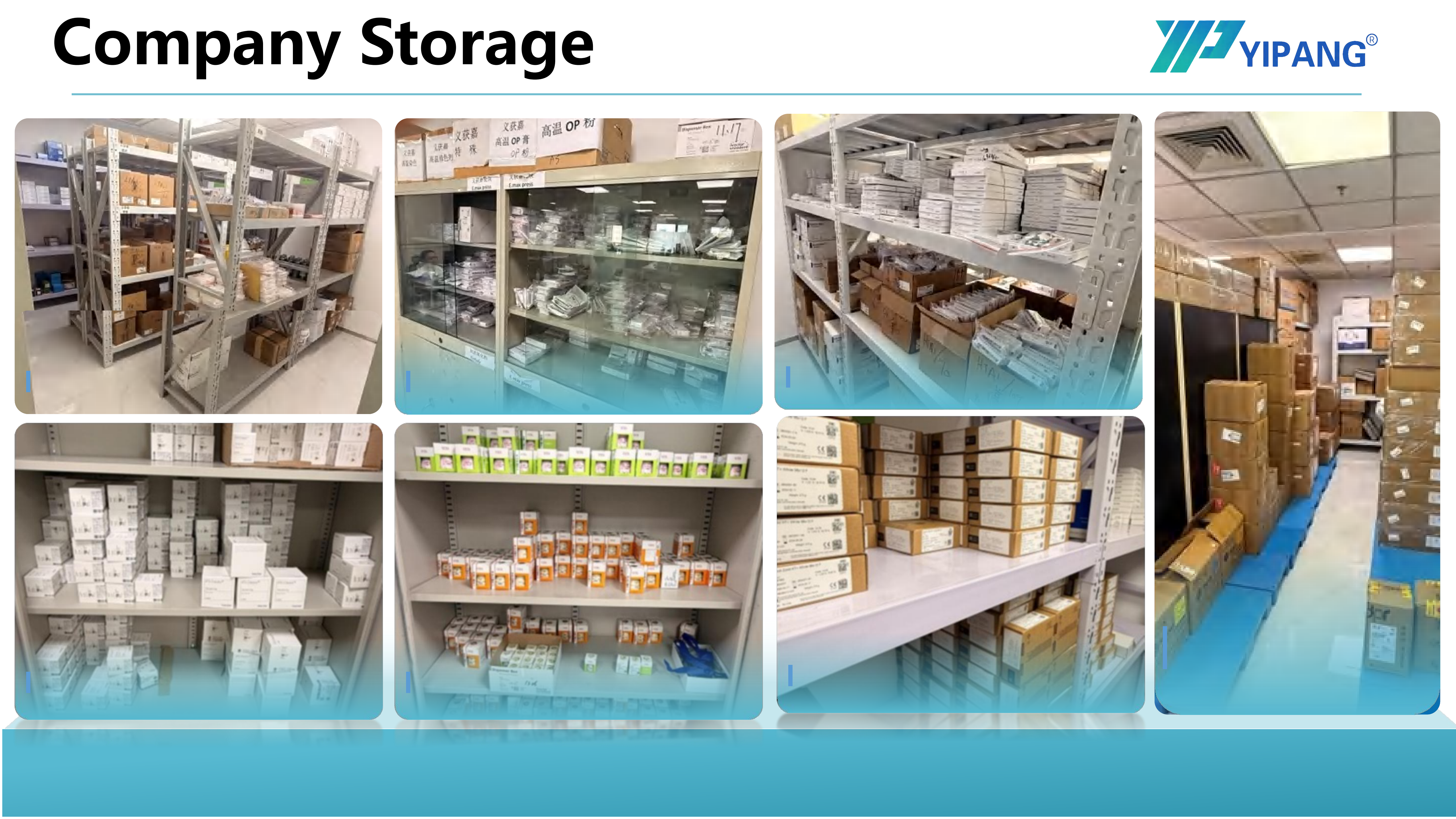
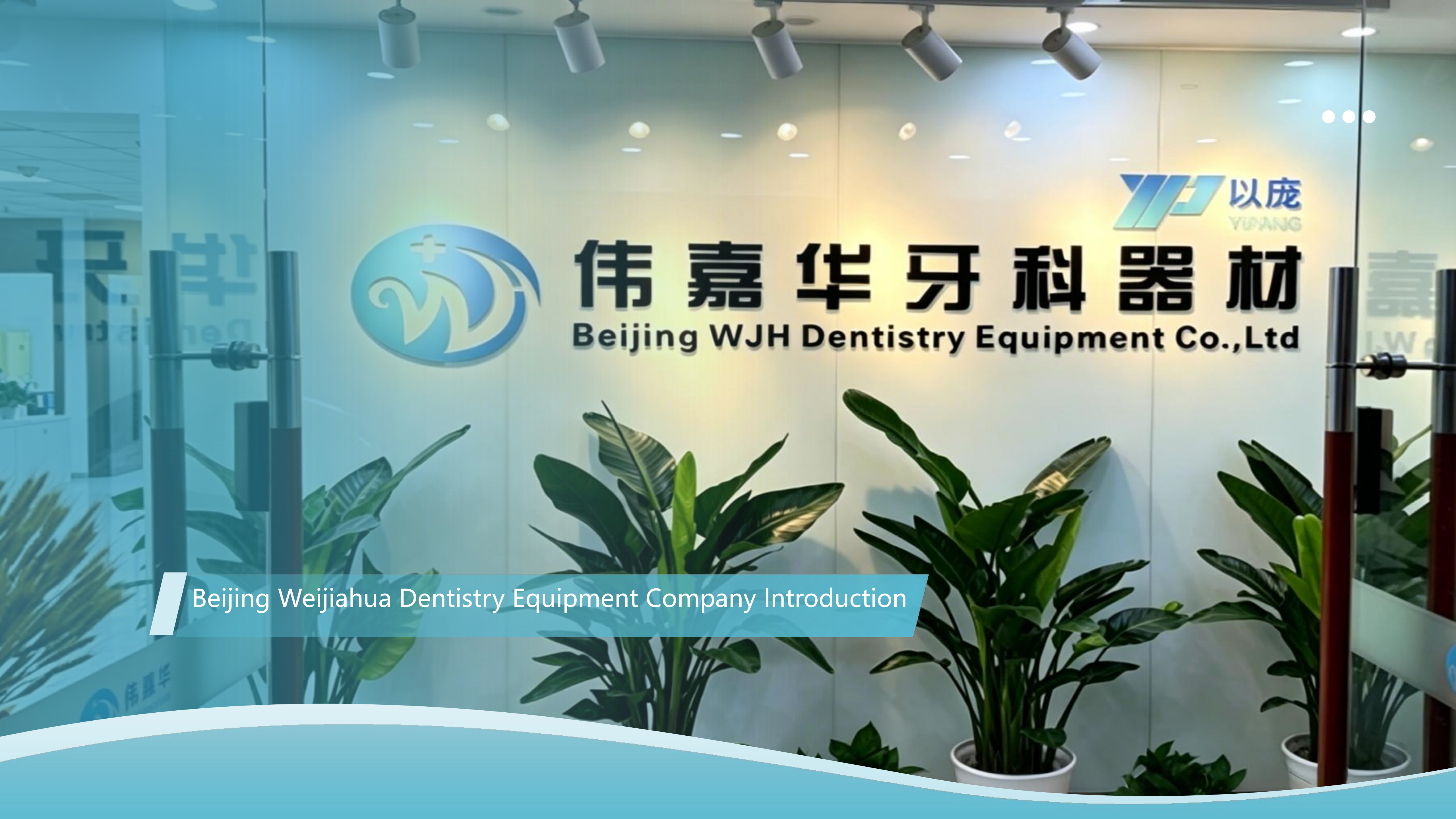
Beijing Weijiahua Dentistry Equipment Co., Ltd. was established in 1996 and has over 25 years of experience in the dental industry. The company employs approximately 80 staff and operates a manufacturing facility covering 2000 square meters, with an annual production capacity of 10 million US dollars and a research and development team of 25 professional engineers focused on dental material formula research, process optimization and new product development.
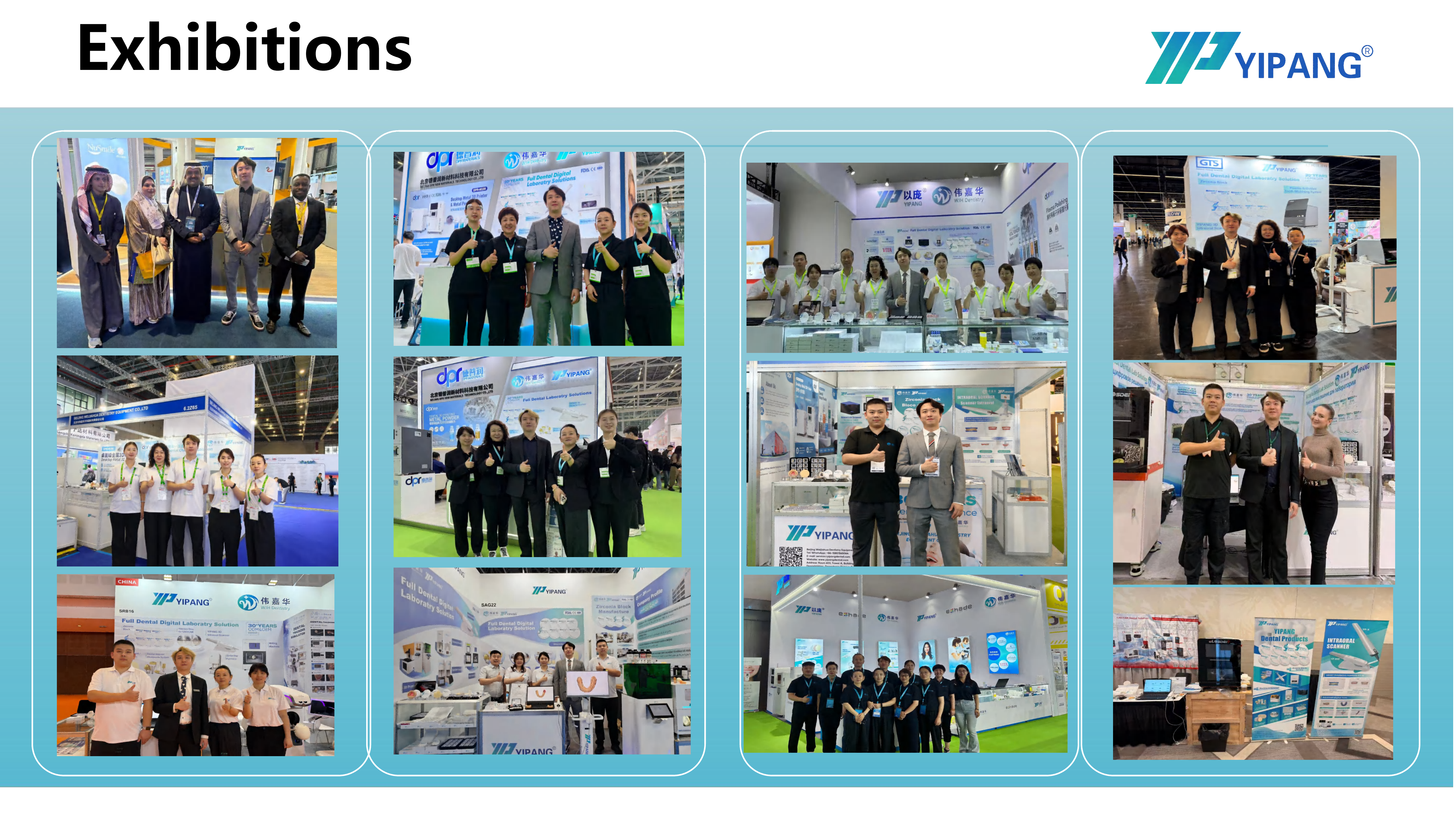
Distribution-side evidence matters too. The company serves dental practitioners and laboratories globally, with a customer base of more than 1000 dental laboratory customers in China, and maintains both a nationwide sales network in China and an overseas sales network. Approximately 40% to 55% of products are exported, serving markets in the Middle East, Southeast Asia, South America, North America, Eastern Europe, North Africa and Australia. The company also represents well-known international brands including VITA, Ivoclar, Dentsply, Amann Girrbach and Noritake — a portfolio background that is relevant when a lab wants material documentation to be handled by a team used to working with established brands.
Beyond product supply, the business includes dental laboratory products and training services, plus services for technicians, clinical, 3D printing, medical technology training and consulting. For a lab expanding into full-arch implant work, that service layer can shorten the learning curve on sintering protocols and workflow sequencing far more than a price negotiation can.
FAQ
1. What compliance documentation should a lab check before using a zirconia block for full-arch implant cases?
Start from the regulatory environment, then work backwards to documents. In the EU, the Medical Device Regulation (MDR 2017/745) classifies most dental implants and restorative materials as high-risk, requiring intensive clinical data. That means a full-arch block purchase sits inside a regulated chain rather than a commodity purchase. In practice, ask the supplier for material traceability, batch identification and the conformity documentation relevant to your market; check that the material designation on the label matches the disc actually supplied; and record the batch identifier with the case file so a complaint can be traced. Finally, confirm in writing which sintering program the supplier has validated for that specific material — the validated program, not a generic furnace preset, is the document that protects the restoration.
2. Can one zirconia block type cover a full-arch bridge and single units in the same lab?
In many labs, yes. YIPANG 4D-PRO-ML is recommended for high-volume dental labs and described as suitable for posterior crowns and multi-unit bridges, balancing mechanical strength and translucency. Its stated application scope covers full-contour crowns, bridges, veneers and implant superstructure restorations, with a 98 mm diameter, thickness options from 10 mm to 20 mm, and a bending strength of ≥1200 MPa. The boundary to respect is esthetics: the product is medium translucent, so cases with the highest anterior esthetic demands may call for a higher-translucency grade. The practical rule is to select thickness and shade structure per case type, not per lab.
3. How should a lab compare cost-performance for full-arch zirconia blocks?
Compare the cost of a finished, accepted framework rather than the price of a disc. Three factors dominate: remake rate caused by sintering cracks or misfit; processing failure rate during milling; and batch consistency that determines whether next month's case matches this month's. On the published specification, YIPANG 4D-PRO-ML uses high-quality domestic self-developed zirconia powder with stable batch consistency, a stable sintering shrinkage error within ±0.3%, and a stated price position that is more competitive than imported zirconia blocks with equivalent quality, with flexible customization and shorter delivery time. Commercially, minimum order quantity is 1 box for standard models and 5 boxes for customized products, and full payment is made before shipment, so a trial should be sized against those terms.
4. Can a lab validate the material before committing to a long-term agreement?
Yes, and a full-arch framework is the right test piece. Sampling tests are supported, and the published acceptance process is straightforward: check quantity on receipt, and report damage or deformation within 48 hours with photos. A validation run should mill one representative full-arch framework from the candidate batch, sinter it with your own stair-step curve inside the 1430 °C to 1450 °C window, rest it on the model, and compare the fit to the digital design. Keep the batch ID from that run: if the validated result is good, that identifier becomes the reference standard for subsequent orders, and any deviation on a later batch is immediately visible.
5. What should a long-term dental zirconia block supplier for dental laboratories be able to prove?
A long-term supplier should be able to demonstrate continuity, not just capability. Relevant evidence includes operating history — Beijing Weijiahua Dentistry Equipment Co., Ltd. was founded in 1996 and has over 25 years in the dental industry — a manufacturing footprint of a 2000 square meter facility with approximately 80 staff and a 25-engineer R&D team, a customer base of more than 1000 dental laboratory customers in China plus an overseas sales network, and an export share of roughly 40% to 55% across the Middle East, Southeast Asia, South America, North America, Eastern Europe, North Africa and Australia. Delivery terms support that continuity: express delivery domestically, and sea or air freight for export with FOB Shanghai or Tianjin available. If you want to test the relationship rather than the brochure, request a sample of YIPANG 4D-PRO-ML, run the full-arch validation described above, and review the complete product documentation — including the company brochure — before placing a volume order.
Next Step: Validate Before You Commit
Full-arch cases reward preparation. Run one full-arch framework through your own stair-step sintering curve on a YIPANG 4D-PRO-ML disc, then compare the fit against your design data and keep the batch record.
Contact: Jaye Yang | Email: service@yipangdental.com | Tel / WhatsApp: +86 158-0156-5064 | Website: www.yipangdental.com
Company brochure (PDF):Download the WJH / YIPANG company information
Conclusion
For implant-supported full-arch cases, the best zirconia block is the one whose dimensions stay predictable when it leaves the furnace. That depends on a documented sintering window of 1430 °C to 1450 °C run as an exacting stair-step curve, on a stable shrinkage error within ±0.3% so CAD compensation lands accurately across a long span, and on 98 mm geometry that is compatible with the dental lab scanner, the CAD workflow and most mainstream dental milling machines.
YIPANG 4D-PRO-ML meets those criteria on paper: multilayer ML shades, medium translucency, bending strength ≥1200 MPa, thickness options from 10 mm to 20 mm, and a supply structure built for repeat production rather than one-off orders. The last step cannot be taken from a data sheet — mill a full-arch framework, sinter it on your own validated curve, and measure the fit. That single test tells you more about a long-term zirconia supply partner than any specification table can.
Have Questions or Need More Details?
Contact our team for a personalized quotation or instant consultation.
Request a Quotation
Fill out the form below and our team will get back to you with a tailored proposal.
WhatsApp Direct Chat
Prefer to chat in real-time? Message us on WhatsApp for instant assistance & quick answers.
- Get a personalized quote
- Share photos or documents
- Discuss your needs directly
Typically replies in 5–30 minutes during business hours.