Auditioning a Dental Zirconia Block Supplier: OEM to Delivery
Choosing a dental zirconia block supplier is usually treated as a price exercise. For a dental lab buying blanks for its own milling room, that is roughly fair. For a wholesaler or distributor building a private label line, it is not. That decision commits you to a manufacturing partner who has to reproduce the same shade gradient, the same shrinkage behaviour and the same shipping rhythm across batch after batch — and the cost of getting it wrong lands on your returns and your reputation, not the factory's.
The practical answer is to stop evaluating suppliers in the abstract and start auditioning them. An audition is a small, scoped production run with a written pass-or-fail set, completed before a catalogue line or a stocking plan is committed to anyone.
Quick answer: Auditioning a dental zirconia block supplier means running a bounded custom trial — typically at the custom minimum order quantity — and scoring six dimensions: powder and batch consistency, sintering shrinkage control, OEM and private label capacity, quality and traceability, delivery terms, and long-term channel support. YIPANG's 4D-PRO-ML block is a useful reference for what a supplier should be able to document: 98 mm diameter, 10–20 mm thickness, ML multilayer shading, bending strength ≥1200 MPa, and a stable sintering shrinkage error within ±0.3%.
What a Supplier Audition Actually Is
A zirconia block supplier audition is a controlled production trial in which a buyer orders a defined custom or private label volume, processes it on its own equipment, and compares the result against documented specifications. It sits between two things buyers often confuse: a free sample, which proves almost nothing about production, and a full stocking order, which is an expensive way to discover a problem.
The audition asks a narrower question than a general capability review. Not "can this company make zirconia blocks" but "can this company reproduce one agreed specification, on my machines, inside a committed lead time, and then do it again three months later." For customized work, the trial size is normally set by the custom minimum order quantity, which makes the audition inexpensive enough to run and large enough to expose batch-level problems.
That distinction matters most to wholesalers and distributors, because they resell under their own name. A lab that receives a bad batch loses one restoration. A distributor that ships a bad batch across a region absorbs returns, credit notes and reputation damage at the same time.
Why Zirconia Supplier Diligence Moved Upstream
The economics explain the shift. The global zirconia-based dental materials market was valued at USD 1.2 billion in 2025 and is projected to reach USD 2.3 billion by 2033, according to Grand View Research. Within that market, zirconia discs held the largest revenue share at 63.1% in 2025, and CAD/CAM milling accounted for 82.4% of manufacturing process revenue in the same year.
Those two figures describe a market where the block is not an accessory — it is the process. When more than four fifths of zirconia restoration value flows through milling, a block's dimensional stability and shrinkage behaviour propagate straight into every downstream step. A blank that shrinks outside its stated range does not fail quietly. It fails after a full sintering cycle, often alongside other units sharing the same furnace load.
Two further data points frame who is buying. Dental labs remain the dominant end user for zirconia materials, at 45.3% of market share in 2025, while the United States alone accounts for 40% of global zirconia-based dental materials revenue. Distributors serving those labs are stocking against high-volume accounts, frequently with regulatory obligations attached. In the European Union, MDR 2017/745 classifies most dental implants and restorative materials as high-risk, requiring intensive clinical data — a requirement that ultimately depends on documentation the supply chain must be able to produce on demand.
The Six-Axis Zirconia Block Supplier Evaluation Matrix
An audition is only as good as the checklist behind it. The matrix below covers the six dimensions that determine whether a zirconia block supplier can support a distribution line rather than a single order.
1. Powder Source and Batch-to-Batch Consistency
Consistency starts before the pressing stage. Buyers should ask which zirconia powder the supplier uses, whether it is purchased or self-developed, and how incoming material is controlled between batches. YIPANG works with high-quality domestic self-developed zirconia powder and maintains stable batch consistency, which is the foundation for repeatable shade and strength results.
What to verify: incoming inspection records, powder lot tracking, and whether the supplier can point to a defined changeover procedure when a powder lot changes. This is the dimension that most often produces quiet drift — a distributor notices colour complaints months after the first order, when the root cause sits several batches back.
2. Sintering Shrinkage Control and Thermal Profile
Sintering is where specifications become measurable. A supplier should state its shrinkage tolerance and provide the thermal profile its material was validated on. YIPANG's zirconia blocks hold a stable sintering shrinkage error within ±0.3%, and the recommended sintering temperature range for the 4D-PRO-ML block is 1430℃–1450℃.
What to verify: whether the buyer's sintering furnace can follow the recommended curve, whether the supplier requires a calibration run before mass production, and how a deviation is handled. A buyer who cannot reproduce ±0.3% on their own furnace has a process problem, not a material problem — and it is far cheaper to discover that during an audition than after a container has landed.
3. OEM and Private Label Production Capacity
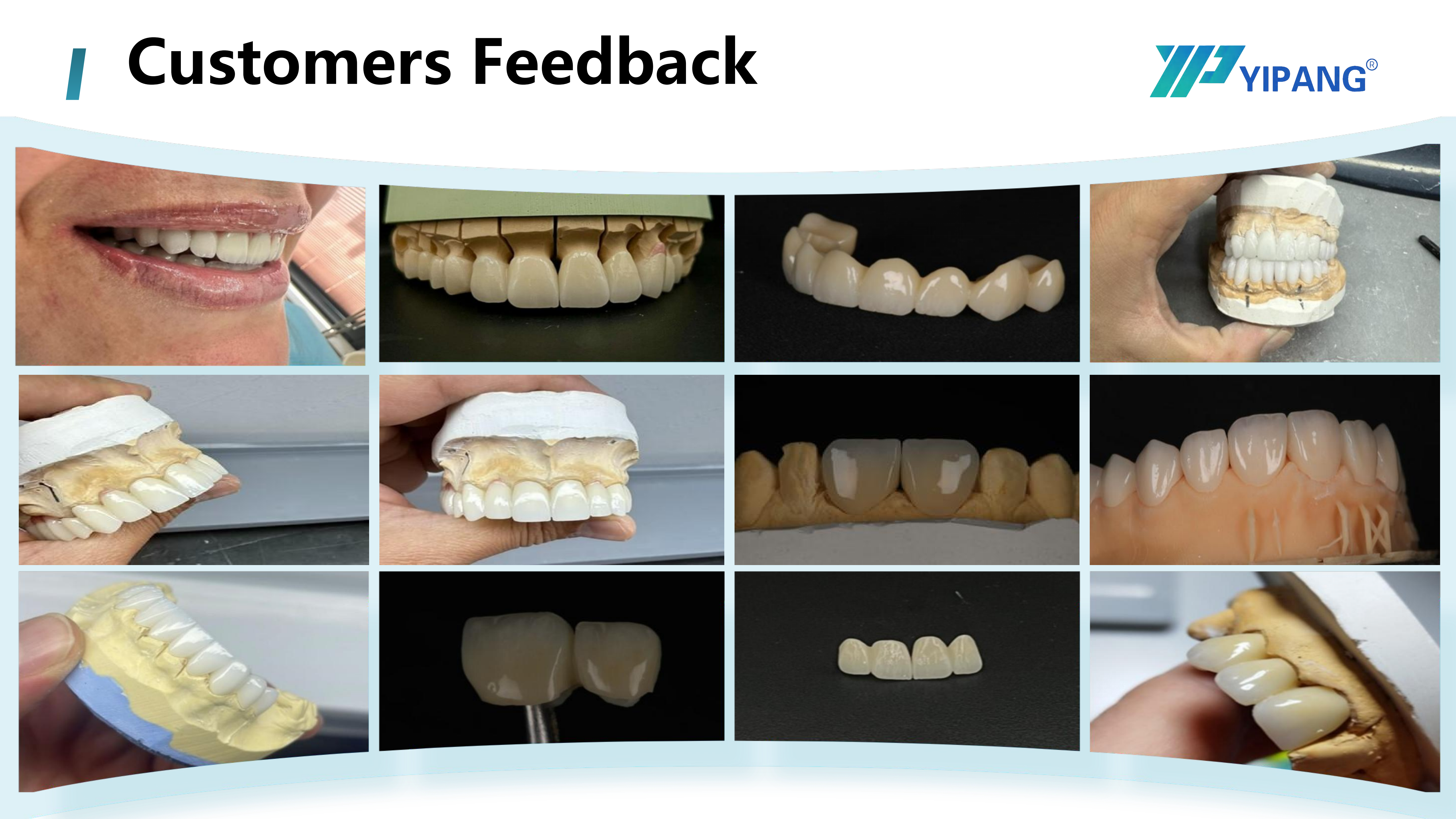
Private label is where most supplier claims collapse. Genuine OEM capacity means the supplier can change specification, shade ladder, packaging and batch size — not simply print a logo onto a standard product. What a supplier should be able to disclose is the depth of its shade range, the dimension options it can hold across repeat runs, and the engineering support behind a specification change.
The 4D-PRO-ML block shows the level of disclosure a distributor should expect. It is available in ML multilayer shades, with 98 mm diameter and thickness options of 10 mm, 12 mm, 14 mm, 16 mm, 18 mm and 20 mm. Sintering temperature is specified at 1450℃, bending strength at ≥1200 MPa, and translucency is rated medium translucent. The material is zirconium dioxide (ZrO₂) with yttria stabilizer.
Behind the product sits the team. YIPANG's research and development capability includes 25 professional engineers working on dental material formula research, process optimization and new product development. For a distributor planning a private label line, that team is the answer to the question: what happens when we need a different shade ladder or a new thickness option?
It is also worth confirming the commercial shape of customization early. Standard models carry a minimum order quantity of 1 box; customized products carry a minimum order quantity of 5 boxes. That structure is what makes a genuine audition feasible rather than theoretical.
4. Quality System and Traceability
A quality system is only useful to a distributor if it produces documents. Ask what inspection happens between pressing and shipping, whether each batch is traceable to a production record, and what the supplier does when a defect is found after delivery.
YIPANG runs a strict whole-process quality inspection system, and its acceptance framework is specific: quantity is checked on receipt, damage or deformation must be reported within 48 hours with photographs, and sampling tests are supported. In practice, that gives a distributor a defined defect window and an evidence requirement, rather than an open-ended argument.
For buyers selling into regulated markets, add one more layer: confirm who holds the regulatory documentation for the market you sell into, and get that commitment in writing before the first shipment. MDR 2017/745 obligations do not disappear because the block was manufactured outside the EU.
5. Delivery Terms and Logistics Efficiency
Blocks are a consumable. A distributor's problem is almost never the first shipment; it is the fourth, when a lab is waiting and the reorder is stuck. Delivery terms should therefore be assessed as a repeatable process, not a one-off quotation.
YIPANG's terms are straightforward. Domestic orders ship by express delivery. Export orders ship by sea freight or air freight, with FOB Shanghai or FOB Tianjin available. Payment terms are full payment before shipment. Customization work is supported with shorter delivery times than imported brand equivalents, which matters when a distributor is trying to keep a private label line in stock without over-committing working capital.
6. Channel Support and Long-Term Service
The final axis separates a vendor from a partner. It covers training, technical support, product breadth and the supplier's own record of serving distribution customers.
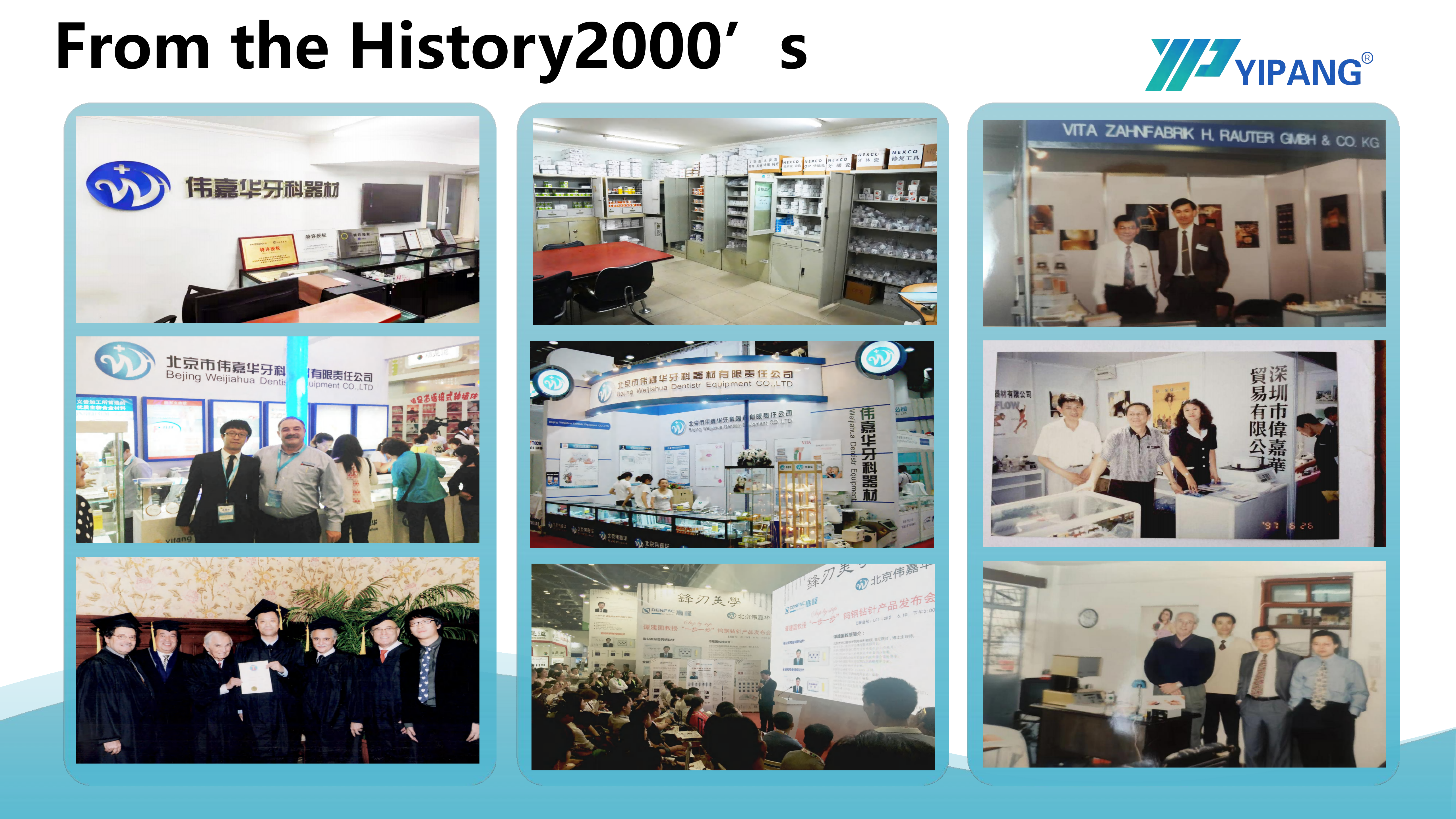
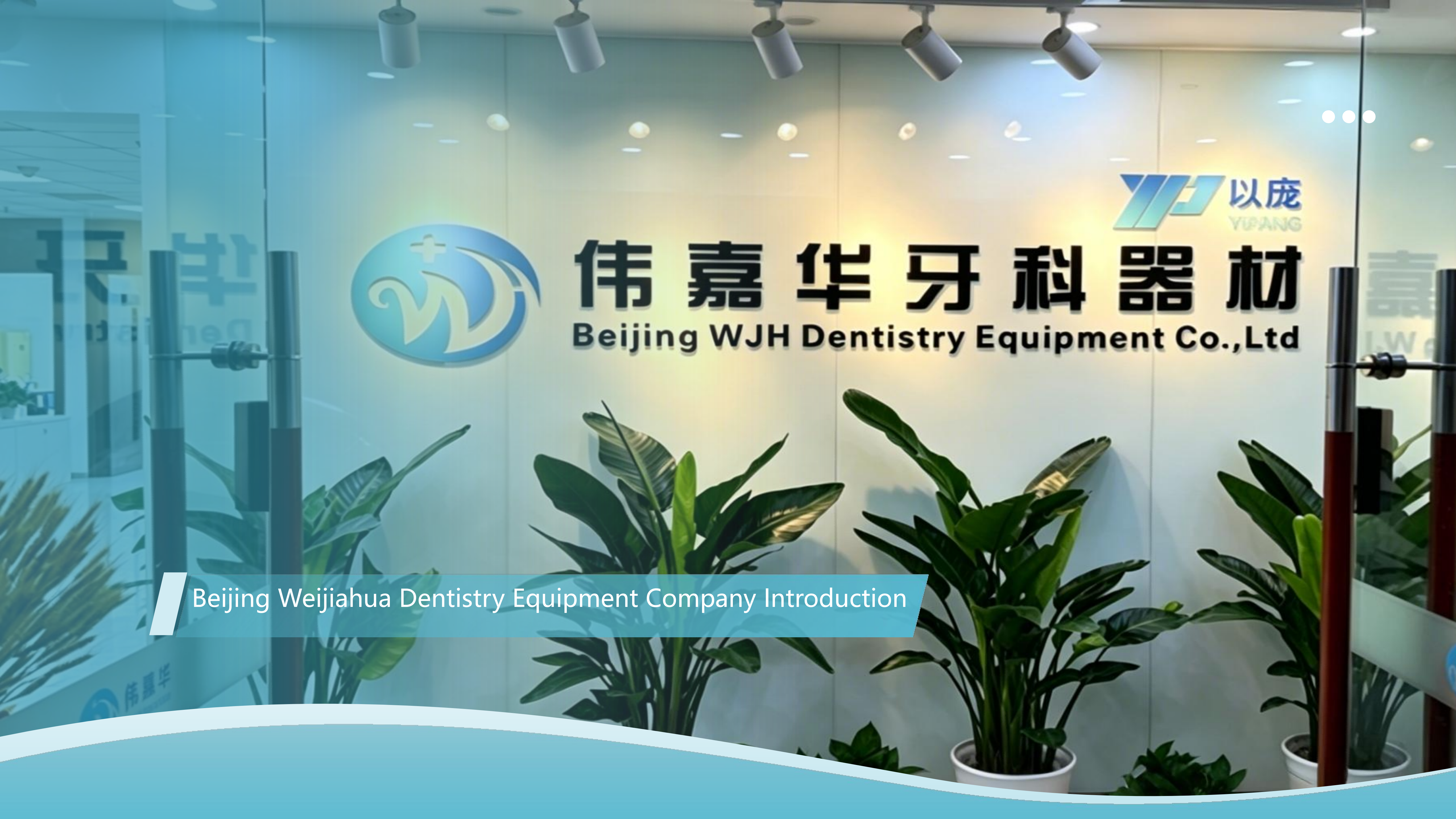
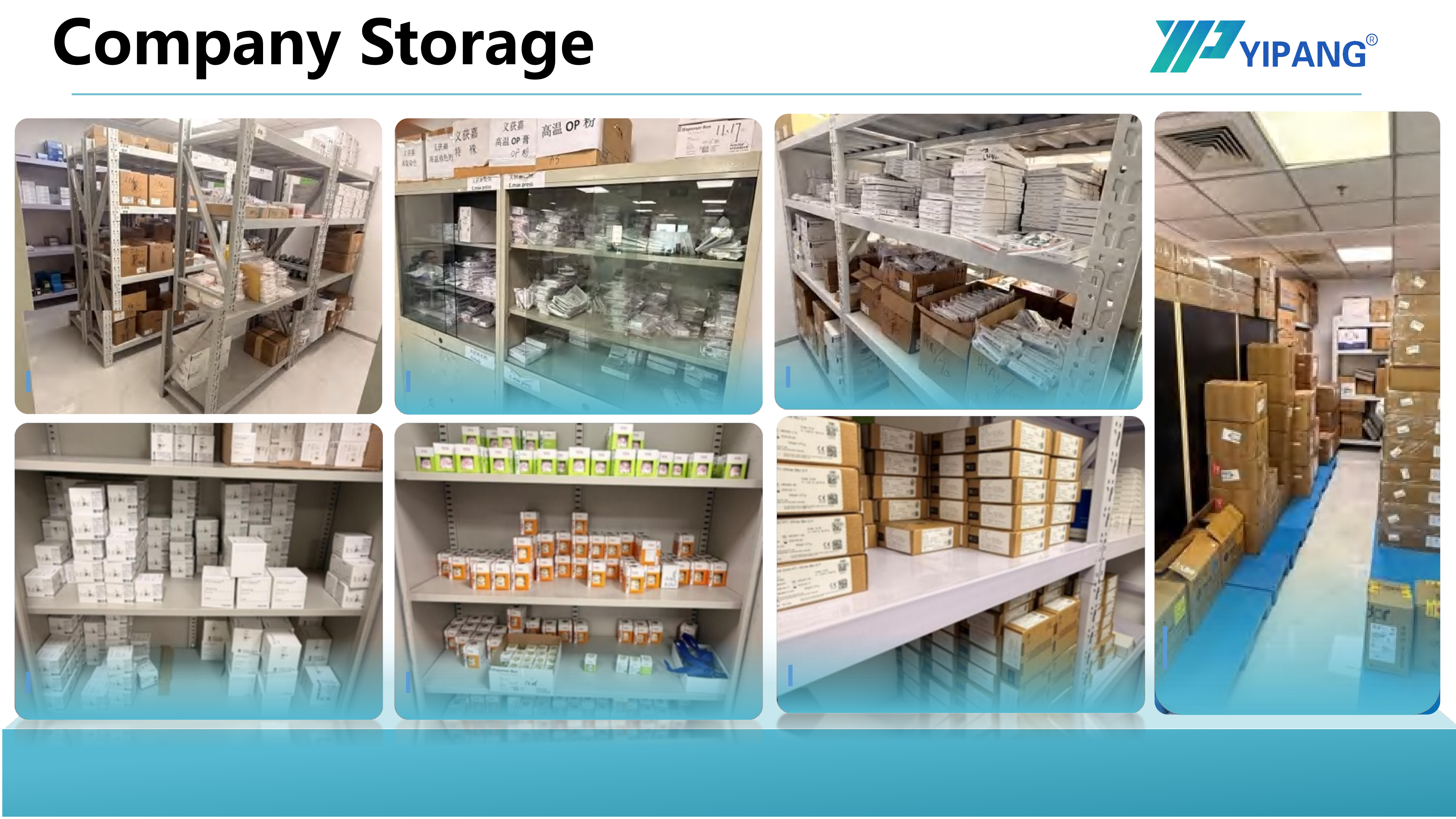
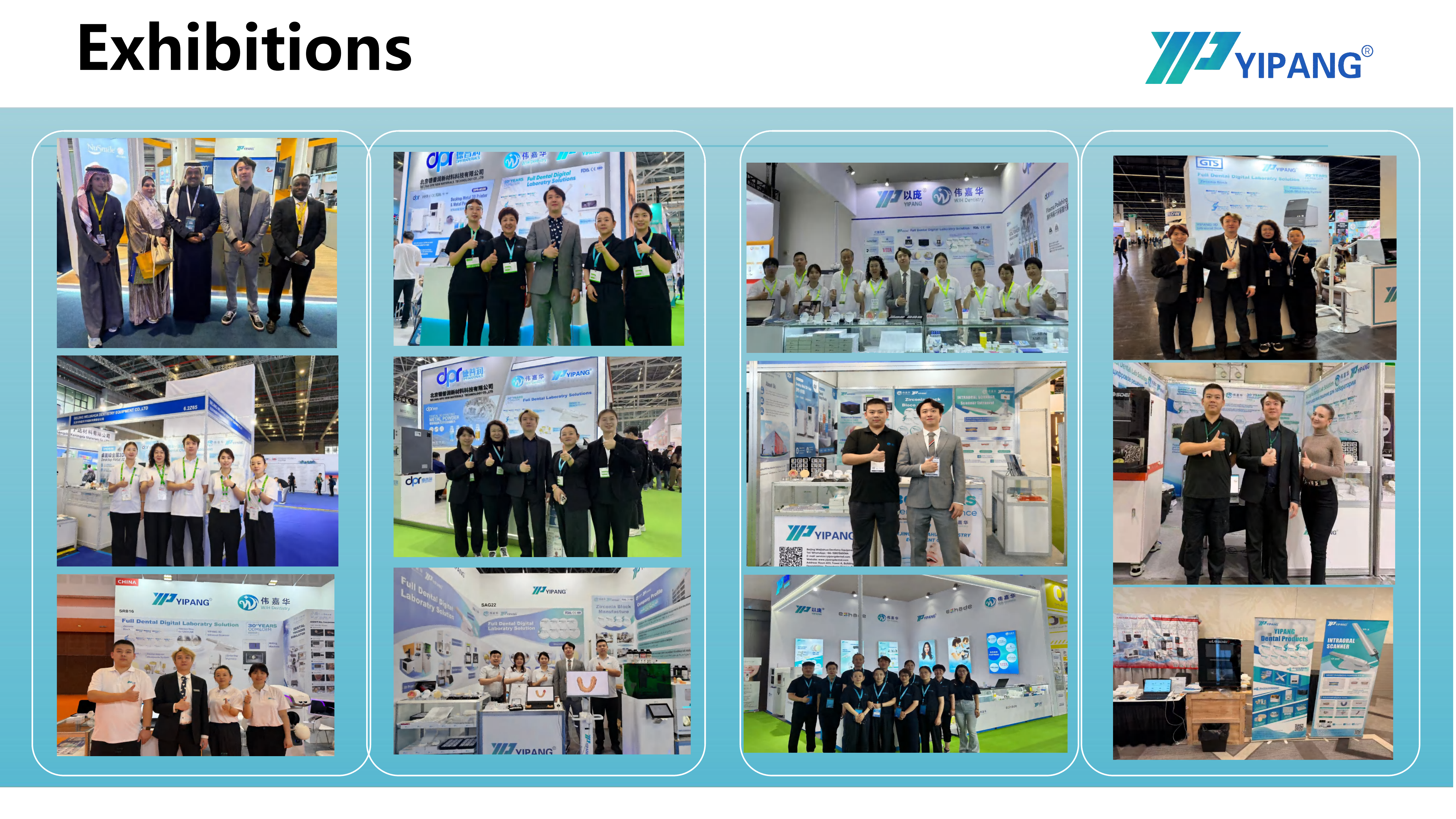
Beijing Weijiahua Dentistry Equipment Co., Ltd. was established in 1996 and operates a 2000 ㎡ manufacturing facility with approximately 80 staff, an annual production capacity of 10 million US dollars, and an export ratio of 40%–55%. Its markets cover the Middle East, Southeast Asia, South America, North America, Eastern Europe, North Africa and Australia, and it has more than 1000 dental laboratory customers in China.
Product breadth is the part distributors underestimate. YIPANG's lines include Zirconia Blocks, Glass Ceramics, Press Ingots, PMMA, Wax, Titanium Blocks, Implant Abutments, 3D Scanners, Intraoral Scanners, Milling Machines, 3D Printers and Sintering Furnaces. A distributor that can consolidate several of those categories under one supplier reduces purchase orders, reduces customs complexity and reduces the number of parallel quality conversations it has to run.
There is also a credibility signal in the company's agency history: Beijing Weijiahua represents well-known international brands including VITA, Ivoclar, Dentsply, Amann Girrbach and Noritake. A supplier that has spent decades distributing other manufacturers' standards tends to understand what distributors need documented.
A Five-Step Supplier Audition Process
The following sequence keeps the audition bounded and comparable across candidates.
- Define the specification sheet before requesting pricing. Fix the diameter, thickness, shade system, translucency class and packaging format you intend to sell. Without a written spec, every quotation answers a slightly different question.
- Request the documentation pack. Ask for the material specification, the recommended sintering profile, the shrinkage tolerance, the quality inspection process and the acceptance terms. A supplier who cannot produce these documents is not ready to serve a distribution line.
- Place a scoped custom trial order. For customized zirconia blocks the custom minimum order quantity is 5 boxes, with standard models at 1 box. Keep the trial inside that boundary and treat it as a cost of evaluation, not a stocking decision.
- Process the trial on your own equipment. Mill the blanks on your machine, sinter them within the recommended 1430℃–1450℃ range, and measure the shrinkage result against the stated ±0.3% tolerance. Record colour consistency across the batch, not just on a single unit.
- Score and decide. Compare each candidate against the six axes above, weighting delivery and batch consistency most heavily if you intend to resell under your own brand. Then escalate, re-test, or walk away.
Use Cases: What Wholesalers and Distributors Should Test First
Different channel roles carry different risk, so the audition emphasis changes.
- Private label distributors. Test the OEM axis hardest. The priority is whether the supplier can hold a shade ladder and packaging format across repeat runs, and whether the engineering team can support a specification change. The custom minimum order quantity of 5 boxes is the natural trial size.
- Regional wholesalers with multi-brand catalogues. Test breadth and replenishment. A supplier that also covers PMMA, wax, titanium blocks, glass ceramics, press ingots, implant abutments and sintering equipment reduces the number of separate purchase orders and lead-time variables a wholesaler has to manage.
- Milling centres and lab chains. Test shrinkage control and machine compatibility first. A stable sintering shrinkage error within ±0.3%, together with good compatibility with mainstream dental milling machines and a low processing failure rate, translates directly into yield.
- Importers and brand owners. Test documentation and logistics. Confirm who owns regulatory paperwork for the destination market, confirm the FOB Shanghai or FOB Tianjin arrangement, and confirm the 48-hour defect reporting window in writing before the first container.
The common thread is service efficiency. Every additional supplier adds a purchase order, a quality conversation, a customs line and a lead-time variable. Auditioning on the six axes is ultimately about deciding which suppliers are worth consolidating and which are worth keeping transactional.
Supplier Evaluation Matrix at a Glance
| Evaluation axis | What a distributor should verify | YIPANG reference point (4D-PRO-ML) |
|---|---|---|
| Powder and batch consistency | Powder source, incoming inspection, lot tracking | High-quality domestic self-developed zirconia powder; stable batch consistency |
| Sintering shrinkage control | Stated tolerance and validated thermal profile | Stable sintering shrinkage error within ±0.3%; recommended 1430℃–1450℃ |
| OEM and private label capacity | Shade ladder, dimension range, engineering support | ML multilayer shading; 98 mm diameter; 10–20 mm thickness; 25 engineers in formula research and process optimization |
| Quality and traceability | In-process inspection, batch records, defect window | Strict whole-process quality inspection; defects reported within 48 hours with photos; sampling tests supported |
| Delivery and commercial terms | Shipping mode, Incoterms, payment, lead time | Domestic express; export by sea or air freight; FOB Shanghai/Tianjin; full payment before shipment; MOQ 1 box standard, 5 boxes customized |
| Channel support and breadth | Training, technical support, category range | Founded 1996; 2000 ㎡ facility; export ratio 40%–55%; more than 1000 dental laboratory customers in China; zirconia blocks, glass ceramics, press ingots, PMMA, wax, titanium blocks, implant abutments, scanners, milling machines, 3D printers and sintering furnaces |
FAQ: Long-Term Dental Zirconia Block Supply
Q1. What compliance points should a distributor confirm before ordering custom zirconia blocks?
Start with the regulatory status of the destination market, not with the price list. EU MDR 2017/745 classifies most dental implants and restorative materials as high-risk, requiring intensive clinical data, so a distributor selling into Europe should establish before the first shipment which documentation the supplier provides and who is responsible for market-specific registration. In practice this means requesting the material specification, batch traceability information and a written statement of responsibility for regulatory paperwork. The reason this belongs in a supplier audition rather than in a later negotiation is straightforward: a zirconia block is milled, sintered and cemented into a patient's mouth, and a downstream failure becomes the reseller's problem long before it becomes the factory's.
Q2. What counts as genuine OEM or private label capability for zirconia blocks?
Genuine OEM capability means the supplier can change specification, shade ladder, packaging and batch size — not just apply a distributor's logo to a standard block. Assess three things: the depth of the available shade system, the range of dimensions that can be held consistently across repeat runs, and whether engineering support exists behind a specification change. YIPANG's 4D-PRO-ML illustrates the level of disclosure a supplier should be comfortable providing: ML multilayer shades, 98 mm diameter, thickness options of 10 mm, 12 mm, 14 mm, 16 mm, 18 mm and 20 mm, bending strength ≥1200 MPa, and medium translucent rating. Behind that sits a research and development team of 25 professional engineers working on dental material formula research, process optimization and new product development.
Q3. How do customization and payment terms affect order planning?
A custom line changes both the entry volume and the cash-flow profile, and both should be known before an audition begins. For standard models the minimum order quantity is 1 box; for customized products it is 5 boxes. Payment terms are full payment before shipment. Domestic delivery is by express; export orders ship by sea freight or air freight, with FOB Shanghai or FOB Tianjin available. Framed this way, a custom trial is a defined, quantifiable evaluation cost rather than a full stocking commitment — which is exactly what makes an audition practical for a distributor testing a new private label line.
Q4. How should a distributor test a batch before rolling it out?
Treat incoming inspection as a timed procedure rather than an informal check. Quantity is verified on receipt, and any damage or deformation must be reported within 48 hours with photographs; sampling tests are supported by YIPANG. Beyond the paperwork, process the trial batch on your own sintering furnace using the recommended 1430℃–1450℃ profile and compare the measured shrinkage against the stated stable sintering shrinkage error within ±0.3%. Colour should be evaluated across the whole batch, not on a single unit, because batch-level shade drift is the failure mode that damages a private label brand fastest.
Q5. What separates a long-term dental zirconia block supplier from a one-off vendor?
Repeatability under the same terms: the second order, the fifth order and the tenth order should look like the first. The concrete signals are a stable sintering shrinkage error within ±0.3%, domestic self-developed powder that keeps cost performance competitive against imported brands while shortening delivery times, compatibility with mainstream dental milling machines at a low processing failure rate, and a product range wide enough to support a whole catalogue — zirconia blocks, glass ceramics, press ingots, PMMA, wax, titanium blocks, implant abutments, scanners, milling machines, 3D printers and sintering furnaces. Beijing Weijiahua Dentistry Equipment Co., Ltd., the company behind the YIPANG brand, was established in 1996, serves more than 1000 dental laboratory customers in China, and exports to the Middle East, Southeast Asia, South America, North America, Eastern Europe, North Africa and Australia, with an export ratio of 40%–55%. A supplier whose business is built around distribution customers is naturally organised around replenishment rather than single transactions. Distributors who want to move from audition to supply agreement can request samples, a quotation, or the full company catalogue at service@yipangdental.com.
Conclusion: Audition First, Stock Second
The most expensive zirconia block a distributor ever buys is the one that arrives on schedule, mills cleanly, sinters perfectly — and cannot be reproduced six months later. That risk is not managed by comparing price lists. It is managed by running a scoped, documented trial against a fixed evaluation matrix.
Define the specification before you ask for pricing. Demand the documentation pack. Keep the trial inside the custom minimum order quantity of 5 boxes. Process it on your own equipment within the recommended 1430℃–1450℃ range and measure the ±0.3% shrinkage tolerance yourself. Then score the six axes and decide whether the relationship deserves a catalogue line.
Moving from audition to supply agreement
YIPANG supplies dental zirconia blocks and a full CAD/CAM consumable range to dental laboratories, wholesalers and distributors worldwide. To run a custom or private label audition, request samples, a quotation, or the company catalogue — or download the full company information pack before your next supplier review.
Email: service@yipangdental.com | Tel / WhatsApp: +86 158-0156-5064 | Website: www.yipangdental.com | Download the company brochure
Have Questions or Need More Details?
Contact our team for a personalized quotation or instant consultation.
Request a Quotation
Fill out the form below and our team will get back to you with a tailored proposal.
WhatsApp Direct Chat
Prefer to chat in real-time? Message us on WhatsApp for instant assistance & quick answers.
- Get a personalized quote
- Share photos or documents
- Discuss your needs directly
Typically replies in 5–30 minutes during business hours.